Whitehot Magazine
April 2026
"The Best Art In The World"
"The Best Art In The World"
April 2026
Tension on the Table: Holly Coulis and the Philosophy of Still Life
By RIAD MIAH, March 7th, 2026
Very much in the spirit of Giorgio Morandi, Holly Coulis treats still life not as a minor genre but as a space for thoughtful exploration. Morandi relentlessly returned to his bottles, bowls, and jars, making subtle adjustments in tone and spacing until the simplest vessels hovered between material presence and metaphysical silence. Painted in Bologna’s subdued light, his tabletop compositions turn the physical world into moments of reflection. Coulis starts from a similar place, objects collected, arranged, and observed, but her goals diverge. While Morandi dissolved form into atmosphere, she sharpens it. Still life becomes a testing ground for painting’s material limits, creating a dialogue between surface, color, and the act of looking that feels uniquely present.
Morandi’s sensitivity was shaped partly by Paul Cézanne, whose apples were never just fruit but questions of weight, duration, and structure. For Morandi, repetition became a spiritual practice. Coulis also works in series, but her repetitions disrupt rather than comfort. Her vessels tilt, her fruit wobbles, and her tabletops defy logic with theatrical imbalance. The traditional promise of domestic order in the genre gives way to subtle vertigo.
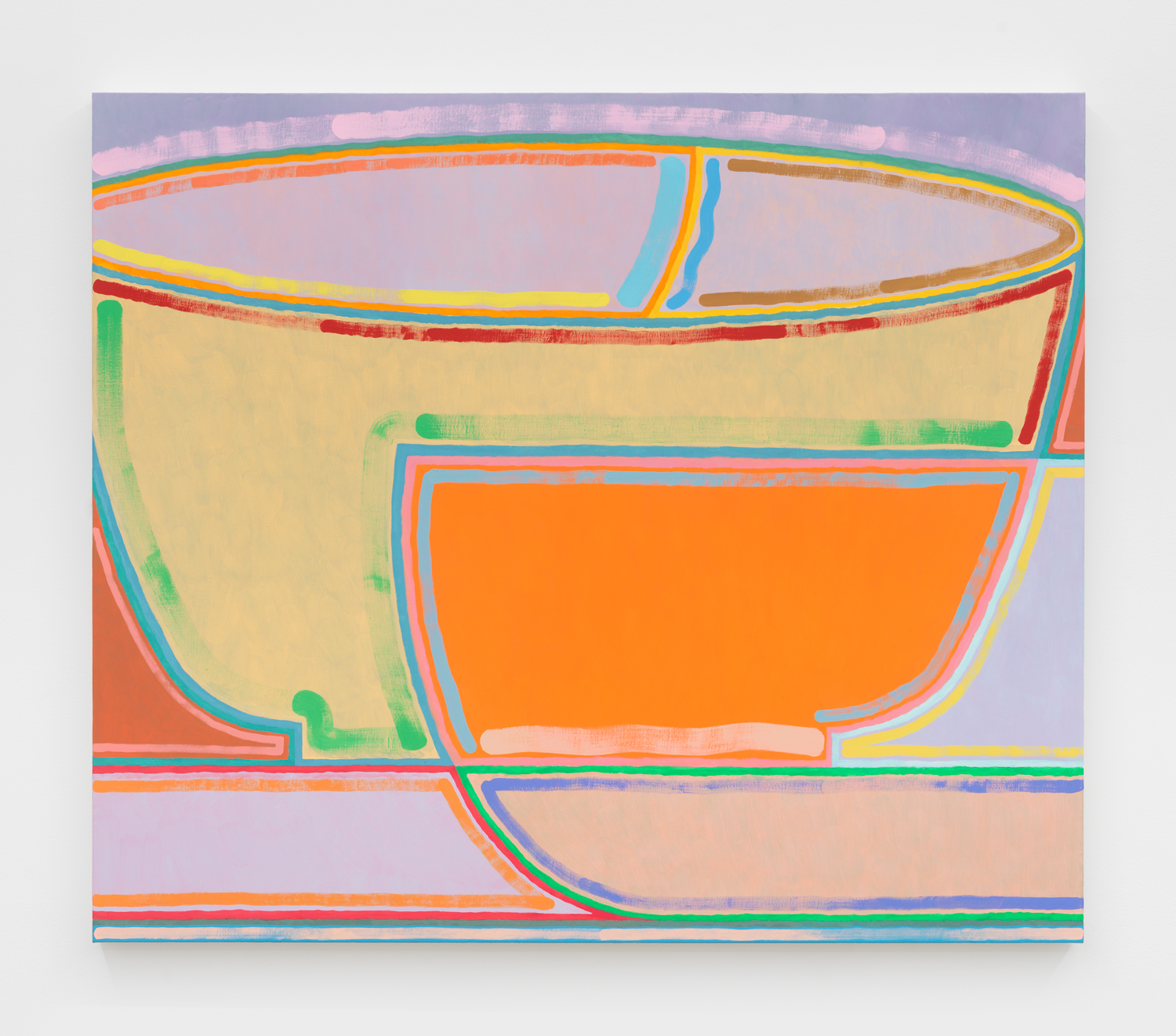 Lilac Energy Glow, 2026, oil on linen,36 x 42 inches
In this regard, Coulis is less aligned with Morandi’s subtle restraint than with the allegorical nature of seventeenth-century Dutch Vanitas painting. These moralizing still lifes; skulls, fading flowers, and overripe fruit used detailed descriptions to impart metaphysical warnings. A lemon peel curling over a table’s edge became a symbol of mortality. Coulis avoids obvious symbolism, but her formal choices function metaphorically. Thick paint presses against flat color; contours interrupt modeled volume; patterns clash with space and depth. These tensions become reflections on time and attention. While the Dutch masters moralized decay, Coulis highlights the fragility of pictorial coherence itself.
Her paintings often reveal their artifice. Color functions less as a simple depiction and more as a structural element. A pear might be blue against a mottled background; a jug could glow in cadmium red, defying any believable light source. Such chromatic boldness recalls Henri Matisse, for whom color was not subordinate to drawing but its equal. However, where Matisse sought decorative harmony, Coulis embraces dissonance. Her outlines press firmly against her shapes, flattening space even as shadows create a sense of depth. This results in a push-and-pull that echoes Cézanne’s constructive brushwork while acknowledging the legacy of modernist flatness articulated by Clement Greenberg. Greenberg’s famous dictum—that painting must recognize its own two-dimensionality finds a playful afterlife here. Coulis respects the flatness of the canvas even while experimenting with illusion, as seen in “Shaky Olive”, 2026. The painting’s composition includes two bowls and an olive. The darker hue surrounding the light blue bowl creates tension with the yellow-shaped bowl form, which sits neatly at the bottom edge of the canvas, acknowledging the painting’s physicality all the while straddling a pictorial space.
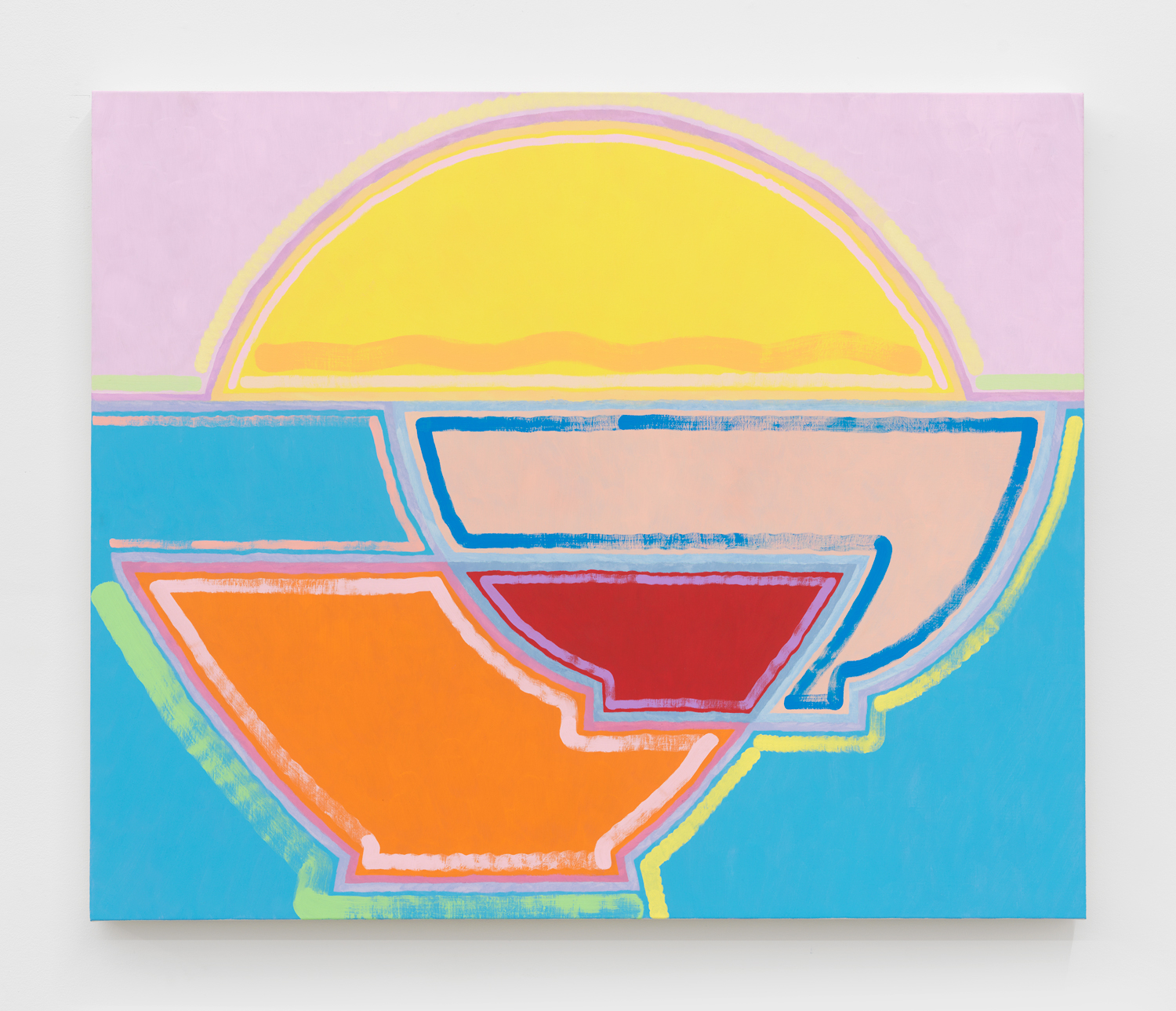 Sunrise, Dish Pair, 2026. oil on linen, 30 × 36 inches
The oscillation between depth and flatness fuels the work’s spiritual energy. In Morandi, spirituality emerges from a near-monastic quiet; Coulis finds it in friction. The viewer’s eye moves restlessly between tabletop planes and abstracted fruit, between solid contour and dissolving brushstroke. Looking becomes effortful and embodied. Painting functions less as a window than as a ritual of sustained attention. This tension is heightened by the tight compositions, where color simultaneously suggests form and asserts flatness.
Although still life has gained renewed interest in contemporary art, Coulis resists simple categorization. She is not a photorealist, nor does she indulge in nostalgia for traditional genres. Instead, still life becomes a laboratory for fundamental questions: What does it mean to depict an object with pigment? How much can representation be simplified before recognition falters? When does a pear stop being fruit and become pure shape?
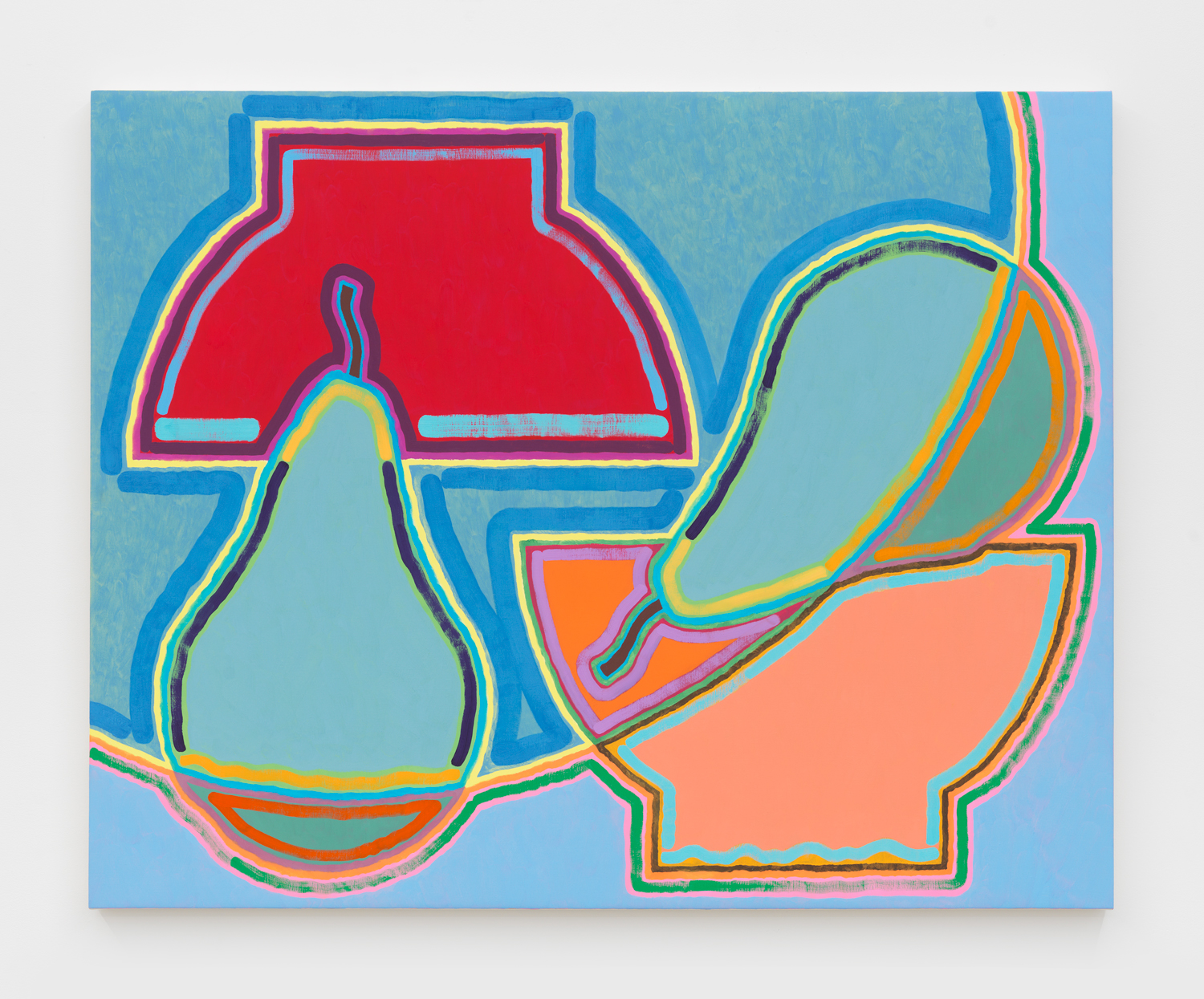 Underwater Pears, 2026, oil on linen, 40 × 50 inches
In this context, Coulis connects with painters who see the genre as a laboratory. Consider the disciplined structure of Juan Gris, whose Cubist still life fractured guitars and bottles into interlocking planes. Gris deconstructed objects to rebuild them as systems. Coulis doesn’t shatter her forms but subjects them to similar pressure. Her compositions often seem as if they are about to fall apart, like in “Underwater Pears, 2026.” We view a bird's-eye perspective of a tabletop; meanwhile, another bowl stands defiantly against perceptual logic, yet it emphasizes and asserts the physical edge of the canvas. The instability is visual, not literal, but it introduces a sense of time. We feel the arrangement could change at any moment. Thus, still life becomes a metaphor for painting itself. The objects are just a starting point; the real focus is on maintaining form against entropy.
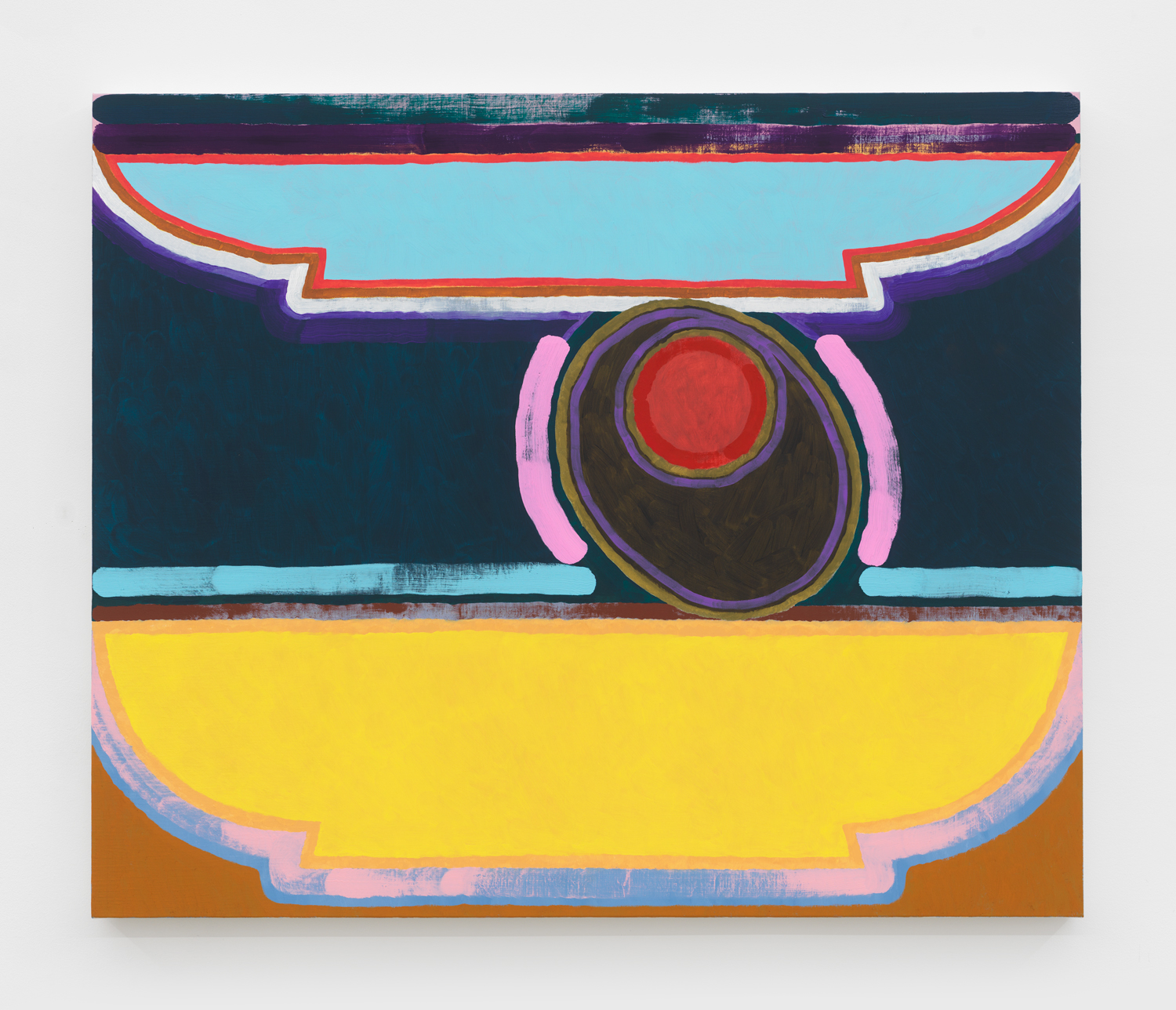 Shaky Olive, 2026, oil on linen, 30 × 36 inches
Her brushwork reinforces this idea. Paint accumulates in visible strokes, sometimes thin and graphic, other times dense and opaque, a recording of calibrated thoughts. Unlike Morandi’s soft atmospherics, Coulis’s surfaces foreground their own making. The canvas becomes a field of action rather than a translucent veil. Echoing postwar claims that process is content, she nonetheless avoids heroic scale or rhetoric. Her formats remain intimate; her motifs domestic. The drama unfolds in bowls and fruit instead of grand gestures.
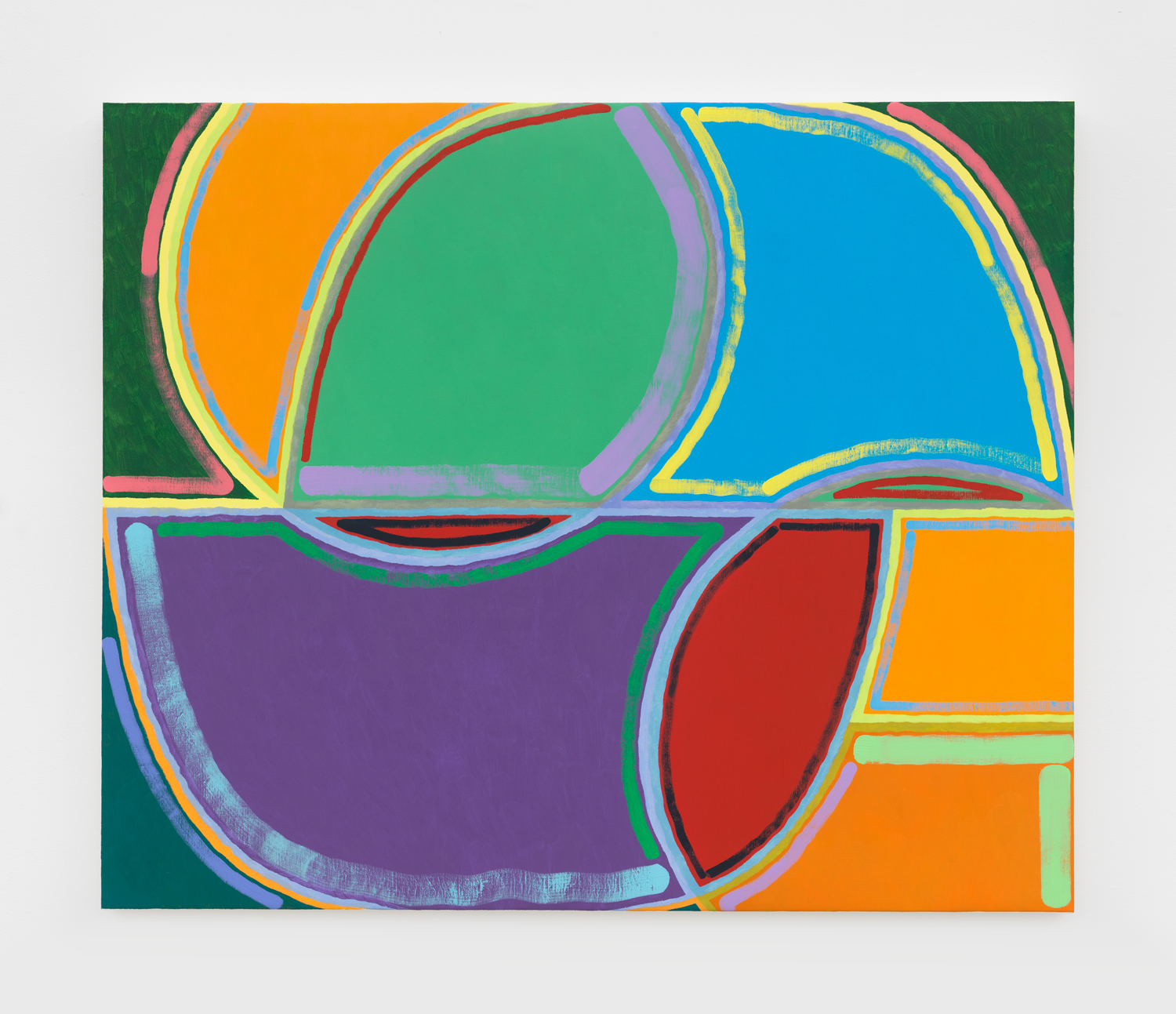 Bowls and Oranges Together, 2026, oil on linen, 30 × 36 inches
If Morandi pursued the spiritual through stillness, Coulis finds it in tension. Her paintings suggest that transcendence lies not in retreat from materiality but in immersion within it, an ongoing negotiation with pigment, canvas, and hand. By revisiting still life, she reactivates its philosophical core. The table becomes an arena of inquiry, the fruit a gathering of forms, and the brushstroke a measure of time. In her hands, still life sheds modesty and reasserts its capacity to confront fundamental questions: how to see, how to attend, and how to remain present before the ordinary until it reveals the extraordinary. WM
Holly Coulis
Whereabouts
February 20 - March 28, 2026
Klaus von Nichtssagend Gallery

Riad Miah
Riad Miah was born in Trinidad and lives and works in New York City. His work has been exhibited at the Baltimore Museum of Contemporary Art, Sperone Westwater, White Box Gallery, Deluxe Projects, Rooster Contemporary Art, Simon Gallery, and Lesley Heller Workshop. He has received fellowships nationally and internationally. His works are included in private, university, and corporate collections. He contributes to Two Coats of Paint, the Brooklyn Rail, and Art Savvvy.
view all articles from this author