Whitehot Magazine
September 2026
"The Best Art In The World"
"The Best Art In The World"
September 2026
The Conviction of David Reed's Doubt
By RIAD MIAH, September 24th, 2026 at 11:44pm EST
Rodder Gallery presents Terrible Idea, an exhibition by David Reed, whose title is drawn from one of the artist’s working notes. It marks Reed’s first exhibition with the gallery and his first solo presentation in six years in New York City. More significantly, it brings his working drawings into direct conversation with the completed paintings. Reed has exhibited these drawings before—independently at Peter Blum Gallery in 2010 and alongside paintings, positioned in the back room, in 2016 (Blum Gallery). Here, they occupy a more consequential position. They function not as supplementary documents or illustrations of the finished work but as critical evidence of the thinking that produces it: the hesitation, revision, calculation, and uncertainty that painting tends to conceal.
Color has long been a defining characteristic of Reed’s work. During the 1980s and ’90s, his thin, glazed layers of color over opaque pigment reflected his interest in cinematic lighting, particularly the heightened chromatic effects of Technicolor. The paintings recalled the charged interiors of Alfred Hitchcock’s Vertigo, North by Northwest, and Rear Window. Reed’s elongated horizontal and vertical formats reinforced this association, as did his cropping and editing of painted passages. His paintings often looked like fragments extracted from a larger sequence—a scene interrupted, enlarged, or cut before its narrative could resolve.
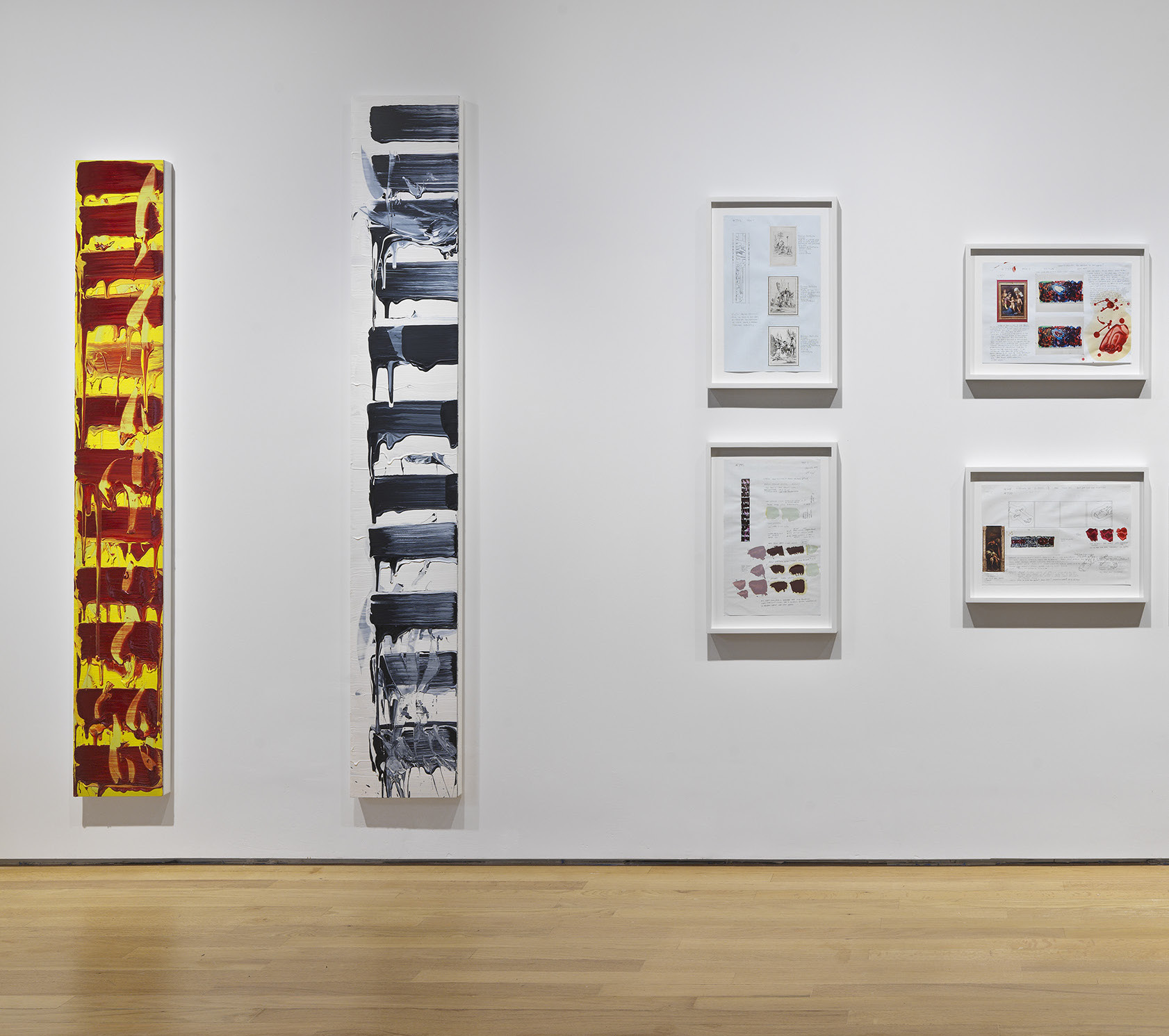
Installation view of David Reed’s exhibition at Rodder
Yet the cinematic analogy only goes so far. Looking back in art historical time, Reed’s fascination with light seems equally connected to the Renaissance and Baroque traditions, in which illumination is not merely descriptive but also organizes attention and produces psychological tension. What Hitchcock accomplished through artificial light and film editing had already been explored by painters centuries earlier. Reed’s work occupies this productive intersection between the screen and the canvas, between the edited image and the constructed field.
In the new paintings, those concerns are reconsidered rather than abandoned. The dramatic elongated formats, intense cropping, and sense of pictorial editing remain, but they have been compressed and reconfigured. Two paintings use a square format, yet neither feels conventionally square. Strong vertical divisions and color relationships establish an implied uprightness within the geometry, creating the sensation that the paintings are simultaneously accepting and resisting their own boundaries. The square becomes less a stable container than a field under pressure.
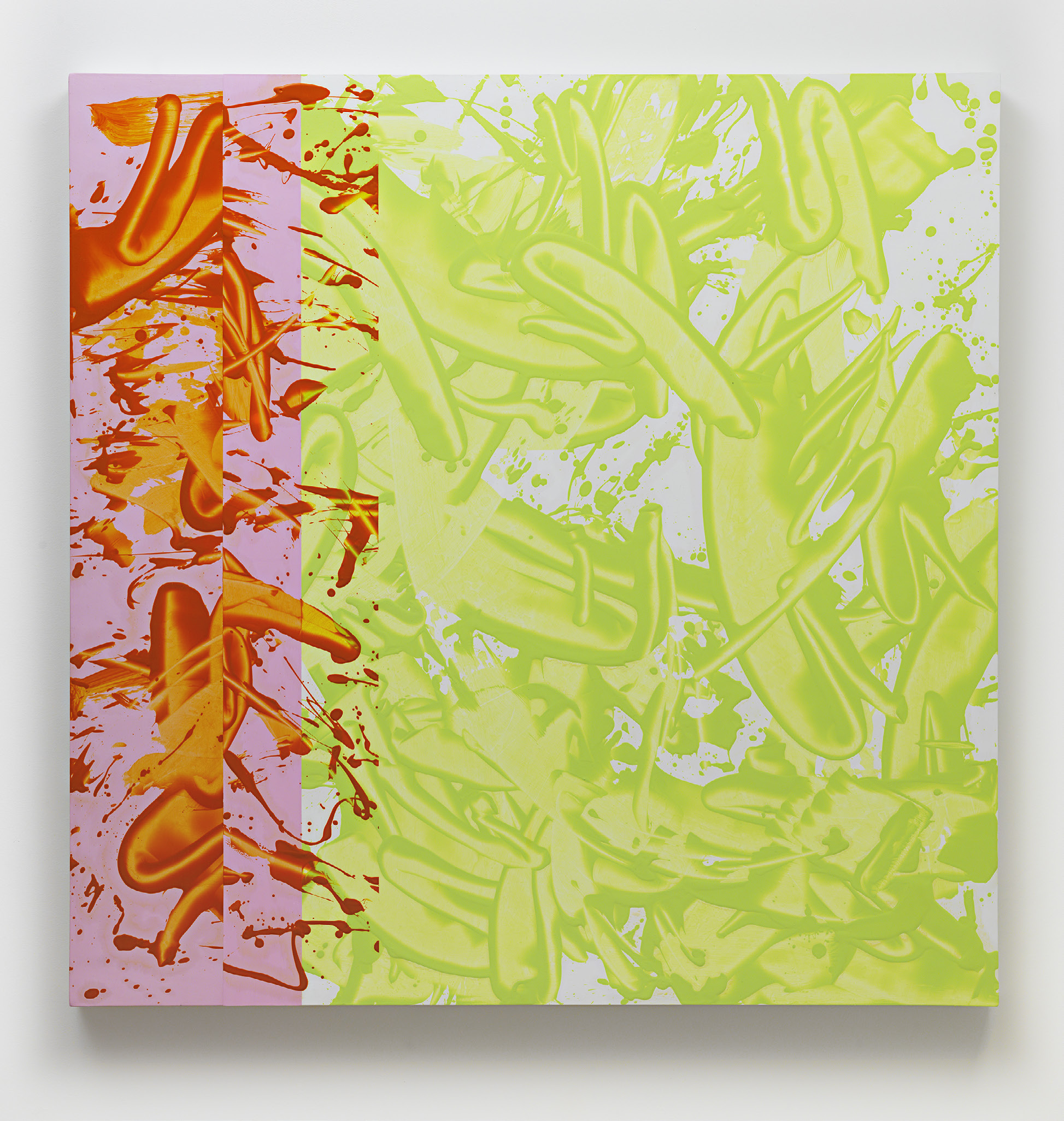 #809, 2025–2026, 42 x 42 inches, Oil and acrylic on polyester
That pressure becomes more apparent in the drawings. Their presence alters how the paintings are read by revealing decisions the finished works conceal. Reed’s drawings are not simply preparatory studies in the conventional sense. They are records of thought: fragments of composition, color notations, revisions, and observations, many precisely dated as a diary entry. We encounter the painting before it becomes a painting, when possibilities remain open and a decision can still be reversed.
This makes the title Terrible Idea more than an amusing studio note. What makes an idea terrible in painting? A wrong color? A failed composition? A decision that cannot be undone? Or is the “terrible idea” the assumption that painting can ever proceed according to a stable plan?
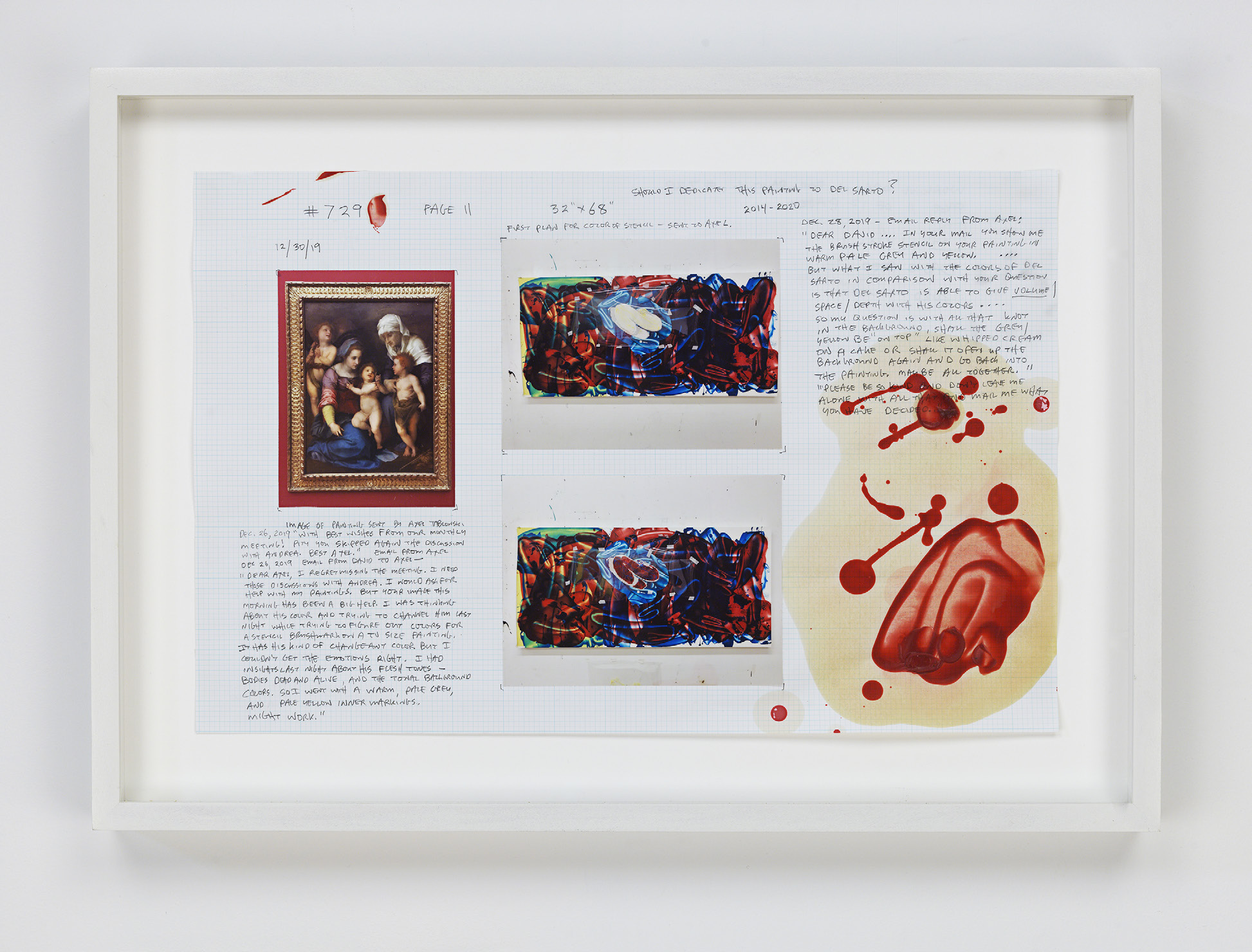
Drawing for #729, 2020, Oil, collage and pencil on graph paper, Framed: 15 x 20 3/4 inches
Here, Reed approaches something like Cézanne’s uncertainty, particularly as Maurice Merleau-Ponty understood it. For Merleau-Ponty, Cézanne’s doubt was not evidence of an artistic deficiency but an essential condition of perception. Painting emerged from a continual negotiation between intention and what the act of painting revealed. Reed’s drawings make this negotiation unusually visible. We see an artist thinking his way into a painting, but also thinking his way out of it.
There is a useful comparison with Ross Bleckner’s show Never the Less, recently presented at Guild Hall. Both exhibitions offer viewers unusual access to process, allowing finished paintings to be considered alongside the thinking and process that went into their making. Yet their approaches are markedly different. Bleckner’s process unfolds through iteration: images are repeated, altered, dispersed, and allowed to evolve. Reed’s is more explicitly cognitive. His notes preserve something of the internal dialogue surrounding the act of painting. The distinction between them lies in seeing thought through repetition rather than reading it as it happens.
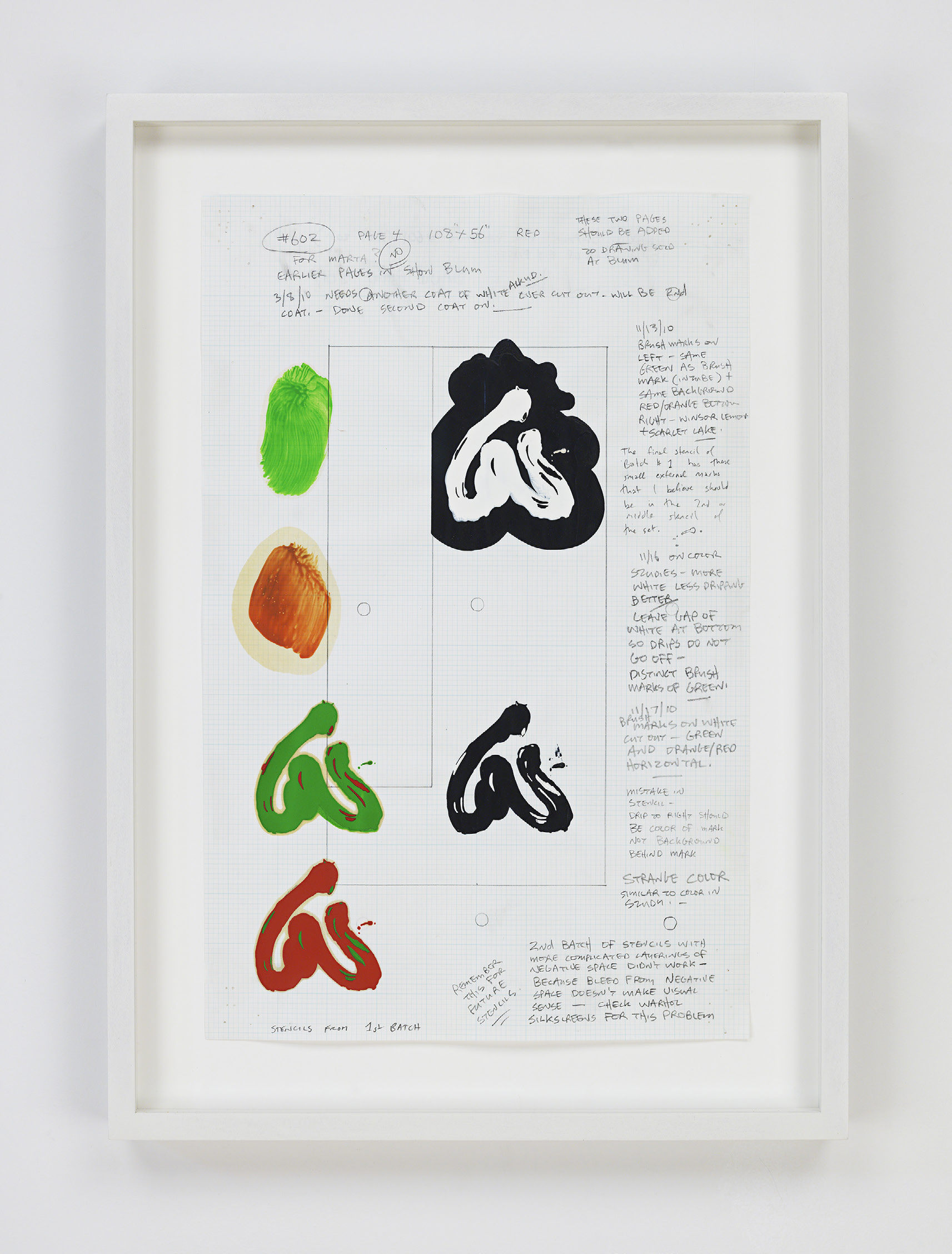 Drawing for #602, 2014, Oil and pencil on graph paper, Framed: 20 3/4 x 15 inches (52.7 x 38.1 cm)
The paintings themselves resist becoming illustrations of those thoughts. In the work #804, 2024-2025, Reed begins with a medium-gray ground, upon which translucent, vibrant gestures of color are applied. The gray recalls the photographer’s gray card, a technical device used to establish accurate exposure and determine a precise white. Reed transforms this utilitarian neutrality into a pictorial condition. The gray becomes a temporal ground against which color registers as an event.
The color does not simply sit on the surface, it interrupts it. Because the gray remains perceptible beneath and between the gestures, the painting carries the memory of what has been covered without allowing the viewer to reconstruct it fully. Each passage is both an addition and a concealment. Painting becomes a record of decisions that cannot be fully deciphered.
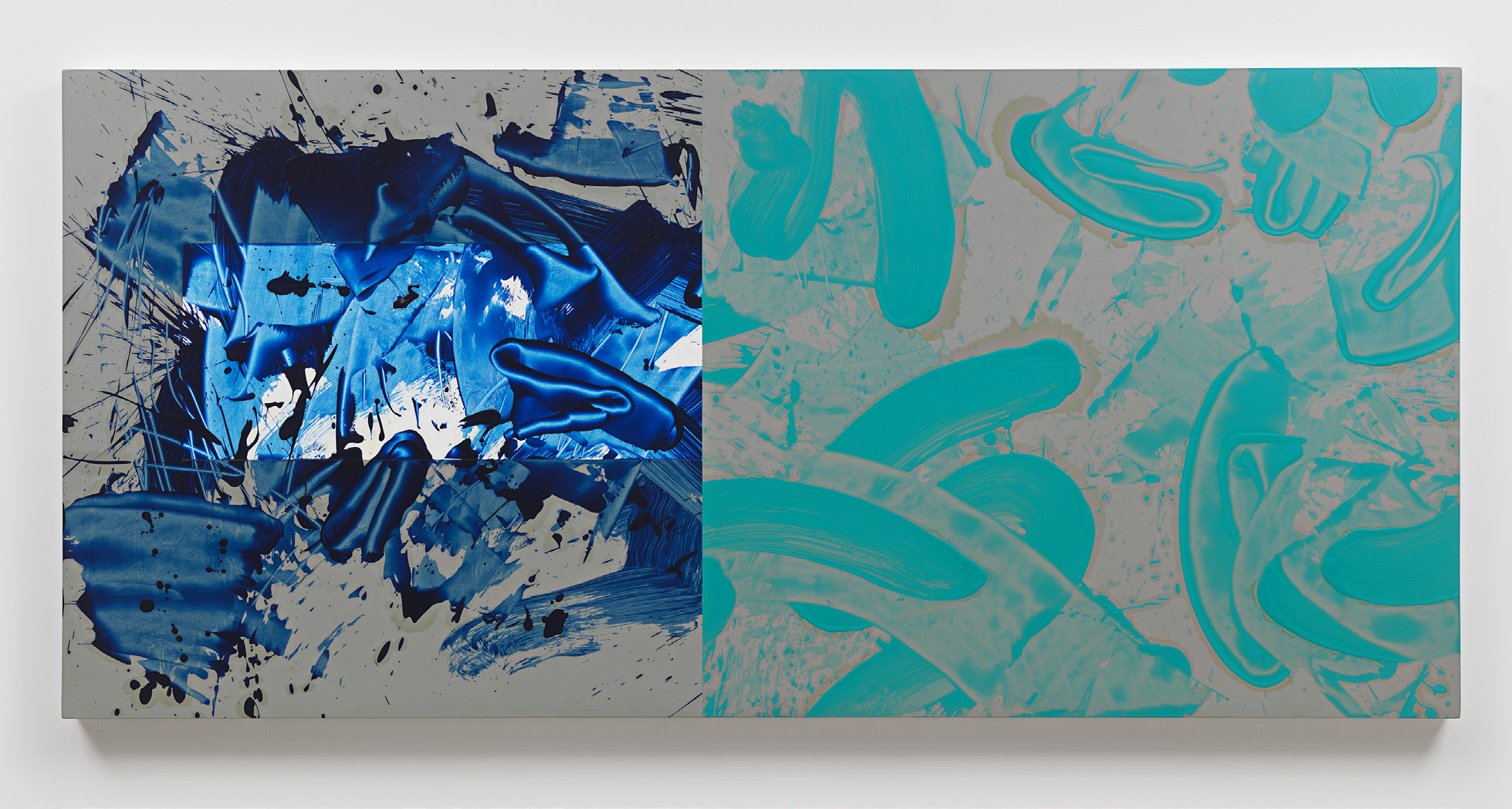 #804, 2024–2025, Acrylic and oil on polyester, 30 x 65 inches (76.2 x 165 cm)
This is where Reed’s longstanding engagement with film becomes newly productive. Cinema depends on editing: what we see is determined as much by what has been removed as by what remains. Reed’s paintings operate similarly, but without the possibility of playback. A painted passage cannot be simply restored to its previous state. Every decision alters the conditions for the next. The painting becomes an accumulation of time without its documentation.
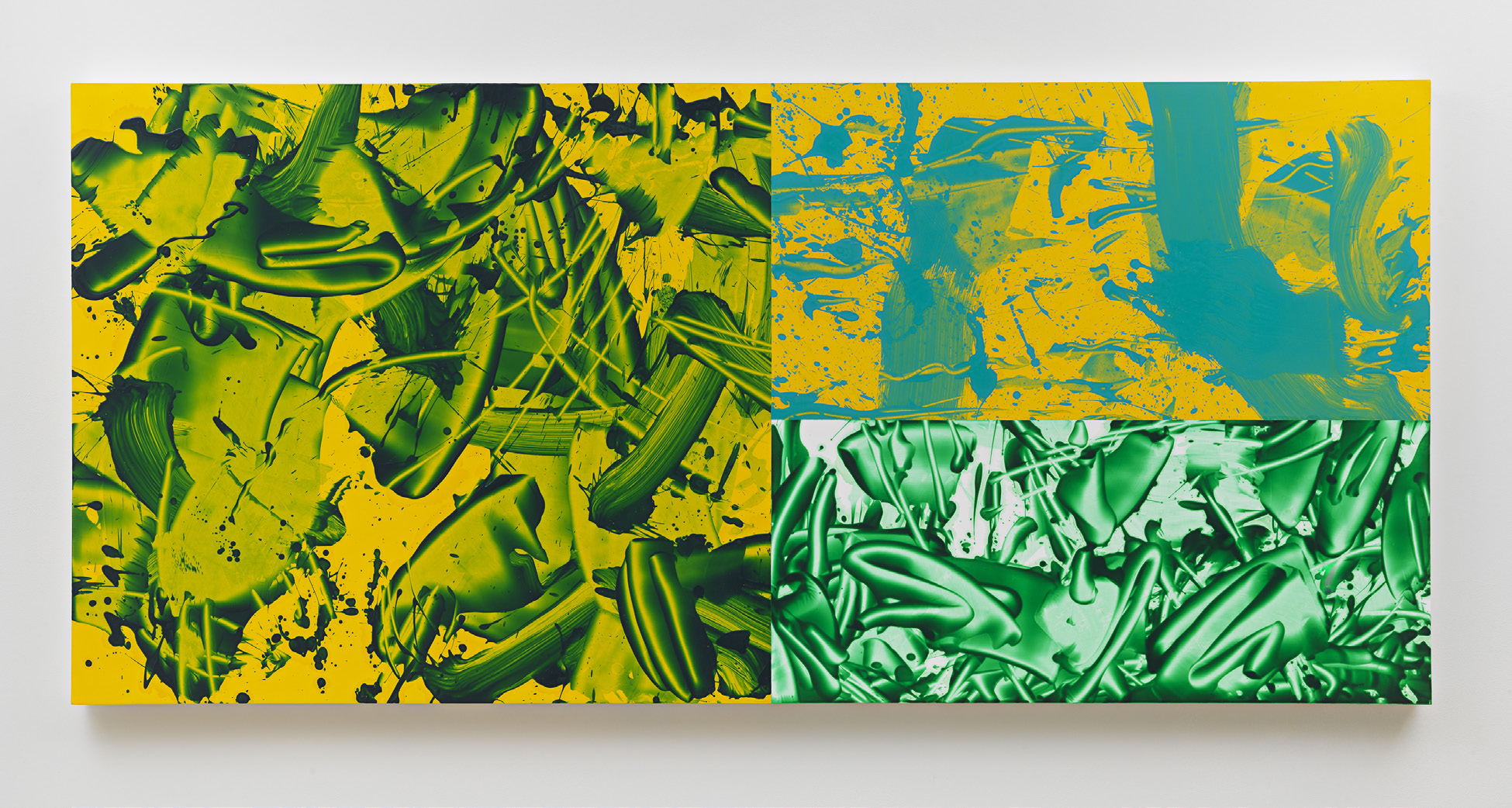 #805, 2024-2026, Oil and acrylic on polyester, 32 x 70 in (81.3 x 177.8 cm)
The working drawings make this temporal structure visible. They reveal that the finished paintings are not the inevitable outcome of an initial idea but the residue of competing possibilities. The painting is what endures. Terrible Idea is therefore less an exhibition about process than about the impossibility of separating process from perception. Reed’s notes, dates, corrections, and doubts do not explain the paintings; they complicate them. They reveal that beneath the apparent control of the finished surfaces lies a practice dependent on hesitation and revision. The drawings also prevent the paintings from being understood as simple formal exercises in color or composition. They restore contingency to what otherwise might appear resolved.
Perhaps that is the real provocation of Reed’s title. In painting, an idea cannot always be judged before it is made. What initially seems wrong may become necessary; what seems resolved may require another modification. A “terrible idea” may be indistinguishable from a productive one until the painting has already absorbed it. Reed’s achievement is to make that uncertainty visible without resolving it. The paintings remain, like the thoughts that produced them, suspended between intention and discovery.

Riad Miah
Riad Miah was born in Trinidad and lives and works in New York City. His work has been exhibited at the Baltimore Museum of Contemporary Art, Sperone Westwater, White Box Gallery, Deluxe Projects, Rooster Contemporary Art, Simon Gallery, and Lesley Heller Workshop. He has received fellowships nationally and internationally. His works are included in private, university, and corporate collections. He contributes to Two Coats of Paint, the Brooklyn Rail, and Art Savvvy.
view all articles from this author