Whitehot Magazine
September 2026
"The Best Art In The World"
"The Best Art In The World"
September 2026
A conversation with Painter Marcus Jansen
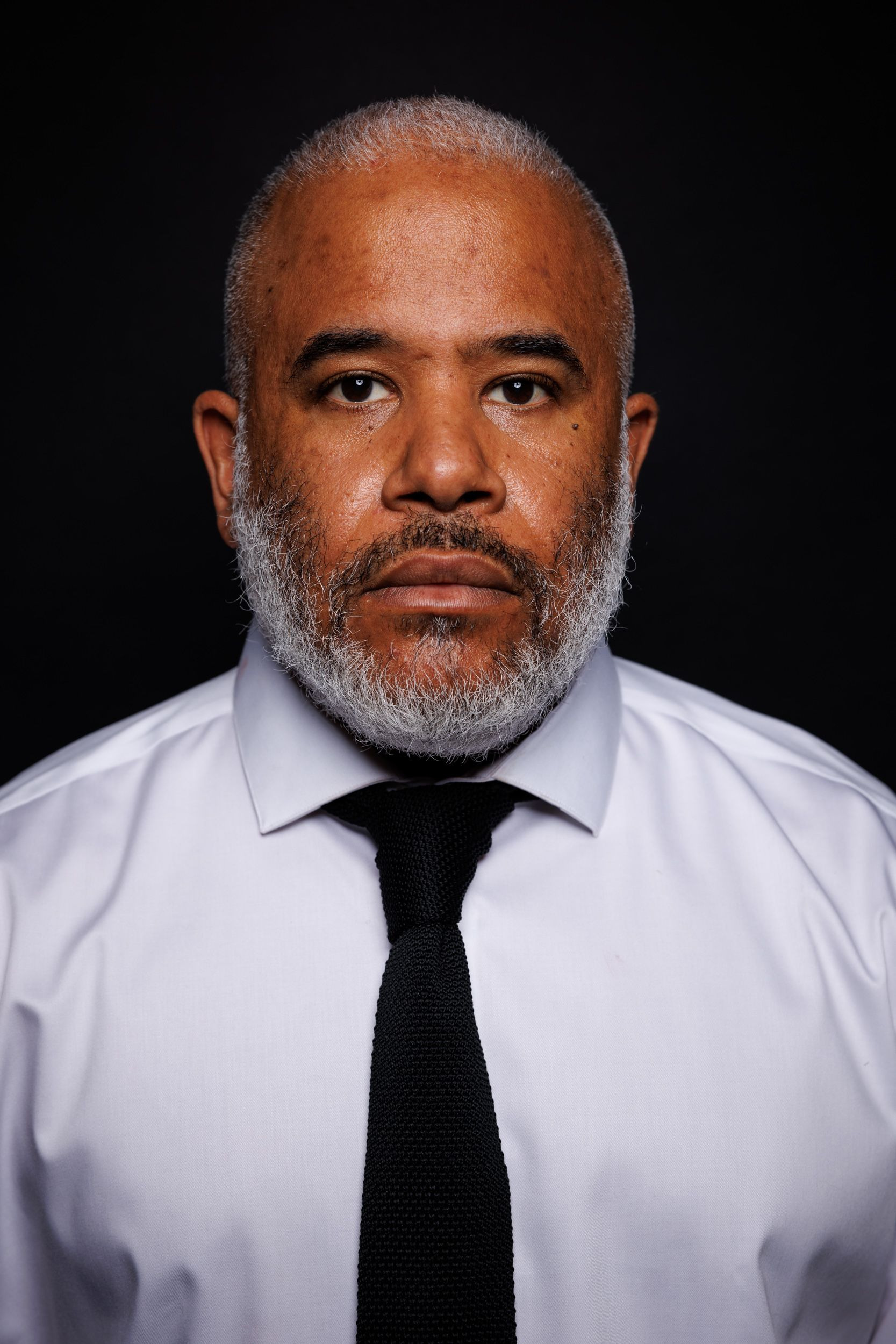 Artist Marcus Jansen, 2026
By NOAH BECKER July 29th, 2026
Many of your figures appear faceless or anonymous. What role does anonymity play in your work, and what does it allow viewers to project onto the image?
For me, anonymity is one of the core mechanisms on which our current economic and racial systems in particular function. Whether it's the anonymity of power structures, the anonymity embedded around technology, or the erasure of peoples' histories, anonymity shapes the world we live in.
These works challenge last centuries-old notions of seeing the world through the perspective of a dominant European elite visual commentary and education. I arrived at this way of painting a little over a decade ago, after feeling the need to challenge visual portrait narratives.
So, rather than presenting identifiable figures, I confront viewers with faceless ones, inviting them to reexamine the kinds of images and histories they have traditionally encountered in museums and educational curricula. I intentionally work in a hybrid style of painting, which naturally reflects my own background and lived experience.
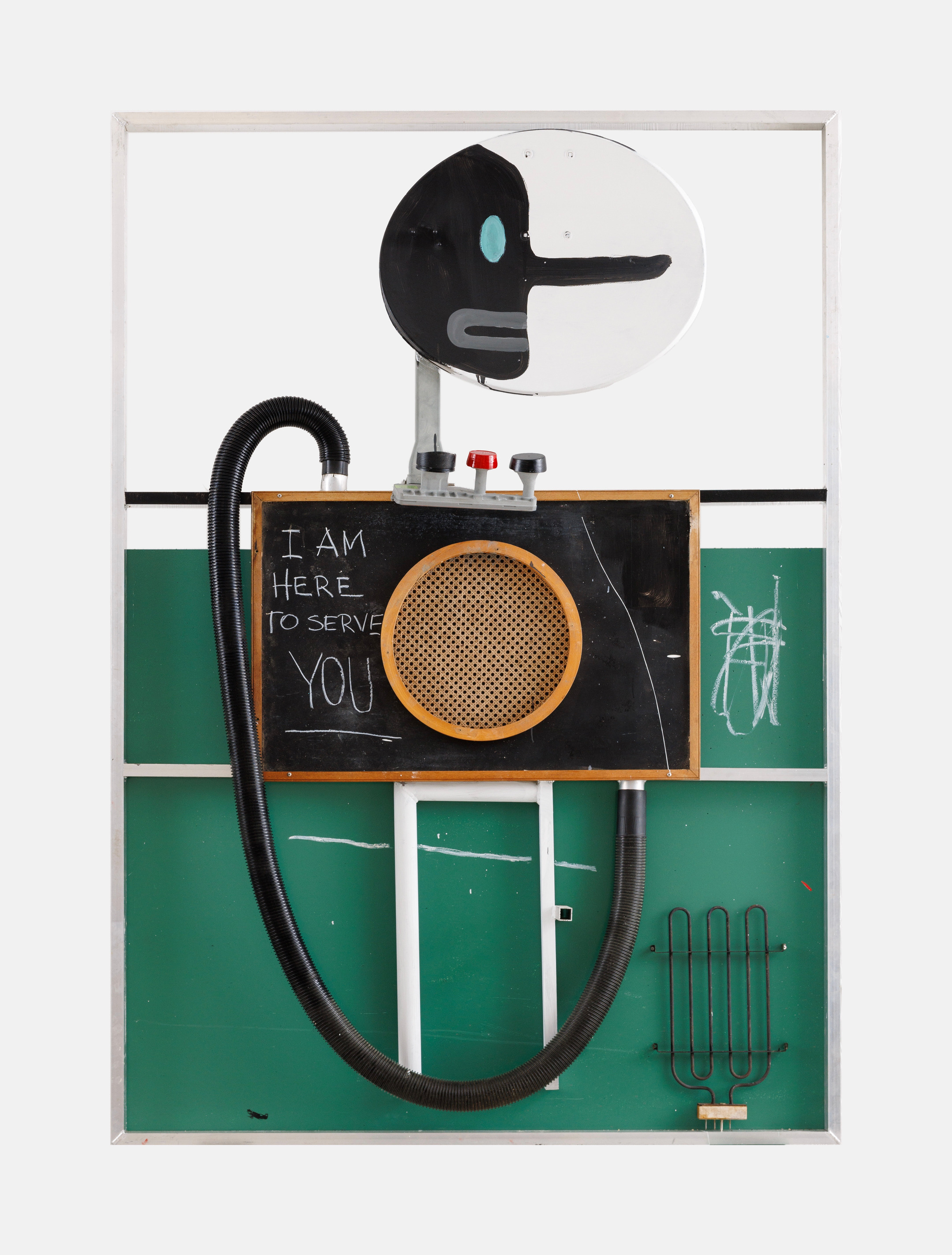 Marcus Jansen, A.I Teacher, 2024
Your military service exposed you to different cultures and landscapes during a pivotal period of your life. How did those experiences alter the way you think about conflict, power, and the perspective from which you paint?
Each experience taught me about the value of life while also raising difficult questions about what I had become a part of as a young man and how I wanted to spend the rest of my life responding to it while serving in a different way
It introduced me to the realities of war that many people—particularly in the Western world never witness firsthand. It gave me cultural, economic, and racial comparisons to reflect on and ultimately became the catalyst for my practice. As a younger person, I detached myself from one system; as a mature adult, I chose to serve humanity through art. I grew up listening to Bob Marley and the Wailers in the house, my mother is from Jamaica. It may have been there where lyrics of songs caught my attention for the first time. It wasn't until much later that I understood the revolutionary significance of them.
Ultimately those experiences have been essential to my interest in exploring human behavior and culture, both as an outsider looking in and as an insider looking out. I would say that this perspective forms the core of how I reassess the historical canons we've inherited. Everything I make is a direct product of that process I am a part of.
Expressionism has long been associated with emotional intensity. How do you see your work extending or redefining that tradition for the twenty-first century?
I'm not sure my work extends Expressionism as much as it contributes another voice to a long history that already contains many powerful examples. I think of it more as finding different ways to juxtapose images and compose paintings so they affect viewers differently.
It's similar to jazz: the instruments may already exist, but there are endless ways to arrange them. After a twentieth century largely defined by European males being highlighted in contemporary art, it's difficult for anyone to invent something entirely new. But as a person of color seeing the world through different cultural lenses and experiences offers endless possibilities for creating something that feels fresh that historically had been oppressed in the contemporary arts.
Your paintings often combine irony, symbolism, and autobiography. When you begin a new work, do you start with a specific narrative in mind, or does the meaning emerge through the act of painting?
A painting often begins with something that ignites my attention—a personal experience, current news event, history repeating itself, or an image in a museum that I find disturbing and deserving of a visual response.
From there, I allow the painting, which for me has its own spirit, to take me wherever it wants to go. Ultimately the painting decides what it wants to become. I simply follow that process intuitively.
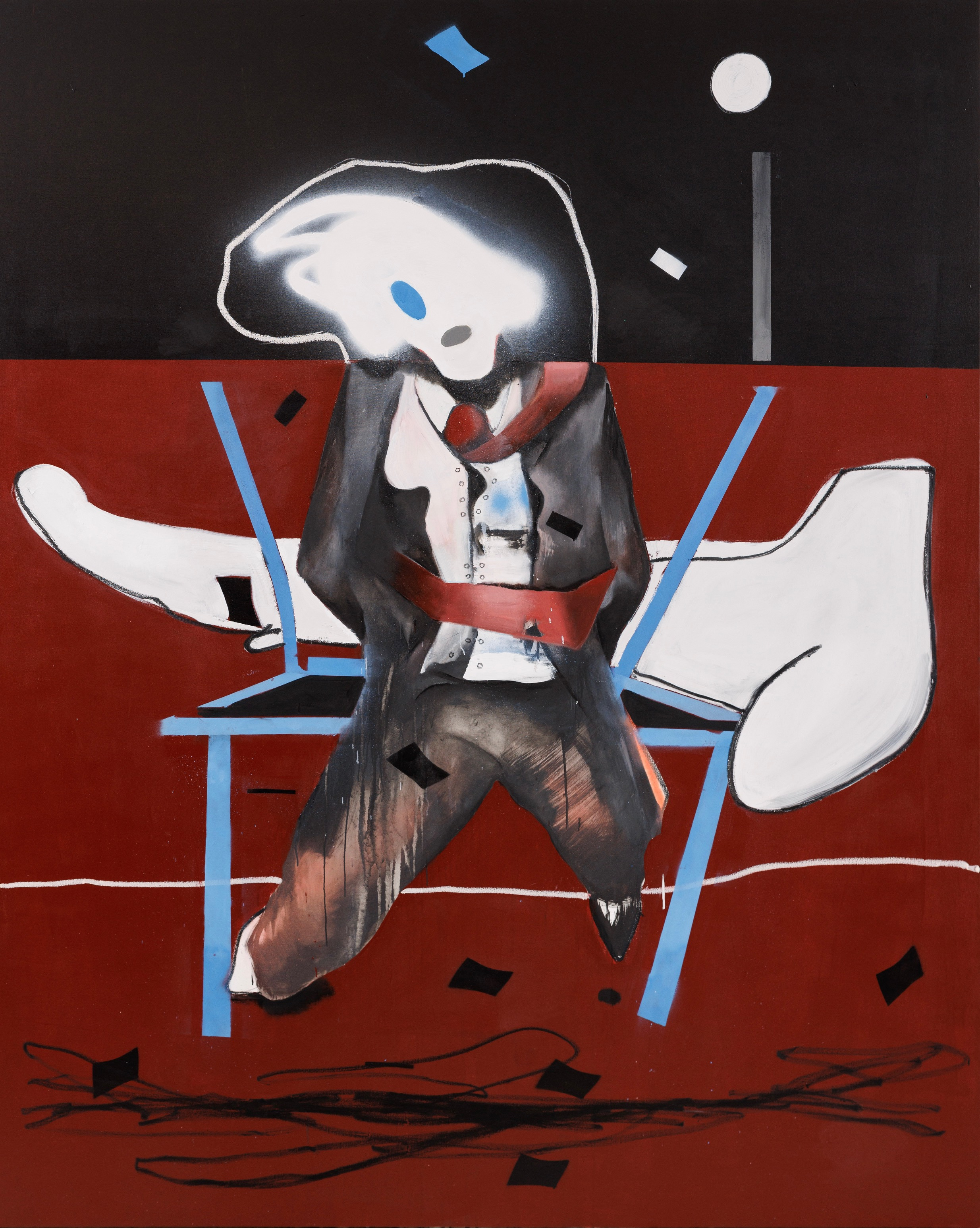 Marcus Jansen, At the Root, 2025
Looking at the current state of the world, what subjects or social conditions feel most urgent for artists to engage with today?
We should be engaged with our own ability to think independently, as artists, we are still free to do so.
But outside of that, I see many urgent conditions, and they vary depending on economic class and racial group, because we as Americans experience these systems we live in very differently. Each artist has his or her own responsibility to be true to themselves.
If we are speaking about humanity at large, one of the greatest concerns for me is the globally unregulated use of modern technologies, including but not limited to artificial intelligence. I pose questions in my latest Man and Machine series, which explores the evolving relationship between humanity and technology.
For people like myself of African and or Indigenous descent living within colonized spaces—particularly in the United States and Europe today—I see the rollback of civil rights, legal protections, and other hard-won safeguards through the continuation of systemic forces.
For the “white” working class in America, I see the unfortunate continuing of far-right ideologies and belief systems rooted in white supremacy being an immediate threat to all humanity.
I respond to all above painterly and in commentary in my new book, COUNTERPOINTBOOK, www.counterpointbook.com where I examine the colonial hierarchy and argue for the deep reflection humanity must undertake if we are to survive and create a more just future.
Your recently published book offers readers a deeper understanding of your life and artistic journey. What inspired you to write it, and what do you hope readers discover about your work that they might not immediately see in the paintings themselves?
Counterpoint will be published in October is a 40 year anniversary publication celebrating my art involvement for four decades now. It has a foreword by Elen Heller the Director of the Boca Raton Museum of Art and brings together 50 + works from 2017–2026, the first catalog published since 2018 and represents the first time I've spoken directly about each painting—not to explain, but to share the personal thoughts and inspirations that inspired their creations.
The book pairs each work with a quote or commentary I give. Perhaps readers return to the paintings with fresh eyes after reading the book and gain a deeper understanding of how the works relate to both our present moment and the many histories that have remained unspoken or deliberately erased and what my thinking was while creating them.
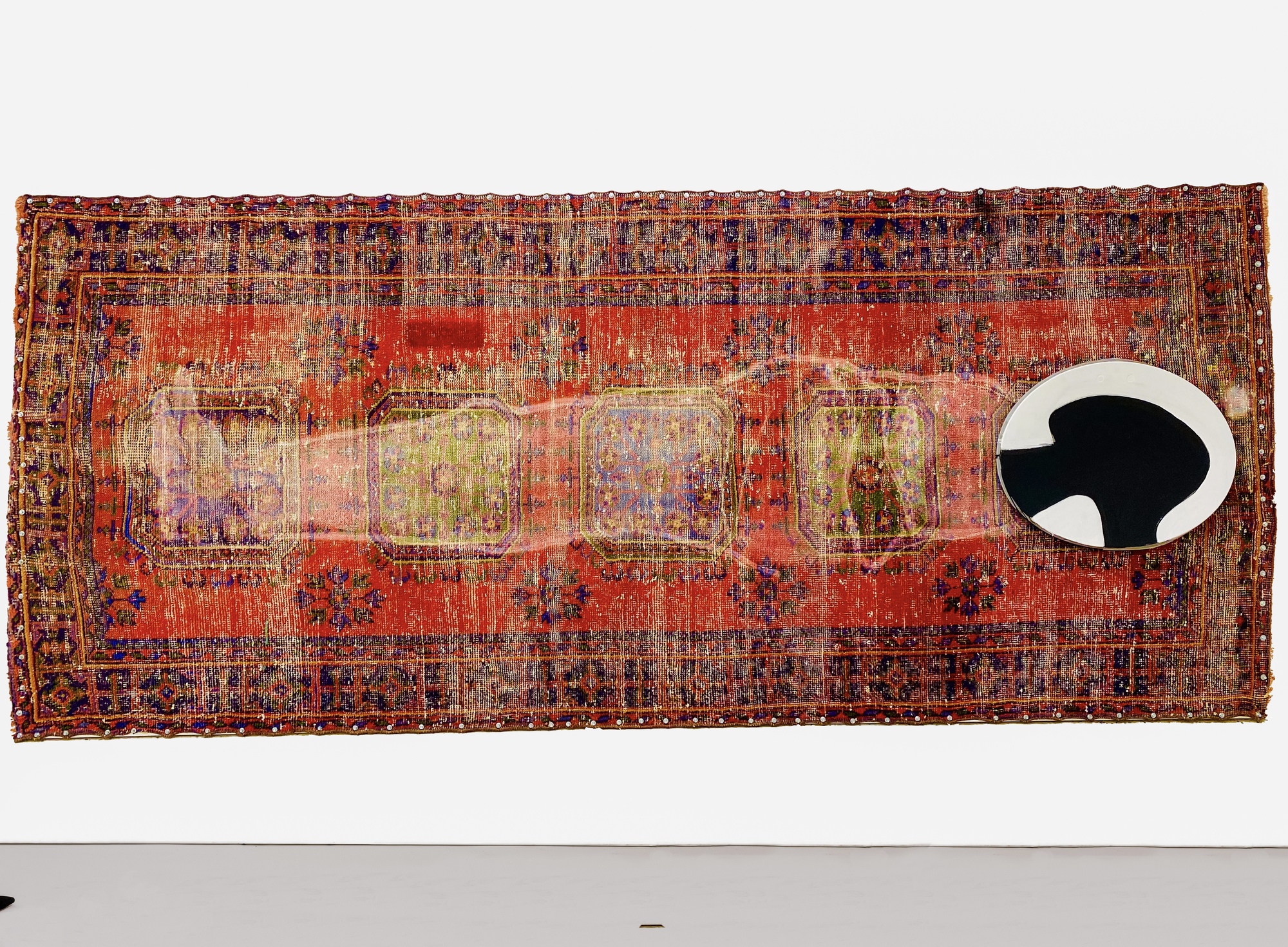 Marcus Jansen, Persian Corpses, 2024
What does painting allow you to reveal about history that traditional historical narratives often fail to capture?
The psychiatrist Frantz Fanon described his work as "combat literature." I think of mine as combat visuals. They aim to do something similar, but in my case through painting rather than writing. Painting allows all of us to reconstruct and reconfigure history so it can be experienced through a different lens. It's similar to how different filmmakers can tell completely different stories about the same historical event depending on who makes the film.
Because history is often shaped by those who write it, it's important to reconsider it from the perspective. My challenge to established artistic canons comes through deconstructing earlier styles that often prioritized beauty over critical engagement. I have little interest in making simply "pretty" paintings.
Having grown up between the Bronx and Germany, how has living between two cultures shaped your understanding of identity and influenced the visual language of your paintings?
I grew up between very different worlds, economically, culturally, and racially. Living between those paradoxes created a hybrid way of thinking to navigate both, and naturally perhaps, a hybrid way of painting.
My work is the direct result of moving between different regions of the world, absorbing different cultures, and experiencing different economic realities through the lenses of those that experience them. Those experiences have become the visual language of my practice.
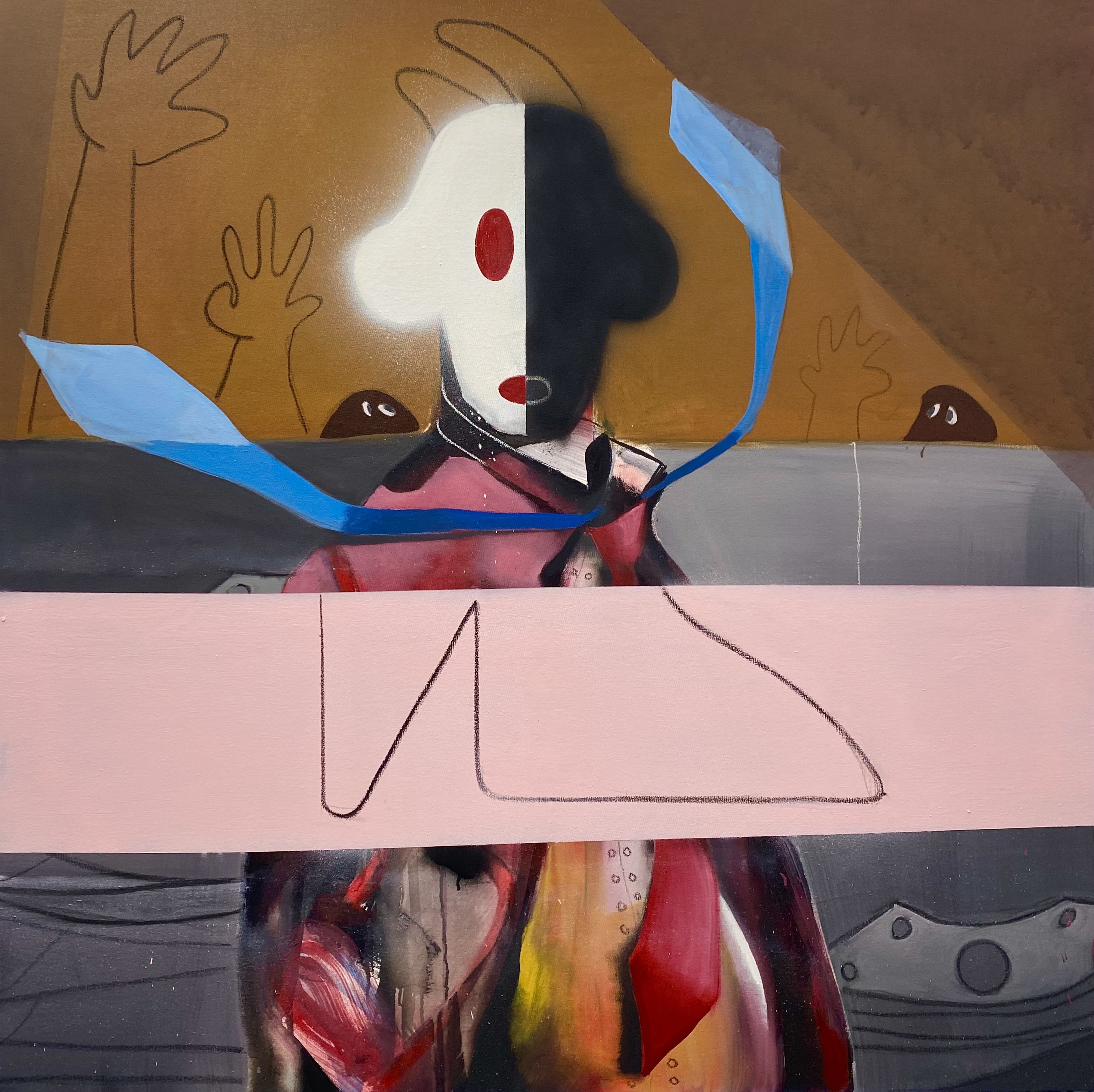 Marcus Jansen, Foothold on Colonialist, 2023
Graffiti was one of your earliest artistic influences. What aspects of graffiti culture continue to inform your practice, even as your work has entered museums around the world?
Graffiti writing taught me about the social aspects connected to its movement, that anyone can say something and have a voice, the importance of searching for knowledge of the self while remembering and uplifting culture, learning about the cultural movement, color and ,most of all, risk taking. All of these elements are essential to contemporary art you see in museums as well.
I still use spray paint in almost everything I make. It's a free and immediate medium that allows me to experiment while keeping movement and energy central to the feeling of the work.
Your paintings address themes such as colonialism, capitalism, racial injustice, and economic inequality. How do you balance political urgency with the formal and aesthetic concerns of painting?.
Anything aesthetically comfortable or too familiar, needs to be radically disjointed. That is my approach when it comes to my work. Anything pleasing is likely not what I am interested in and will be radically responded to in order to reach a new consensus of sort..

Noah Becker
Noah Becker is an artist and the publisher and founding editor of Whitehot Magazine. He shows his paintings internationally at museums and galleries. Becker also plays jazz saxophone. Becker's writing has appeared in The Guardian, VICE, Garage, Art in America, Interview Magazine, Canadian Art and the Huffington Post. He has written texts for major artist monographs published by Rizzoli and Hatje Cantz. Becker directed the New York art documentary New York is Now (2010). Becker's new album of original music "Mode For Noah" was released in 2023.
Becker's 386 page hardcover book "20 Years of Noah Becker's Whitehot Magazine of Contemporary Art" drops Aug 8, 2025 globally on Anthem Press.
Noah Becker on Instagram / Noah Becker Paintings / Noah Becker Music / Email: noah@whitehotmagazine.com
view all articles from this author