Whitehot Magazine
November 2026
"The Best Art In The World"
"The Best Art In The World"
November 2026
Ezra Chowaiki: “Dealers are Dreamers”
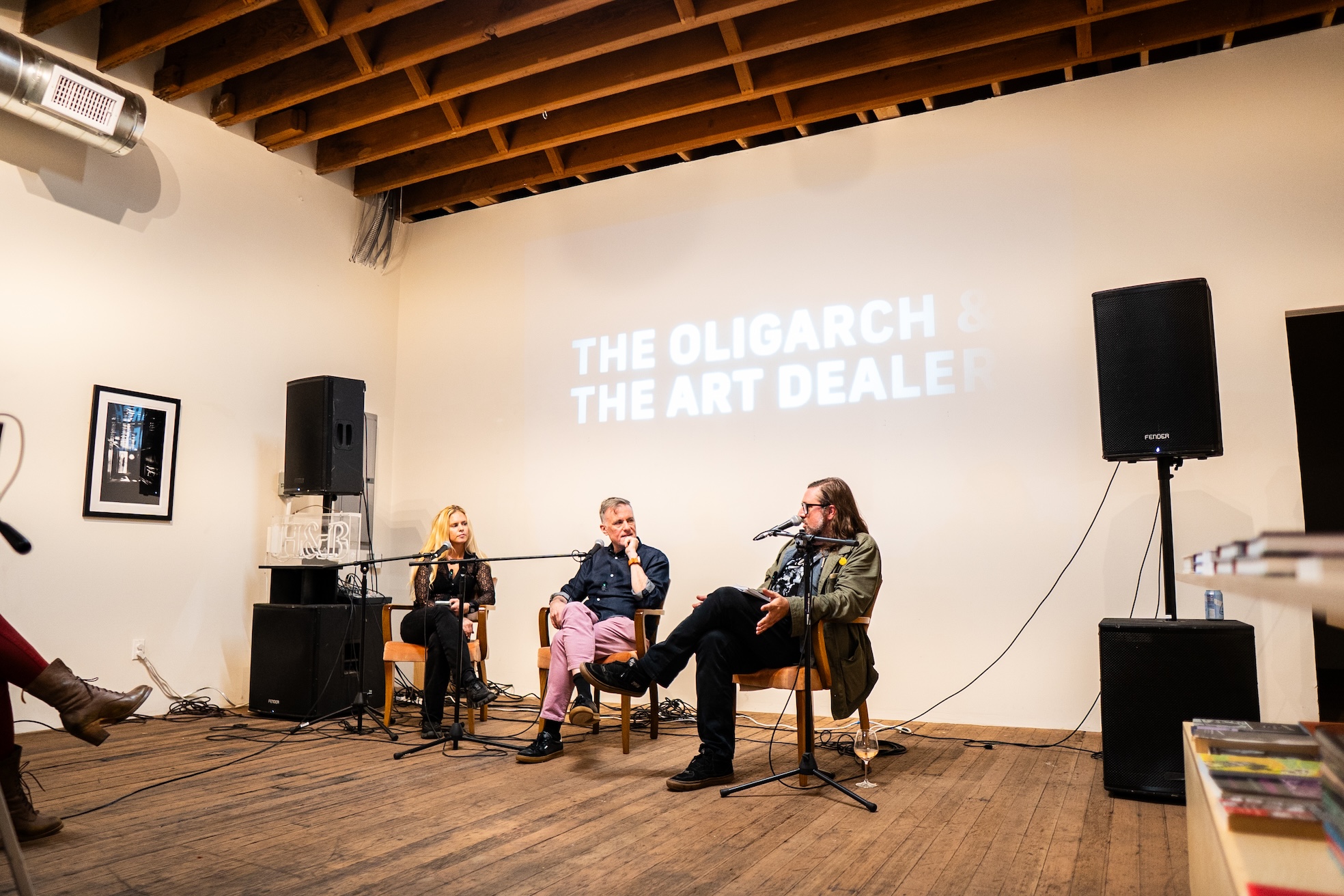
Ezra Chowaiki, The Oligarch & The Art Dealer screening
at The Loved One. Photo: James Duran.
By Carlota Gamboa, November 21, 2026
On October 30th, The Loved One in Los Angeles screened an episode of The Oligarch and the Art Dealer, a documentary series examining the decade-long dispute between Swiss art dealer Yves Bouvier and Russian billionaire Dmitry Rybolovlev. Beginning with their relationship as dealer and collector, the series traces the extraordinary legal battle that followed Rybolovlev's allegations that Bouvier had secretly inflated the prices of dozens of artworks, pocketing enormous markups in the process. Across three episodes, the documentary opens a window into the opaque international infrastructure of the high-end art market, from Geneva's freeports to offshore financial arrangements and the movement of billions of dollars in art.
Appearing throughout the docuseries as an expert is art dealer and writer Ezra Chowaiki, who gave a talk and audience Q&A following the screening. For Chowaiki, whose own career has been shaped by the same relationships between dealers, collectors, and extraordinary sums of money, the subject is hardly unfamiliar territory. His participation offers a perspective informed by years of working inside this exclusive marketplace. But his relationship with the industry has also been complicated by his own experiences. In 2018, Chowaiki was convicted of wire fraud and sentenced to federal prison, where he served thirteen and a half months. He has been open about his wrongdoing, acknowledging his actions and taking responsibility for them. Rather than presenting himself as a victim, he has become increasingly interested in examining the culture and incentives of the market he eventually returned to.
Chowaiki’s candid, blistering and humorous perspective on the events of the Bouvier-Rybolovlev affair extend to the larger systems they inhabit. As Chowaiki takes his perspective around the world with different kinds of panels and screening events, he offers something most art dealers seem to shy away from: telling it like it is.
For Chowaiki, the art world has always been something of a family affair. Born and raised in Mexico City before making his way to Southern California for film school, he grew up surrounded by classical works with an extended family whose influence in the international market was difficult to overstate. His uncles, Joe, David, and Ezra Namiad, were among the world's most prominent art dealers, building an extraordinary collection by some of the most celebrated artists of the twentieth century. Still, Chowaiki's own entry into the business was hardly predetermined.
Despite these familial connections, Chowaiki initially pursued an entirely different direction. However, Ezra’s first brush with the art market came almost accidentally. A former classmate contacted him about finding Monet paintings for a potential client. Chowaiki called his uncle David, who offered three paintings for consideration. And like that, Ezra realized that he was being presented with an opportunity to travel down an alternative path, perhaps one that offered a bit more excitement.
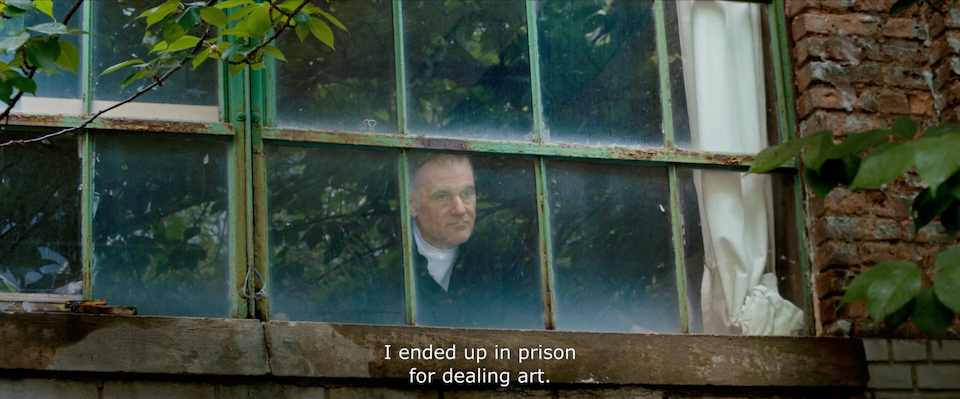 The Oligarch & The Art Dealer (still)
Ultimately, the deal fell through and the 1990 art market crash soon followed. But the experience left an impression. After graduating, Chowaiki briefly pursued filmmaking, even co-writing a screenplay that made its way to Hollywood studios, before taking a marketing position with his father-in-law's ice cream company. "For years I didn't pursue the art dealer path,” he says about the contemplation. “Even though it was always in the back of my mind, because I was like, this is so obscene to equate art with money.” It wasn’t until years later during a business trip to Paris that he reconsidered his trajectory. Whether it was the adrenaline of a sale, or the allure of exploring aesthetics and building connections, Chowaiki began his business shortly after. "I was really feeling kind of down," he remembers. "I can't just be an ice cream salesman. I think I've got to do something more interesting."
He approached his uncles about becoming an art dealer and eventually began building his own business, specializing in blue-chip works by artists including Picasso, Monet, Rothko, and Warhol. But entering the market proved considerably more difficult than he anticipated. Rather than inheriting an established clientele, Chowaiki took a decidedly old-fashioned approach: he bought a copy of Art News' annual list of the top 200 collectors and began cold calling his potential clientele. "It took me a year to sell my first painting," he says.
Over the following decades, Chowaiki established himself as a reputable dealer, navigating a market in which personal relationships and financial speculation are often inseparable. His experience would eventually inform his understanding of what makes an art dealer successful. As he explains, the profession requires two distinct forms of knowledge: an understanding of art history and an understanding of people's net worths. The two, he argues, are not necessarily related. "It's an irony that I don't want to be a sales guy, and I kind of became a sales guy," he reflects.
"If you care about art, how do you care about how rich someone is?” he asks. “It's kind of incongruous, you know, but that is what it is. You would think that having a love of art is a prerequisite to becoming an art dealer. You can say it is, but it's also a little bit of a liability."
Dealers, he explains, are dreamers. They see a painting and immediately imagine its potential buyer, its future placement, and the possibilities of a successful transaction. But an artwork's aesthetic merit and its commercial appeal are not always aligned.
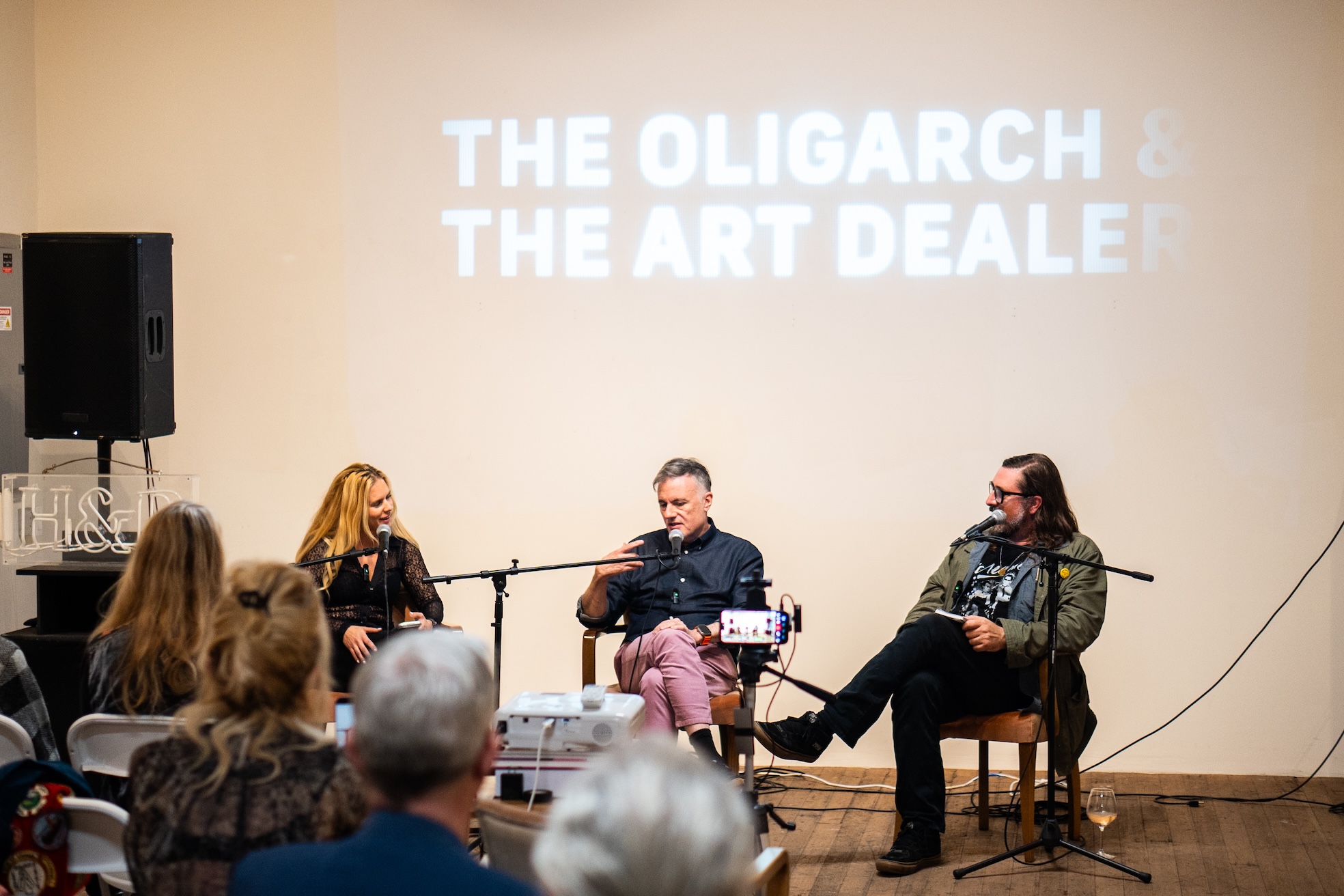 Ezra Chowaiki, The Oligarch & The Art Dealer screening at The Loved One. Photo: James Duran.
His assessment of the contemporary collecting landscape is similarly candid. As prices have climbed into the stratosphere, art has increasingly become an investment vehicle, with collectors paying close attention to resale value, auction records, and the comparative desirability of individual works. "I would argue that more than 95 percent of the collectors buy with an eye to resell in the future," he says. "And their thoughts are always like, how big is it? What year is it? How does it compare to that one that sold before?"
Today, Chowaiki has returned to buying and selling art for clients, while also exploring journalism, documentary, and books and film projects. In many ways, his return represents a continuation of the career he spent decades building, albeit with a more complex relationship to the industry and his place within it. Asked about the unusual trajectory that brought him from aspiring filmmaker to blue-chip art dealer, convicted felon, and documentary participant, Chowaiki describes it as perhaps the most circuitous route imaginable into the film industry.
Still, his return to the art world seems to have brought a different kind of clarity. He understands its contradictions, recognizes its commercial incentives, and is no longer particularly interested in maintaining the illusion that art and money exist in separate spheres. "I was OK being in prison," he has said before. "What I wasn't OK with was that I was the only art dealer in prison."
It's a provocative observation, and one that captures the larger question at the center of his story: not simply what happens when an art dealer breaks the rules, but what the industry itself reveals about the people, relationships, and enormous sums of money that sustain it. He is particularly candid about the contradictions of returning to a profession that requires him to think commercially, even when his personal sensibilities might lead him elsewhere.
To learn more about Ezra Chowaiki, please visit his website and follow on Instagram @ezra.chowaiki

Carlota Gamboa
Carlota Gamboa is an art writer and poet from Los Angeles. You can find some of her writing in Art & Object, Clot Magazine, Salt Hill Journal, Bodega Magazine, Oversound and Overstandard.
view all articles from this author