Whitehot Magazine
September 2026
"The Best Art In The World"
"The Best Art In The World"
September 2026
Review: Izzy Barber at Charles Moffett Gallery, New York
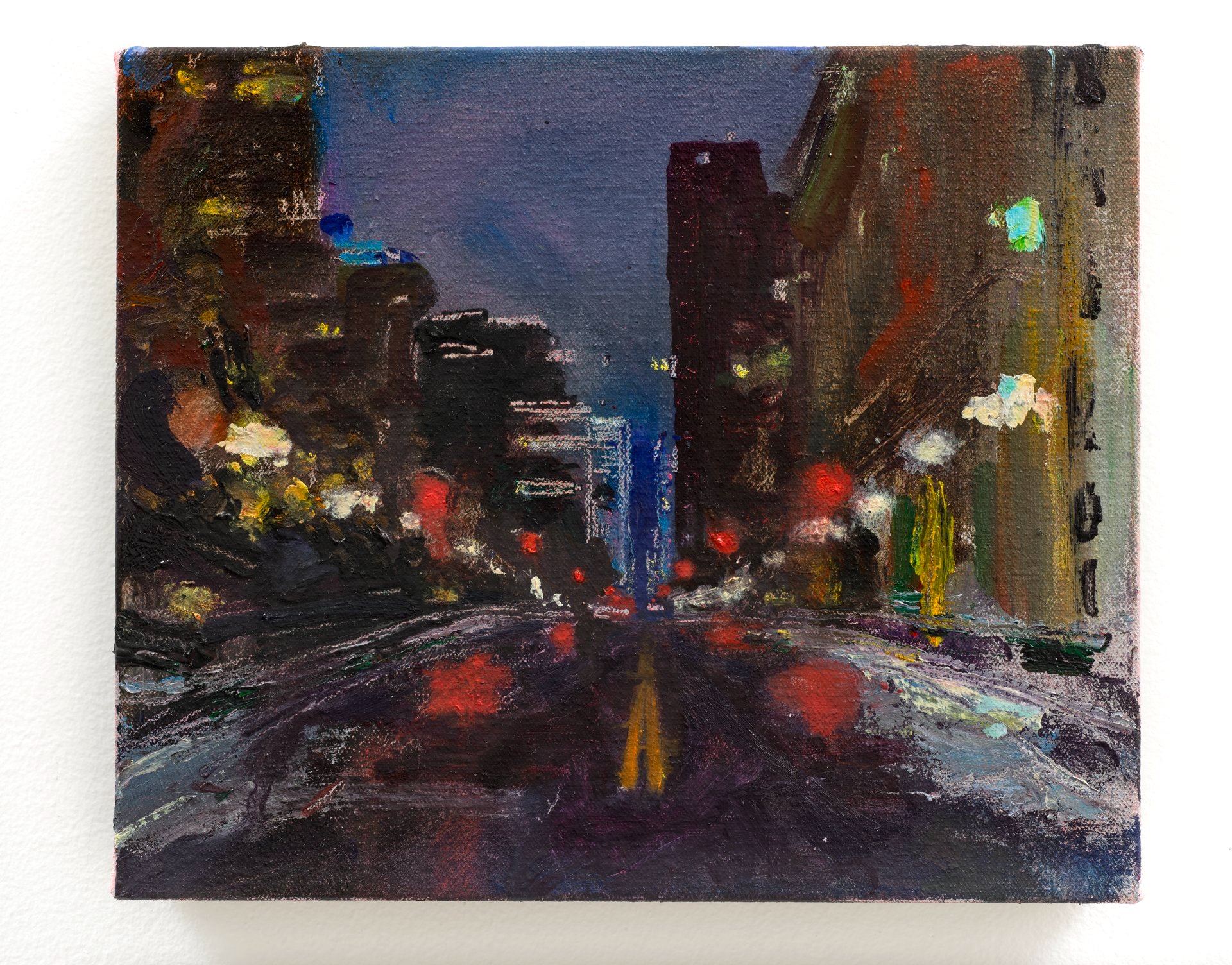 Izzy Barber, “Central Park West,” 2025, oil/canvas, 10x12 inches.
By MITCHELL JOHNSON July 20th, 2026
Izzy Barber (b. 1990) is a Brooklyn-based painter currently showing at Charles Moffett Gallery in lower Manhattan. Her color-charged exhibition, Clay Pigeons, is installed in a pristine white space just a brief walk from the former site of Pearl Paint, the beloved artists' supply store that served generations of New York painters before closing in 2014.
If anyone is concerned that painting died with Pearl Paint, Izzy Barber will convince them otherwise.
Barber received a degree in Studio Art and Human Rights from Bard College in 2011. She spent twelve years working as a studio assistant to Francesco Clemente while simultaneously pursuing her own development as a painter, eventually earning an MFA from the New York Studio School in 2017. The combination of those experiences—one rooted in the realities of contemporary studio practice, the other in sustained observation, art history and rigorous looking—may help explain the unusual maturity of the work on view.
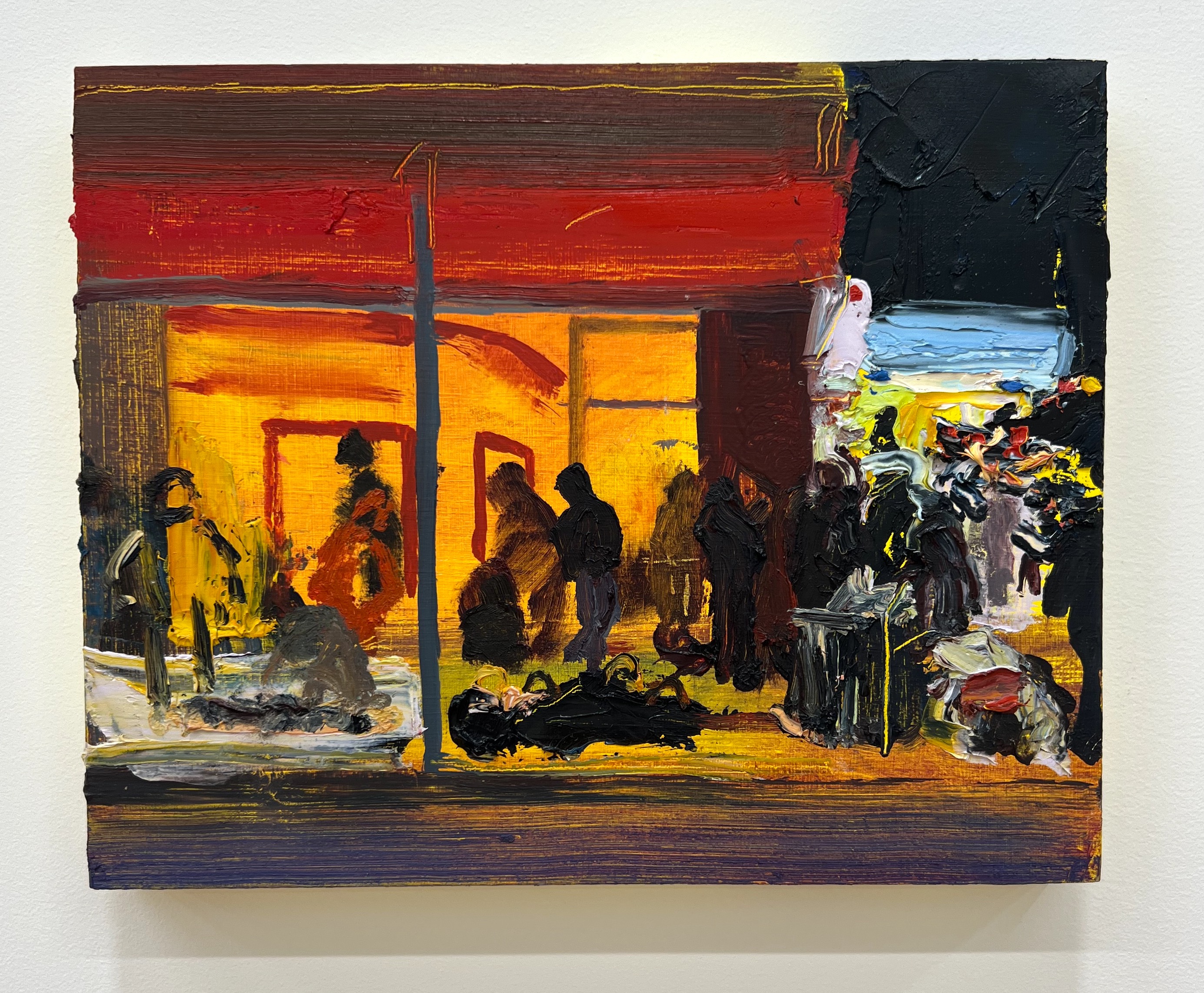 Izzy Barber, “Canal Street Bag Sellers,” 2025, oil/panel, 8x10 inches.
Clay Pigeons contains significant social commentary and art historical awareness, but these concerns never arrive as illustration or thesis. They are woven into a personal and dazzling display of color, composition, and paint handling. There is no sense of stylistic searching here, no theatrical display of artistic identity, no anxiety about finding a voice. Instead, Barber presents herself as a self-assured painter offering a grounded and deeply felt response to her surroundings.
The exhibition arrives at an interesting moment. Simultaneously on view in New York at the Art Students League is a significant exhibition of Fairfield Porter. Porter remains one of the great enigmas of postwar American painting: a household name among painters and a largely unknown figure outside the art world. His commitment to specificity and realism had less to do with description than with attention. In this regard, his concerns often paralleled those of poets such as James Schuyler and Frank O'Hara, whose work transformed ordinary experience through the practice of observation.
Barber's paintings share something of that sensibility. Her realism is not an exercise in rendering or demonstration. The paintings are not studies in realism as craft, illusion, or technical display. Rather, they function as analogies of lived experience. Like a Schuyler poem or a Porter painting, they begin with the particulars of the world and gradually reveal larger emotional and pictorial dimensions.
“National Guard” is a tiny but powerful canvas where a bluish ice-cream like wave of paint hovers over a group of figures. Barber covered the figure of a protestor on the right of the canvas with the chartreuse square. She is riffing off of her surroundings, conversing simultaneously with
the place, color and light, and the voice of the painting itself.
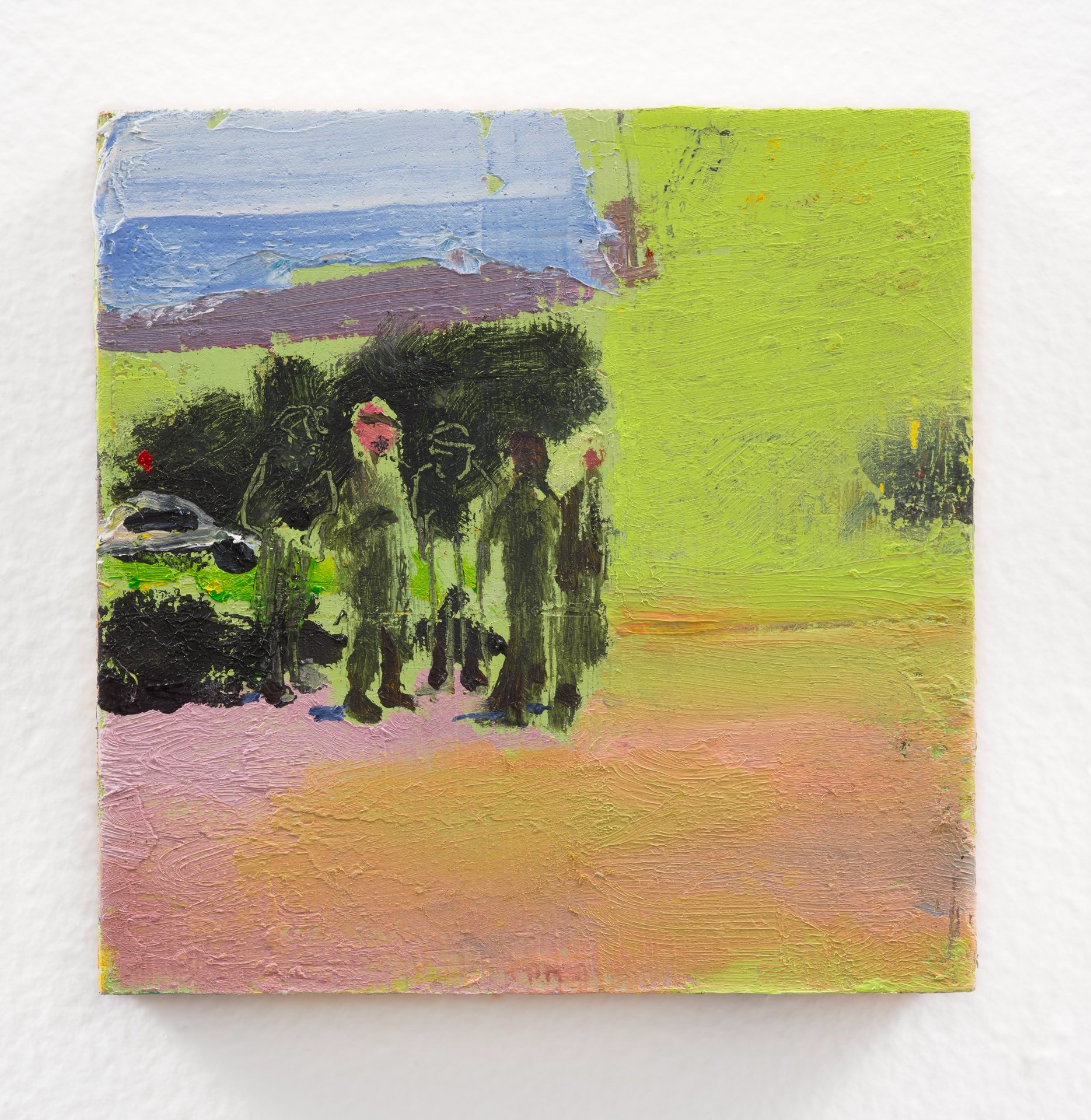 Izzy Barber, “National Guard,” 2025, oil/panel, 4x4 inches.
What distinguishes Barber's work is the way these dimensions coexist without hierarchy. Clay Pigeons allows multiple points of entry, almost like the buttons in an elevator. Choose your floor of engagement and Barber will deliver. The buttons might read: color, social awareness, composition, art history, paint handling. Some viewers will be drawn first to the chromatic intensity of the paintings. Others will linger over their social content or their engagement with the history of representation. Still others will focus on the assured structure of the compositions, the vitality of the brushwork.
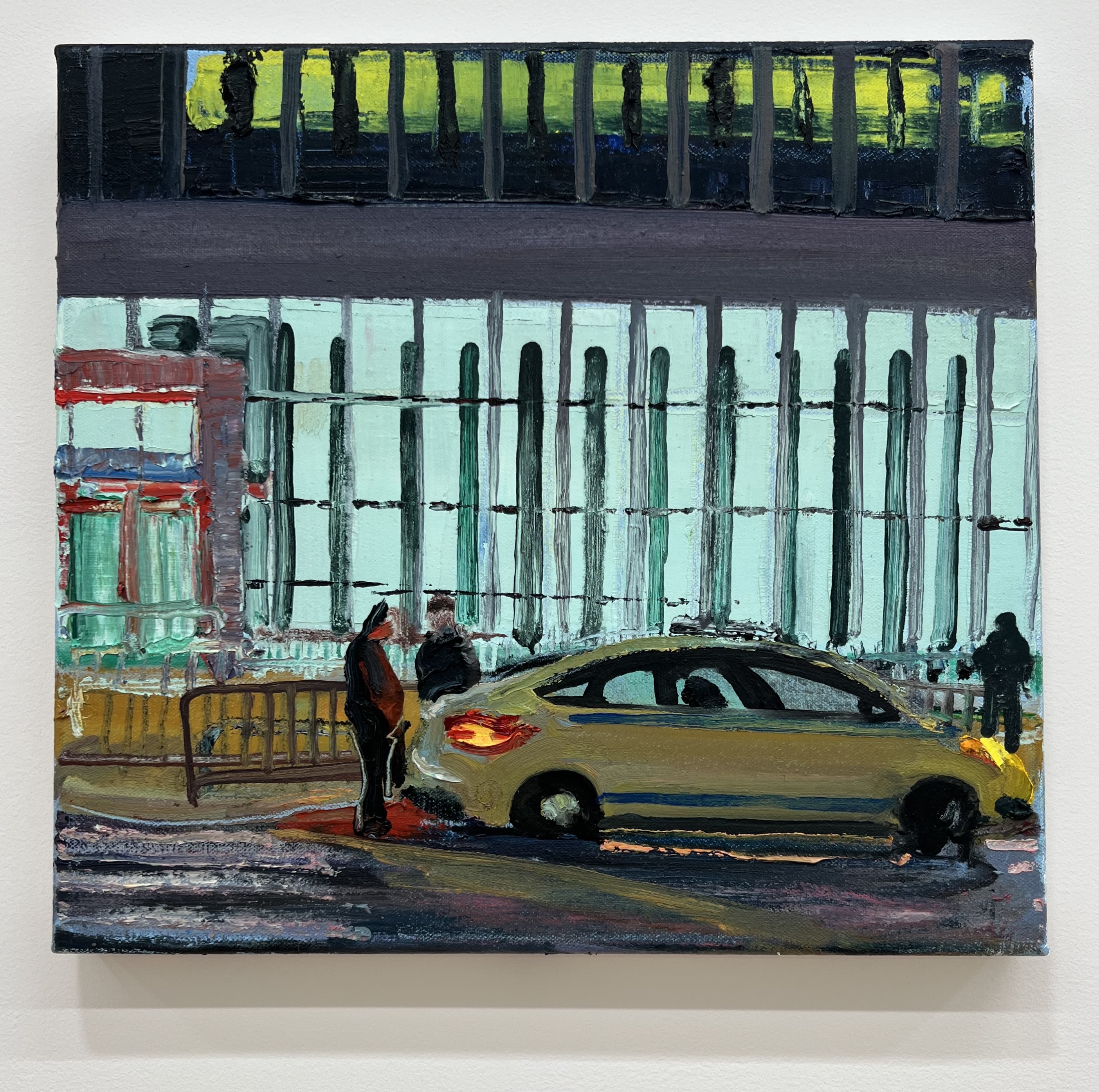 Izzy Barber, “26 Federal Plaza NYPD,” 2025, oil/canvas, 12x13 inches.
The achievement of the exhibition is that none of these levels feels separate from the others. Color carries meaning. Narrative shapes composition. Paint handling becomes a form of thought. The pictures reward sustained looking because they are built from the conviction that visual experience matters and is never only visual.
At a moment when so much contemporary painting seems eager either to announce its ideas or advertise its style, Barber does something more difficult. She trusts painting itself. The result is an exhibition that feels contemporary without being fashionable, intelligent without being didactic, and personal without becoming self-regarding. Barber doesn’t mimic Porter stylistically, but she shares Porter and Schuyler’s belief that the specific can carry the universal. Clay Pigeons confirms that painting remains a remarkably flexible language for describing the complexities of both our surroundings and contemporary life.
Izzy Barber at Charles Moffett Gallery, New York June 29-July 31, 2026
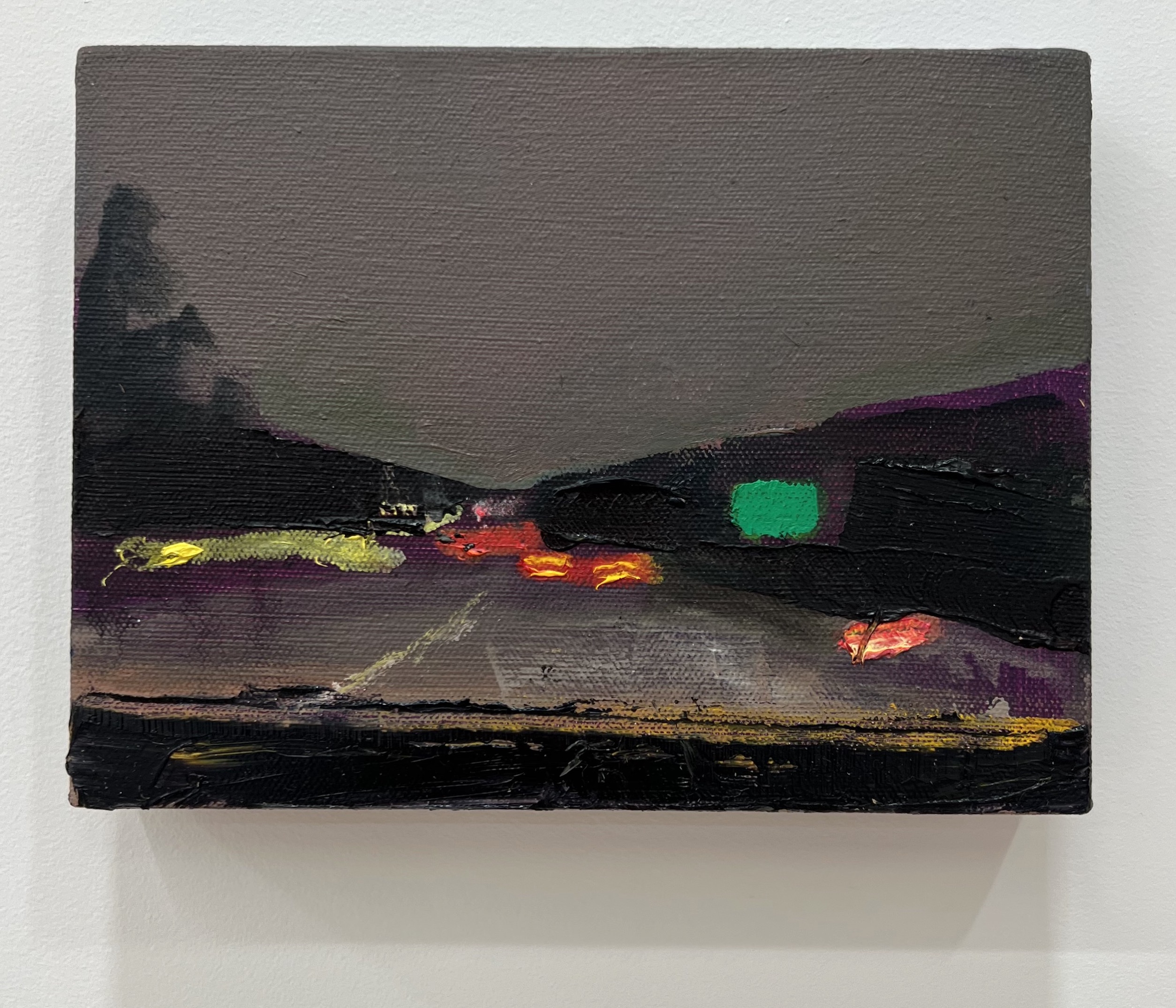 Izzy Barber, “Interstate,” 2026, 6x8 inches, oil on canvas.
Mitchell Johnson
Mitchell Johnson is a San Francisco Bay Area artist who studied at Parsons School of Design in NYC (1988-1990) with many former students of Hans Hofmann. His paintings are in the permanent collections of 40 museums. He writes about color and the art world on Substack: Mitchell Johnson On Color.
view all articles from this author