Whitehot Magazine
November 2026
"The Best Art In The World"
"The Best Art In The World"
November 2026
The Conundrum of Capital for Creatives: How One Art Space Moved Closer to the Center to Serve Those Outside
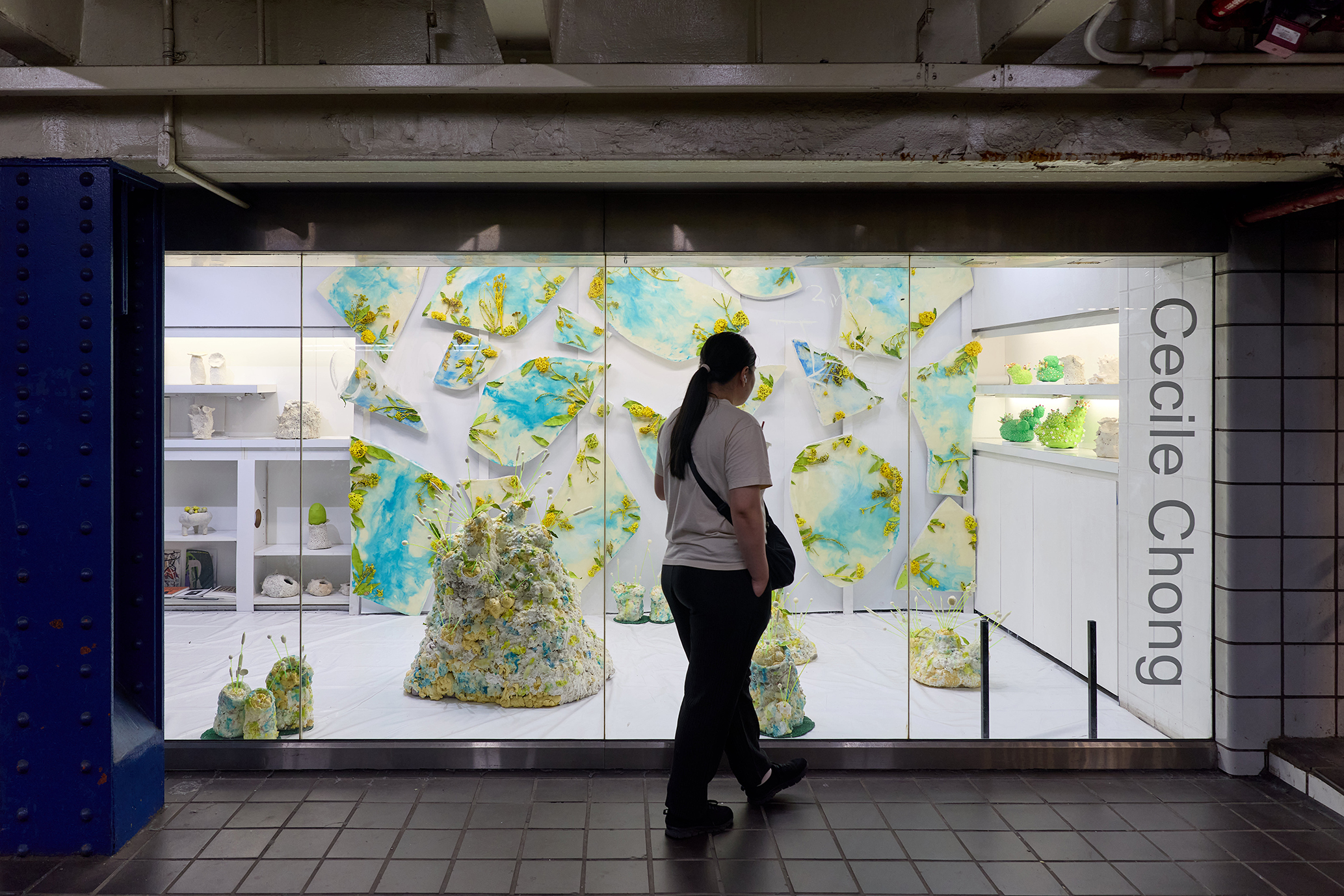 Exterior view of WhiteBox Portable @ MTA, New York, 2026. Cecile Chong, CHICKEN LITTLE – LÍNEAS DE FALLA / FAULT LINES, 2026. Curated by Yohanna M Roa. Photo by Argenis Apolinaro.
By ISAAC ADEN, November 3rd, 2026
Artists and those who make up the vast majority of the art world didn’t come for the lavish lifestyles. They were driven by an unyielding passion to paint or produce practices which are informed by, and shape our very culture. However, we too often see (especially when times are lean) the disproportionate influence of capital on the lives of practitioners. While introverts are generally suited to being artists, as the nature of producing artwork is generally a solitary one, they all seem to yearn for the capacity to share the results of those long isolated evenings. Inevitably they look to art spaces, whether they be galleries, museums, or nonprofits, and this is where the conundrum of capital corners creators.
How and where do they engage with the public? While metaphysically the work of art remains the same whether it is on a street corner, abandoned in a crypt, or presented on a pristine pedestal, it is merely the context surrounding the work of art which has changed. While there are certainly arguments which can be made for and against the current contemporary architectural language surrounding art presentation, I would assert there are certainly advantages lent by the modernist approach to isolating art. However, there have been radical shifts away from experiencing art in person and in the dissemination of art since the widespread adoption of social media. Yet, I would wager most would want the works experienced in person, otherwise why make an actual object in the first place. Therein lies the conundrum of capital for creatives; physical space is rarely unbridled from its capital calculation. Aside from the dilettantes, the closer you are to the perceived center, the greater risk you assume or the more often you become embedded in elitist exchanges. You can move farther from the center but risk running too rural. So how can an art space which does pander to capital move closer to the center and yet serve its constituents who are on the outside?
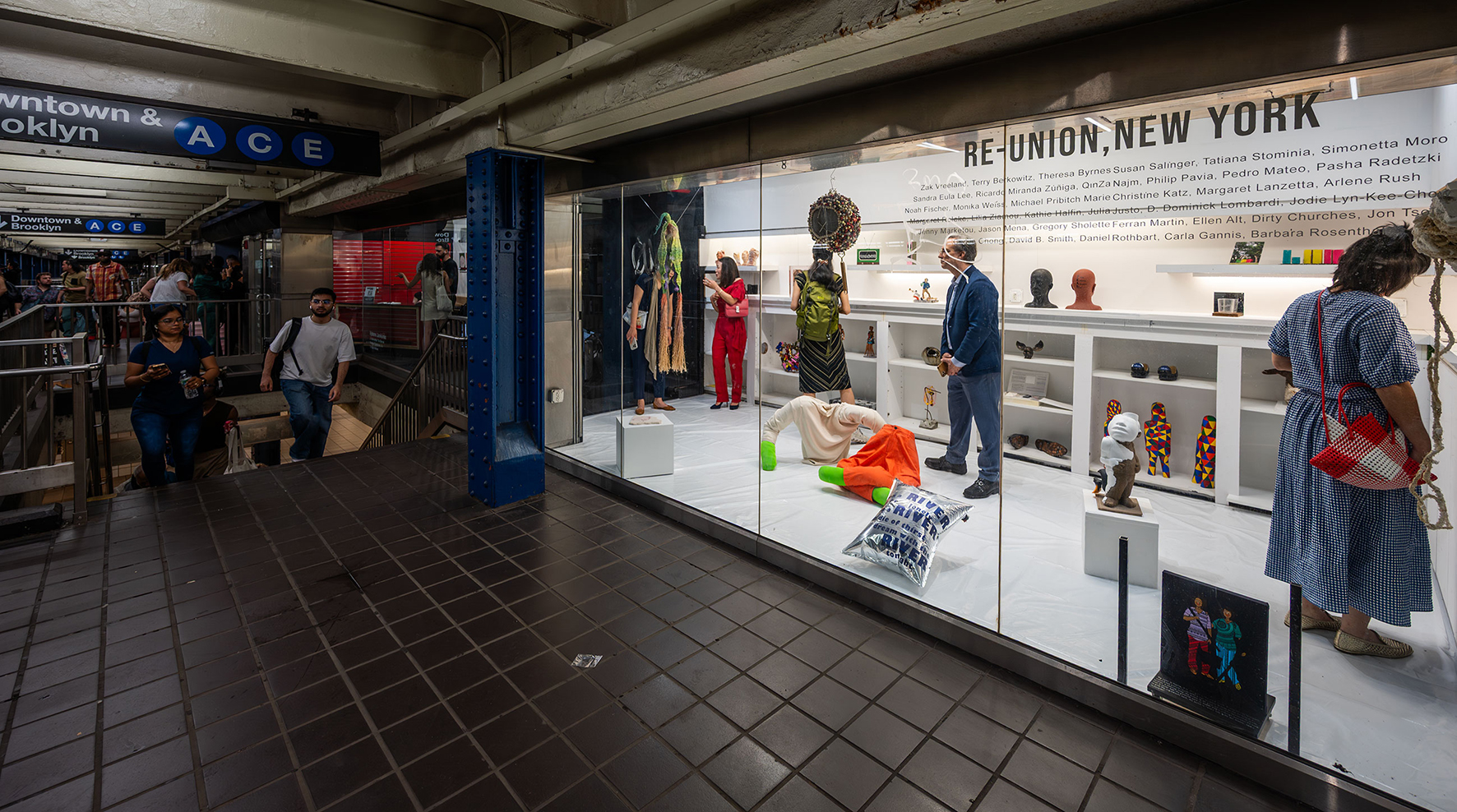 Exterior view of Re-Union, New York, WhiteBox Portable @ MTA, New York, May 9–June 13, 2026. Curated by Juan Puntes and Yohanna M. Roa. Photo: WhiteBox Archive.
Outside of my window a warm summer night's drive beckons but in the art world there brews a chill revealing a season with meagre morsels. The art world is weathering wintry withdrawal, as the creative commerce contracts into complete stagnation. An anonymous authority divulged the true temperature: a barren business backdrop where even simple solicitations for prices have perished. Private purchases have plummeted into a profound pause, producing a pittance of profits. Most critically, the 40–60 thousand-dollar sector, once the robust and reliable meat of the market, has met a sudden, silent slump, leaving this traditionally thriving tier totally listless.
The pinnacle of the secondary sector operates merely as a playground for passing existing wealth, a sterile cycle where capital shifts between affluent individuals without sparking serious upward ascension or genuine growth. Within this stagnant structure, mid-sized galleries face a suffocating squeeze, finding no space to breathe, build, or belong. This commercial crunch inflicts an immense, agonizing strain on the creative population, pushing art practitioners and painters beyond the brink of perseverance.
Beneath the commercial surface, patron-driven nonprofits offer little refuge, most frequently relying on boards of directors that serve as a direct extension of the same elite gatekeepers governing the commercial and museum systems. When macro economies stumble and art markets suffer, the private wealth that buoys and bolsters these institutions is inevitably constrained and constricted. This funding freeze creates a devastating domino effect, crippling creative centers and cutting off the vital cash flows that community spaces count on for survival. In this period of economic erosion, lessons can be learned from those who have weathered lean harvests and managed not only to maintain but to thrive throughout.
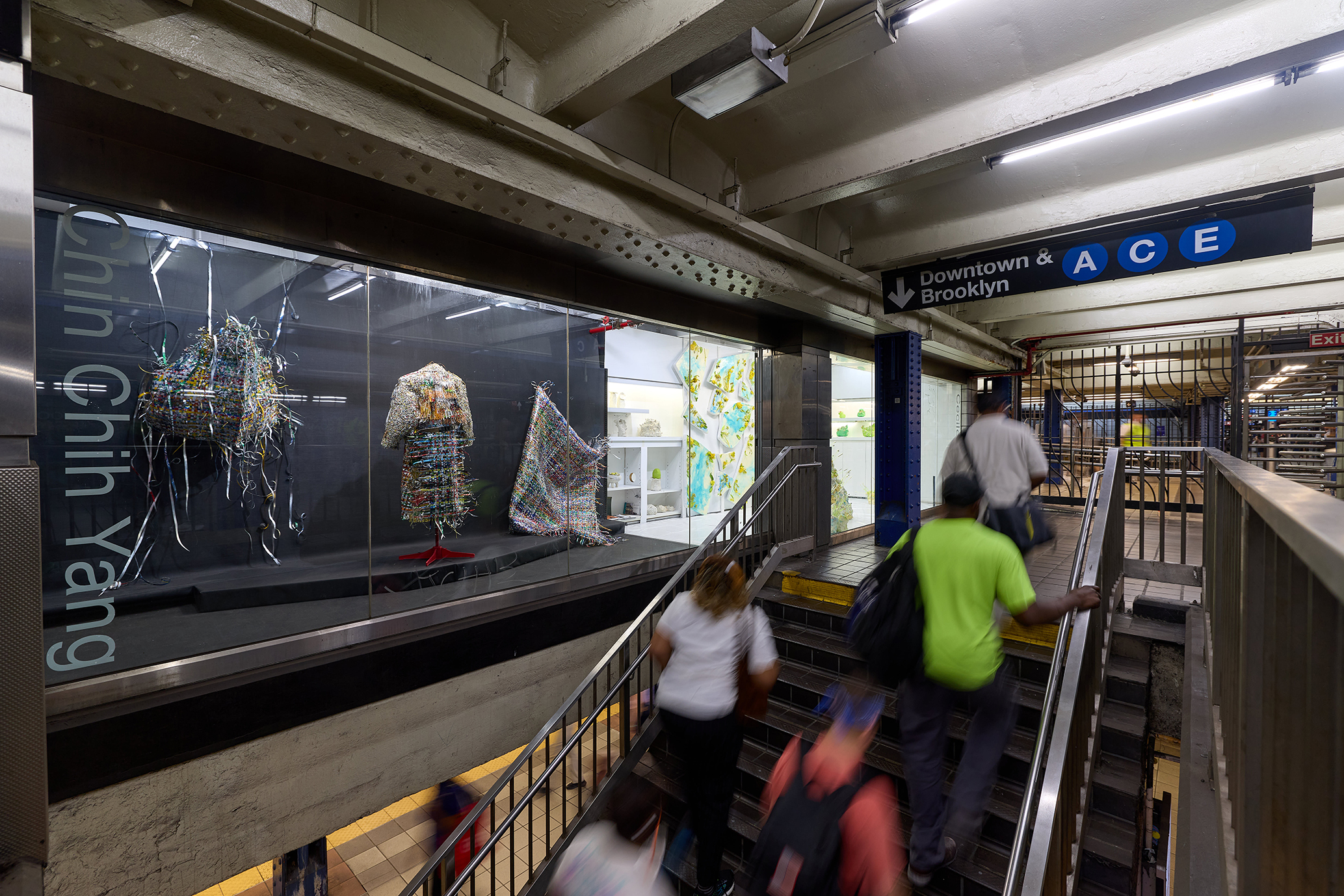 Exterior view of WhiteBox Portable @ MTA, New York, 2026. Chin-Chih Yang, 123 POLLUTION SOLUTION, 2026. Curated by Yohanna M. Roa. Photo by Argenis Apolinaro.
WhiteBox is a New York City-based nonprofit Art Space which has for almost thirty years served as an epicenter for post-market practices. The success of WhiteBox is in part because they have boldly anticipated the fluctuating flows of the New York property market, proving to be an early pioneer in Chelsea and the Lower East Side. This avant-garde vision frequently put them ahead of the cresting tide of commercial development.
However, escalating expenses (namely skyrocketing rents) predictably pushed them out as premium pricing peaked. Seeking sanctuary from surging costs, WhiteBox headed to Harlem just before the pandemic, but the post-COVID period brought a painful lack of pedestrian foot traffic, culminating in the loss of their lease to a mainstream media company.
Looking to reinvent itself, WhiteBox ventured to the East Village to reconnect with the roots of its core constituency. However, the move reset its rent to market rates just as the arts sector entered a markedly more constrained period between 2023 and 2025. Confronted with a frozen funding landscape and diminishing financial support, the organization faced a critical financial challenge.
Rather than closing, the founders relocated WhiteBox's headquarters and pilot exhibition space to the Pavia–Edgar Trust at 810 Broadway. A longtime supporter of WhiteBox's mission, the Trust provided a stable home and enabled the launch of WhiteBox Portable @ MTA through a partnership with Chashama, expanding the organization's public reach. Chashama is a nonprofit which partners with property owners to transform vacant unused real estate into affordable spaces for the artists and small businesses.
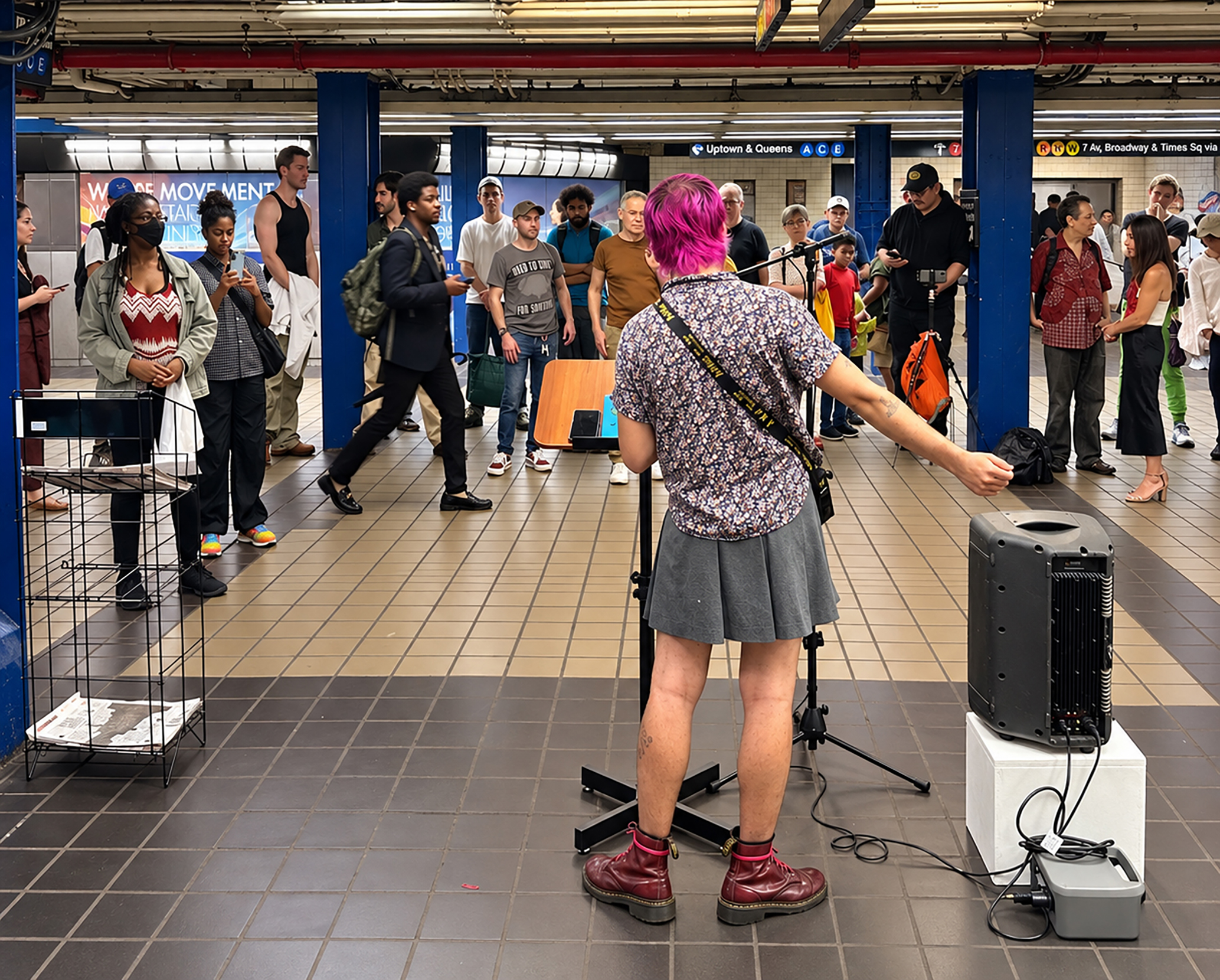 Underground Poetry for Unsettled Times, WhiteBox Portable, 2026. Curated by Bruce Andrews and Paolo Javier. Photo: WhiteBox Archive.
While many galleries have reduced costs by closing their public spaces and operating privately, WhiteBox has taken the opposite path, securing a brick-and-mortar base that redefines the contemporary art space. Through Chashama's partnership with the MTA, WhiteBox established WhiteBox Portable inside the Port Authority–Times Square–42nd Street subway station, where between 200,000 and 250,000 commuters pass daily, with peak-hour foot traffic reaching 65,000–78,000 people per hour.
Rather than replicating the conventional, cloistered white cube, this repurposed retail space presents a striking storefront gallery. Two illuminated 7 × 15-foot display windows, lit day and night, are separated from the constant flow of commuters by nothing more than sheets of glass. This transparent threshold invites hundreds of thousands of passersby into an unplanned encounter with contemporary art, collapsing the distance between the street and the gallery. More often than not, commuters continue on their way—but every day, countless others pause, look, and discover that on an ordinary commute they can unexpectedly become engaged with art.
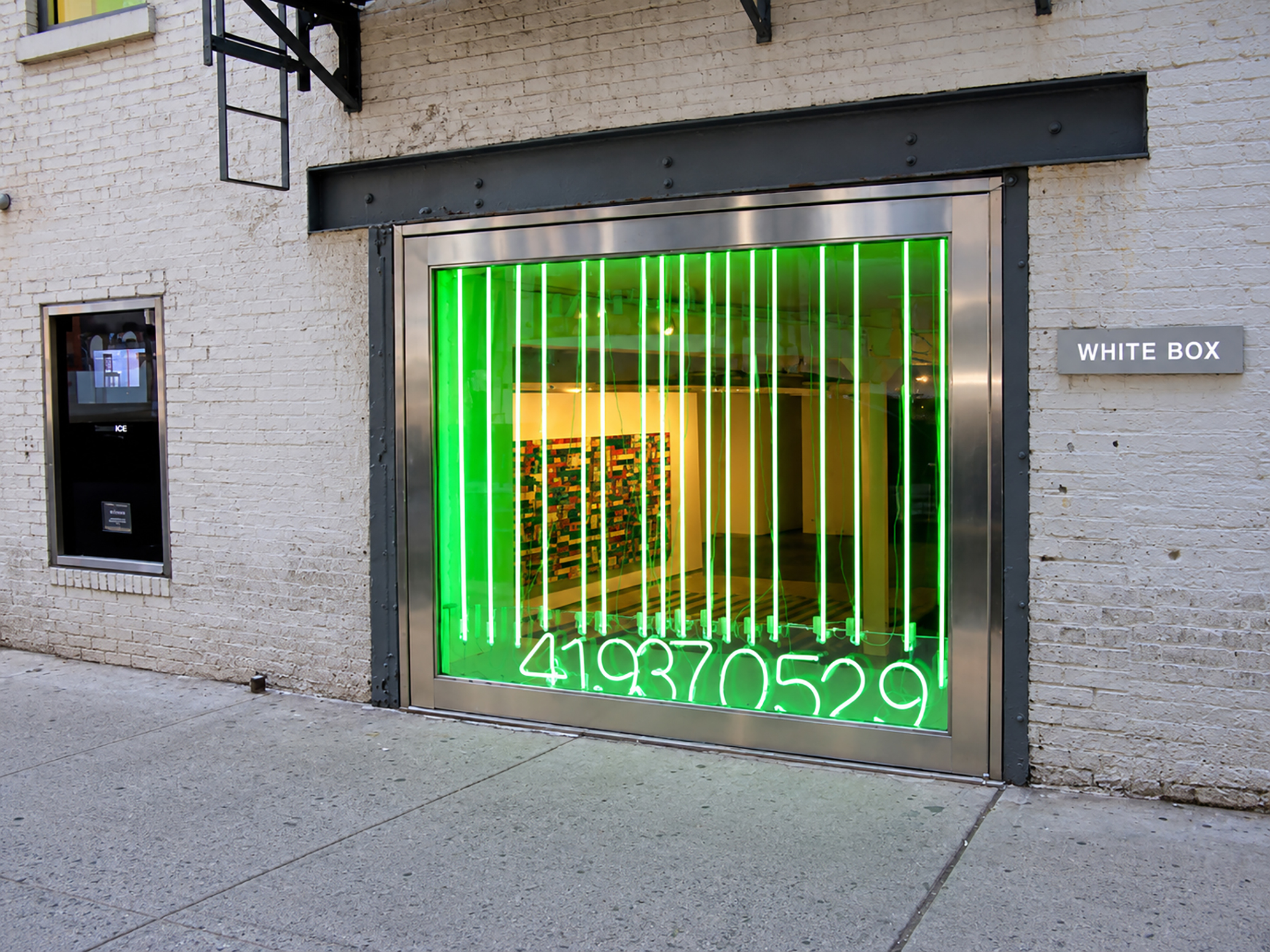 Entrance to WhiteBox, Chelsea, New York, 2008. Exhibition: Jheon Soocheon, Beyond Bar Codes: A Site for Meditation, installation view. Curated by Juan Puntes. Photo WhiteBox Archive
Contrasting sharply with WhiteBox's current clarity, recent architectural trends in high-end art spaces heavily favor strict exclusivity. Generally speaking, commercial galleries construct windowless walls that purposefully block external vision, partly to maximize valuable hanging areas but primarily to create secluded, contemplative sanctuaries. These elite exhibition environments purposefully prioritize a pristine, hushed atmosphere over public participation. By isolating individuals and items within vast, barren galleries, the architecture acts as an accomplice for a consensual capitalist con.
The Megas masterfully manipulate the cadence of negative space, elevating the solitary object within minimalist surroundings. Devoting massive volumes of incredibly expensive real estate to a single piece, strategically spiking its perceived value, feeding a continuous cycle of commodification and capital exchange. Through this clever choreography of emptiness, these wealth warehouses transform intimate instances of contemplation into an emetic elitist economy engine.
WhiteBox breaks boldly from these exclusionary environments, operating in a space of literal transparency completely devoid of commercial capitalism’s consumerist ends, ironically by re-appropriating a previous site of consumerist exchange. By purposefully placing art behind vast panes of public glass, they foster a profound democracy of the viewer, welcoming those who are not necessarily searching for art, but are suddenly sparked by its presence. Rather than playing the real estate game of artificial scarcity and commodification, WhiteBox aggressively expands public access, delivering creative concepts directly to diverse demographics.
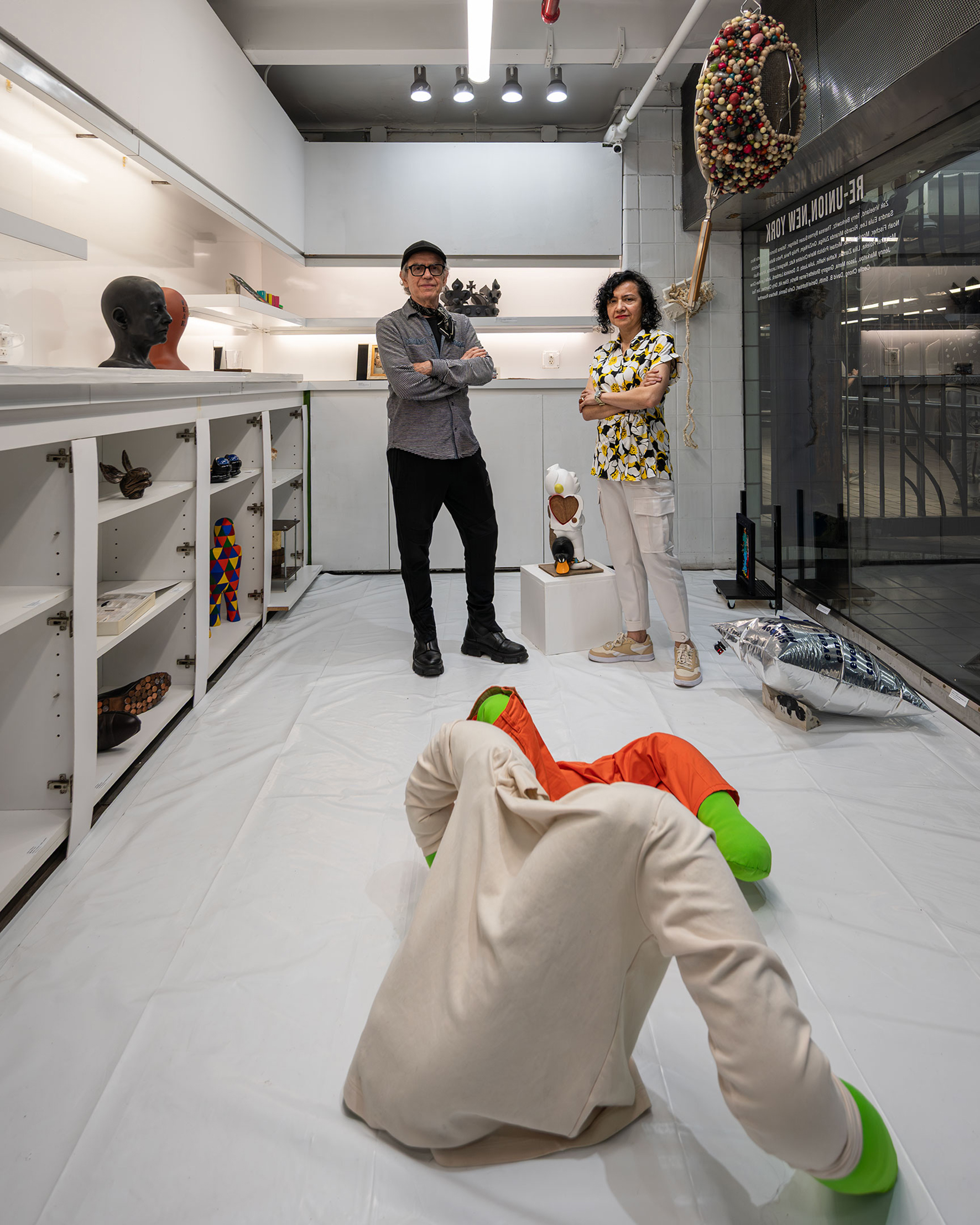 Juan Puntes, Founder and Executive–Artistic Director of WhiteBox, and Yohanna M. Roa, artist and curator of WhiteBox Portable. During Re-Union. Photo: Vytenis Jankūnas.
This radically accessible stance aligns directly with the long legacy of the post-market pioneers who permanently pushed past the boundaries of the traditional art market. WhiteBox’s transparent philosophy channels the spirit of Joseph Beuys, who famously championed "social sculpture" and radical direct democracy to ensure affordable art belonged to the masses rather than a wealthy elite. Similarly, this public positioning reflects the contemporary critique of Hito Steyerl, who continually exposes how the modern art market operates in conjunction with real estate speculation and corporate data extraction. By bringing actual people into immediate contact with creative work, WhiteBox sidesteps capitalistic constraints, trading elitist architecture for authentic urban engagement.
These progressive public partnerships perfectly embody democratic socialist values, transforming sterile storefronts into shared socialist sanctuaries while simultaneously stimulating economic returns. Ironically, cultivating a vibrant, creative culture ultimately boosts the city's tax coffers, as these dynamic arts initiatives inevitably elevate neighborhood appeal and push up surrounding private property values. To sustain these liberating civic strategies, a loud and clear call to action confronts New York’s democratic socialist administration to acknowledge underlying issues. By deliberately donating or deeply discounting city-held spaces, the municipal managers can protect nonprofit art programs from the pulverizing prices, turning commercial real estate gains back into a public benefit.
Mobilizing city-owned assets for aesthetic advancement allows civic leaders to cultivate a creative landscape that serves the people. Providing dependable, non-market domains directly defeats the destabilizing trends of displacement and corporate commodification. This proactive political support secures a steady sanctuary where experimental art can thrive, permanently pairing public properties with progressive artistic practices. By sponsoring these radical infrastructure strategies, the city administration can actively anchor a true cultural democracy for all New Yorkers.

Isaac Aden
Isaac Aden is an artist and curator based in New York.
view all articles from this author