Whitehot Magazine
October 2026
"The Best Art In The World"
"The Best Art In The World"
October 2026
Engineering the Encounter: An Interview with Holly Hendry by Phillip Edward Spradley - Tokyo
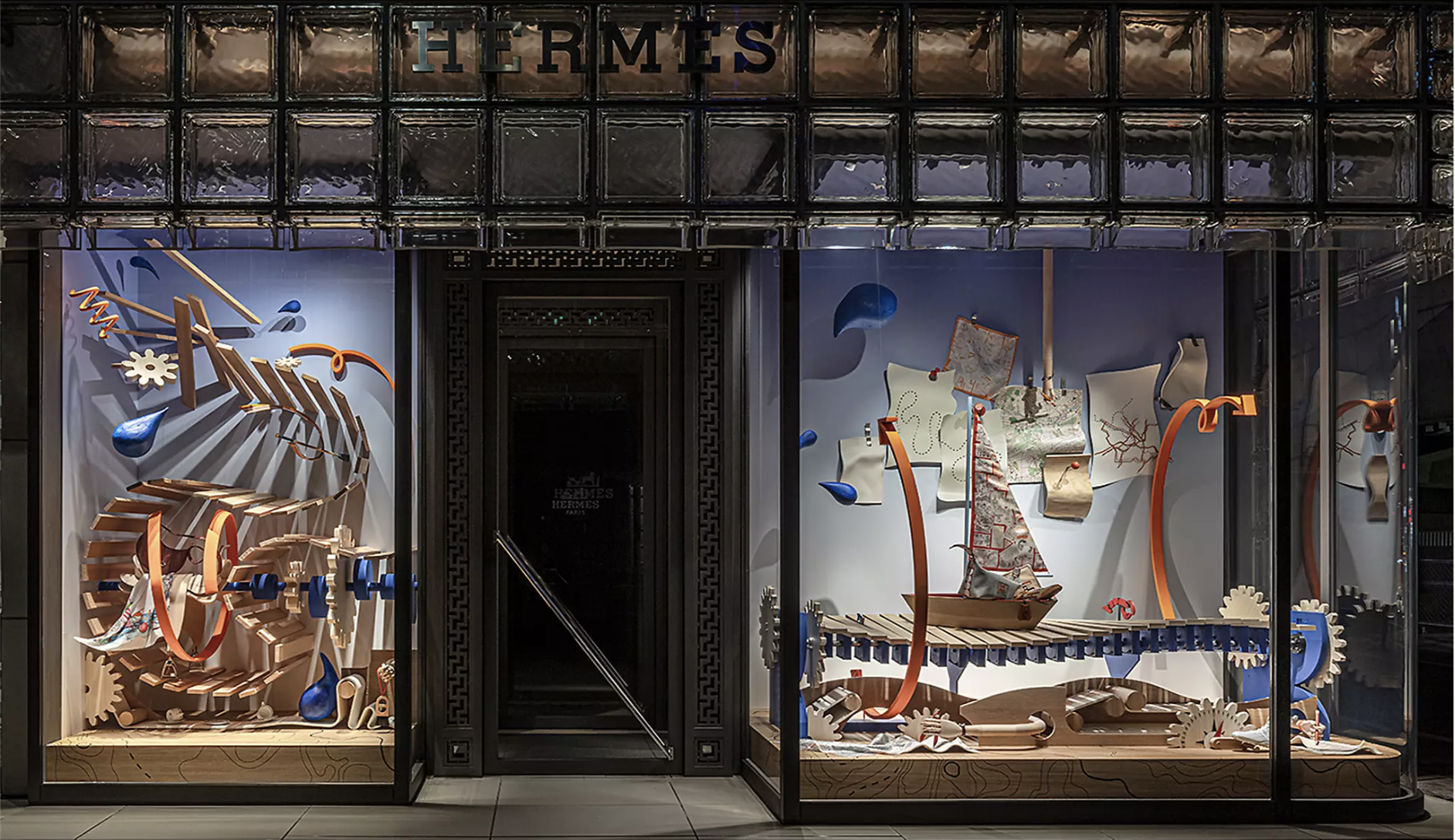 Holly Hendry, Wave Machine, Febraury 26-June 2, 2026. Photo: Satoshi Asakawa, Courtesy of Hermès Japon
BY PHILLIP EDWARD SPRADLEY April 23, 2026
Behind the glowing glass blocks of Ginza Maison Hermès, Holly Hendry transforms the storefront into something far stranger than a display. It becomes part laboratory, part stage, part impossible machine. Framed by Renzo Piano’s quietly luminous architecture, the installation draws passersby into a world where motion is implied, systems seem to hum without moving, and objects appear to think.
At first glance, the windows present a playful choreography of wooden mechanisms, looping forms, and suspended fragments. As passersby slow and look closer, these forms begin to unravel. Gears suggest function, but refuse to engage, while other elements oscillate with intention. Diagrams hint at knowledge while withholding explanation. Hendry draws on 18th-century wave apparatuses, devices once designed to model the unseen forces of light and vibration. Rather than clarify these phenomena, her work dwells on their limits. What emerges is a deeper fascination with the human impulse to build understanding through objects, even when the forces they describe remain out of reach.
The movement and repetition evoke voyages beyond the known, recalling the age of sea travel and the mechanisms that enabled such journeys. The installation is both playful and analytical, these gestures intertwine scientific inquiry with imaginative exploration, suggesting both the ambition and the fragility of human attempts to map the unknown.
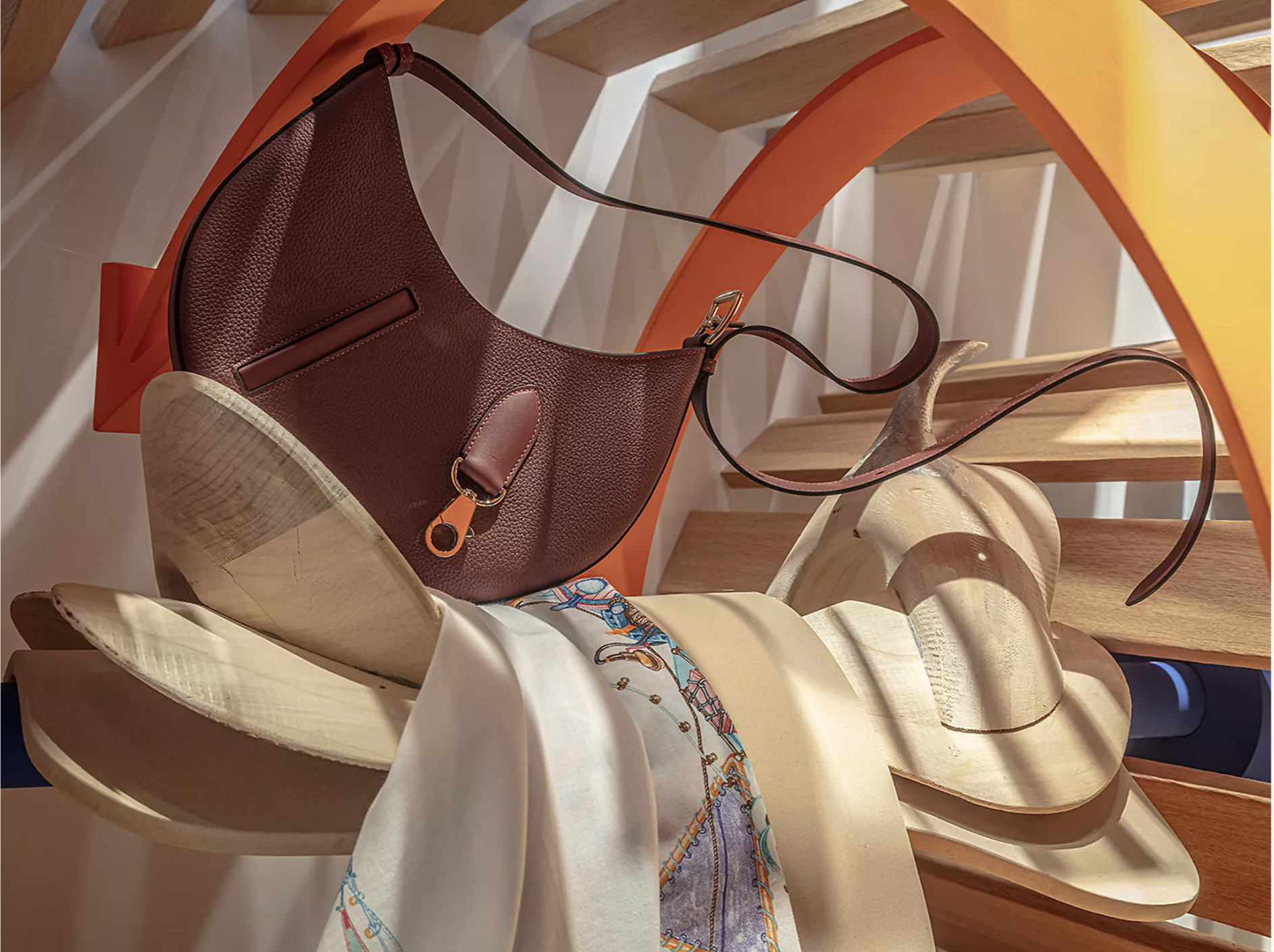
Central to Hendry’s practice is an investigative approach to how cultures have engineered knowledge through craft, navigation, and mechanical invention. This perspective shapes the installation’s material language. Echoes of ancient nautical charts, automata, saddle molds, and early mechanical theater come together in a sculptural vocabulary that feels both archaic and speculative. Across two large windows and sixteen intimate vitrines, the work moves between precision and play, instruction and illusion.
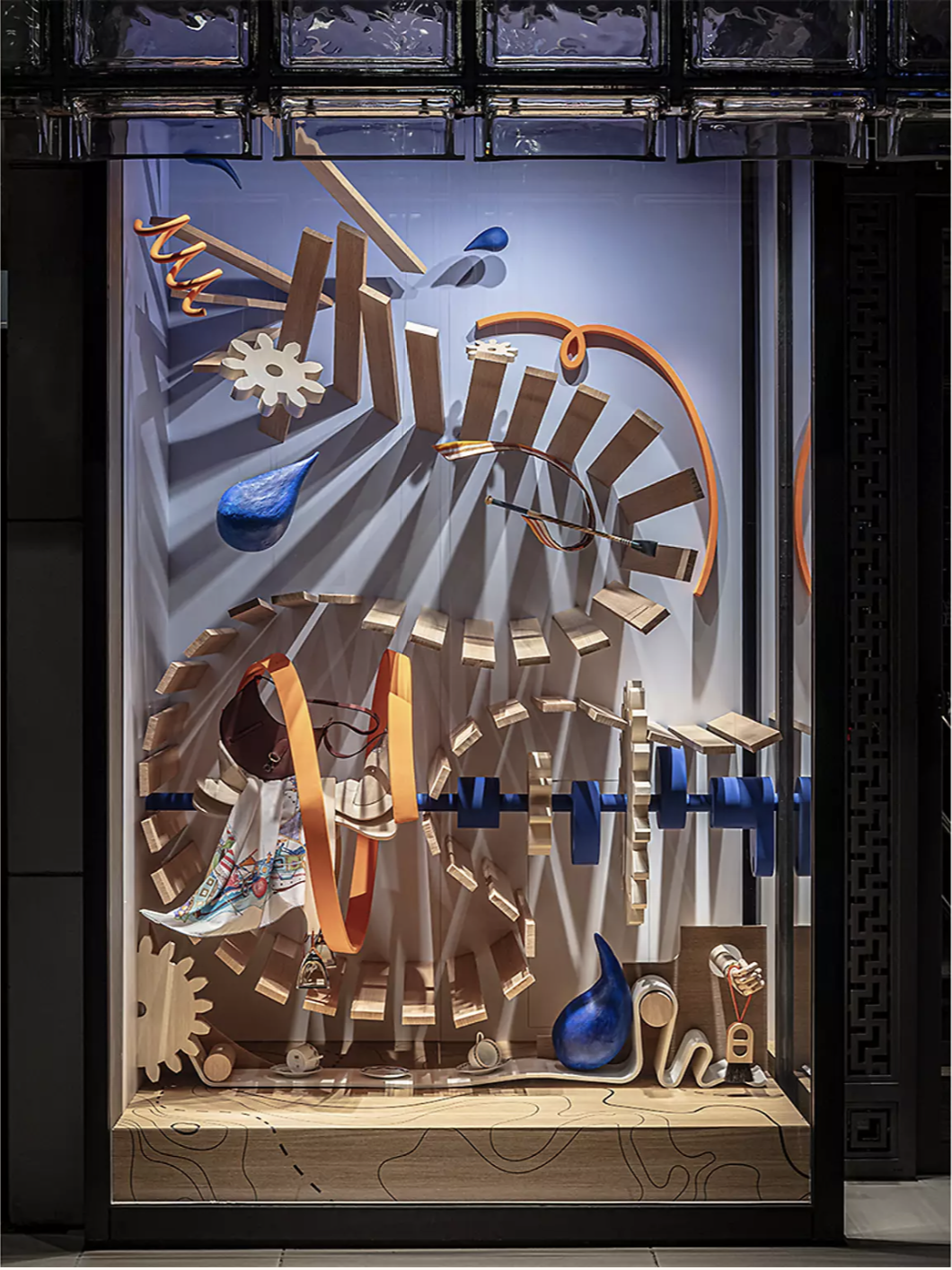 Holly Hendry, A Horse Memento, 2026. Photo: Satoshi Asakawa, Courtesy of Hermès Japon
How did the Tokyo context shape your approach to visibility and display?
I often look to cross sections or specific set viewpoints that we see in science, engineering and architecture – a way of revealing through a controlled slicing – an edge that reveals more chaotic insides. The window is exciting in this sense as it presents a physical slice within the context of a huge metropolis like Tokyo, so I was really thinking of it as a diorama of sorts. A window space makes public what might usually be shown inside, so it was the ideal space for me. I was also very excited to have my work become part of Renzo Piano’s architecture – a building I had known of for its distinctive glass block façade, something that also reveals or conceals depending on the time of day and light settings. I love how it glows at night, exposing its architectural bones, and the fact that the Piano was inspired by the Japanese "magic lantern" (chōchin) when designing the building. These moments acted as my starting point, where I was looking at optical projection, mechanical puppetry and devices in early mechanical theatre to develop the work. In the Edo period, the mechanical techniques of Karakuri puppetry enabled sophisticated animation using complex mechanical slides, gears and pulleys, forming part of a moving image that told ghost stories or dramatic tales of the sea, so this really connected to the Hermès yearly theme of L’appel du Large – a French expression meaning “the call of the open sea”.
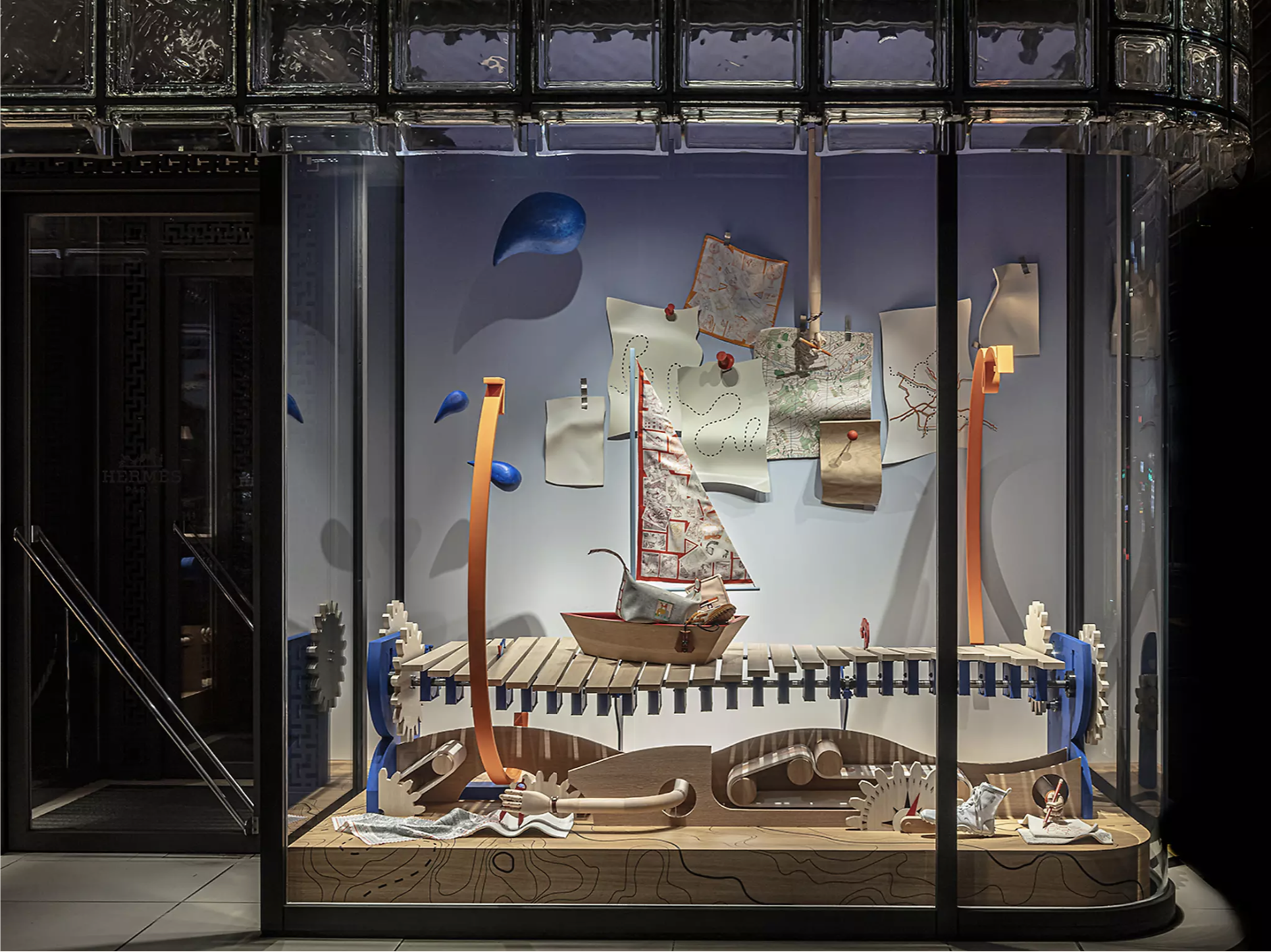 Holly Hendry, Wave Machine, Febraury 26-June 2, 2026. Photo: Satoshi Asakawa, Courtesy of Hermès Japon
You highlight 18th-century wave apparatuses that modeled invisible forces without fully explaining them. What draws you to these historical tools of knowledge-making?
These tools were often used as educational models that enabled intuitive understanding of phenomena without relying solely on mathematical formulas. I am interested in working with illogic or trying to physicalise something that feels materially unimaginable, like an emotion, or something felt momentarily. Sculpture often holds things in space in such a physical way that this can seem like an impossible task. The Shive Wave Machines were also attempting the impossible task of representing waves through simple stick constructions. I like how these basic compositions can open the imagination to ways of thinking about complex oceans currents, weather systems, and light movements.
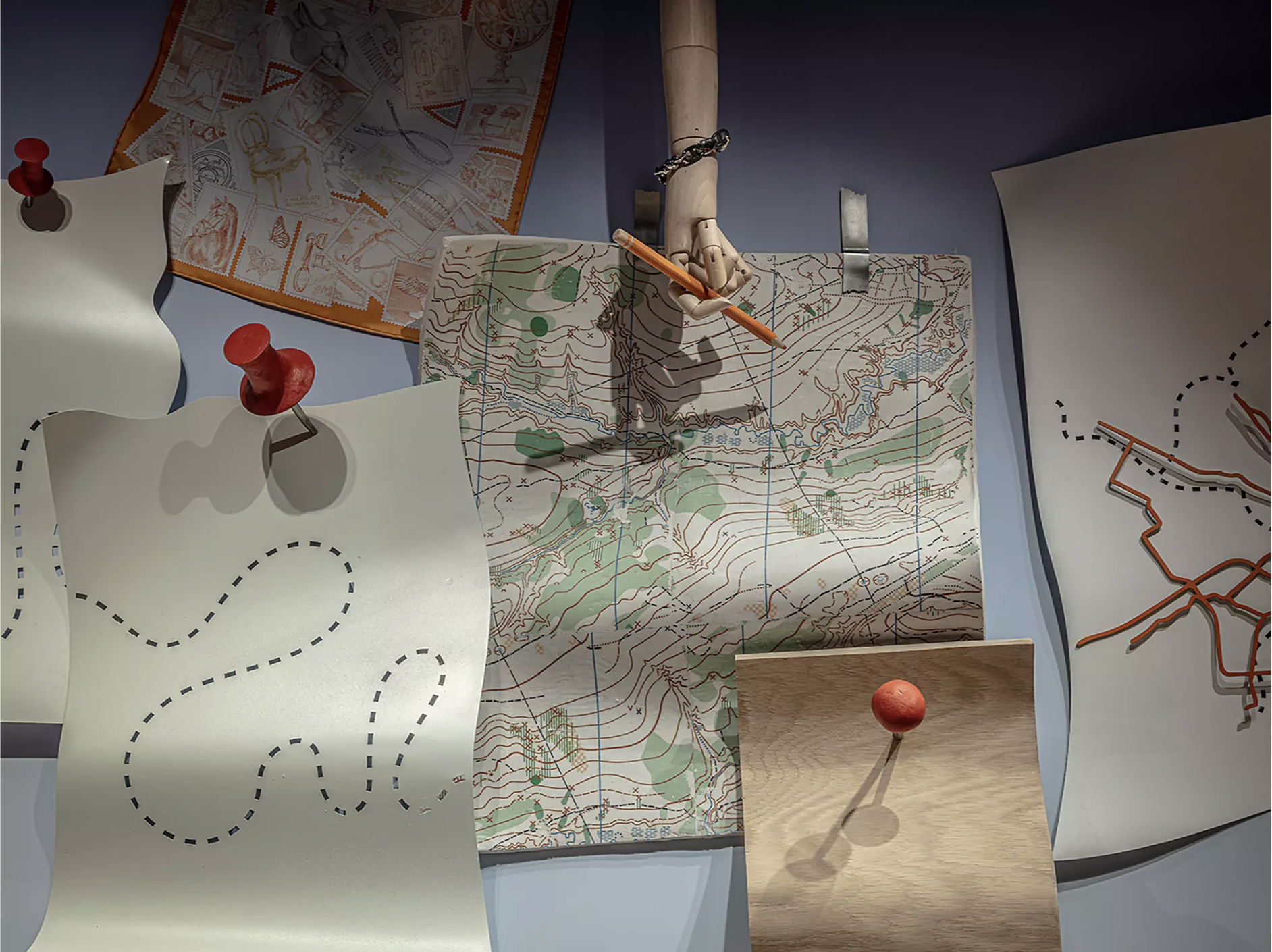 Holly Hendry, Wave Machine, Febraury 26-June 2, 2026. Photo: Satoshi Asakawa, Courtesy of Hermès Japon
Many of the forms feel both archaic and speculative. Are you more interested in looking backward, forward, or in collapsing those distinctions?
I am interested in the collapse and the collision of these forms and references. It is important for me that the more archaic forms do not feel nostalgic, but instead remain active. I am less interested in a linear sense of past/ future, and more in how certain ideas, technologies or visual languages can recur and mutate over time. By bringing these references together, I hope to create a space where it’s unclear whether something is a remnant, prototype or a form of speculative device. That ambiguity feels productive to me, where attempts to understand the world can be presented as imaginative propositions instead of fixed knowledge.
 Holly Hendry, Wave Machine, Febraury 26-June 2, 2026. Photo: Satoshi Asakawa, Courtesy of Hermès Japon
Your use of wood and handcrafted joinery evokes pre-industrial technologies. How did these materials shape, or resist, the illusion of function in the work?
Using wood in quite a specific and overt way is something quite new to me, but it felt important for this project where craft and the influence of the wooden toy automata/ the model/ patternmaking were important to the ideas behind the work, and to Hermès’ historical identity. I hope it creates a moment that moves between craft, science, and cartoon impossibility. For me, wood was a material very rooted in the real, something used structurally and geometrically in frameworks. I was interested in how the window display could utilise these connections, but also defy this – creating undulatory movement through the kinetic wooden form in the main window.
For some of the compositions in the smaller windows, I worked with friend and wood carver, Oscar Whapham, who carved rippling paper forms and envelopes from wood. For me, these objects sit in an interesting space where the material carries a sense of permanence and craft, yet the forms themselves suggest something fleeting, instinctive and impossible to hold still. I was drawn to that contradiction — using a solid, historically functional material to produce forms that appear unstable, animated, or on the verge of movement. In that sense, the wood both supports the illusion of mechanism and gently undermines it, allowing the work to oscillate between something engineered and something dreamlike.
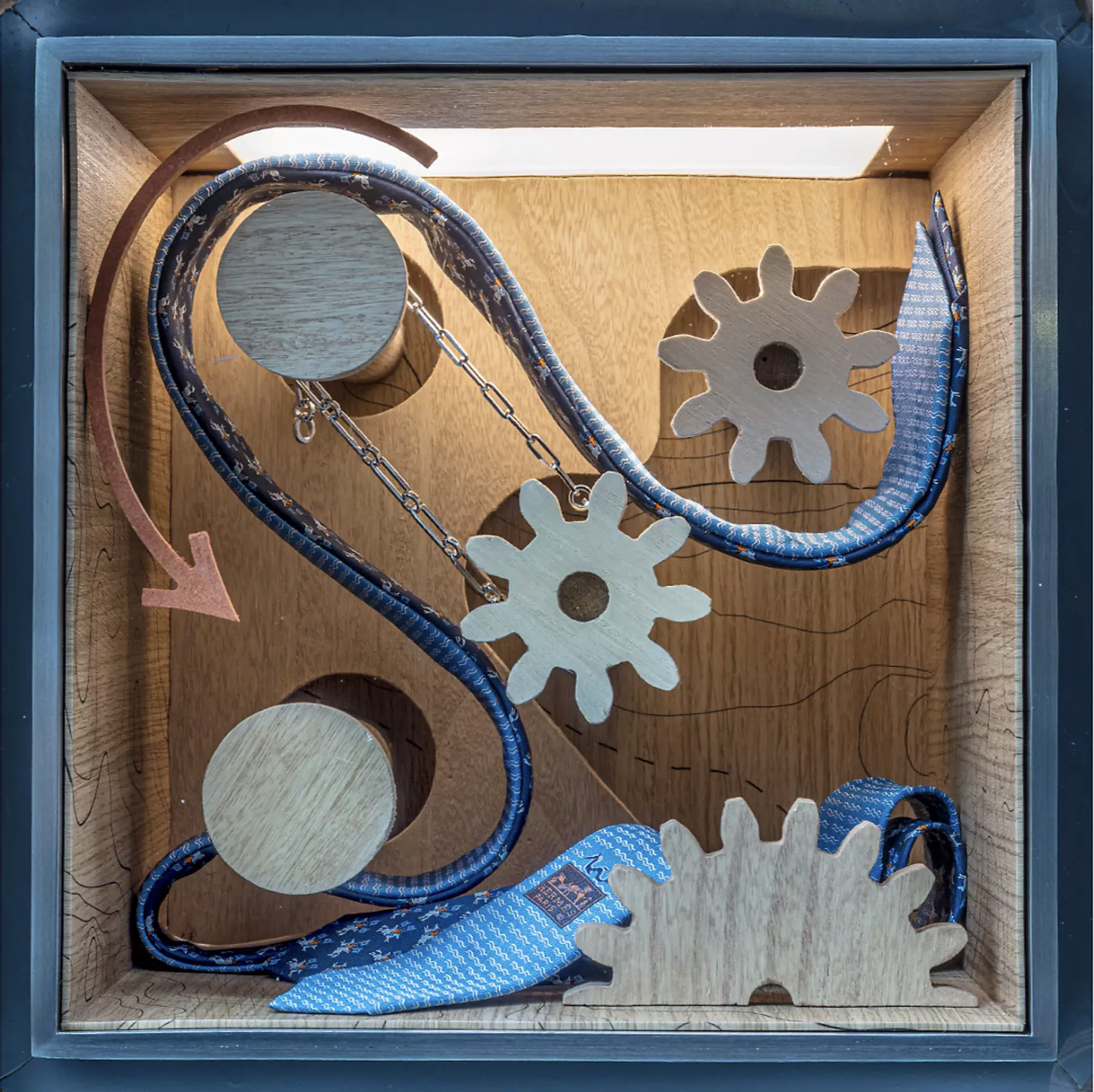 Holly Hendry, The Artisan's Melody, 2026. Photo: Satoshi Asakawa, Courtesy of Hermès Japon
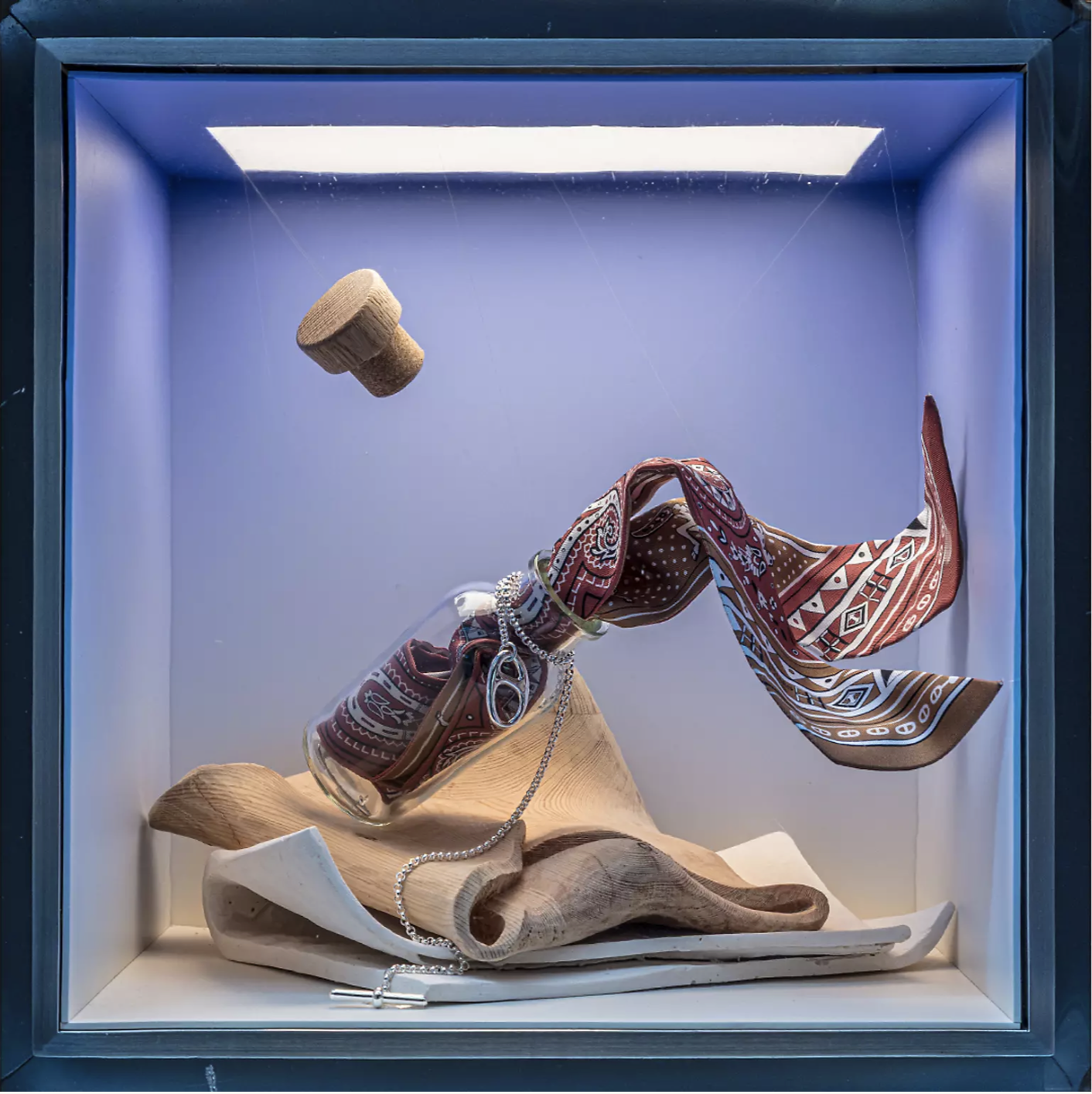 Holly Hendry, Letters for No One, 2026. Photo: Satoshi Asakawa, Courtesy of Hermès Japon
Your installation suggests systems that almost work but never fully resolve. What interests you about this space between function and failure?
I often think about both notions in relation to visibility. When something stops working you think about it more; attention is drawn to its construction and application. I am interested in that moment where a system reveals itself – not through seamless operation, but through slippage or partial failure. In a lot of my work, I try to hold things in that unresolved state which creates tension between expectation and outcome, where the viewer is perhaps encouraged to project their own sort of logic onto the object and what they expect from it next. That space between function and failure feels generative to me.
I was looking at a lot of ancient sea maps whilst making the work, where the sea monsters depicted are actually based on real mammals, and some of the islands depicted were more likely to be whales resting and surfacing at the time. I think this is interesting in terms of function, failure and imagination - how maps, meant for plotting geographical knowledge or navigating such terrain, could also be inaccurate yet amazing examples of imagination and intrigue.
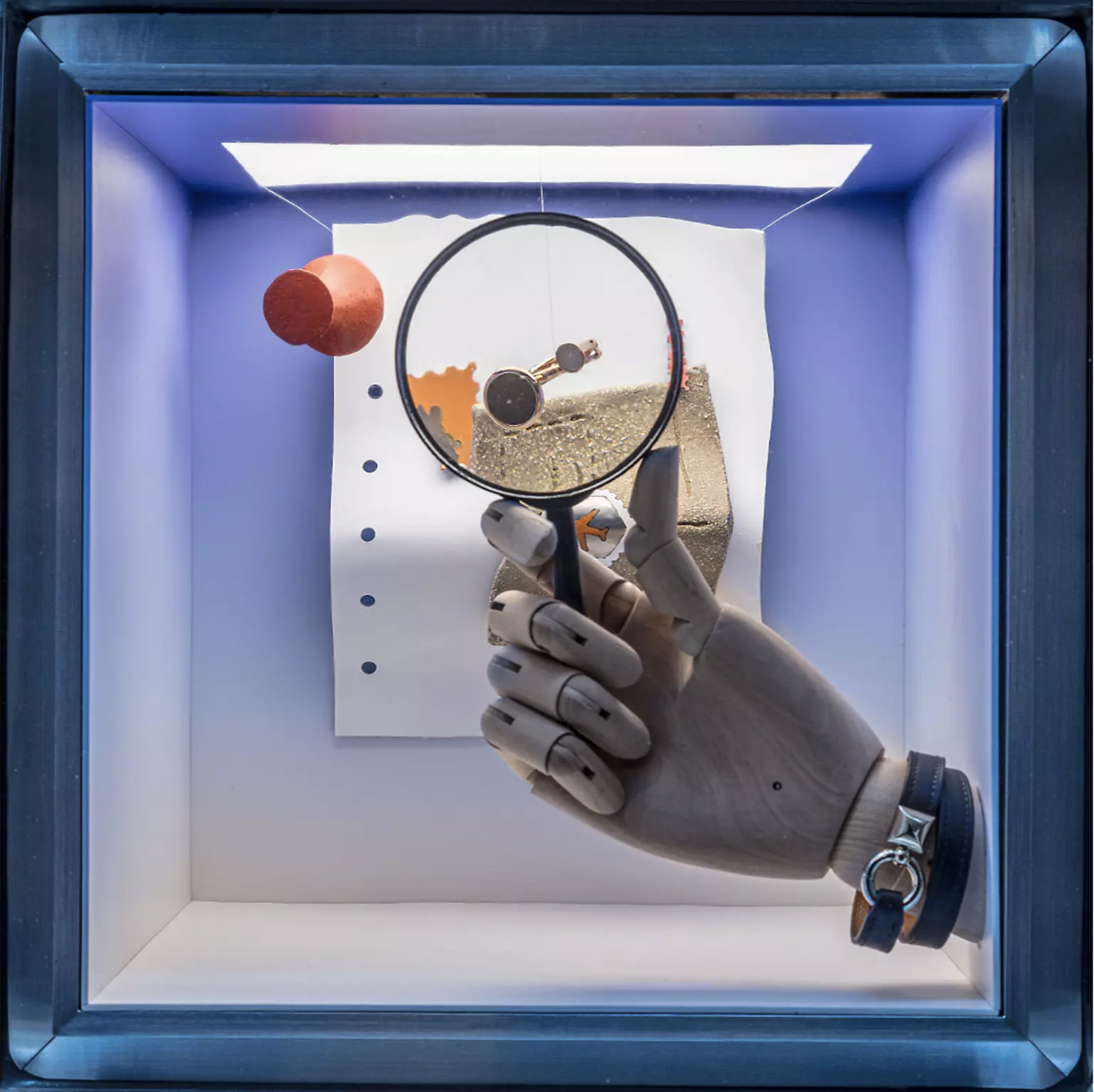 Holly Hendry, Through the Magnifying Glass, 2026. Photo: Satoshi Asakawa, Courtesy of Hermès Japon
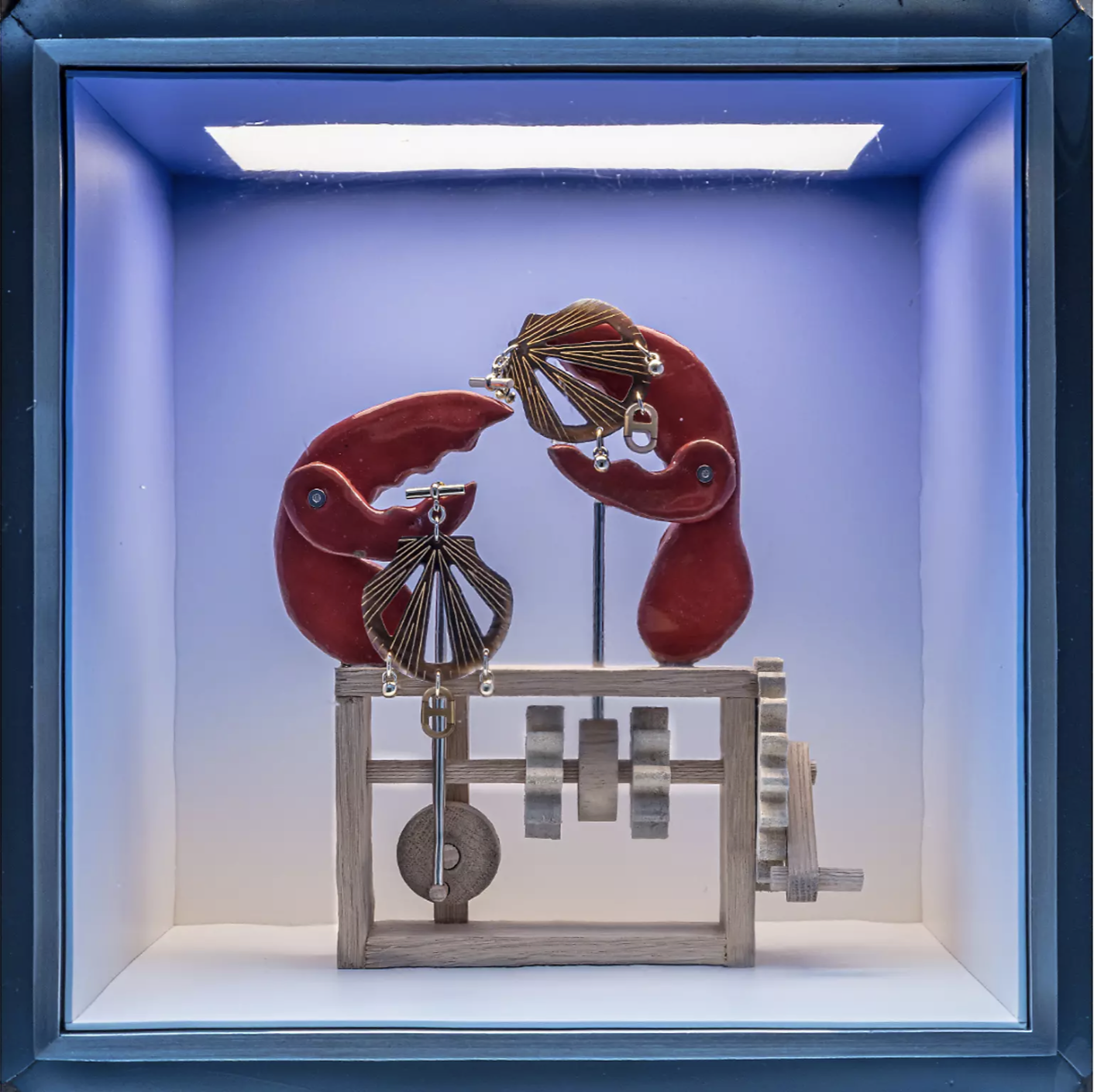 Holly Hendry, The Automata of the Sea, 2026. Photo: Satoshi Asakawa, Courtesy of Hermès Japon
Across large windows and intimate vitrines, how do you imagine the experience differing between a passerby and a viewer who lingers?
We are all familiar with the experience of looking into shop windows, but I hope the work also considers what is projected outwards too. I think the smaller windows can act as snapshots, as to me they feel close to the studio, to my thinking and making, like glimpses of a workshop made visible. These windows feature paper stacks and postcards which do the same – offer personal snapshots that carry emotions over the seas and through the skies to reach their recipient. I wanted these smaller windows to be playful in their material use, like little material love letters to making and thinking and inventing.
In the larger window, there is a sense of overall pace through the repetitive kinetic movement, although the details are still important; the hands sketching, the maps, the fish and lobster that pop up cyclically. I am interested in this notion of speed and the constant hum of the city, when there is a steadiness to the rhythm of the wave motion itself. I would hope that all passersby feel a sense of intrigue, curiosity and openness that connects the architecture to their own bodies in the street and their imaginations, no matter how long they spend at the windows. I am excited to see how the window becomes a small part of the constant story of the city whilst it is on display at Hermès.
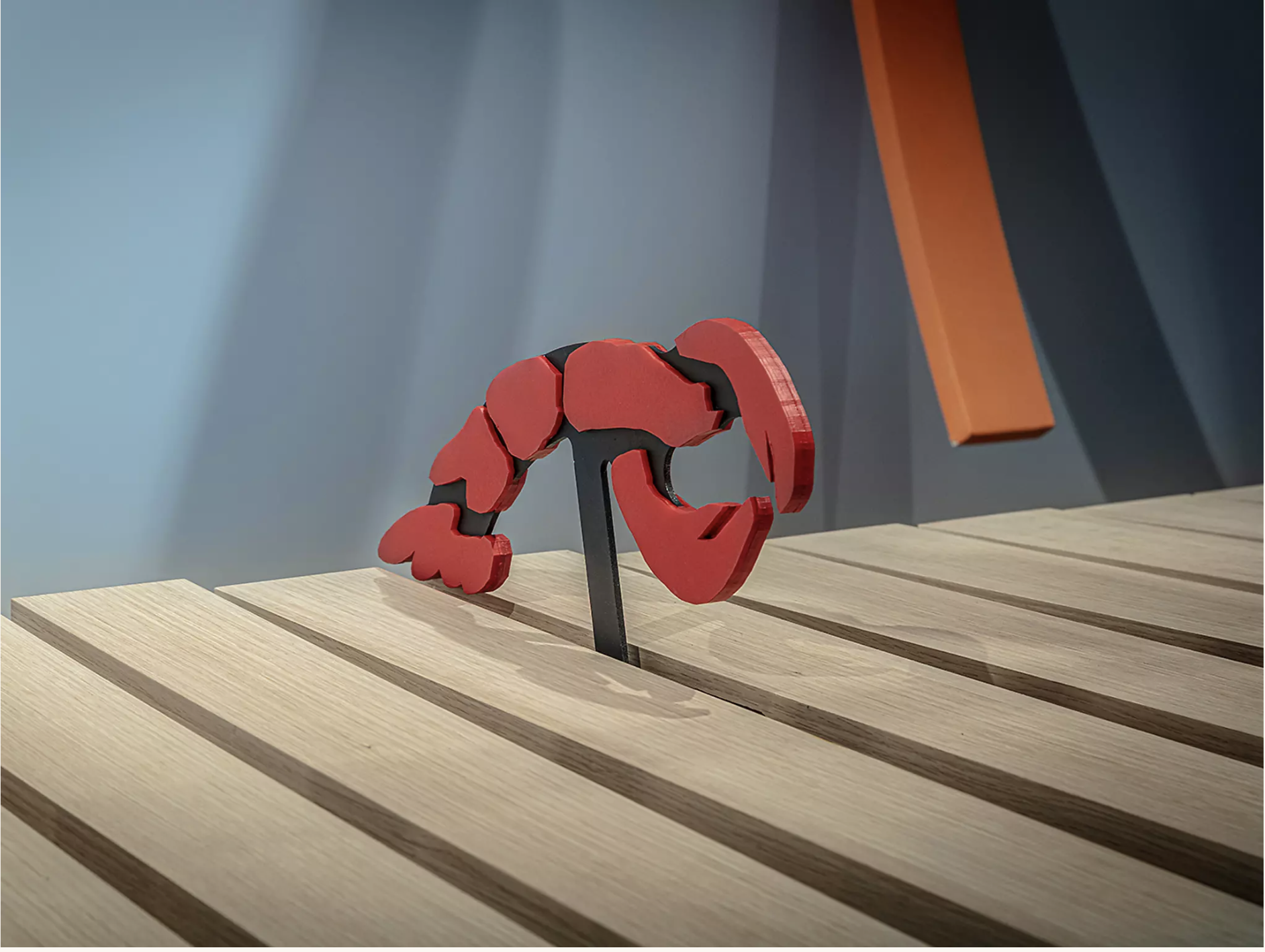 Holly Hendry, Wave Machine, Febraury 26-June 2, 2026. Photo: Satoshi Asakawa, Courtesy of Hermès Japon
To learn more about Holly Hendry, follow her Instagram

Phillip Edward Spradley
Phillip Edward Spradley is a cultural producer based in New York City.
view all articles from this author