Whitehot Magazine
October 2026
"The Best Art In The World"
"The Best Art In The World"
October 2026
Filing for Disappearance: A Bureaucratic Experience at FLOHAUS Gallery
By Sherly Fan May 2, 2026
“Do you choose ‘Partial Erasure’ or ‘Full Withdrawal?’” asks the Agent from the Institute of How to Disappear.
Artist Mere Cui recently brought her bureaucratic experience to the FLOHAUS Gallery, challenging visitors to re-examine the meaning of existence in the modern world. This existential crisis-triggering project asks what determines our trace in life, whether through institutional records, social media, other digital records, or even our own memories.
The gallery space transforms into a fully functioning bureaucratic office. Institutional logos on the walls; a waiting room screen flickers; staff wear office uniforms; and shelves are filled with documents. The intentionally sterile, detail-oriented design feels both bureaucratic and sci-fi. It almost suggests that once you decide to disappear, you could simply walk to the end of the office, put on a white lab overall, and vanish in a blink of light.
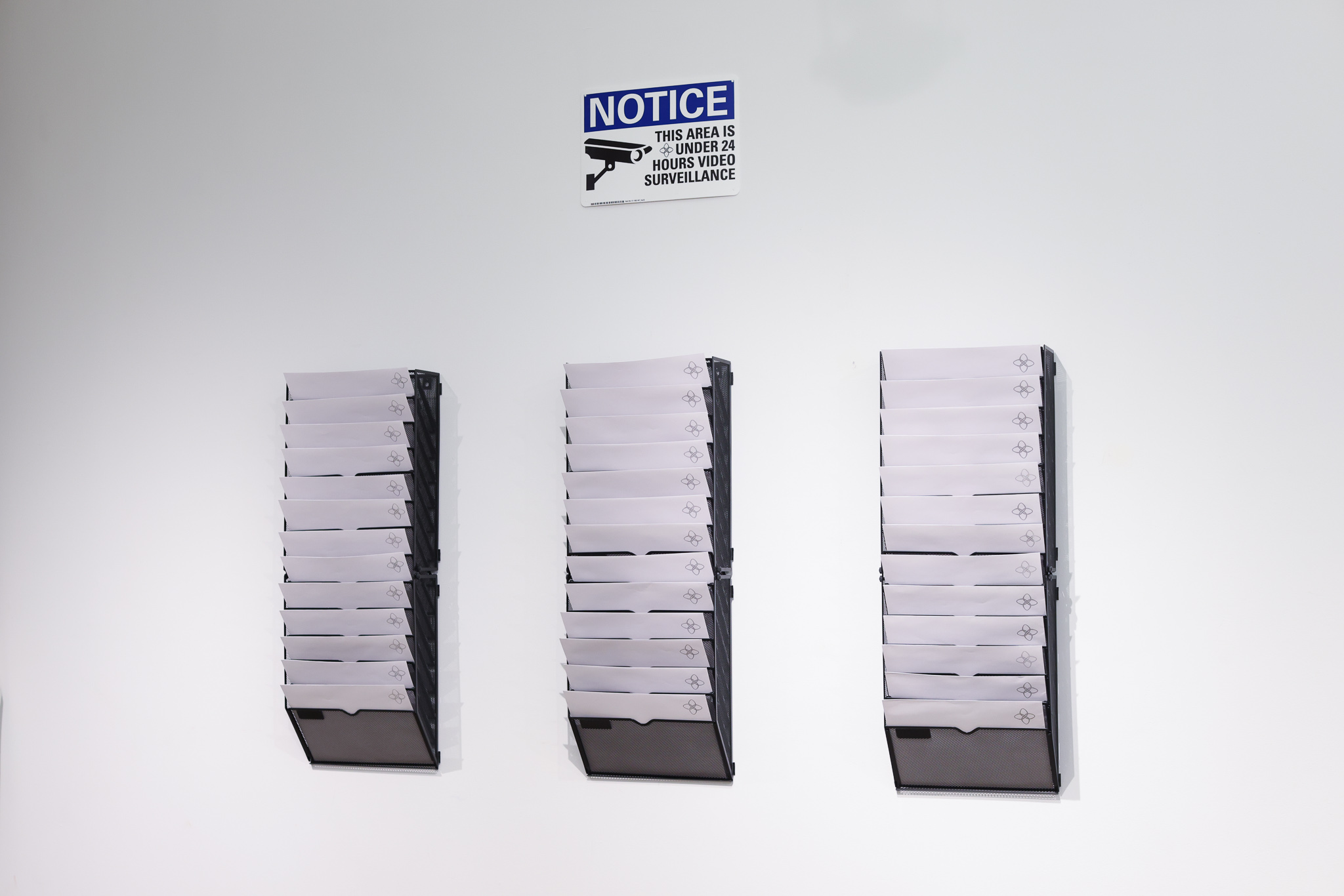 INSTITUTE OF HOW TO DISAPPEAR, New York Operational Week 01, April 10 - 17, 2026. Courtesy of FLOHAUS Gallery
Participants are invited to go through a bureaucratic process: reserving an appointment online, waiting in line to receive a ticket, filling out an application, obtaining a receipt, and then waiting for a decision on their case. The structure is unsettlingly familiar, and it provides a scenario where erasing oneself requires nothing more than paperwork. As if erasing oneself were no more complicated than a trip to the DMV—slow, procedural, and always draining.
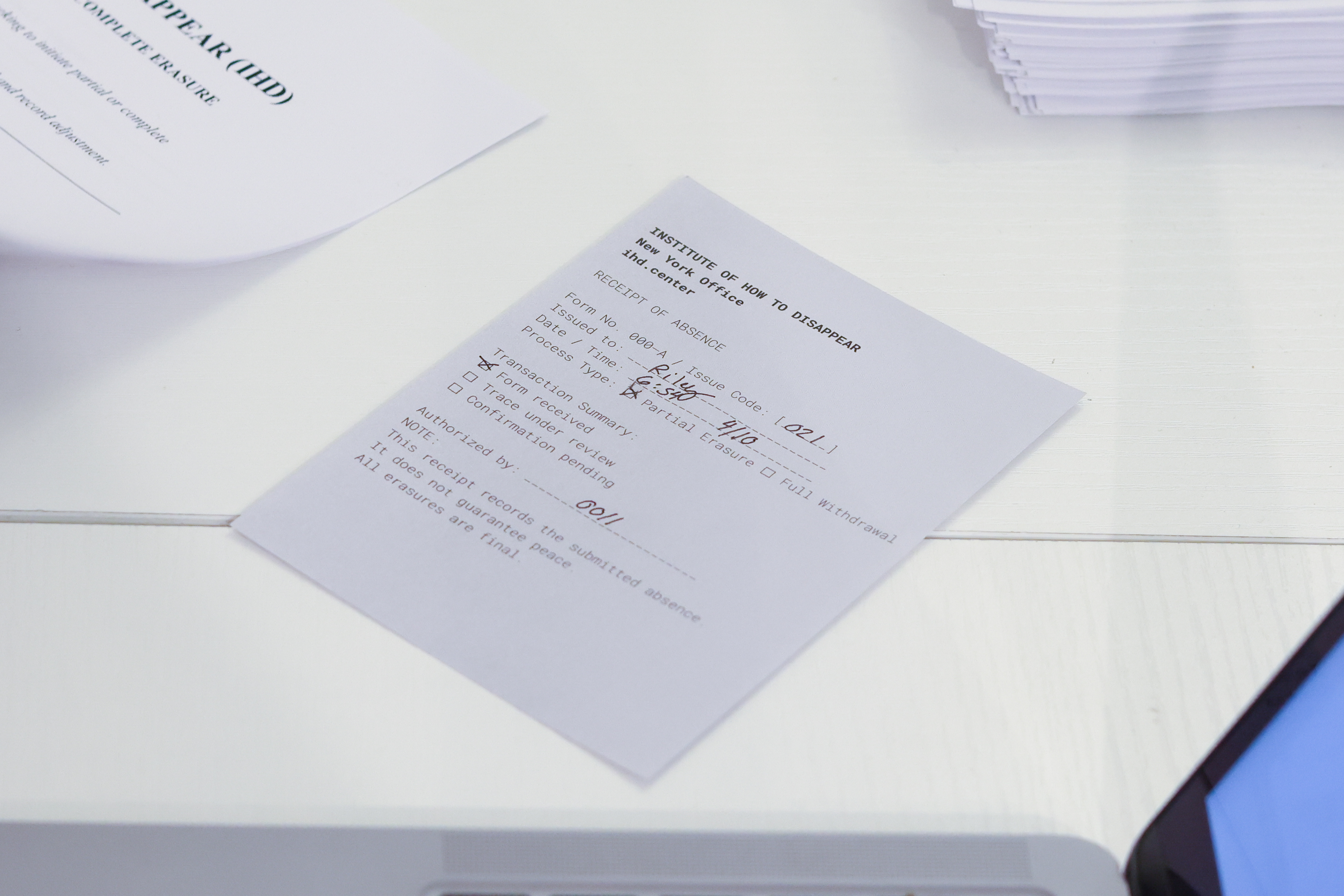 INSTITUTE OF HOW TO DISAPPEAR, New York Operational Week 01, April 10 - 17, 2026. Courtesy of FLOHAUS Gallery
While working on the application form, you are forced to re-evaluate your life through a series of thoughtful questions, including: Why do you want to disappear? Is your disappearance reversible? What aspects of your existence would you choose to erase—physical traces, digital data, emotional records? Each category is detailed with options that push you to reflect on every aspect that defines and documents us. I wonder if these are intentionally designed in response to the overwhelming pressure to be present and visible. Have laws, technological advancements, and emotional connections—once created to support and protect us—ended up burdening our consciousness, functioning more as constraints than as aids? Does disappearance, in this context, become an escape from overstimulation and fatigue—or a way of negotiating our boundaries within a system that has none?
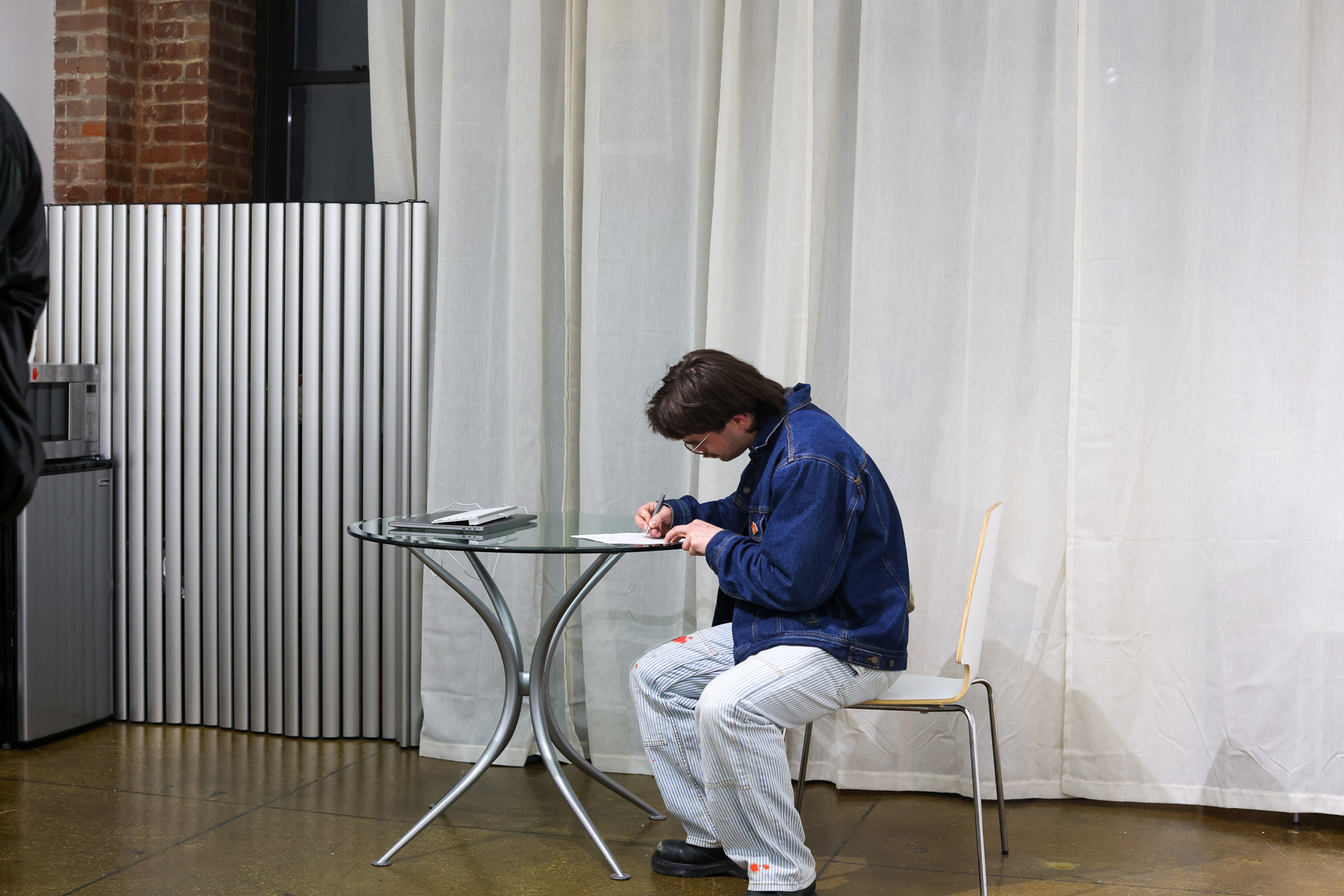 INSTITUTE OF HOW TO DISAPPEAR, New York Operational Week 01, April 10 - 17, 2026. Courtesy of FLOHAUS Gallery
Cui extends this tension further by introducing AI into the equation. If an intelligence is trained on our data and begins to generate its own language from it, can we ever truly withdraw? Even if we erase our records, does part of us persist within the systems we have already fed? Is the work also trying to raise a quiet but unsettling possibility: that disappearance may no longer be entirely within our control?
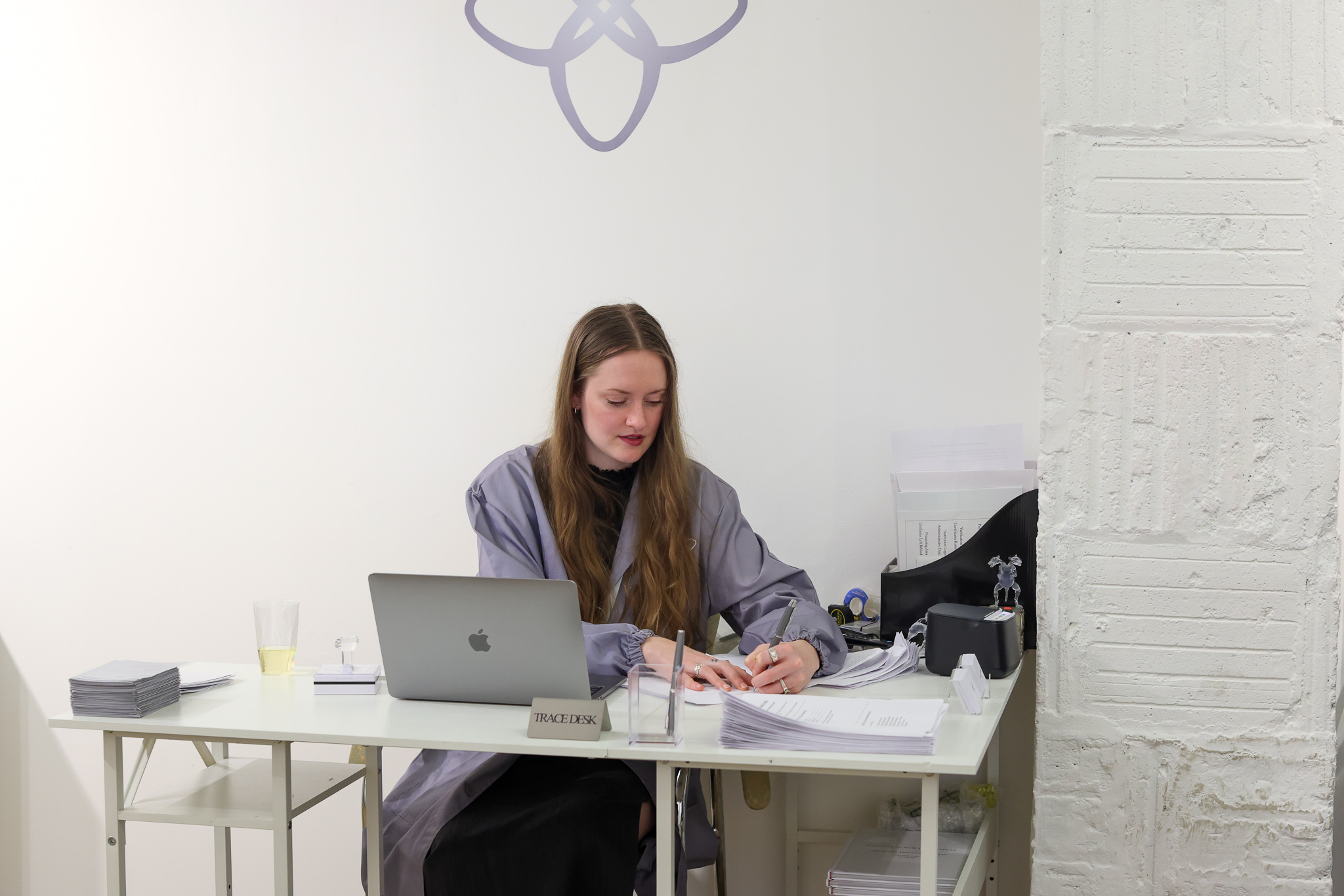 Artist Adehle Daley as an office agent at INSTITUTE OF HOW TO DISAPPEAR, New York Operational Week 01, April 10 - 17, 2026. Courtesy of FLOHAUS Gallery
Some afterthoughts I had after the experience: Does institutional evidence of our disappearance still count as a form of existence? Does full disappearance truly exist if we remain in others’ memories? If you still exist physically but erase all your digital and institutional records, are you still considered to exist? If disappearance does not equal absence, does it then resemble death? Rather than offering any direct answers, this installation subtly critiques the bureaucratic framework while opening up a space for us to reflect on our own existence and the fragility of identity and presence.
So, do you ever want to disappear? Why, and what would you choose to erase? Fully or Partially?
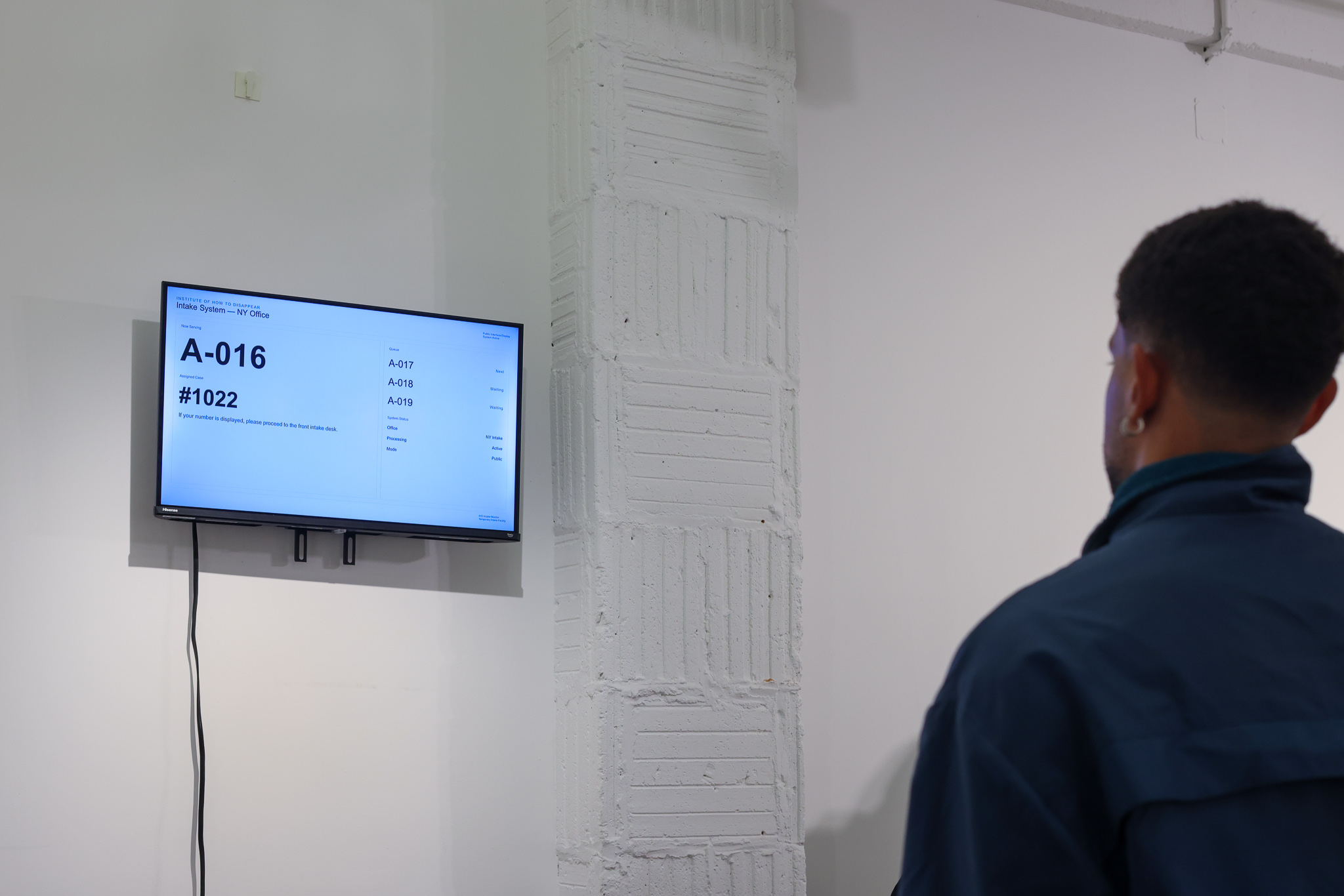 INSTITUTE OF HOW TO DISAPPEAR, New York Operational Week 01, April 10 - 17, 2026. Courtesy of FLOHAUS Gallery
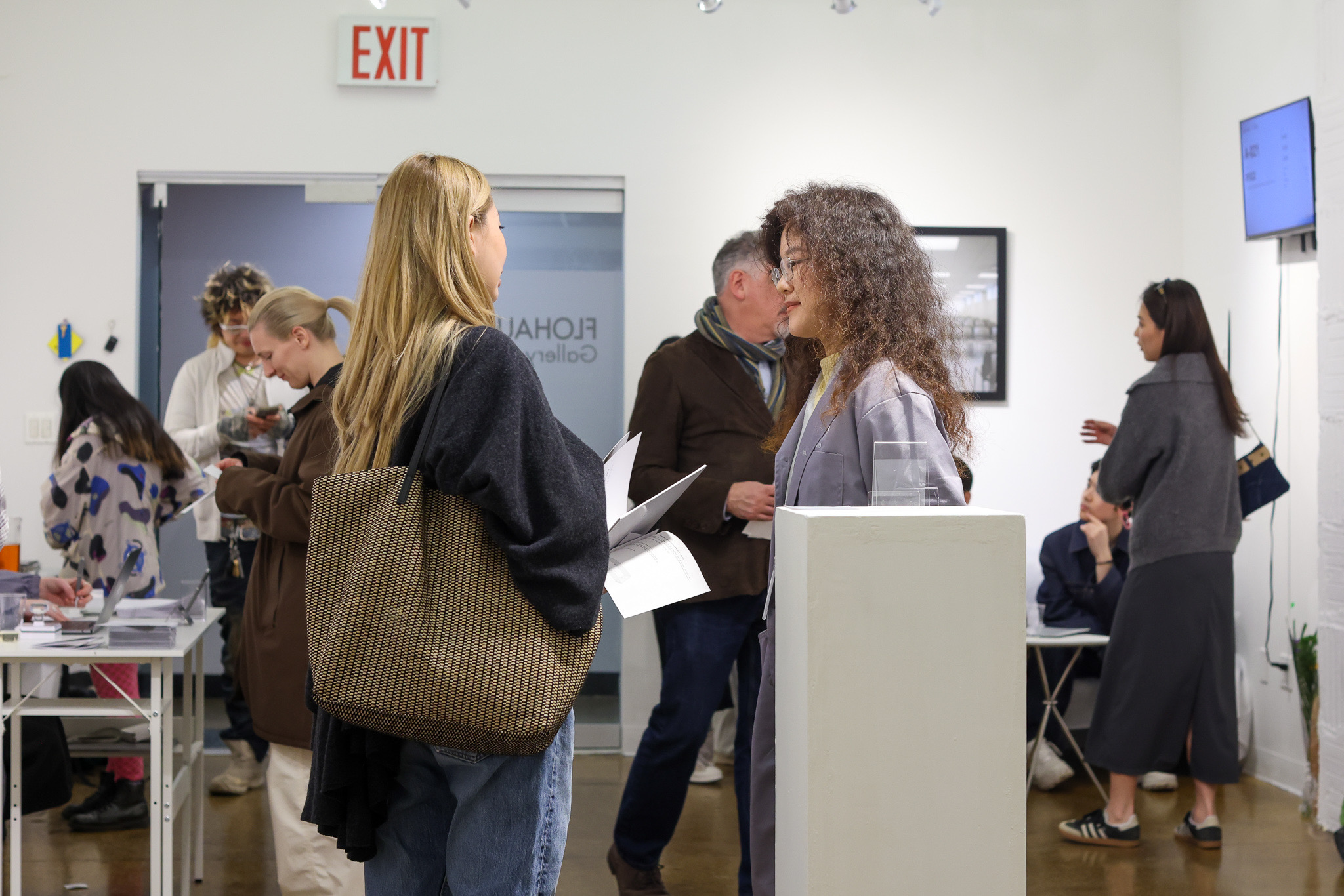 Opening night at INSTITUTE OF HOW TO DISAPPEAR, performance artist Ke Zhang as agent, New York Operational Week 01, April 10 - 17, 2026. Courtesy of FLOHAUS Gallery
FLOHAUS Gallery: 209 W 38th St #500, New York, NY, 10018

Sherly Fan
Sherly Fan is a writer and artist who received her MFA from Duke University. Drawing from her background in experimental documentary, performance art, and her ongoing exploration of “cute studies,” she approaches the art world with directness, honesty, and a sense of openness. Her writing is guided less by answers than by questions—philosophical, rhetorical, and reflective—inviting multiple ways of seeing and
understanding.