Whitehot Magazine
October 2026
"The Best Art In The World"
"The Best Art In The World"
October 2026
“The Art of Witnessing:” A conversation with Bronx cultural worker Guadalupe Ambrosio
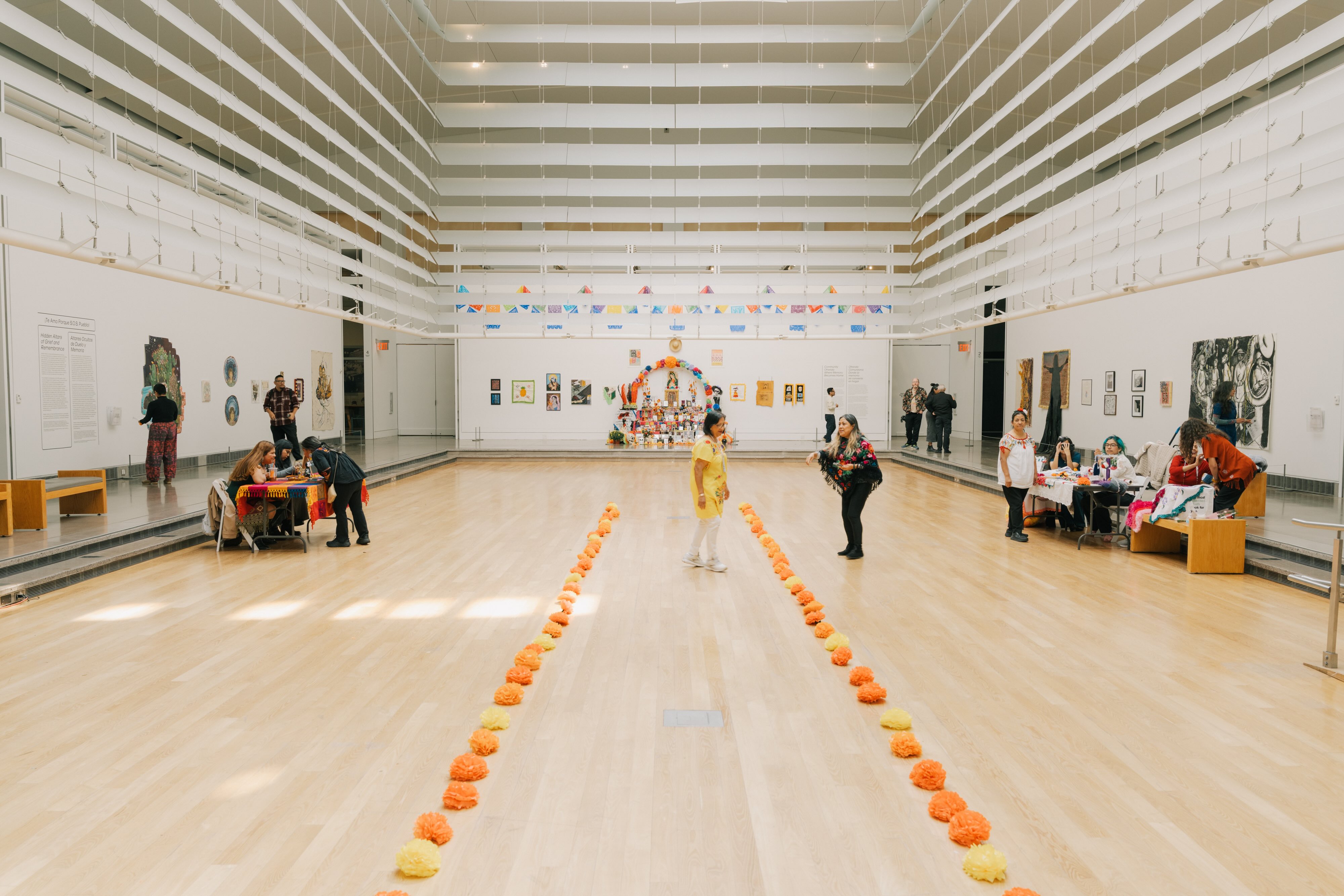 Installation view, ¡Te Amo Porque S.O.S. Pueblo! Hidden Altars of Grief and Remembrance (October 7, 2026 - February 7, 2027). Photo courtesy Queens Museum, credit Kuo-Heng Huang.
BY EMMA CIESLIK, October 16th, 2026
On October 7, the Queens Museum opened its Community Partnership Exhibition¡Te Amo Porque S.O.S. Pueblo! Altares Ocultos de Duelo y Memoria (Hidden Altars of Grief and Remembrance). The exhibition features 23 artists exploring the ways in which grief, memory, and cultural rituals become interwoven with immigration and immigrant communities. Right before the exhibition opened, I sat down with Bronx-based cultural worker Guadalupe Ambrosio to learn more about the craft of curating an altar to cultural, familial, and community grief that visitors are invited to inhabit.
Throughout our conversation, I learned about the grief of not just losing loved ones but also losing the cultural traditions they instilled or didn’t have a chance to share, alongside the challenges and opportunities of curating a community-led exhibition at a major arts institution. At its core, this interview was about how institutions can care for both the artists and curators at the heart of their exhibitions.
Emma Cieslik: Would you mind please introducing yourself however you feel comfortable?
Guadalupe Ambrosio: I’m a cultural worker, community organizer, and curator from the Bronx, and much of my work has been rooted in immigrant justice, community building, and resource allocation and mobilization. This is my curatorial debut, so I’m really excited! This is a great re-entry as someone who’s also impacted by immigration. I’m a DACA recipient. I’m okay with sharing that. I can’t go back into the shadows. I might as well just embrace it at this point, but this is also me re-entering my advocacy through the arts, so I’m excited to see what it looks like.
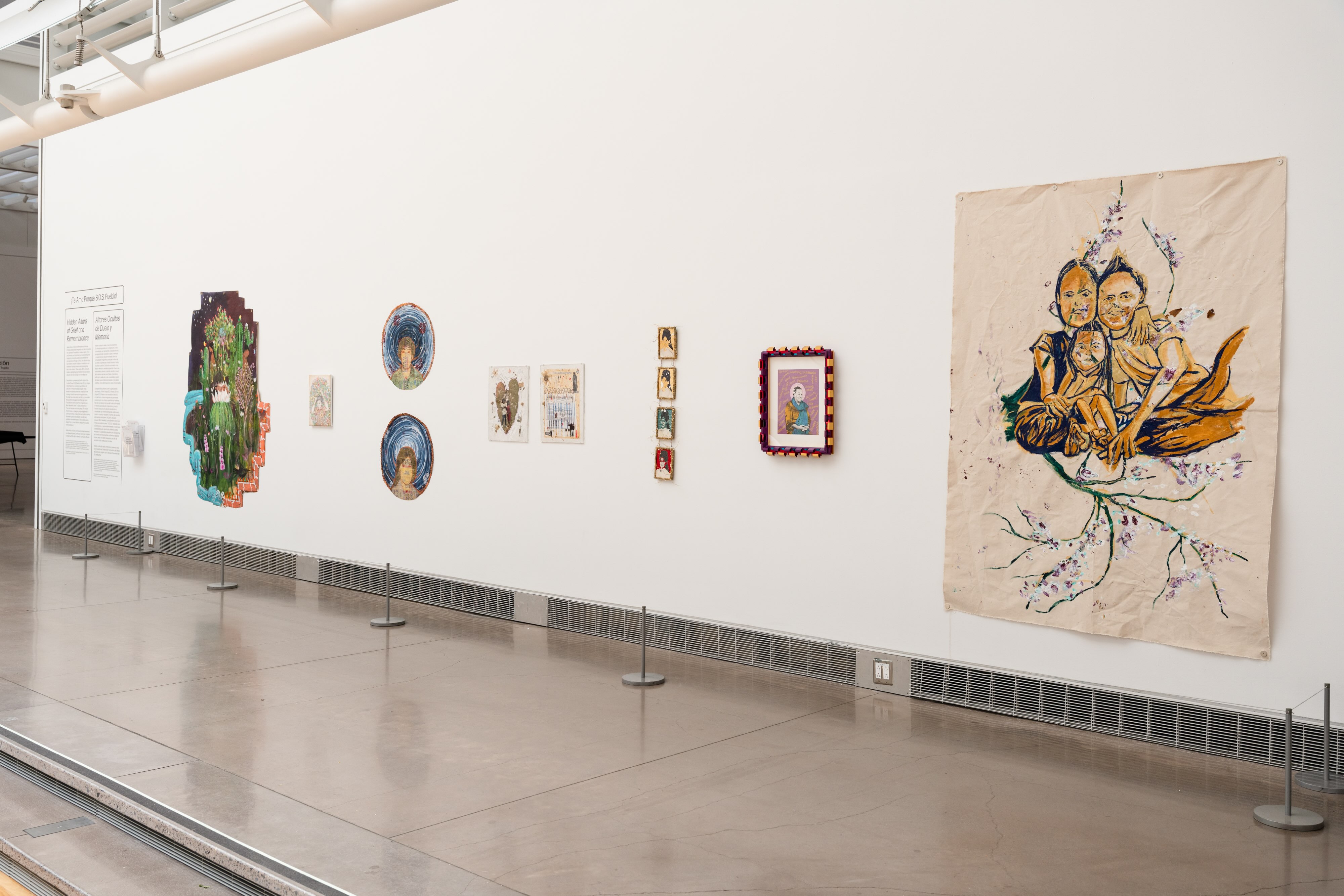
Installation view, ¡Te Amo Porque S.O.S. Pueblo! Hidden Altars of Grief and Remembrance (October 7, 2026 - February 7, 2027). Photo courtesy Queens Museum, credit Kuo-Heng Huang.
Cieslik: The collective, ¡Te Amo Porque S.O.S. Pueblo!, takes its name from Uruguayan poet Mario Benedetti’s poem Te Quiero and “S.O.S.” to evoke the violence against immigrant communities in the United States. How did this collective first get started? Who founded it?
Ambrosio: The collective was founded by artists and advocates Blanka Amezkua, Marcos Saavedra, and Maria Ponce-Sevilla, all of whom crossed the U.S. border as undocumented minors and since then have obtained some type of citizenship or asylum, or were able to adjust their status. It was their form of reclaiming their narratives, and the first exhibition had legal services at the opening, so people were there to give out resources and host know-your-rights training. They also used this as a way to connect, using art as a tool of liberation, advocacy, and organizing. Later, the Peruvian artist and organizer Niceli Portugal joined the collective to help curate and organize other installations.
We don’t want to center the trauma our communities are experiencing in our art as a way to trauma dump. There’s enough violence going on. We don’t need to exemplify it or be very explicit about what that looks like, so this is also a collaborative effort to show that we are connecting people power, and that we always have agency.
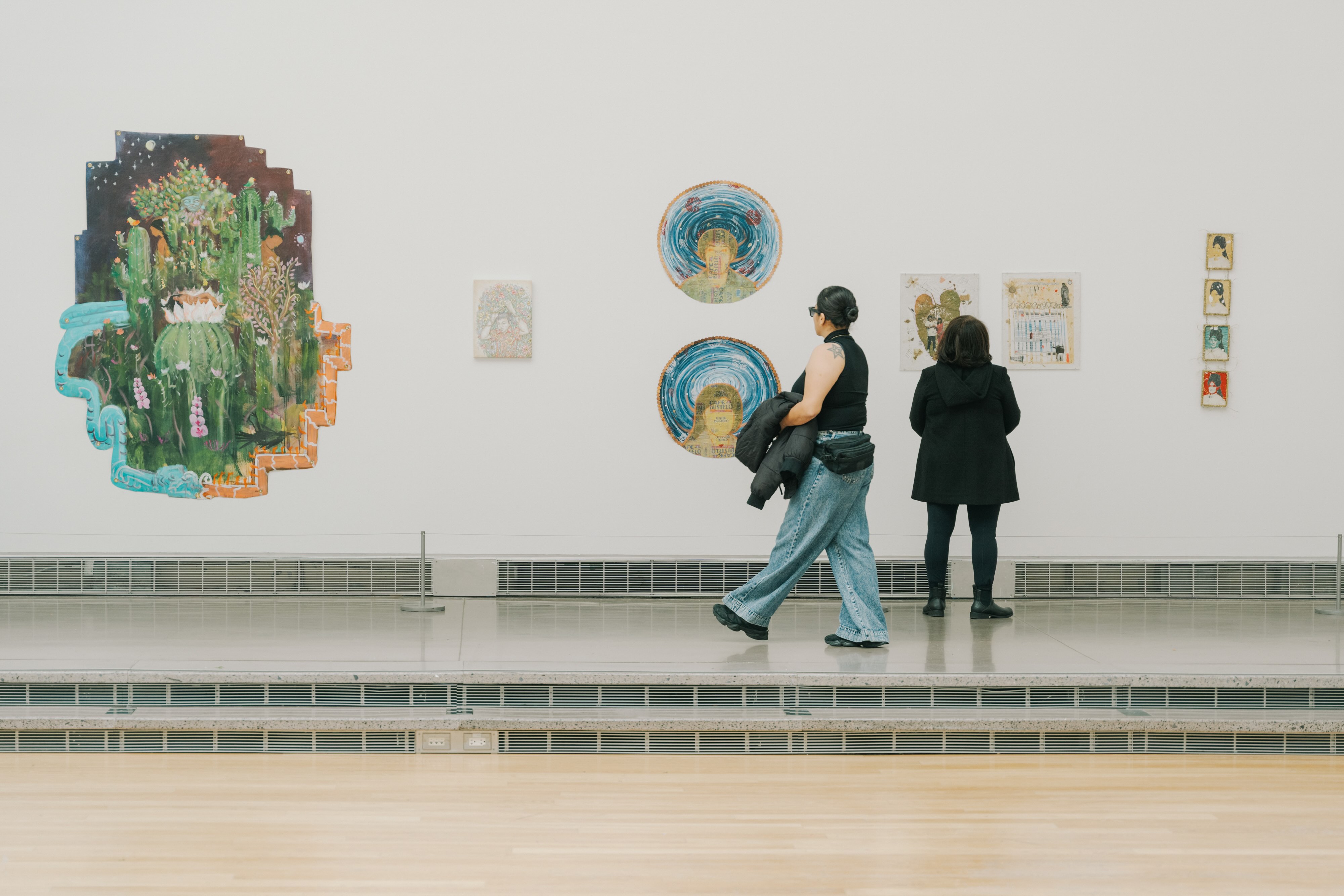 Installation view, ¡Te Amo Porque S.O.S. Pueblo! Hidden Altars of Grief and Remembrance (October 7, 2026 - February 7, 2027). Photo courtesy Queens Museum, credit Kuo-Heng Huang.
Cieslik: As you share, “each artwork becomes an altar of remembrance and resistance, honoring ancestors and mourning lives lost to state violence.” What is the importance of visualizing grief? Visualizing violence against and outright murder of immigrants in the United States at a time when many people look away?
Ambrosio: That came out of my personal experience knowing that immigrant people, especially noncitizen immigrants, are constantly asked to keep going. They’re not allowed to rest. They’re not allowed to grieve publicly or even privately. The idea of the hidden altars comes from the reality that immigrants and noncitizens are often expected to not take up space. We’re expected to keep moving, keep working, and keep serving instead of stopping, expressing grief, or simply existing. Because of that, we develop other ways of carrying memory and honoring loss.
Sometimes these altars are visible; sometimes they remain hidden in our homes, in our traditions, in our clothing, stories, or creative practices. Each art piece doesn’t give you an explicit idea of what a person is grieving, but you can tell that they’re honoring something or someone. They’re also honoring their ancestors or practices that only get passed down through culture and families, but because there’s so much family separation and fragmentation, those skill sets also get lost in the process.
I really wanted to introduce the fact that the way we grieve within ourselves is important and is a form of self-care that should be honored, whether that’s through nature or keeping cultural practices alive, like weaving. I think part of what this administration is doing is also really pushing us to hide and to get rid of our cultural practices that make us strong.
Cieslik: How are the religious layers of altars incorporated into this exhibition? What is the connection, or is there a connection, to Día de los Muertos?
Ambrosio: The exhibition itself is very Latino-centric, like Mexican-heavy. At first, I thought that was a disadvantage because there are so many stories of immigration from so many different backgrounds, and all of them matter and are equally important. But I also thought about the anti-Mexican sentiment in New York City while Mexicans make the city run. Although this particular exhibition does include different artists from different parts of Latin America, a lot of them are Mexican. For me, being Mexican is a big part of my identity. I experience altars.
The museum offered this time on their calendar, and it happened to be Día de los Muertos, and I just thought, wow, I’m obsessed with altars. This is perfect; let’s maximize that. Día de los Muertos is very colorful, and I think that’s something people don’t often associate with grief: the joy of feeling and making space to be connected with people who have passed. Stay with them, stay beside them, and continue to honor them, especially with Gabriel García Román’s piece depicting Lorena Borjas. Lorena and I met when we were awarded a proclamation from the city for supporting immigrant communities. She was a trailblazing advocate for the trans and LGBTQ community in Queens. When she passed, we all felt and still feel her loss. It is a privilege to have her portrait in the show.
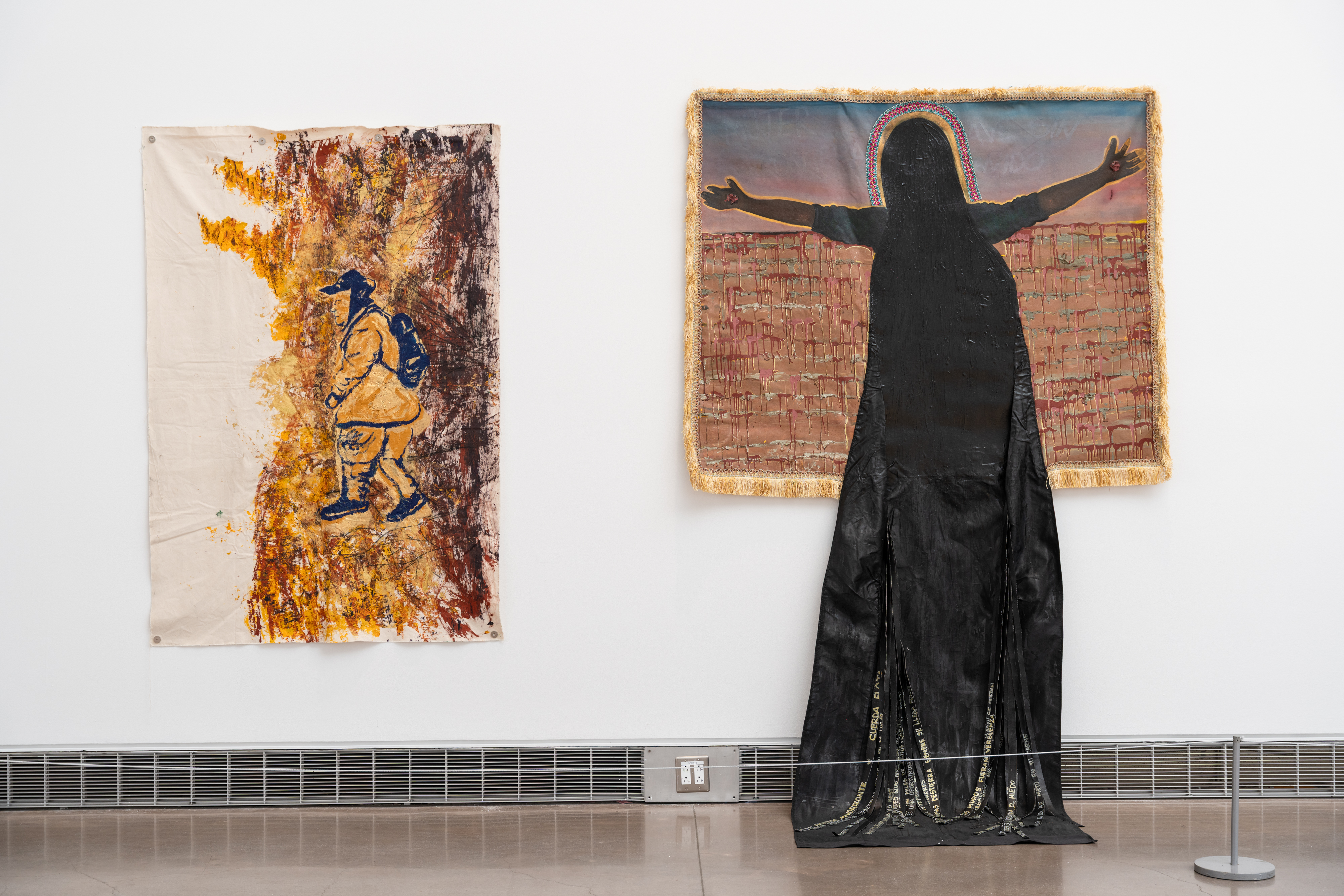 Installation view, ¡Te Amo Porque S.O.S. Pueblo! Hidden Altars of Grief and Remembrance (October 7, 2026 - February 7, 2027). Photo courtesy Queens Museum, credit Kuo-Heng Huang.
Cieslik: Immigrants are dying in detention centers, killed by the state due to medical neglect, or outright murdered by ICE agents. How does this exhibition force viewers to confront this reality and the real human crises we are witnessing? How is the act, or art, of witnessing a key piece of this exhibition?
Ambrosio: I think the art of witnessing is asking people to meet us with our humanity. This means rejecting the idea of the perfect victim scenario. I don’t think that in the context of immigration, there is one perfect victim because legality in itself is already criminalizing people regardless of their background or age. Some people like to say, “Oh, you came in at an age where you were so young, you didn’t consent,” but honestly, from my personal experience, I wouldn’t have it any other way than to be with my family.
Lupita Romero has two pieces—one called Los Caminos de la Vida, which depicts her and her parents. She also has a piece called American Dream, with photocopies of the artist’s DACA approval letters and fragments discussing the paperwork that goes into being a valid human being within the United States, which, at this point, there is no such thing. She also has imagery of incarceration, as her family has experienced family separation through deportation. It’s not putting the burden on artists to have to remind people to care; it’s artists sharing their experiences. We are asking folks to just sit with that.
Cieslik: How is art itself a form of resistance against fascist violence? What do you hope visitors to this exhibition take away from these works, and learn from the model that the Queens Museum presents?
Ambrosio: As people who are holding the line, or people who are responsible for doing this work, I think the collective is so brave. It’s also a way to care for each other. The exhibition itself is an act of collective care because it creates space for artists, many of whom have been directly affected by immigration, to share their cultures, histories, talents, and perspectives on their own terms. What makes this collective special is that it’s rooted in people power rather than waiting for institutions to decide whether their stories are worthy.
We support one another, celebrate one another, and create opportunities together. That’s why those relationships with the Queens Museum, the Bronx Art Space, and the Stephen Gallery, as well as small businesses like Spongy’s and Emily’s Deli, where exhibitions were held before, really remind us that this is a collective experience of supporting and caring for immigrant communities.
The Queens Museum was one of the first spaces, the first institutions, to welcome us into their community space, and I also think about how these opportunities are very rare for immigrant artists. A lot of them were really excited to be showcased at a museum for the first time because there was no gatekeeping about how and who was able to apply to this show.
For me, it’s been transformative. I went to art school, so I was always wanting to do this kind of work, and I’ve done it in a very nonprofit way, but this is my first time doing it and learning alongside curatorial and exhibition staff at the Queens Museum who are also all from New York. There aren’t enough professional development opportunities just for us, right? I’m the nontraditional curator, independent curator, because I haven’t studied art history, but that’s also because part of me is like, “Well, if I’m going to spend money on this degree, I also want to learn from artists who look like me, who have a history here.” I wouldn’t say that’s not happening, but it’s still such an early stage that I don’t think I will get the education that I deserve and need to be able to succeed in the work I want to do because it is different.
We recently postponed our public opening due to ICE presence near the museum. This was flagged by local organizers in Corona, Queens, and although we want to share our work and celebrate together, the reality is that it is still very unsafe to do so. There are no safeguards for immigrants or noncitizens, and that includes us and the community that our art honors.
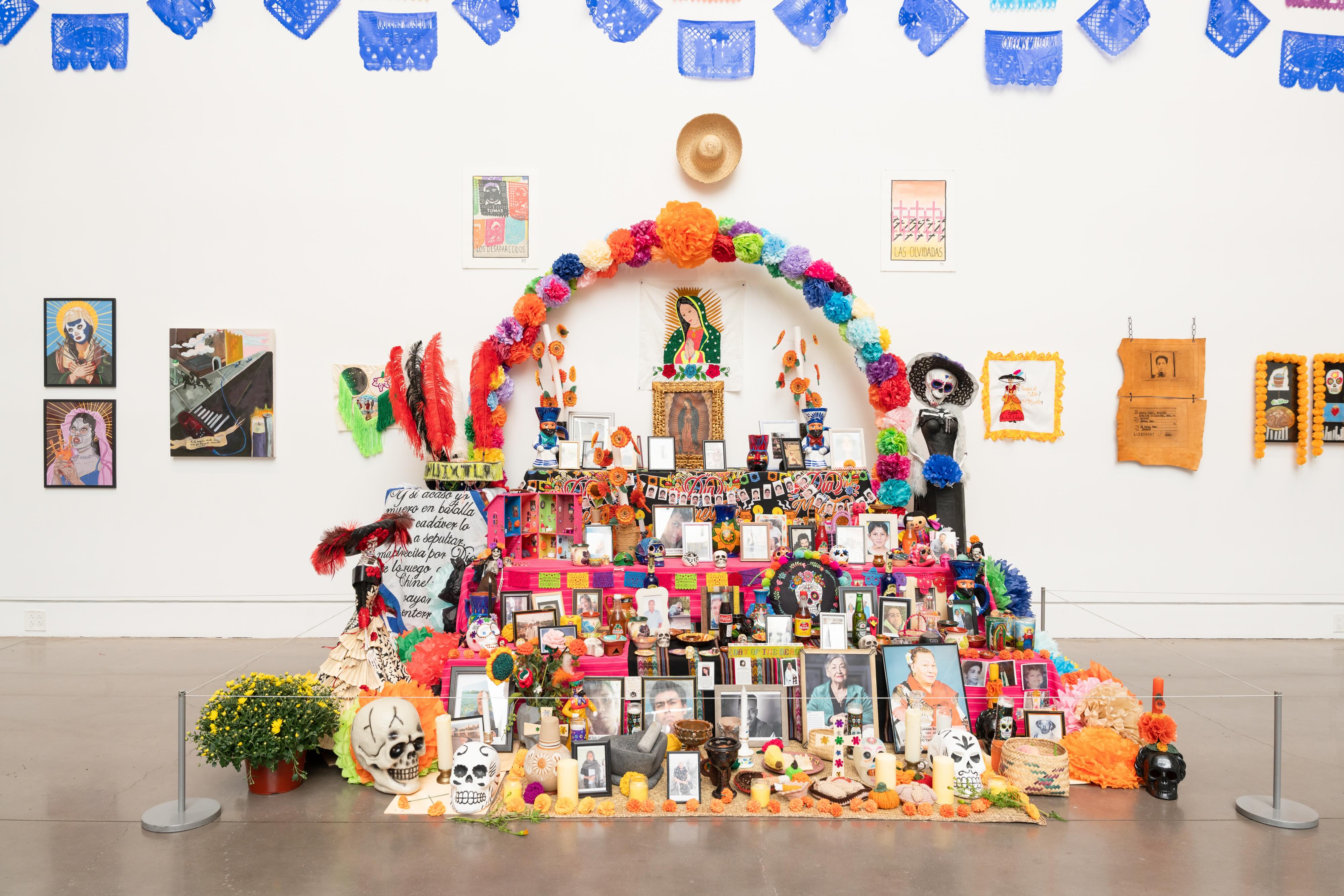 Installation view, ¡Te Amo Porque S.O.S. Pueblo! Hidden Altars of Grief and Remembrance (October 7, 2026 - February 7, 2027). Photo courtesy Queens Museum, credit Kuo-Heng Huang.
Cieslik: How do you care for yourself, and how does the collective care for its artists, when engaging with these losses, with this grief?
Ambrosio: I love your question. I don’t even know how I take care of myself. I think I’m going to keep thinking about your questions as I am curating because they help me ground myself. I haven’t had time to process this. It’s been three months of ongoing work, and part of me is like, it’s done, it’s over, I’m done. We’re good.
But I think one of the challenges when taking care of myself or even trying to curate the show was thinking about how every day there was a new story about someone who was being lost or killed, and not overwhelming myself by pushing myself to include them, to figure out ways to solve and honor all of them because, again, it’s been centuries of this kind of violence, and it’s not isolated. There are so many intersections with Palestine, with Black Lives Matter, with Black racial justice, and with queer liberation. These are not movements necessarily depicted in the show, and I really grappled with that because I’m like, how can there be a show about grief and state violence and not show these intersections in a direct way? I struggle to be okay with this and compartmentalizing how to honor them, but the reality is that they are honoring our collective lives in the intersections. I make sure to add them to our collective altar, too.
Cieslik: Is there anything else that you would like to add?
Ambrosio: I would love for people to take away the artists’ stories, that their stories matter, as well as the way they want to share them, whether that be through art, through their own advocacy, or by collectively bringing their own items to build their own altars.
¡Te Amo Porque S.O.S. Pueblo! Altares Ocultos de Duelo y Memoria will be on display at the Queens Museum until February 7, 2027.

Emma Cieslik
Emma Cieslik (she/her) is a queer, disabled and neurodivergent museum professional and writer based in Washington, DC. She is also a queer religious scholar interested in the intersections of religion, gender, sexuality, and material culture, especially focused on queer religious identity and accessible histories. Her previous writing has appeared in The Art Newspaper, ArtUK, Archer Magazine, Religion & Politics, The Revealer, Nursing Clio, Killing the Buddha, Museum Next, Religion Dispatches, and Teen Vogue
view all articles from this author