Whitehot Magazine
May 2026
"The Best Art In The World"
"The Best Art In The World"
May 2026
Transcending Borders: A Conversation With Yiwa Lau
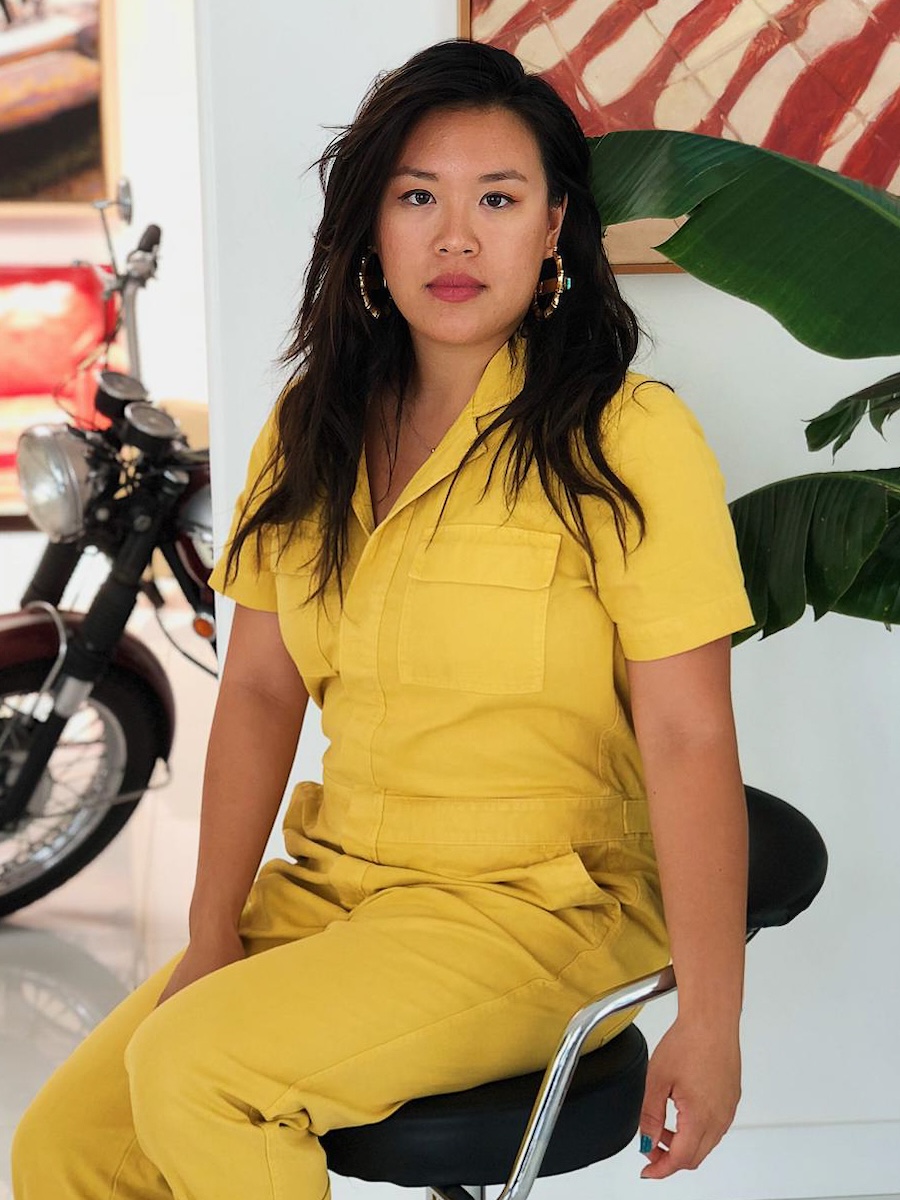 Portrait of Yiwa Lau. Courtesy of the artist.
By YEZI LOU March 4th, 2026
“I think art is meant to transcend borders.” Yiwa Lau’s concise articulation of what art means to her extends from art making into curatorial practice, crossing both emotional and physical terrains. Born and raised in Southern California, Lau’s engagement moves across multiple cultural contexts. After completing her undergraduate studies in film in Beijing, she is now based in London, working as a curator, filmmaker, and photographer. These environmental shifts have shaped her perspective, yet they have also compelled her to construct a distinct language responsive to the world surrounding her.
On August 4, 2025, Photobook Café launched a joint exhibition curated by Lau. The show brought together works by Coco Mori and Soshi Hiramatsu, focusing on understated narratives captured through lenses wandering across two globally recognizable cities, London and Beijing. In Lau’s curatorial decision, the intimacy between the two artists was not overstated, nor were their works merged into a generalized theme. Instead, she presented them in two clearly defined sections within a shared space, each with its own title and conceptual framework.
Hiramatsu presented Bond With, a body of photography and graphic works exploring nuanced human relationships, emotions, and memories that circulate within society yet often remain unarticulated. Hiramatsu photographed figures, objects, and architecture in London, recording a diary of encounters that feel both trivial and tender. “These thoughts and feelings are ones I never truly experienced while living in Japan,” Hiramatsu notes. “It was only through distance that I came to realize the deep importance of human connection.” In several images, the film appears underexposed; the lens loses focus, occasionally trembling. These technical imperfections do not weaken the work. Rather, they translate a sense of displacement and foreignness embedded within the act of looking.
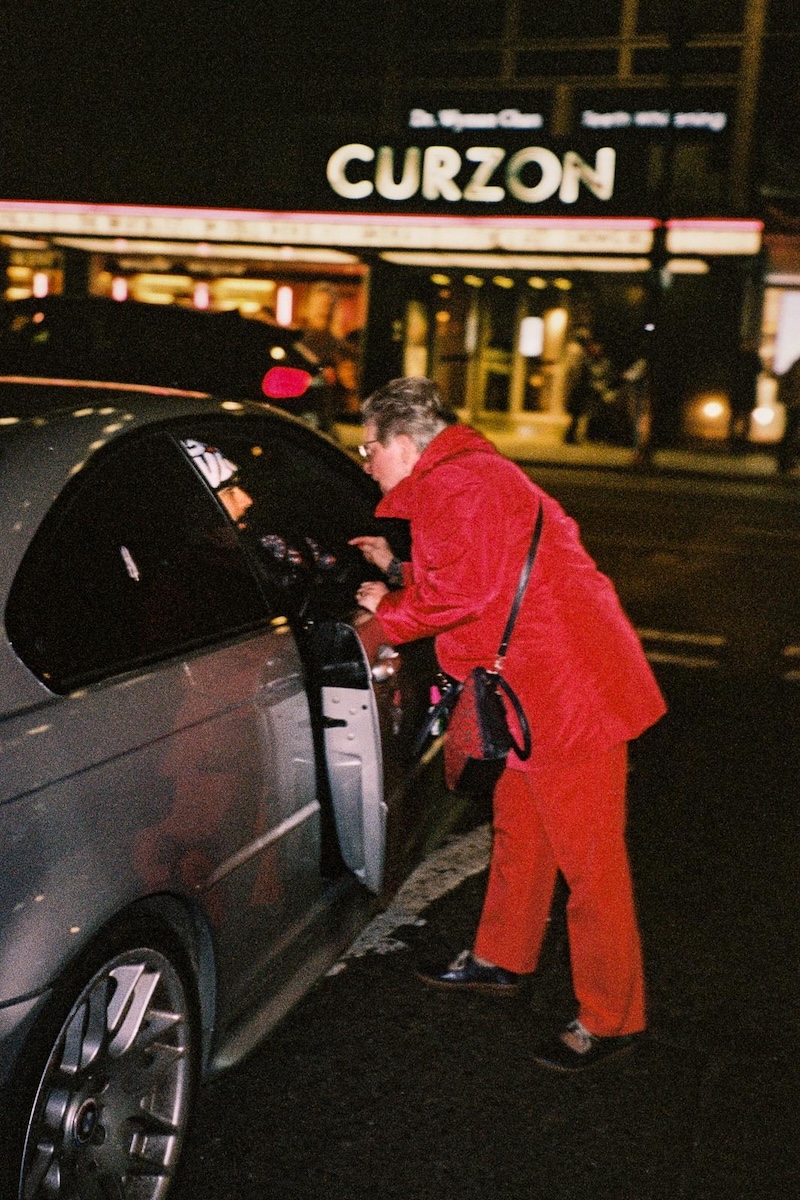 Soshi Hiramatsu, The Red Trace, 2025, Analog, 8 x 12 inches. Courtesy of the artist.
 Soshi Hiramatsu, The Red Trace, 2025, Analog, 8 x 12 inches. Courtesy of the artist.
In the adjacent section, Coco Mori presented Uncertain Blue, documenting life in Lujiaying, a village located 4.9 miles from central Beijing. The area has long been home to working class residents, many living in the shadow of economic precarity. Mori’s project recorded daily scenes, faces, and voices of villagers before to the demolition announced in May 2025, under the urban redevelopment policies. Mori’s archival photographs hold moments suspended before erasure. Each frame suggests that what appears ordinary may in fact be a threshold, containing multiple possibilities of transformation. The work becomes an open question on what change demands, and what it leaves behind.
 Coco Mori, Piece from Uncertain Blue, 2025, Photographic Print, 9 × 12 inches. Courtesy of the artist.
Through Lau’s curation, both Bond With and Uncertain Blue address human relationships within broader social systems. The conversations unfold in different countries, where geography initially seems irrelevant, yet the works share an empathetic observation. They resonate through parallel structures of attention rather than through imposed thematic unity. Such layering also extends into Lau’s spatial conception of the exhibition. The room functioned almost like a compressed file. Entering the space felt akin to entering a database of images, texts, and digital traces. “What stays consistent is my belief that the audience's body moving through the space is itself part of the storytelling,” Lau explains. “The sequence in which they encounter things, the moments of proximity and distance, the decision to read or not to read a text panel, all of that is compositional.”
Lau’s attentiveness toward marginalized groups and socially peripheral positions emerges partly from her own itinerant life, but also from a collective sensibility shaped by care for one’s surroundings. She understands adaptation not as weakness, but as a deliberate response to structural realities. For those positioned at the margins, such negotiation becomes a rational way of inhabiting conditions not of their own making. It is a way to endure uncertainty, to navigate loss, and to seek localized solutions where institutions fall short.
Today, “the margin” and “the center” have hardened into oppositional categories. Cultural attachment to centrality often renders marginal life as lesser, concentrating power and visibility in limited spaces. Lau’s practice resists this hierarchy without spectacle. Instead, it reorients attention toward the individual situated within these systems, asking quietly but insistently: who am I here? What can I do as an artist from where I stand? In this sense, her work transcends borders not only geographically, but structurally.
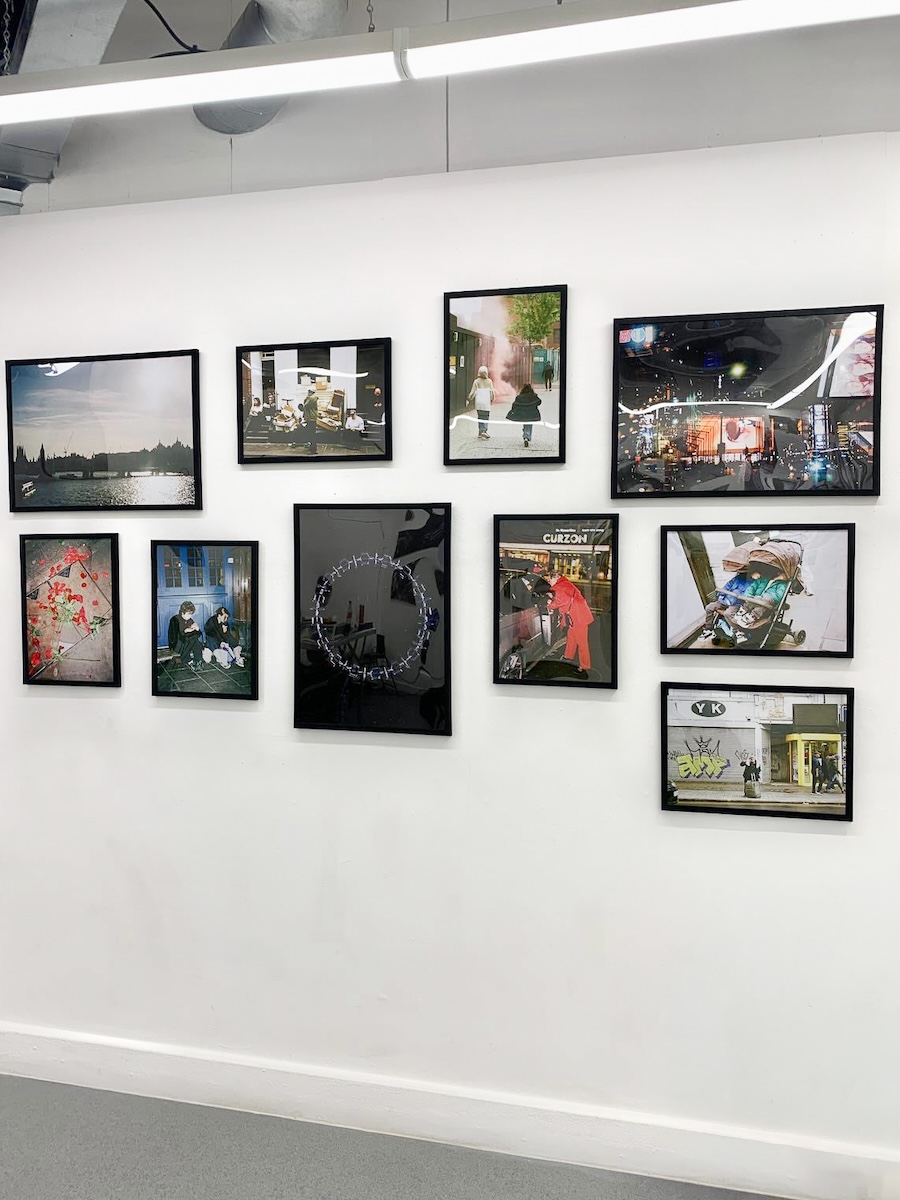 Bond With. Exhibition view at Photobook Café , London, 2025. Courtesy of the artist and Photobook Café. Photography by Coco Mori.
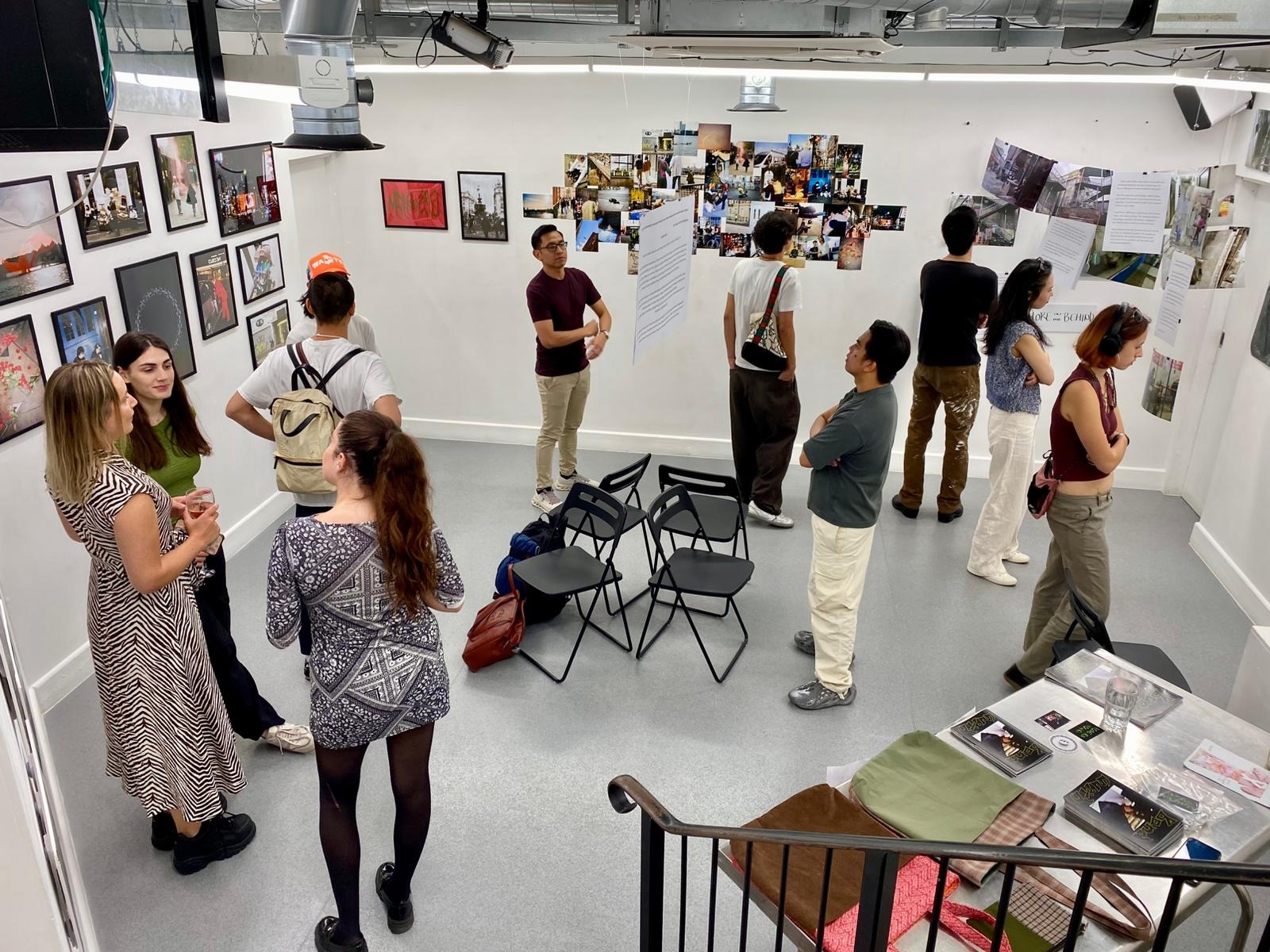 Bond With and Uncertain Blue. Exhibition view at Photobook Café , London, 2025. Courtesy of the artist and Photobook Café. Photography by Coco Mori.
Yezi Lou: You’ve lived across very different cultural contexts, from Southern California to Beijing and now London. How have these environmental shifts shaped your perspective as a curator and image-maker?
Yiwa Lau: I think art is meant to transcend borders. It’s an expression of ideas that people around the world can relate to. I’ve had the privilege to live in all three places and really felt that my mindset expanded with the places that I’ve lived in. I’ve had the wonderful opportunity to meet people of different backgrounds and perspectives that ultimately shaped my worldview. The exhibitions that I’ve curated are born of that, including the themes I wanted to lean into and the artists that I want to champion.
Yezi Lou: Empathy and honesty are at the heart of your creative values. How do these principles shape your curatorial process and your engagement with artists and audiences?
Yiwa Lau: I really like this question. I think collaboration is key in the curatorial process, as well as consent and maintaining an ethical practice. Some of the exhibitions that I have done showcase artists who have never had an exhibition before and, because of their current circumstances, don’t want to show their full name on their work. When working with marginalised stories or artists, that’s something to be mindful of. It’s also about steering away from “poverty porn,” which is already quite difficult when you’re bringing certain themes into a Western community. However, the artists are sharing their work on their terms and are given agency in how they want to communicate those themes to the audience.
Yezi Lou: Bond With explores invisible human connections through photography and graphic art. What drew you to this theme, and how did you translate such an intimate, intangible concept into a spatial experience?
Yiwa Lau: Bond With is really interesting because it’s what the artist was experiencing living away from his home in Japan for the first time. It kind of switches the gaze around. We see so many photos of the East from a Western gaze, a colonial gaze. You rarely see it the other way around. Hiramatsu’s frames are interesting because it kind of approaches the West in a curious manner, where we are looking through the lens of someone being here for the first time. He captures really intimate and fleeting moments. The way we arranged the frames, as a sort of cluster around each other, shows how so many moments can be in one memory.
Yezi Lou: In Bond With, the Japanese notion of “ichi-go ichi-e” (one time, one meeting) is emphasized as a core philosophy of the exhibition. How did this concept guide your curatorial approach and your collaboration with Soshi Hiramatsu?
Yiwa Lau: This is such a beautiful saying and one that I think we can all learn from. Ichi-go ichi-e is a chance meeting that is drawn by our own consciousness and can never be repeated. It signifies how precious each encounter is, with anyone. I look at my own curatorial practice and really see how it has been drawn from the people I’ve met.
Hiramatsu explained the backstory of two images that will be shared in the article. One day, he was walking around Soho when he encountered a family with a baby stroller crossing the street behind a car. The car suddenly reversed, and people started to scream and shout with alarm. Thankfully, no one was harmed. All of a sudden, this lady in red walked up to the driver and was very angry with him. Soon after, Hiramatsu found roses scattered on the floor, and had a feeling that the roses were left by the woman, like leaving a trace behind her - an impression he felt from that moment.
I really wanted to evoke that same ethereal environment in the exhibition space and show how moments can both branch off from others or be enjoyed singularly, which is why you’ll see some images framed and the others in a cloud-like organisation to one side.
Yezi Lou: Uncertain Blue documents life in a Beijing urban village facing demolition. How did you translate that emotional tension into the exhibition experience?
Yiwa Lau: Mori thought of a very unique idea where some of the more intimate and sensitive photos could be hung up in the corner, where you had to peek behind a “curtain” of images. It acted like a barrier in itself. The audience was able to feel that same emotional tension that many of the residents faced in the village, where they had to hide their livelihoods. The moving image piece also created emotional tension. You can hear the voices of the villagers, see their living conditions, and be immersed in an environment where the audience can almost feel like they are in that same village.
Yezi Lou: What was your curatorial intention in pairing the photographs with transcripts of conversations and video excerpts? Did you see this as giving voice to the residents, revealing the fragility of their stories, or both?
Yiwa Lau: I think both! Mori's photographs are powerful, but images without words can flatten people into symbols. The moment you read a resident's actual words, their uncertainty, their views on what is going to happen to their home, it adds a different layer. When there are video excerpts, they become fully dimensional. As a lot of my work focuses on those of marginalised backgrounds, I really want to give a space to really invite people to humanise stories and invite people to a different perspective.
Yezi Lou: There is a quiet tenderness in the exhibition images, moments of mid-gesture, traces of shared space, fleeting emotions. How did you work with the artist to balance observation and intimacy?
Yiwa Lau: There’s something Hiramatsu shared with me that I think is essential to understanding the tenderness in these images. The work didn’t begin as a project about strangers. It began as a feeling about missing family. I think that’s exactly what Hiramatsu wanted to capture, that being away from home made him recall his family in a way that he’s never experienced. Capturing these people in their intimate moments are something they might recall later in life.
Yezi Lou: How do you navigate your own position as a curator from a diasporic background?
Yiwa Lau: I grew up between cultures, which means I have never had the luxury of assuming my perspective is neutral. That is actually, I think, one of the most valuable things a diasporic background gives you as a curator, a heightened awareness of the gap between representation and reality, between how a story is told and who it is told for. But I think the most honest thing I can say is that my diasporic position doesn't resolve the ethical questions, it just makes me more attuned to them. I try to hold that tension openly rather than pretend I have resolved it.
Yezi Lou: What kinds of stories or themes are you most drawn to explore next?
Yiwa Lau: I’m really interested in stories of the East Asian diaspora, especially in the West. There's a striking contrast between the US, where East Asian narratives have gained considerable visibility, whereas in the UK, there is a gap in representation, even though I know that there is a rich Chinese history here. I’d really love to explore the tension of the Chinese British community and its foundations.

Yezi Lou
Yezi Lou (b. 1997) is an artist and independent writer based in Los Angeles. Her research centers on material culture, social phenomena, and syncretic spiritual practices in East Asia. She earned her MFA in Painting and Drawing at UCLA.
view all articles from this author