Whitehot Magazine
October 2026
"The Best Art In The World"
"The Best Art In The World"
October 2026
Radiographs of the Soul: Richard Humann’s Bone Songs at Leonovich Gallery
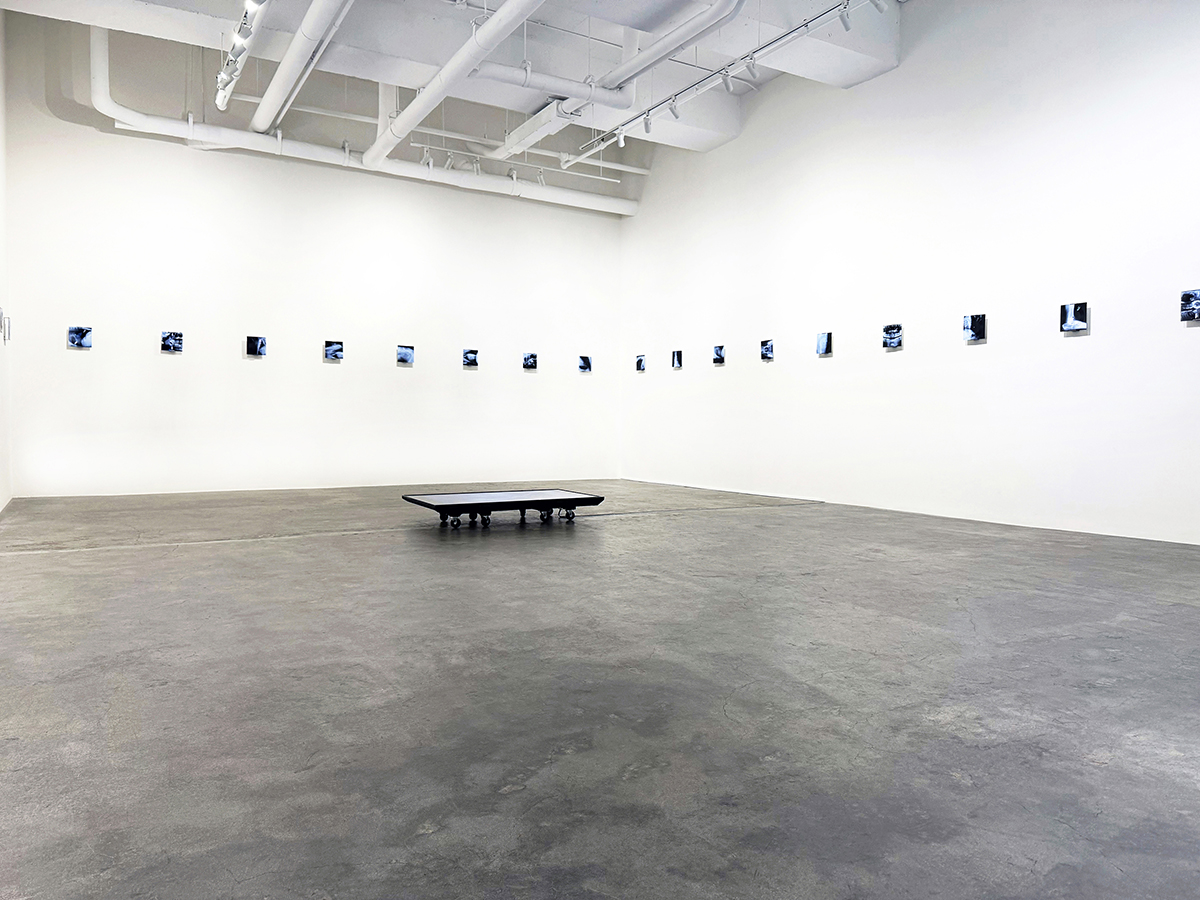 Installation view of Richard Humann: 'Tomorrow I'll Miss You' at Leonovich Gallery, 520 West 24th Street, New York, NY 10011. Courtesy of the artist and Leonovich Gallery.
By Dr. Thalia Vrachopoulos December 13th, 2025
Richard Humann’s Tomorrow, I’ll Miss You at Leonovich Gallery is a rare demonstration of how contemporary art can reactivate a historical medium thus revealing its latent magical dimensions. Curated by Elga Wimmer, the exhibition is anchored in “bone music”—the mid-twentieth-century circulation of illicit Western recordings on discarded X-ray plates behind the Iron Curtain. Humann’s project, transforms this anecdote of cultural resistance into a poetic system where technology, memory, and the political imaginary converge in ways reminiscent of techno-mysticism. Humann’s gesture echoes Andrey Platonov’s visions of machines animated by human longing and of bodies functioning as metaphysical infrastructures. Technology here becomes less an instrument of modernity and more an oracle; an intermediary that preserves and transmits what would otherwise be forbidden or lost.
Seen through these lenses, the historical practice that inspires Humann’s exhibition aligns closely with what Russian writers have long described as the underground ecosystem of samizdat: the self-published literature that circulated in defiance of state censorship. Bone music, in this sense, functioned as a form of musical samizdat; an acoustic parallel to the manuscripts typed, carbon-copied, and passed hand-to-hand in the kitchens and corridors of late-Soviet underground culture. Much like the magical prose of Pasternak, these fragile X-ray discs enacted a potent denial to official institutions relying on communal networks of trust, ingenuity, and shared longing for an unbridled imaginary space.
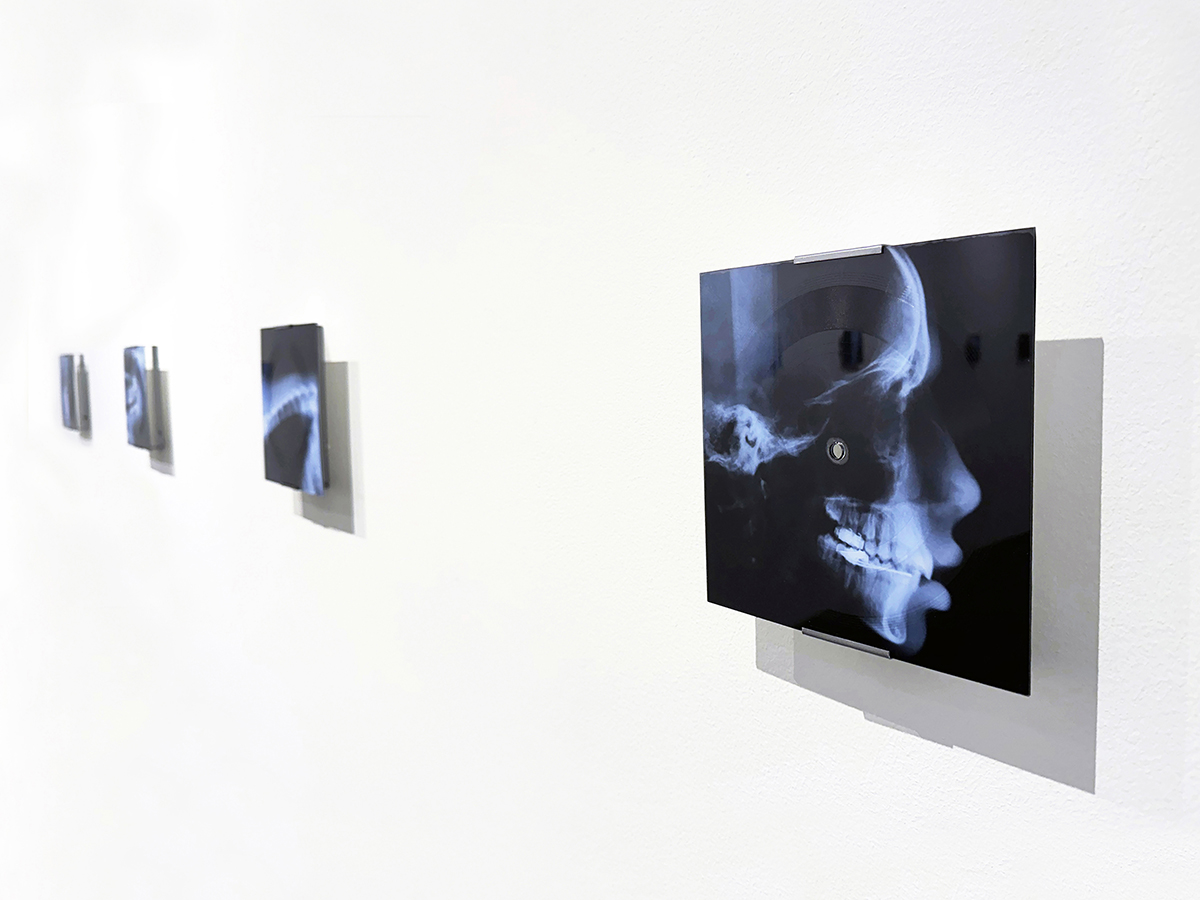 Richard Humann, installation view of original music pressed into polycarbonate flex discs, ink on paper, steel, 7.5" x 7.5". Courtesy of the artist and Leonovich Gallery.
Upon entering the elongated gallery space, I was shocked by the exhibition’s nearly clinical atmosphere. The white architecture, with its surgical brightness and immaculate surfaces, rendered the X-ray discs strangely operative, as though I was entering not an art space but an antiseptic laboratory. This sterility then gave way to an uncanny sensation, prompted especially by the AI-generated music. And yet, beneath these initial layers of clinical shock and robotic uncanniness, a final emotion slowly crystallized: nostalgia, and unexpectedly, a kind of warmth. The project transported me back to an era in which artistic expression itself was an act of resistance, when the circulation of music or literature could carry genuine political consequence. In that recognition, this exhibition reminded me of the fragility—and the urgency—of maintaining the freedom to imagine, to create and to act.
Lining the galley walls in a frieze-line composition, hang sixty-six polycarbonate “singles,” each backed by a printed X-ray image; radiographic apparitions rendered spectrally by their archival deterritorialization. These objects, with their skeletal translucence and central perforations, operate as both relics and instruments: part funerary tablet, part technological fetish. In a way, they persist in an ambiguous state of liminality between medium and message; a territory in which anatomy and machine intermingle. Like a digital mise-en-abyme of a technology resurrecting technology, a centrally located monitor topped by a turntable plays an X-ray disc. Depicted is this X-Ray record appears a skull in profile rotating with hypnotic slowness while the needle translates its grooves into sound.
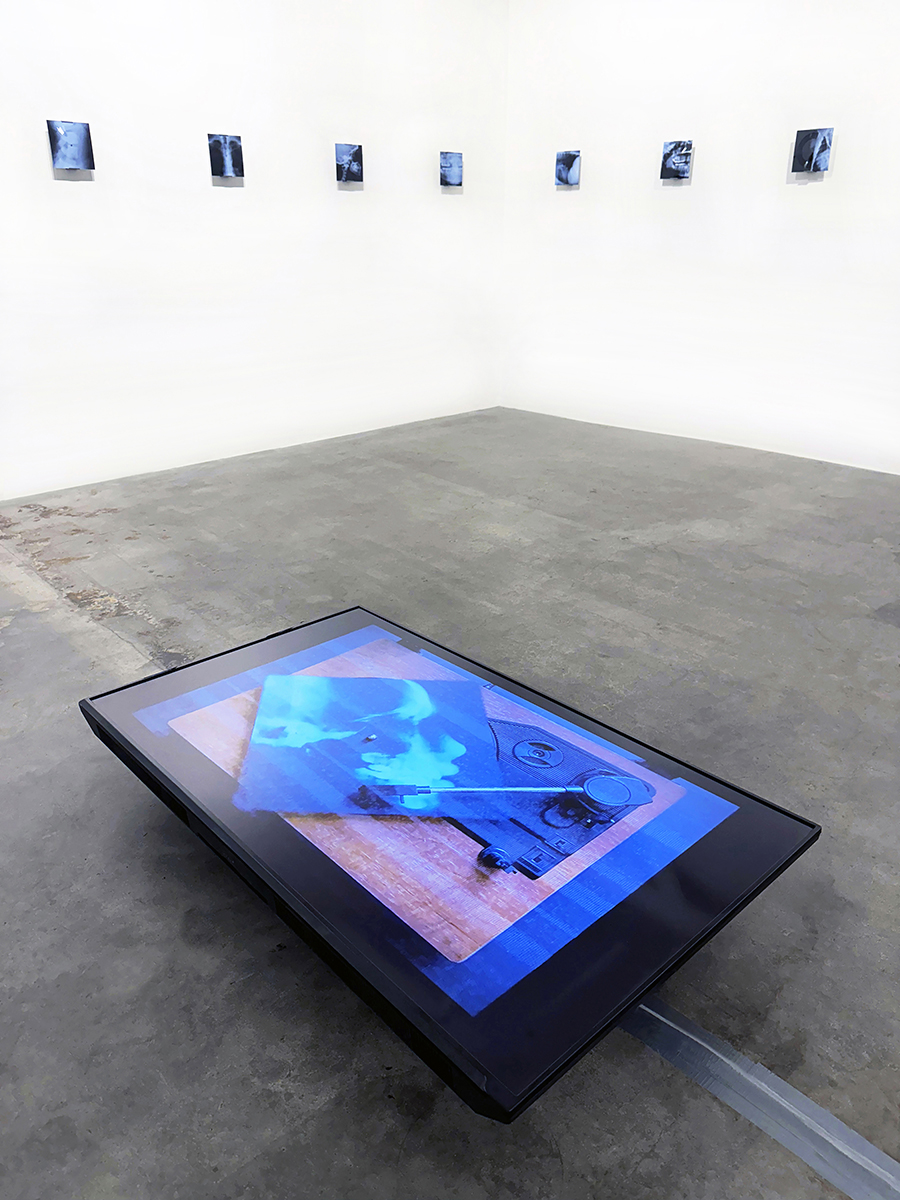 Installation view with audio/video work of Richard Humann: 'Tomorrow I'll Miss You' at Leonovich Gallery, 520 West 24th Street, New York, NY 10011. Courtesy of the artist and Leonovich Gallery.
This image extends the logic of the entire exhibition: a ritual of listening in which the body becomes a channel, its hidden interior transformed into a vessel for cultural transmission. The music and lyrics—six tracks composed by Humann and realized through AI—internalizes this alchemical dialectic. Rejecting the authenticity obsession of the studio (or the band), Humann instead embraces a generative system capable of simulating, but never replicating, the tonal atmospheres of Presley, Seeger, Dylan, Beach Boys and early Beatles. This decision situates the work within a ritual of technological invocation: the artist conjures a sonic era through technological portals, much as Platonov’s characters invoke utopian futures through decrepit machines and improvised apparatuses.
The resulting compositions are not pastiches but evocations —spectral transmissions suspended between time and algorithm, between historical resonance and computational abstraction. The X-rays, once diagnostic images of the corporeal interior, now become metaphors for the human soul. These disks expose not pathology but imagination: the mind’s capacity to smuggle hope, desire and memory beneath the brittle lucidity of obsolete media. Each disc echoes the novel’s central tension: technology as an apparatus of control that nonetheless cannot fully extinguish the interior spark.
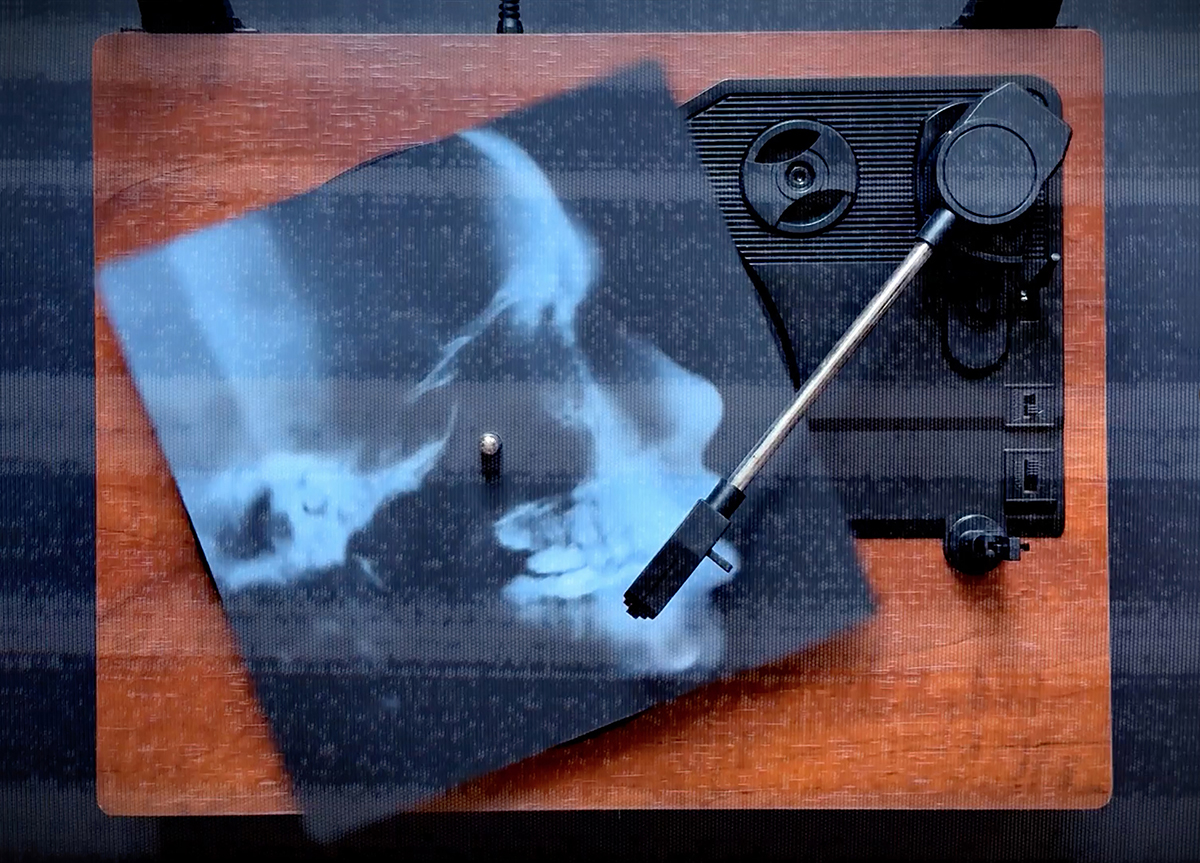 Richard Humann, 'Turntable', 2025. Video installation with audio music, mixed media, variable dimensions. Courtesy of the artist and Leonovich Gallery.
Just as the Beatles’ forbidden melodies once flowed through the fragile membranes of X-ray plates to catalyse new imaginaries behind the Iron Curtain, Humann suggests that even now, disruptive and counter-environmental uses of technology can carve out spaces for aesthetic and political liberty. In reactivating the magical and transgressive potential embedded in these media forms, Humann implicitly argues that the tools capable of numbing us into algorithmic conformity are equally capable—if reoriented with intention and imagination—of fostering new modes of freedom, solidarity and critical alertness.
Richard Humann
Tomorrow I’ll Miss You
November 6 – December 20, 2025
Leonovich Gallery
520 West 24th Street
New York, NY 10011
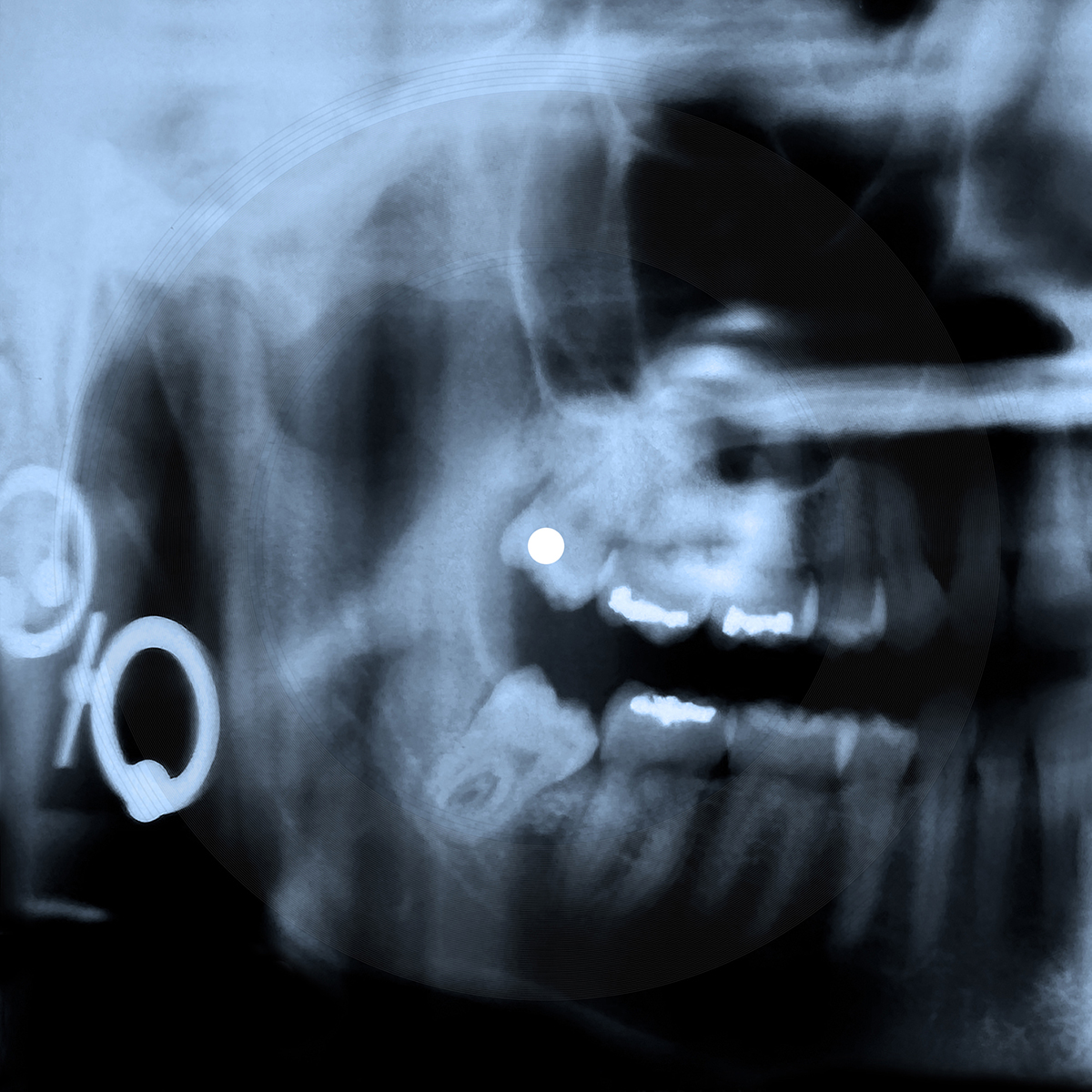 Richard Humann, 'Dead Horse Bay', 2025. Original music pressed into polycarbonate flex discs, ink on paper, steel, 7.5'' x 7.5''. Courtesy of the artist and Leonovich Gallery.

Thalia Vrachopoulos
view all articles from this author