Whitehot Magazine
October 2026
"The Best Art In The World"
"The Best Art In The World"
October 2026
“Conceptualize tragedy:” A conversation about art memorializing the survivors of Irish Industrial Schools and Mother and Baby Homes with Olwen Kelly
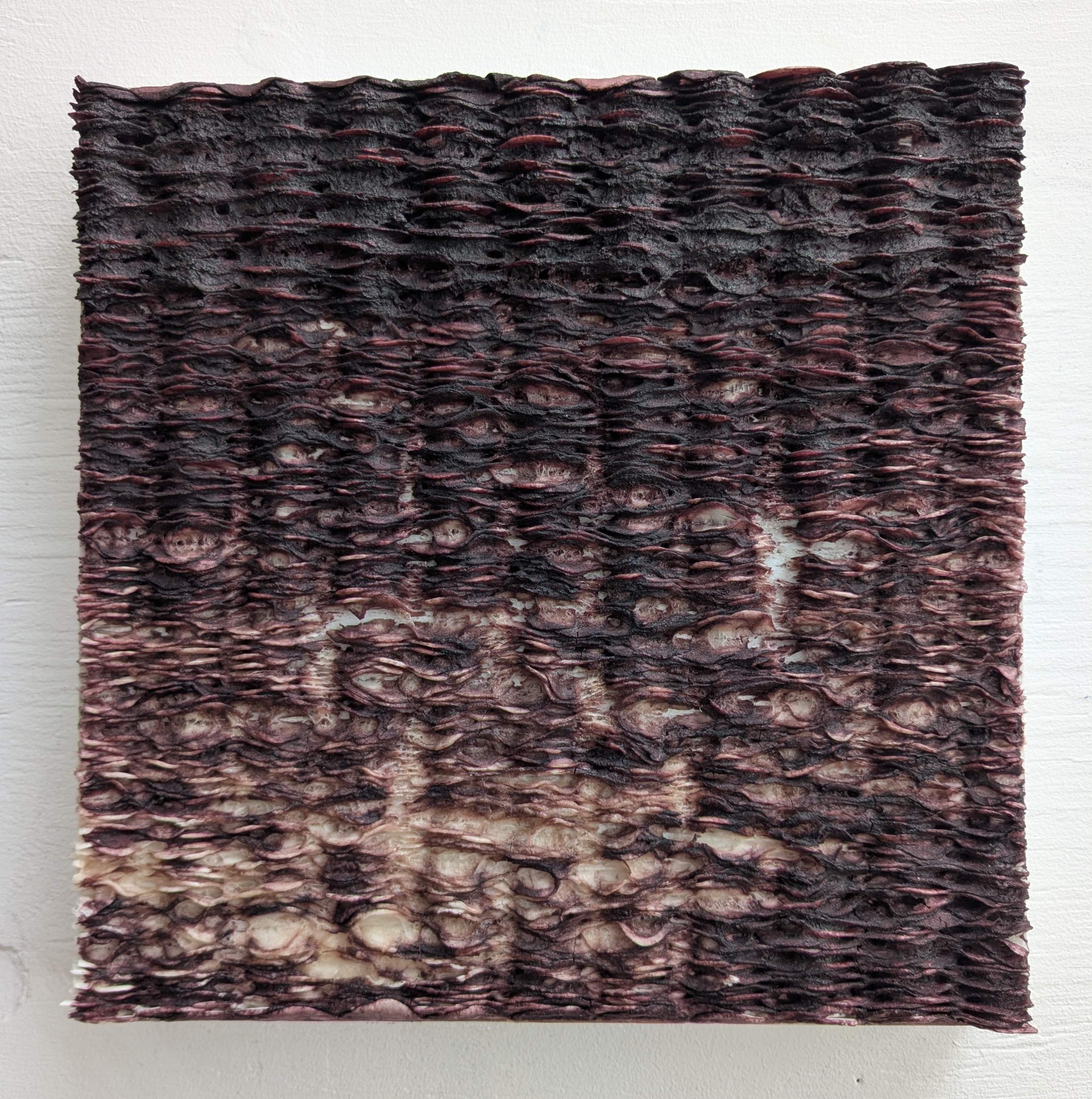 Tuam Excavations VIII, by Olwen Kelly. Permission from the artist.
BY EMMA CIESLIK July 9th, 2026
This past week, I came across mixed-media artist Olwen Kelly’s work Tuam Excavations I (2026). Kelly is based at the back loft at La Cathedral Studios in the Liberties in Dublin. Created out of multilayered communion wafers and wine, it recalls the horrific abuse suffered by people in Mother and Baby homes in Ireland. The piece references the forensic excavation of the Bon Secours Mother and Baby Home in Tuam, County Galway, Ireland, where hundreds of the bodies of infants and children who died at the Catholic-run institution between 1925 and 1961 were buried. It is a mass grave within and around an underground sewage tank that speaks to some of the horrors committed by the Catholic Church.
Kelly’s work explores these and other histories of systemic abuse perpetrated by Catholic institutions and people--visualizing the scale and severity of child abuse, neglect, and death in ways that both memorialize the forgotten and call out the unshakable, challenging institutions that have long remained untouchable. After first encountering their amazing work, I had the great honor to meet with them about the importance of creating art that tackles dark histories and creating with the tools that were once used to perpetrate these crimes.
Emma Cieslik: When did you first start to create art, and what inspired you to create art visualizing the scale and severity of abuse at the hands of Catholic institutions and officials?
Olwen Kelly: I’ve always made art. I can remember even before I started preschool, I can remember my parents buying me colored card and poster paints and crayons and other art stuff and I went to art and drama summer camps growing up, so I’ve always been painting and drawing and making things. When I finished school, I decided to go and study art in college, first at Ballyfermot College and later at the National College of Art and Design.
I was in the National College of Art and Design in my second year in 2019 when a few people in my class and I went to see an exhibition at the National Museum of Ireland at Collins’ Barracks. That exhibition was called A(Dressing) Our Hidden Truths by Alison Lowry, about Magdalene Laundries and Mother and Baby Homes, and I can remember just being really impressed and really affected by that exhibition.
So the basic idea I had for my installation Stigmata took root on that day. I can remember sitting down in the museum cafe with a few people in my class, after seeing the exhibition and saying ‘guys, I have such a good idea for an installation that I want to make,’ and I can remember telling them about the basics of the idea and them saying, ‘yeah, you should make that.’ I then started work on Stigmata in January of 2020.
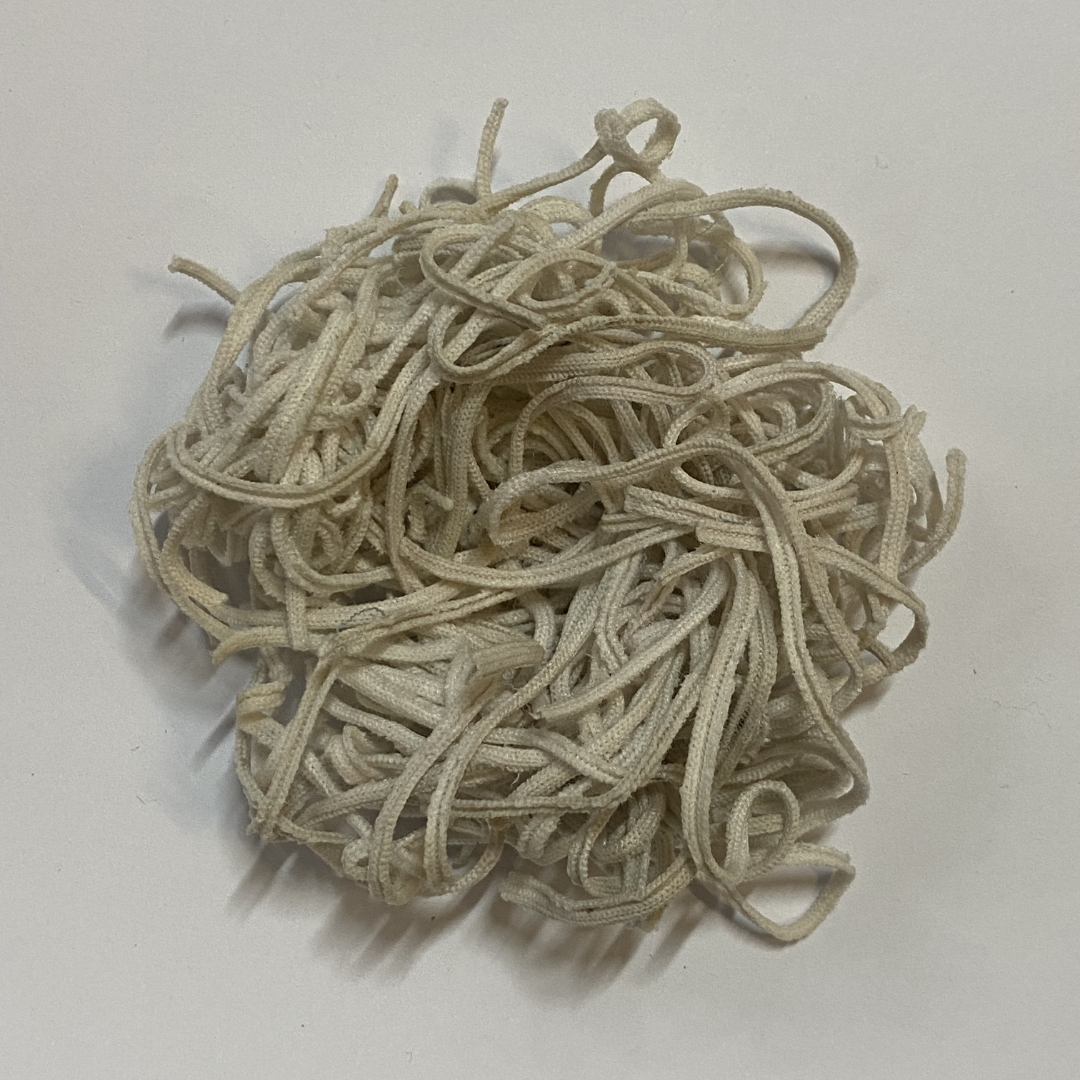 Nest 1, by Olwen Kelly. Permission from the artist.
Cieslik: Some people may not be familiar, but I think it’s important to highlight the histories of and your personal connections to the Laundries, Mother and Baby Homes, and Industrial Schools in Ireland and beyond. Would you mind sharing more about what happened, and what it means to you to document this abuse through art?
Kelly: So, I’ll be brief because there’s a lot [to discuss], industrial schools were institutions usually run by Catholic orders, although there were a few Protestant industrial schools as well. They were residential schools run by religious orders and overseen by the state and the local authorities. They operated from the 1860’s up until 1995 in Ireland. They were ostensibly set up to teach poor, orphaned, neglected or abandoned children or children who were convicted of crimes, a trade. So in theory, the idea was that these children would go into these schools and come out of them with good training in a trade which would allow them to be gainfully employed as adults and would keep them from resorting to crime to make money. The reality was that the setting up of these schools resulted in thousands of children being taken away from their families and communities. As the schools were usually very far away from the children’s homes and their families would often not be able to afford to visit them, this left the children extremely isolated and vulnerable to exploitation and abuse at the hands of the religious orders running the schools.
It is said that only around 5% of the children in these schools were actually orphans, even though they’re often called orphans when people speak about these places. Across the country there are many accounts of the systematic abuse which took place in these institutions such as children being sexually and physically assaulted, psychological abuse, neglect and the children being used for very hard labor and not being paid for it.
The Mother and Baby Homes were institutions set up from 1922 onwards where women who were unmarried and became pregnant would be sent to give birth. Their pregnancy would have been considered too shameful to happen in a normal maternity hospital at the time. After they gave birth, the mothers would nurse the children in these places for a period of time, usually for around six months to a year or more depending on the institution. During this time the nuns who ran the home would try to find adoptive parents for the babies. A lot of the children who were born into these places didn’t get adopted, so those that didn’t get adopted would be sent into the industrial school system. These homes also had extremely high rates of infant mortality in comparison to mainstream maternity hospitals at the time. In any case, the mothers would normally never see their children again.
Women who gave birth more than once in the mother and baby homes would be sent to Magdalene Laundries, although some were sent after the birth of their first child as well. These were prison-like institutions which operated from 1767 to 1996 in Ireland. These institutions were run by nuns and the women sent to them would be forced to work really, really long, hard unpaid hours in laundries which were run as for-profit businesses by the nuns. There’s also loads of accounts of women who didn’t have children who were sent to the Magdalene Laundries as well, like women who were convicted of certain crimes such as sex work related offences or who had just aged out of the industrial school system and were sent straight to the Magdalene Laundries because they could be easily exploited for their labor as no one would be asking questions about where they were. Some women would be allowed to leave after a period of time, others managed to escape and there were also many women who never left and worked in the laundries until they died.
I don’t have any personal connection to the Mother and Baby Homes or to the Magdalene Laundries that I know of, but I think it’s important to note that given the level of secrecy and shame that surrounded them, it’s not impossible that I could have relatives that were in those systems. I know there are so many families that are only now uncovering their connections to all these places, especially with the release of the 1926 census recently, but I do have a connection to the Clifden and Letterfrack Industrial Schools. So I felt that I wanted to make an artistic response to these places, not just because of my own connection to them, but I felt that they’re actually part of an unfolding story.
The events that took place in these institutions are not just things that happened long ago that have been forgotten. When you put into perspective, the last of these institutions only closed in the 1990s, which is the decade that I was born in. Many of the survivors of these institutions are still alive and they’re still battling with all these religious organizations and with the state for compensation and for recognition. Just last year, a number of survivors were on hunger strike outside of the Dáil, which is our parliament buildings, and they were seeking very, very basic redress for themselves and for around 4,500 other survivors. It’s only last year that the excavations began at the Mother and Baby Home in Tuam even though the public have known that the site has existed since 2014. At that site, there are 798 babies with no official burial records that are thought to be buried in and around a sewage tank on those grounds, but there’s also the question as to whether the nuns could have been falsifying records to facilitate illegal adoptions too. Those excavations are ongoing at the moment to find out what the truth is.
And at the moment in Cork, planning permission has been granted to build apartments on top of the grounds of the former Mother and Baby Home in Bessborough where 923 children died, 859 of whom have no recorded burial site. There are women alive today who are just seeking the very basic thing of being able to visit their child’s grave and to know where it is and who will be denied that if those apartments are built on their graves.
I felt that making this work would draw attention to the fact that the survivors of these institutions and those that died in them are still being treated as disposable and irrelevant in Ireland today. I don’t feel that its right that we should just concrete over these places and forget about them, so that was a big motivation in making the work.
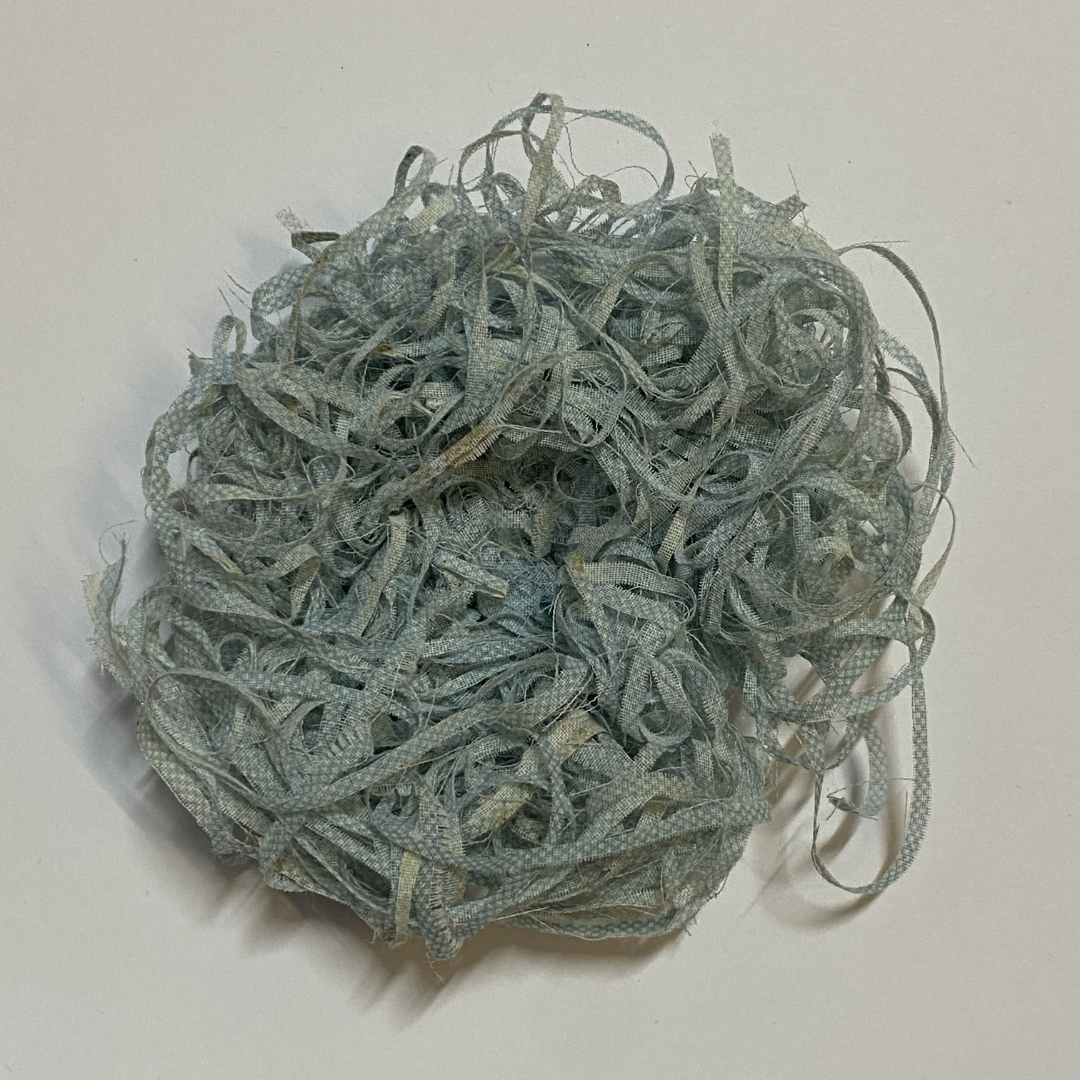 Nest 2, by Olwen Kelly. Permission from the artist.
Cieslik: One of your most arresting works for me is Nests, a series of 43 soft sculptures created using deconstructed fabrics and laundry starch. You mention it was partially inspired by visiting the site of the former Clifden Industrial School notorious for child neglect and abuse. What inspired you to create around the theme of nests, and with the tools and materials often wielded against these children?
Kelly: I visited the Clifden Industrial School building in December of 2020 when I was visiting my family in Galway for Christmas, and my mom was the one who told me that the building was about to be remodelled for a social housing development, so she asked me if I wanted to go up and have a look around just to see it before it was gutted. I had a relatively new camera at the time, so I thought it would be a good opportunity to get the camera out and take some photos.
I’d heard my mom talking about ‘the orphanage’ as it was known locally. Growing up, I’d heard her tell me stories about it. She went to primary school across the road from the industrial school building, so she was taught by the Sisters of Mercy, the same nuns who ran that institution. Originally, the ‘orphans’, as they knew them, were segregated from the children of the town, they had their own playground, their own school, everything, but then as new educational reforms were brought in there was an effort to integrate them more with the local population. My mom can remember that when they integrated those kids into her school she remembers them as being really, really fearful.
She can remember the nuns would always beat them much, much more aggressively if they stepped out of line compared to the other children. She can remember there were two different sticks that they used to beat the children with. One of them was a harder wood and the other was made of bamboo, and the bamboo was a much sorer stick to be beaten with because it had kind of frayed, so it would feel like being lashed, and she can remember the nuns always using the bamboo on the children from the industrial school. My aunt can also remember that once, she came to school with a really sick stomach and got sick, and the nuns called for one of the orphans to go and clean up her sick, which shows how they were treated as less than second-class citizens.
My mom can also remember the kids not being very clean and their clothes not being really clean, and she can remember them being so socially isolated from the other children in the town that they actually had a different accent to them, which also made them stick out a lot more. It probably made them feel even more different.
So, I was aware of mom telling me all these stories growing up, but I knew that I also had a family connection to the place. My great-aunt Peggy gave birth at home in Clifden when she was young. She hadn’t told anyone that we know of that she was pregnant. She wasn’t married, so her daughter was taken by the nuns into the Industrial School. The story I’ve heard from our family is that her daughter was very sick and skinny and her relatives became quite concerned that she wasn't being taken care of well, so luckily for her, these relatives managed to convince the nuns to let them adopt her, so she managed to get out of there quite young but her adoptive family do remember that she was walking and talking by the time she came to them.
As an adult, she actually approached the Sisters of Mercy because she was interested in getting her records from her time there, and they told her that she doesn’t exist in their records. That’s actually quite a common story in Ireland that people who know they were in these places or who know they had family in these places will go searching for records, and they’re told that they’re just not there, and as a result of that, she is ineligible to apply for the redress scheme for survivors.
Knowing all this, I went into this place, and I had a walk around, and it was a very eerie building. I only managed to get into the ground floor and the side building because a lot of the top floor had collapsed, but I can remember walking around wondering about all of the memories that the place must hold for people. There was a side building next to the industrial school which was the laundry building. That laundry was staffed by the children who would have washed all of their own laundry from the industrial school, the nuns laundry from the convent and for a time the laundry was also being run by the nuns as a commercial enterprise staffed by the children. The children would have worked really long, exhausting hours there, and they were never really compensated for any of that work.
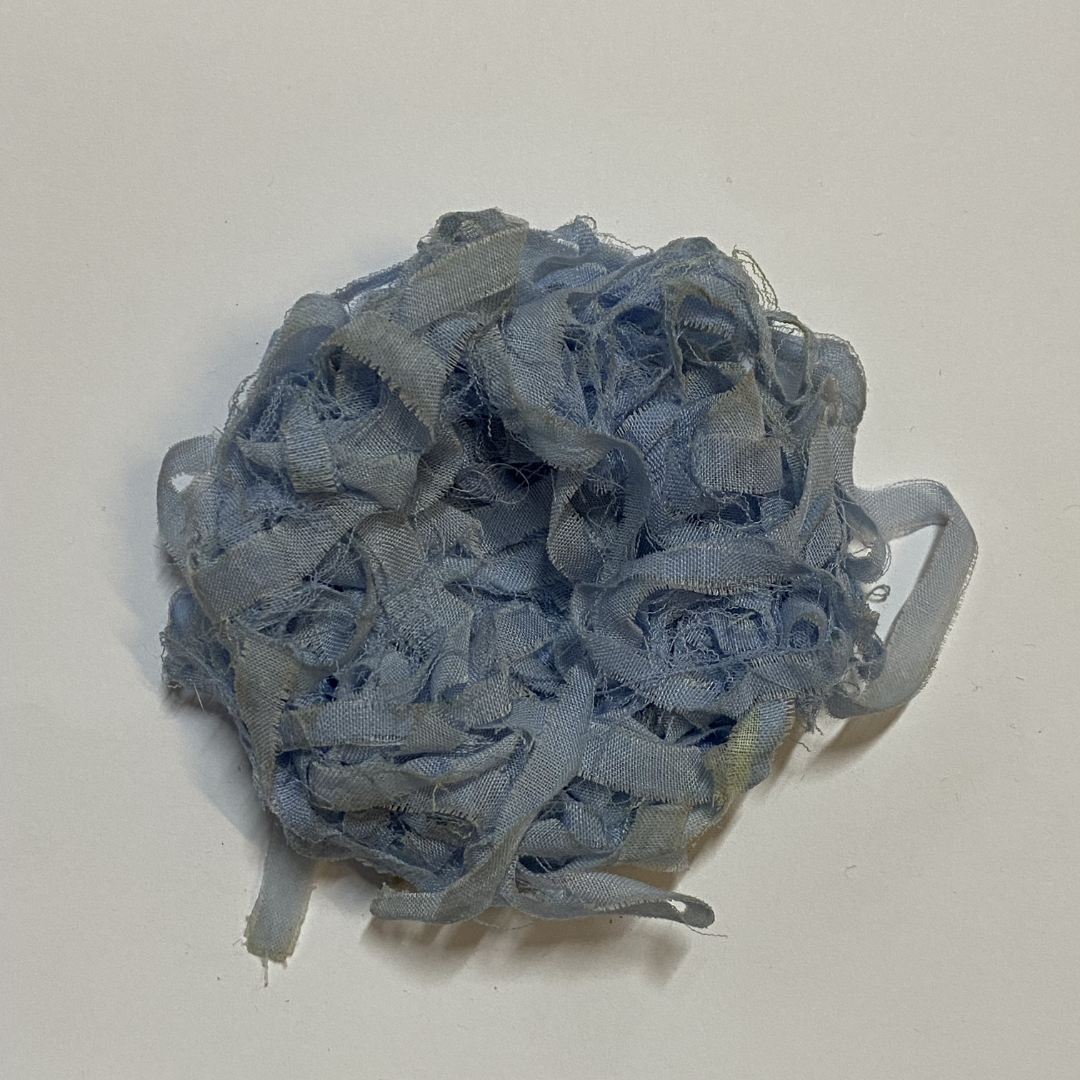 Nest 3, by Olwen Kelly. Permission from the artist.
I was really amazed to find that there were actually clothes in the laundry when I went there, so I collected them, washed them, took them back to the studio, and I can remember it was quite difficult for me to actually make something with them because I knew that by taking them apart, I was effectively destroying these historical artifacts, they were from the 1970s so they weren’t antique but I had a question in my mind as to whether that was the right thing to do with them. I initially thought that the project would take me a few weeks, but I ended up working on it on and off for a few years.
The idea of the nests formed gradually. I had thought about a lot of different ways of manipulating the fabrics, but I think the reason I came up with the nest idea was that on the most basic level, nests are something that you find a lot of in abandoned buildings, so I was thinking about how the abandoned school had become a home for all of these birds, and I was thinking about how the building itself was kind of like an empty nest, place which had once been full of children, but when I went there, it was just this sad, empty shell. I was also thinking about the homes that the children came from and how empty they must have felt after the children were gone from them to be taken to the industrial school. The other thing I was thinking of is that the shape of the nest is very reminiscent of fabric being stirred in water as it’s being washed, so I was thinking about the labor of those children and how hard their work must have been there. To stiffen the nests, I used laundry starch, so they all smell like laundry as well, so you do feel a very strong connection to the place that the fabrics were found when you’re near them.
The nests appear soft, but because of the starch, they’re actually very rough to touch, I was thinking about how, to outsiders, this place was probably seen as this lovely, charitable place where they took in all these unfortunate children and took care of them, but to a child living there it was actually a very harsh, bleak, unforgiving place to grow up, so that was the idea behind the nests.
Cieslik: Your installation Stigmata won the 2020 Visual Arts category in the Island of Ireland Region of the Global Undergraduate Awards. The work explores the scale and severity of physical abuse of boys by the Christian Brothers at St. Joseph’s Industrial School. As you mention, your great grandfather was one of 2,819 boys sent to Letterfrack, where boys suffered intense physical, emotional, sexual, and financial abuse at the hands of the Brothers. What inspired this work, and specifically to create using hosts and wine?
Kelly: I started to hear stories about Letterfrack towards the end of when I was in primary school. The Ryan Report, which was a major report into child abuse at all these institutions, was published around the time I was finishing sixth class, so I can remember a lot of the adults around me being really distressed by the findings of that. I can remember a lot of discussions taking place on the radio about it and I can remember hearing survivors telling their stories, and I can also remember at times, my parents turning the radio down when those stories would come on because sometimes they would be talking about things that were quite explicit that they didn’t want us to hear. I can also remember my next door neighbor in Galway telling me that when he was a little boy, if he and his siblings were messing around, his parents would say, ‘if you don’t behave, we’ll send you away to Letterfrack where all the bold boys are.’ That statement made me wonder how much people in the local area really knew about what was happening in the school there.
We don’t know a lot about my mother’s grandfather who trained as a carpenter in Letterfrack. We think he probably trained there around the 1890’s. We do know that this father died when he was young, leaving his mother with a large family and that he was poor. He was disabled with a leg injury from a young age which would have left him with few employment prospects. We think he probably began his training in the school following the death of his father and his disability may have also been a factor in why he was sent to train there. My mom did not learn about our family connection to Letterfrack until she was an adult when she found out about it accidentally. She was very shocked when she heard about it and asked her mother if it was true. My grandmother told her that it had come up as an issue when she went to marry my grandfather as her father had warned her that her husband-to-be’s father had trained in Letterfrack and that this should put her off marrying him.
I do also know that my great grandfather was known to be a jolly man, so I would like to think that he was able to move past any harm that may have come to him when he was in Letterfrack but it did upset me that he, and by association his son, would be stigmatised because of the place where he had to train in order to make a good life for himself.
I actually find it quite interesting, that over on the opposite side of the country in Dublin where my dad grew up, he told me that when he was little he thought his mother had this really irrational fear that her children were going to be taken away and sent to the industrial school in Artane which like Letterfrack, was also run by the Christian Brothers. He realized then as he got older that when his mother was young, one of her parents had died, so the fear of the industrial school was probably something she had carried from her own childhood into her adult life as she probably was very justifiably afraid of being taken away as a child herself. I can also remember my dad telling me that every single night before my grandfather went to bed, he would kneel down and would say a prayer and would have regarded himself as someone who had a relationship with god but my dad can remember that he would never go into church. He would go to church and then wait outside while everyone was at Mass. This struck my dad as being very strange but as he grew older he learned that his father had known children who had been in the industrial schools when he was a child and had probably heard stories about what was happened in those institutions from them which is probably why he distanced himself from participating in Catholicism in any organised capacity.
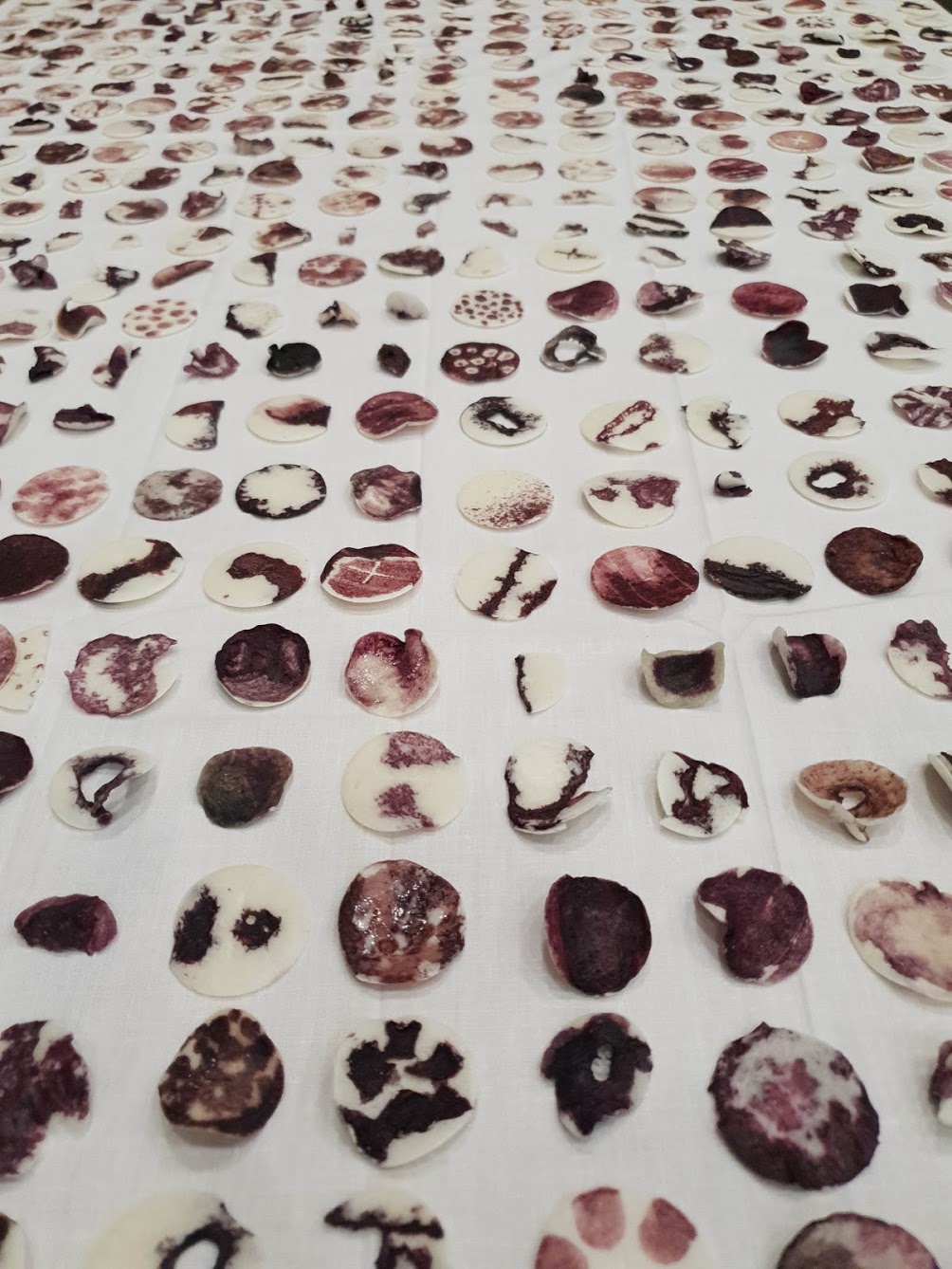 Stigmata, by Olwen Kelly. Permission from the artist.
By the time I started work on Stigmata, I was also aware of the work and writings of artist and Dublin City councillor Mannix Flynn who has spent decades campaigning for survivors of industrial schools. He, like many others who were sent to Letterfrack and to other institutions is from Dublin City Center which is where I live now so I also felt that the Stigmata project was one that was not only rooted in my family history in Galway but was also rooted in the community in Dublin that I am now a part of. During my research for Stigmata, I also came across the story of Peter Tyrell, a man who was sent to Letterfrack aged eight who spent his adult life in England desperately trying to get politicians in Ireland and the Christian Brothers to do something about the abuse taking place in the school. He eventually committed suicide by setting himself on fire. A ripped postcard addressed to Senator Owen Sheehy Skeffington who he had been corresponding with was found next to his body.
So learning all of these stories made me want to make a piece about Letterfrack. I was particularly interested in making something which showed how stigmatised boys who were sent to Letterfrack were, even after leaving the institution. I discovered that stigma and stigmata have a shared root, originally stigma meant to mark or to brand, but over time that word has come to mean a metaphorical mark of disgrace. I was also thinking about all these accounts of beatings taking place in the school. In particular, there's a lot of accounts of boys being beaten on the hands and elsewhere until they bled, so this kind of reminded me of the stigmata phenomenon where people miraculously develop the wounds that Jesus had during his crucifixion I was also thinking about the idea of having blood on your hands in the metaphorical sense. I was thinking about all the boys walking around bleeding and also the idea of the institution having the blood of those boys on its hands.
I came up with the idea of using the communion wafers as they are very delicate and porous which reminded me of how easily hurt children are, and the wine obviously resembles blood to indicate the harm that was happening to the children in the school.
Cieslik: Your work often utilizes unconsecrated hosts and wine. Where do you get it (if that’s important, feel free to decline to answer), and what is the power of creating art with and seeking justice through the objects that Catholicism believes contains divine power?
Kelly: I don’t use consecrated hosts or wine. I don’t think it would be possible for me to get them even if I wanted to. I’m not really interested in using anything consecrated. About 60% of the Irish population is Catholic, at least according to official figures, and a lot of people, even people who have survived these institutions, would have their own religious beliefs around Jesus and the sacredness of communion who I wouldn’t want to hurt.
I also think the idea of the materials being unconsecrated is a symbolic thing itself, because by making artworks from them, I’ve kind of interrupted their life cycle because they’ve now not gone to a Church where they would have been consecrated and then consumed. It made me think of how the lives of so many people were not allowed to run their own course because these institutions interfered with that.
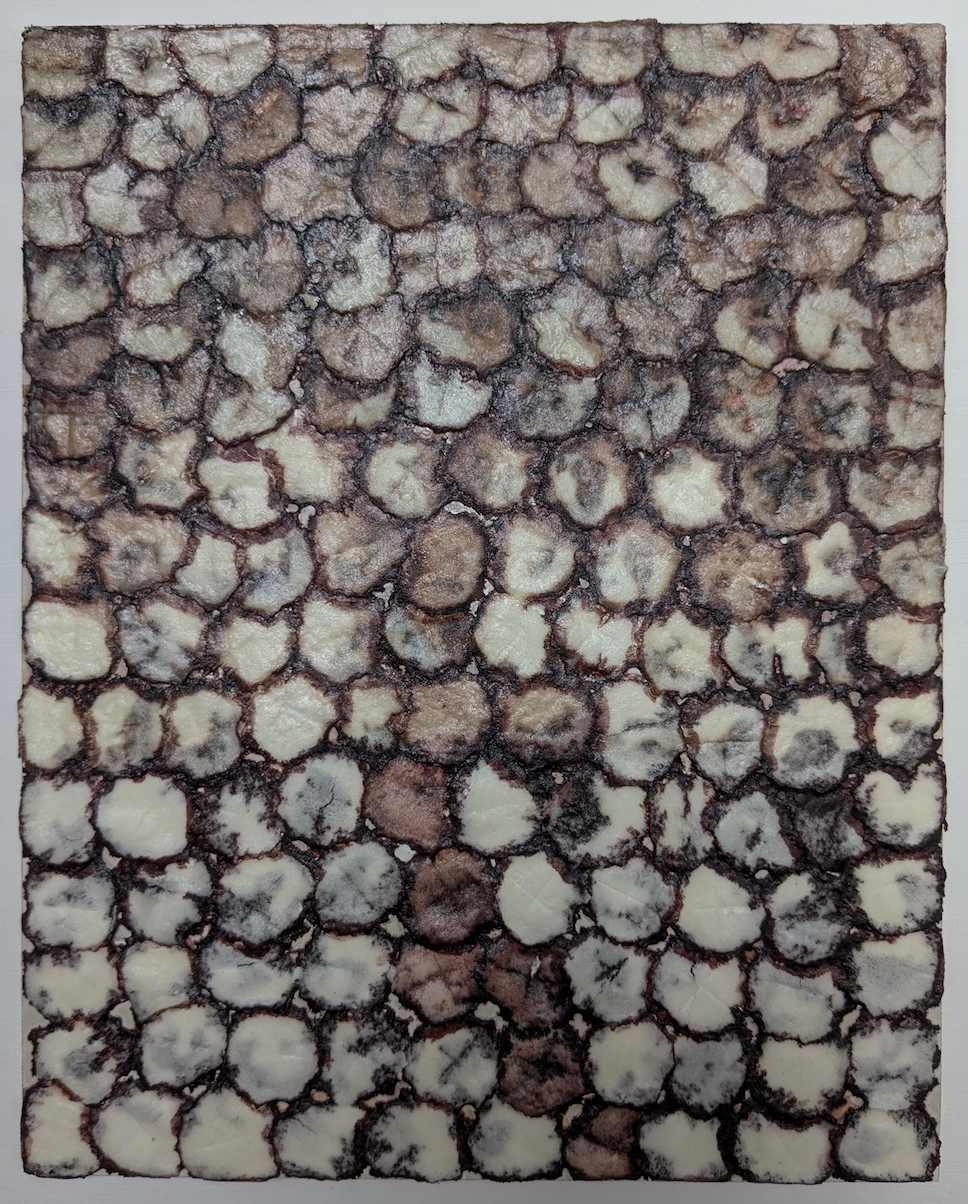 Tuam Excavations XIII, by Olwen Kelly. Permission from the artist.
Cieslik: What is your process? You mention online that you glue wafers to gesso-primed wood or mounting board and then paint them with boiled wine and cover it in a varnish. How do you prevent decomposition, or is that part of the work itself?
Kelly: So, I order all of the wafers online, and I use supermarket wine as paint, usually non-alcoholic wine because it’s a little bit cheaper to buy, and I boil that at home and bring it into the studio. Boiling it is what gives it that deep red bloody color. I do have kind of a rough plan in my head for how I want the pieces to come out, but it is an experimental process, so each piece is a process of trial and error and discovery for me. Once I paint the pieces with the wine I leave them out to dry in the sun in the roof garden of the studio. It’s been very hot in Ireland this summer so they have been drying quickly. I then wait until they’re fully dry, before I varnish them. I haven’t really had issues in a big way with decomposition.
The only work I’ve had issues with decomposition with was with Tuam Excavations I which I made in the wintertime. I had left it in the studio over Christmas when no one was in there, so no one was turning the heat on. The empty studio was very cold and kind of damp so that piece did have a tiny bit of mold growth on it when I came back after Christmas. I soaked it in vinegar, and it seems to have killed the mold. I do think over time, it’s likely that the colors in the works will probably fade, but I think that that in itself is kind of an interesting part of the work, that the works are these continually evolving things.
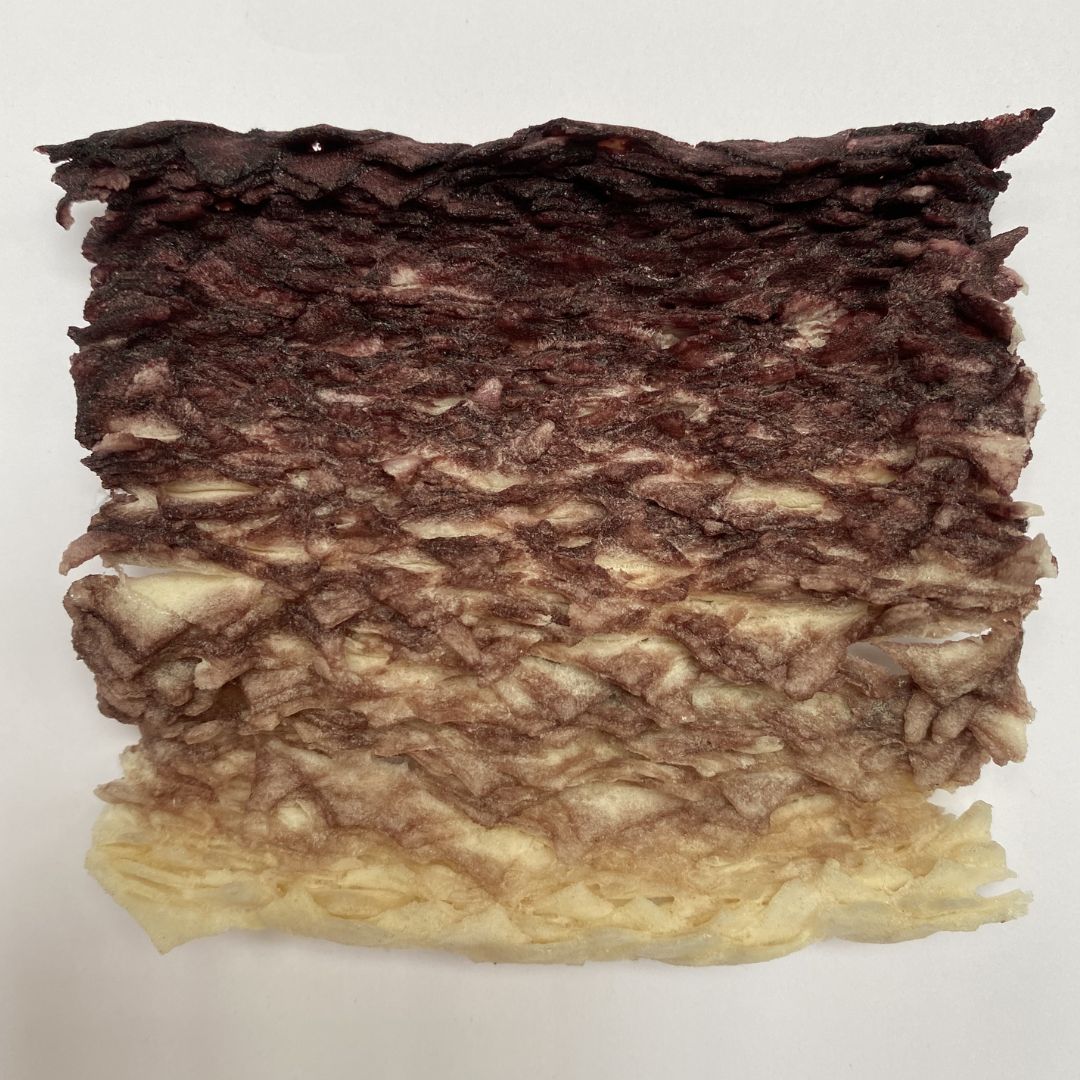 Tuam Excavations I, by Olwen Kelly. Permission from the artist.
Cieslik: What inspired you to create this work (Tuam Excavations), and how does this history inform the repeated pattern of the wafers covered in boiled wine?
Kelly: I had thought about making work about Tuam for a long time. Actually, when I was working on Stigmata, I was thinking about Tuam and that was before the excavations had started, but last year those excavations started and the more I was hearing about them, the more I felt compelled to make something about them. I had kind of questioned myself a bit as to whether I should make this project because I don’t have a personal connection to that particular institution, so in some ways, it didn’t feel as close to home as the other ones. The more I thought about Tuam the more I felt like it was a missing piece of the puzzle in my projects about the industrial schools. As I said before, a lot of the children born in Mother and Baby Homes, if they weren’t adopted or didn’t die, they would end up in Industrial Schools. There were also women who grew up in the industrial schools system who would have given birth in Mother and Baby Homes too. Since Tuam, Clifden and Letterfrack are all in Galway it is likely that people who were born in Tuam could have been in school in Letterfrack or Clifden at some point or that women who had been in the school in Clifden may have ended up giving birth in Tuam too at some stage. I felt that I wanted to further expand on my ideas about the stigmatized body which I was exploring when I worked on Stigmata. I decided that I wanted to make a series that was looking at the Tuam site not just as a literal excavation site but as a site of metaphorical unearthing, of stories and feelings and secrets which had long been buried that are now coming to the surface.
I was also thinking about a song in the Irish language called Caoineadh na dTrí Mhuire which is a traditional song from the Galway and Mayo area. The women who were sent to the home in Tuam were from Galway and Mayo so it’s very likely that many of them would have been familiar with it. The song is a lament in which there is a dialogue between Mary, Jesus’s mother, Mary Magdalene and Mary of Clopas and Jesus who is dying on the cross; it's still a very popular funeral song today in the West of Ireland. I wondered if it was something that the women in the home in Tuam might have sung as a lament for their dead babies or for other women who died there.
The song is very evocative of the grief of a mother who is helplessly watching her son die. The lyrics of it are quite powerful. There’s part of the song where Mary doesn’t recognize Jesus on the cross because he has been so badly injured, where she says, ‘who is that man up there,’ and Jesus says ‘do you not recognize your own son?’ And she says ‘is that the son that I carried for three seasons’ and she becomes very upset, seeing how his face is cut and seeing the nails piercing his body and she calls him ‘my darling little son’. This exchange where Mary is distressed that she did not recognise her own child reminded me of stories I’d heard about women whose children were adopted into other families where the women would wonder if they were passing their own children in the street without knowing.
There is another part of the song where one of the Marys addresses the other two saying ‘come with me you two Marys and grieve with me for my sweet love’ and they respond’ ‘what have we to grieve without his (Jesus’) bones’.
That part of the song reminded me of all of the people wondering if their family members are buried in Tuam or if they were adopted and are now unfindable and how important that dig is for them in order to find some kind of closure about what happened there. At the end of the song, Jesus says to his mother, ‘listen now my dear mother and do not be broken hearted, the women who will mourn me have yet to be born’. And that part of the song made me think about how people in the past may not have cared about all of these institutionalized people and what happened to them, but we can.
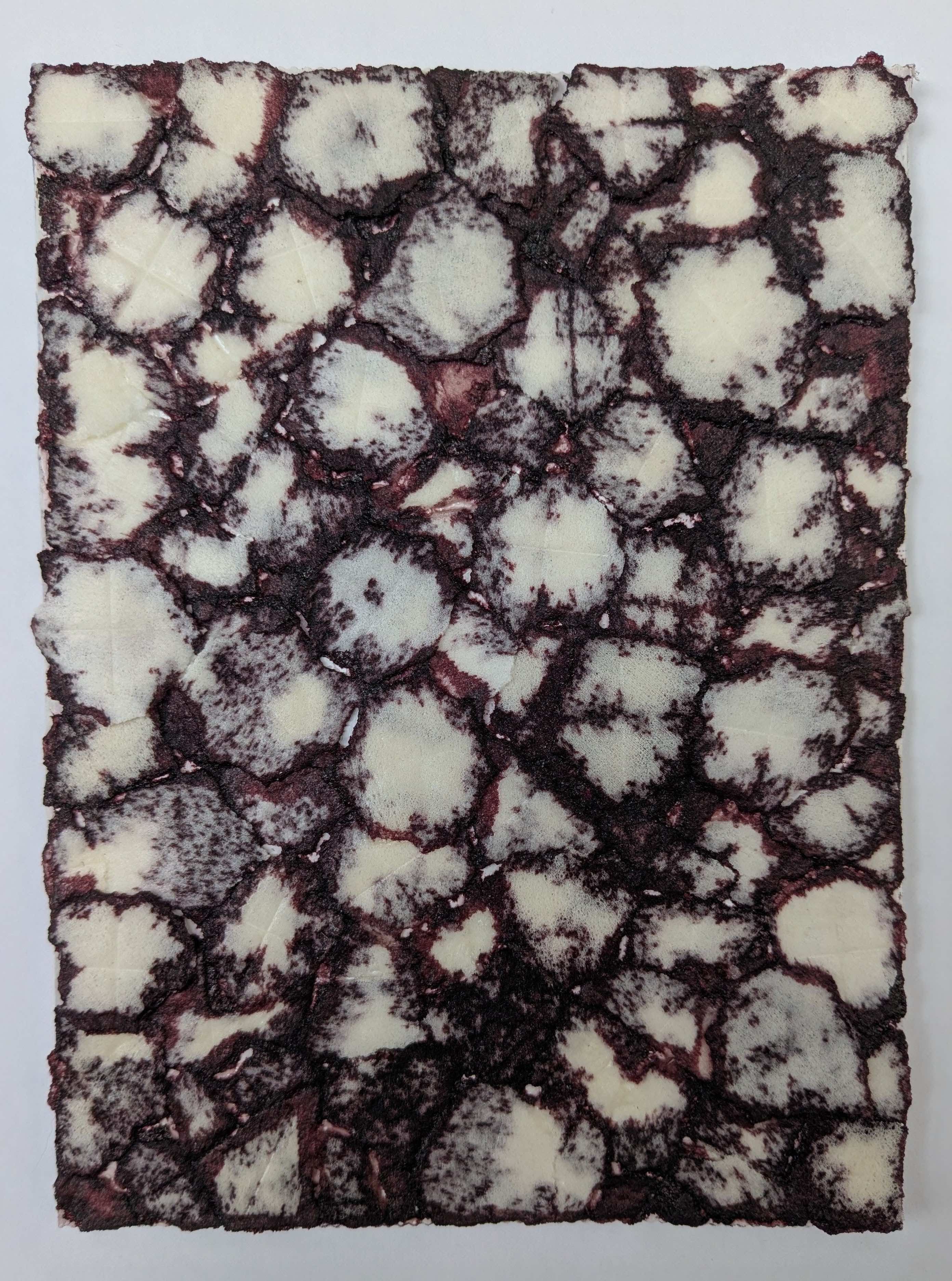 Tuam Excavations X, by Olwen Kelly. Permission from the artist.
Cieslik: The work that you do is so incredibly important and difficult. It’s rooted in trauma, especially traumatic family histories. How do you care for yourself creating these works?
Kelly: I treat my art just like a job. I find that very helpful for me. I keep a regular routine. I don’t generally make any work on the weekends. I never make any of my work at home. I don’t have any of my work up around the house. Everything stays in the studio, and the only work that I would do at home would be work on my laptop or reading. Keeping a divide between the studio work and life is really important for me. I think this is important for all artists, regardless of the kind of work that you do, to have a second art practice that’s unrelated to your main artistic projects. Earlier in the year, I did life drawing at the Royal Hibernian Academy every Friday. The drawing I did there were totally unrelated to main artistic focus and I don’t anticipate that I’ll try to sell those works or exhibit them, but it was important for to have a separate project to focus on. I also do embroidery at home and beading. I just have a strict balance between my work and just being home.
Cieslik: What does it mean to memorialize your family and other people who have been hurt by the Church?
Kelly: I often think that it’s very difficult for the human brain to comprehend tragedy on a large scale. You do see that a lot when you see war memorials that are just names and names and names and names on a piece of stone. It’s very difficult to imagine all of those people as personalities and family members. I feel that the work that I make is a way for people to conceptualize tragedy in a way that they can emotionally respond to where it’s not just names on a page. I think it’s really important for people not just to be able to read about all of this but to be able to see something which allows them to understand the stories of these people on an emotional level.
Cieslik: Do you have anything else that you would like to add?
Kelly: I would say if people are interested in my work and in the Tuam Excavation series that they should look up what’s happening in Bessborough in Cork at the moment, that’s very much related to the Tuam story as well. It’s quite urgent that people get behind the activists there because if there isn’t a big public support for them, it’s almost certain that the site is just going to be built over, burying forever any chance that those families may have to find closure. We might never know how many people are buried there or what happened to them if that site is allowed to be built on.

Emma Cieslik
Emma Cieslik (she/her) is a queer, disabled and neurodivergent museum professional and writer based in Washington, DC. She is also a queer religious scholar interested in the intersections of religion, gender, sexuality, and material culture, especially focused on queer religious identity and accessible histories. Her previous writing has appeared in The Art Newspaper, ArtUK, Archer Magazine, Religion & Politics, The Revealer, Nursing Clio, Killing the Buddha, Museum Next, Religion Dispatches, and Teen Vogue
view all articles from this author