Whitehot Magazine
October 2026
"The Best Art In The World"
"The Best Art In The World"
October 2026
Overexposed: Art, Technology, and the Body at the Museum of the Moving Image
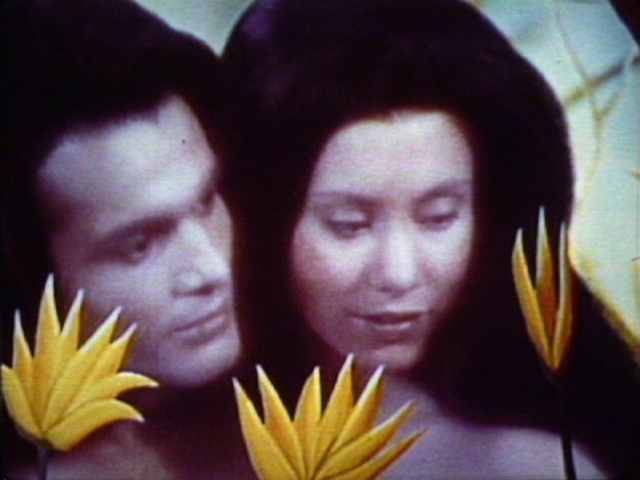 Peggy Ahwesh, The Third Body
By LARA PAN October 15th, 2026
Art in New York sets a high standard this fall, with many remarkable exhibitions. Among them is Overexposed, at the Museum of the Moving Image in Long Island City, which brings a fresh perspective to the relationship between art and science. The result of several years of research by curator Sonia Shechet Epstein, the exhibition is accompanied by a book co-edited with Elisabeth Sherman.
Tracing connections between medical research, imagery, and technology, Overexposed reveals how the desire to see beneath the surface has shaped both scientific discovery and artistic imagination. From the beginnings of the moving image and the discovery of X-rays to present-day medical research, it brings together unusual visual material to explore a shared impulse: to make visible what otherwise remains beyond our perception.
Several small artistic masterpieces deserve close attention, including The Third Body, a video by American experimental filmmaker and video artist Peggy Ahwesh; in ocula oculorum, a digital video work by Anna Kipervaser; and De Humani Corporis Fabrica, a six-channel video installation by artists and researchers Verena Paravel and Lucien Castaing-Taylor.
Beautifully curated, the exhibition invites us to look, learn, and reconsider our understanding of ourselves. We leave carrying something precious: a greater awareness of the human body and the images through which we attempt to understand it.
For me, the scientific and the spiritual meet through an analytical and artistic gaze. What emerges is a sense of wonder at the human condition and at how scientific discovery transforms our understanding of ourselves while opening further questions about what it means to be human.
It was a pleasure to take a guided tour with Sonia and ask her a few questions about how this project began.
Sonia, what first drew you to medical imagery, and how did that interest develop into Overexposed?
As a film curator who focuses on science, I was, perhaps unsurprisingly, originally drawn to moving X-ray images. One of the first films I ever presented as a curator was Barbara Hammer’s Sanctus, which opens Overexposed and is composed of cineradiographic footage from the 1950s showing people performing for the X-ray film camera. The subjects are playing the trumpet, drinking, shaving, and acting out daily rituals. I was confused and fascinated by the fact that these were not medical diagnostic images but were more experimental.
From there, I started reading about X-ray technology, learned that it was introduced to the public at the same time as cinema, and began my research in earnest. I’ve had some wonderful collaborators along the way who helped inform my thinking and move the project forward, including Valentine Umansky at Tate Modern, who invited me to put together a program of art films on the subject, and fellow curator Elisabeth Sherman, who co-edited the book for Overexposed with me.
How did you approach medical images as both scientific evidence and a source of artistic imagination?
I wanted the show to include educational, research, and industrial films that treat medical images as scientific evidence, so that people could learn about the ways the body can be rendered as an image and also appreciate how these images exist as part of our culture. Hence, the exhibition’s design distinguishes between didactic films and artworks. The artworks, for the most part, use such medical images to pose questions about the body—about normative ideals, claims to objectivity, and power dynamics between doctors and patients.
For me, the exhibition opens a dialogue between the scientific and the spiritual. Did that relationship inform your curatorial thinking?
Only in the sense that I was very aware of the turn-of-the-century Spiritualism movement, which intersected with the invention of cinema and the discovery of X-rays. Spiritualism heavily influenced the ways those technologies were used early on.
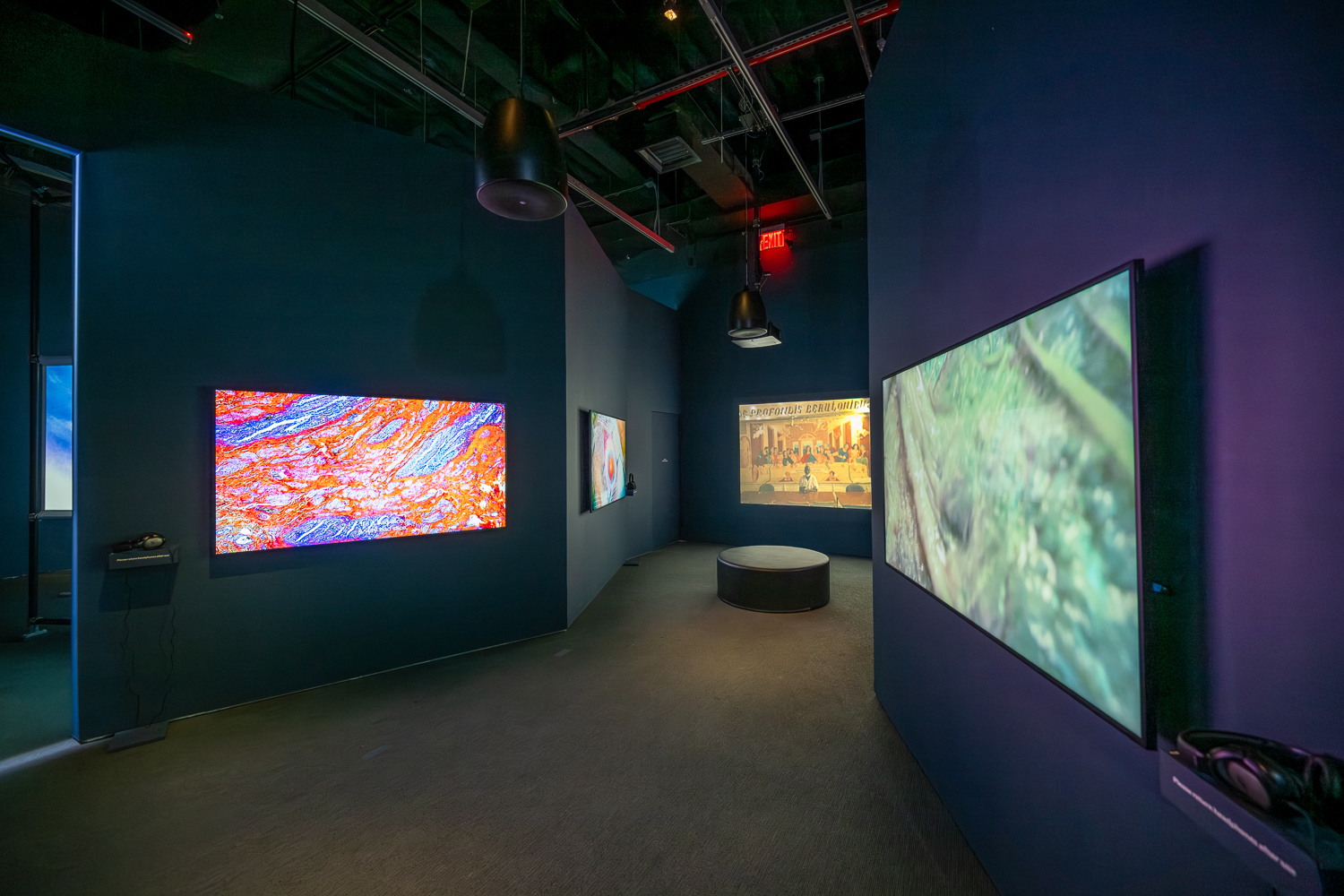 Installation view: Overexposed: Art, Technology, and the Body at the Museum of the Moving Image
How do you think this exhibition might change the way viewers see and experience the human body?
I’d like them to tell me!
Medical imaging forever altered the way we think about, treat, and interact with the human body. With Overexposed, I hope to show how these images or renderings, which claim objectivity, are in fact situated in bodies and in culture, and have the power to change the way bodies are considered in the social, medical, and political spheres.
Alongside the exhibition, you have organized several panel discussions. Which aspects of these programs would you highlight as offering another way to experience and engage with art?
The public programs each approach the exhibition’s themes in different ways. The program with artist Panteha Abareshi focused on the chronically ill and disabled body in society. Lily Offit, a radiology resident, also spoke on the panel and shared clinical perspectives on imaging tools used as diagnostic evidence.
Another program, coming up on October 15, is called “Making Art in the Era of Neurotechnology.” It is in dialogue with artist Rachel Rossin, who is using brain imaging tools to make art. The discussion will include her collaborator at Yale’s institute for neurocognition. In November, I’m bringing an ophthalmologist and a photographer to talk about a 1990s project called the Visible Human and its implications.
Centering artist-led perspectives alongside those of clinicians, these programs aim to draw out themes from the show through the interdisciplinary ethos that is central to my curation.

Lara Pan
Lara Pan is an independent curator,writer and researcher based in New York. Her research focuses on the intersection between art, science, technology and paranormal phenomena.
view all articles from this author