Whitehot Magazine
November 2026
"The Best Art In The World"
"The Best Art In The World"
November 2026
Afterlives: Contemporary Art in the Byzantine Crypt at the The Metropolitan Museum of Art
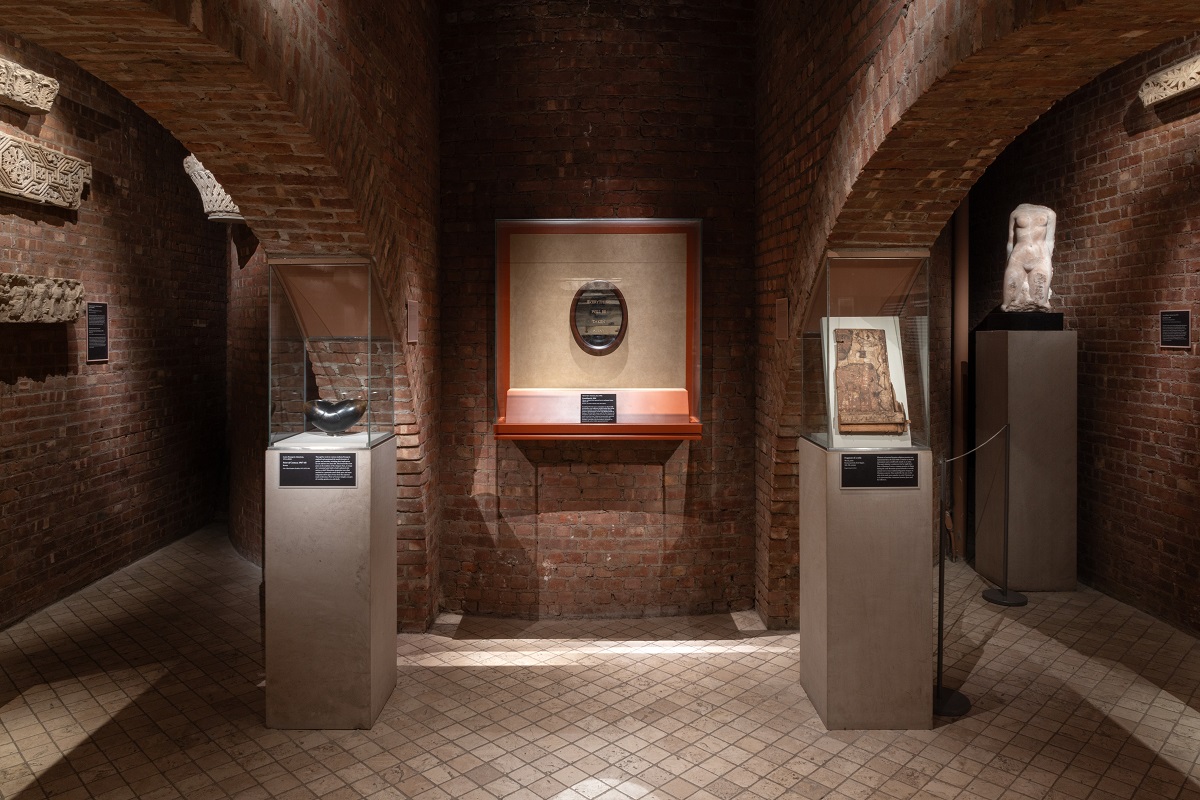 Installation view of Afterlives: Contemporary Art in the Byzantine Crypt. Photograph courtesy of The Metropolitan Museum of Art.
By MICHAEL WOLF, November 24, 2026
“In Morrisonville death still made house calls. It stopped by the bedside, sat down on the couch right by the parlor window, walked up to people in the fields in broad daylight, surprised them at a bend in the stairway when they were on their way to bed,” wrote New York Times columnist Russell Baker in his autobiography Growing Up (1982). Earlier in the book, he observes that death “was not treated as an obscenity to be confined in hospitals and ‘funeral homes.’” In contrast to the modern tendency to remove the rituals of death from everyday life, the Metropolitan Museum of Art’s exhibition Afterlives: Contemporary Art in the Byzantine Crypt explores how death was understood and commemorated in Byzantine Egypt, inviting comparisons with contemporary artists’ interpretations of mortality and the rituals surrounding it.
Andrea Achi, the Met’s Curator of Byzantine Art, collaborated with Akili Tommasino, Curator of Modern and Contemporary Art, on the exhibition. Afterlives is presented in the Mary and Michael Jaharis Gallery, commonly known as the Byzantine Crypt, a space beneath the Grand Staircase connecting the Great Hall to the second floor. Small and easily overlooked, the Harry Potter-like space was opened during a renovation in 2000. Its brick arches and rough-cut stone ceiling, the underside of the Grand Staircase, make it an ideal setting for the exhibition.
In selecting works for the exhibition, Achi and Tommasino loosely paired contemporary artworks with objects from the Byzantine Egyptian era. One of the most striking pairings brings Ana Mendieta’s The Vivification of the Flesh (1981), from her Amategram series, into dialogue with an Egyptian wool tunic dating to around 700 CE. The tunic’s decorative woven patterns were thought to bring good luck to the wearer, and such garments were worn in life as well as used for burial. Stains from human contact and decomposition remain on the fabric. Mendieta’s work is made with gouache and acrylic on amate, a bark-based paper traditionally produced by Indigenous Otomi craftspeople in Mexico. She frequently photographed her body in grave-like recesses in the earth as part of her Silueta works, also known as the “earth-body” series. The drawing in the exhibition depicts a black, spiraling silhouette that coils inward, suggesting bodily decay. Placed together, the two objects amplify each other’s meaning, linking a garment associated with burial to Mendieta’s spiraling figure, which evokes the body’s return to the earth.
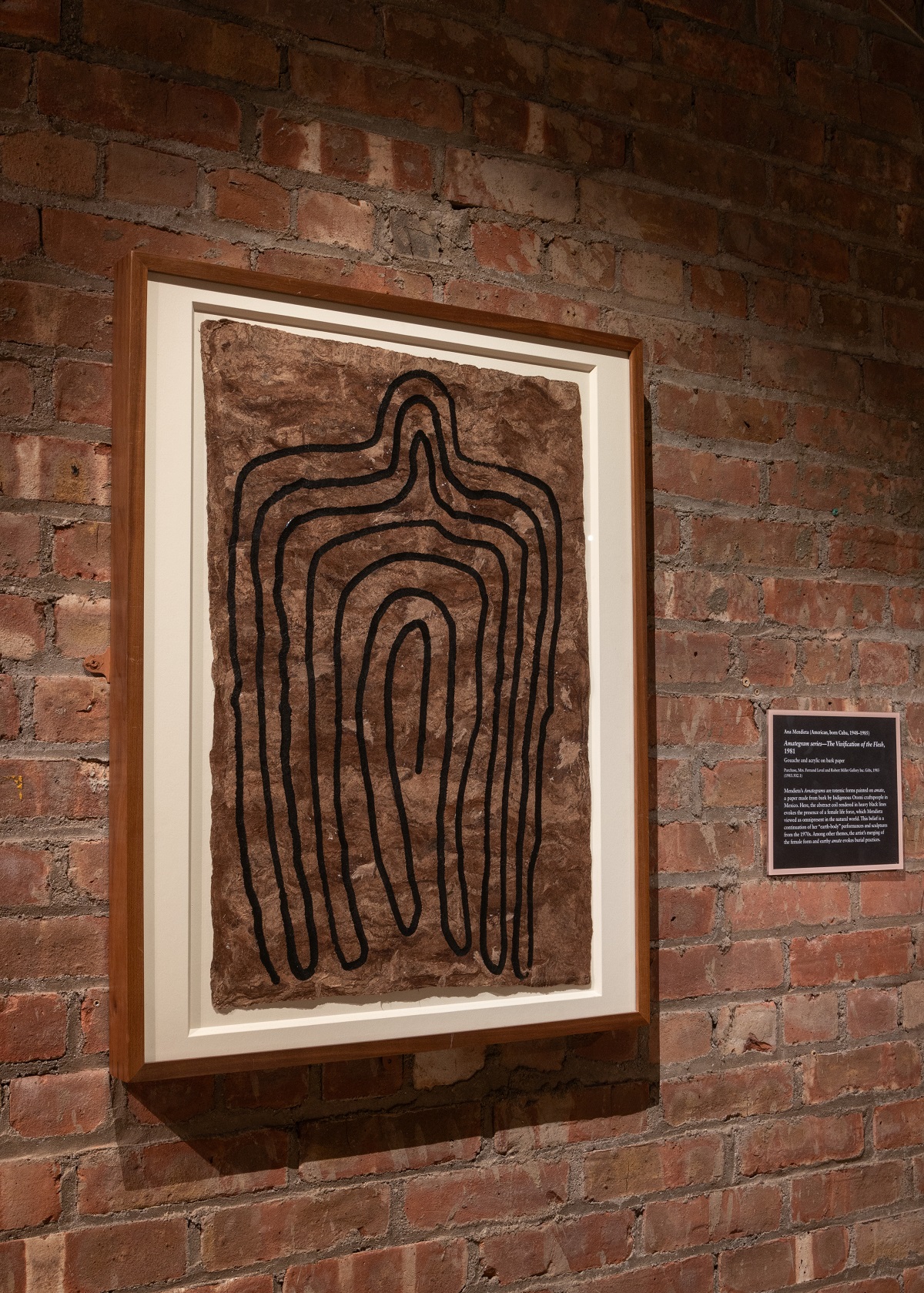 Ana Mendieta, Amategram Series – The Vivification of the Flesh, 1981. Photograph courtesy of The Metropolitan Museum of Art.
In the diagonally opposite corner of the gallery, the curators juxtaposed American artist Melvin Edwards’s Ready Now Now (Lynch Fragment) (1988) with a sixth- to seventh-century limestone frieze fragment from Egypt depicting the biblical story of the loaves and fishes. The faces and hands of the figures have been defaced, presumably by iconoclasts seeking to suppress the power believed to reside in these parts of the body. This deliberate destruction echoes the erasure of Black lives through lynching, a subject addressed in Edwards’s sculpture, which draws inspiration from African masks. The theme of racial violence and erasure also emerges in poet Nicole Sealey’s “Candelabra with Heads,” written after she encountered Thomas Hirschhorn’s sculpture of the same title. Although Hirschhorn’s work was not intended to depict lynching, Sealey’s response reveals how its imagery can evoke that history for a viewer. In her poem, published in Ordinary Beast (2017), she writes:
Might be a family tree with eight pictured
Might be eight fleshy fingers on one hand.
might be eight infants swaddled and sleeping.
and mounted on a wooden scaffold,
this brood of mannequins, cocooned
as it has been made, this thing,
Had I not brought with me my mind
Who can see this and not see lynchings?
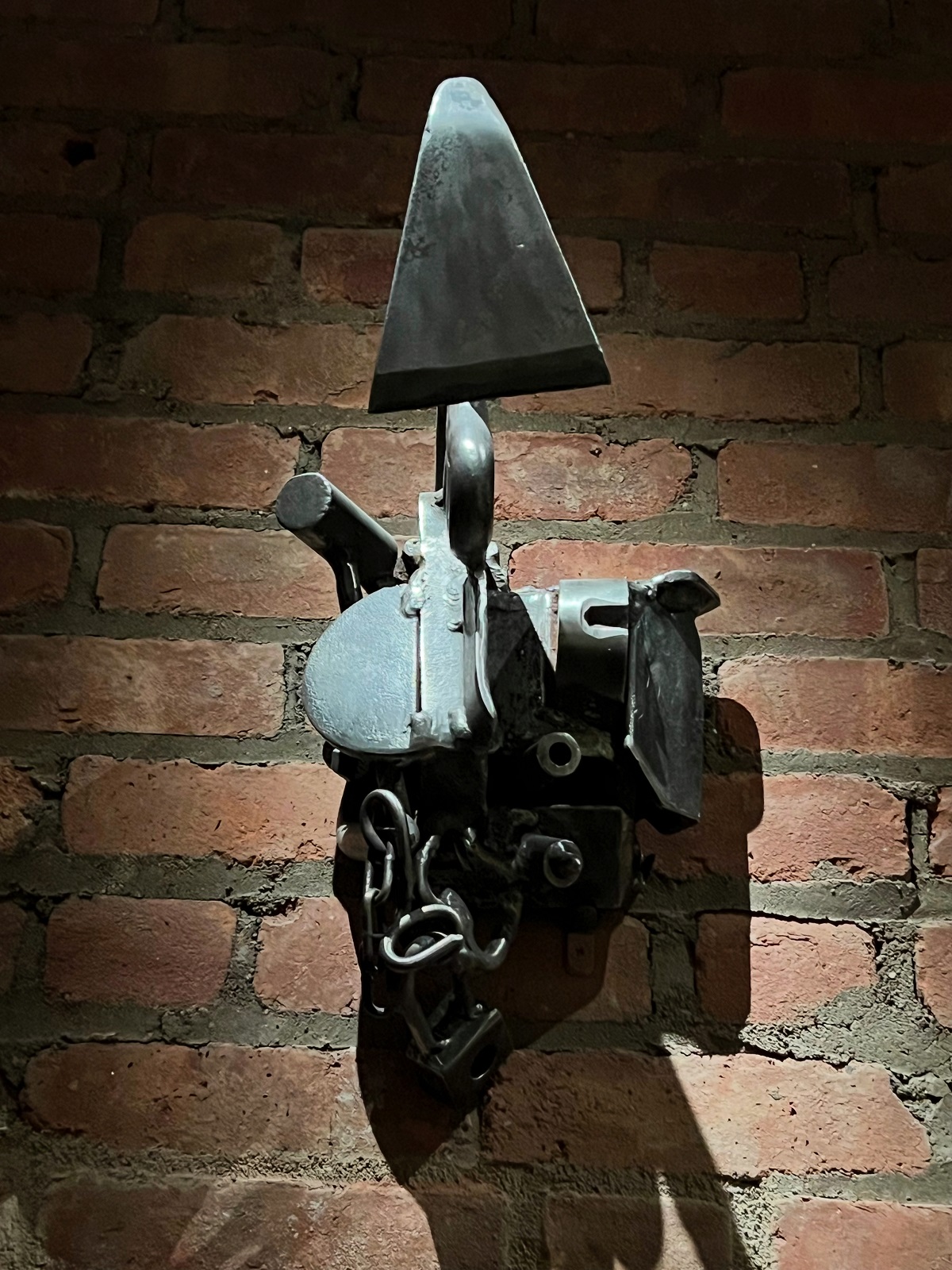 Melvin Edwards, Ready Now Now (Lynch Fragment), 1988. Photograph courtesy of the author.
From the erasure of lives to the physical consequences of trauma, the exhibition confronts the vulnerability of the human body. Michael Aschenbrenner, a Vietnam War veteran, sustained a leg injury while serving as a medical field technician during the war. His Damaged Bone Series is represented in the exhibition. Bone forms cast in glass are wrapped with twigs, fabric, and wire, as if broken bones and injuries were being mended on the battlefield with whatever materials were at hand. The brittleness of the glass echoes the vulnerability of the human body when subjected to severe trauma. Aschenbrenner’s sculptures provoke one of the exhibition’s most visceral responses, evoking the nightmarish memories of his wartime experience.
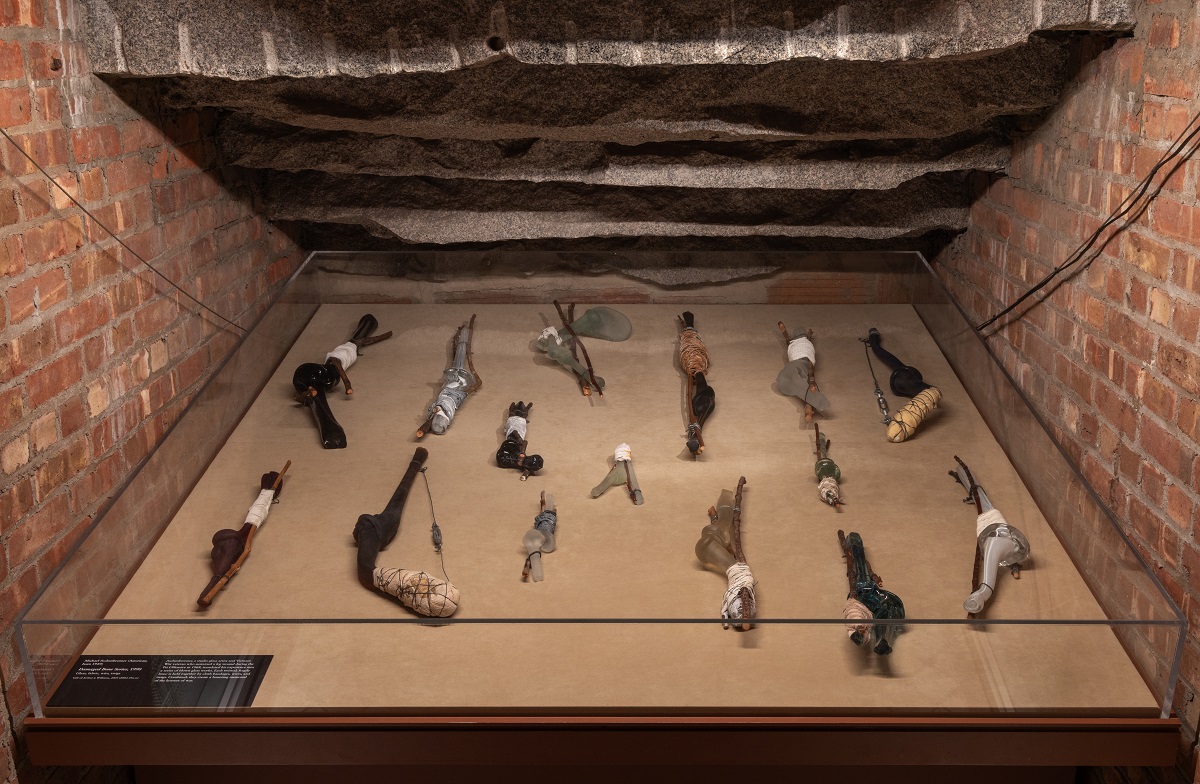 Michael Aschenbrenner, Damaged Bone Series, 1990. Photograph courtesy of The Metropolitan Museum of Art.
While many of the objects in the exhibition, such as Aschenbrenner’s Damaged Bone Series, provoke a visceral response, Tavares Strachan’s ENOCH takes a more cerebral approach. Inspired by ancient Egyptian canopic jars, the bronze-and-gold sculpture is dedicated to Robert Henry Lawrence Jr., the first Black American astronaut, who died in a flight training accident in 1967. The work’s title refers to the biblical prophet Enoch, who was said to have “walked with God.” Filled with what Strachan calls “sacred air” and blessed by a Shinto priest, the sculpture brings together ideas of spirituality, remembrance, and exploration beyond earthly boundaries. One edition of ENOCH was launched into orbit, where it circled Earth for three years before reentering the atmosphere on December 21, 2021.
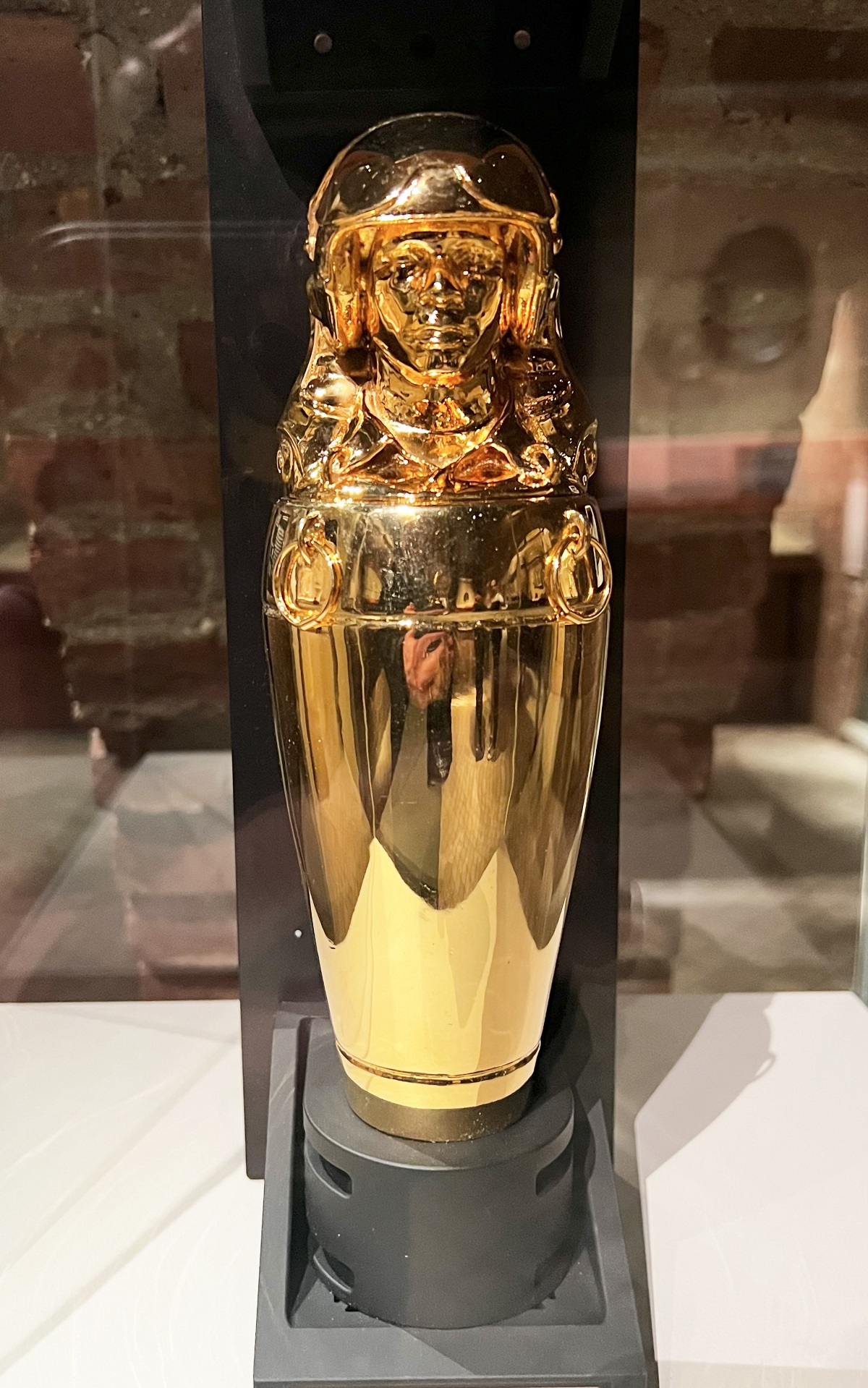 Tavares Strachan, ENOCH (display unit), 2015–17. Photograph courtesy of the author.
One of the works in the exhibition that most directly confronts the brevity of life is Adrian Piper’s Everything #4, a small oval mirror framed in mahogany. Etched into the glass in gold lettering are the words “Everything Will Be Taken Away.” Viewers encounter the phrase alongside their own reflections, making the work’s message deeply personal. The Met has acquired several editions of Piper’s work, which are displayed in galleries throughout the museum, including at the Cloisters in Fort Tryon Park.
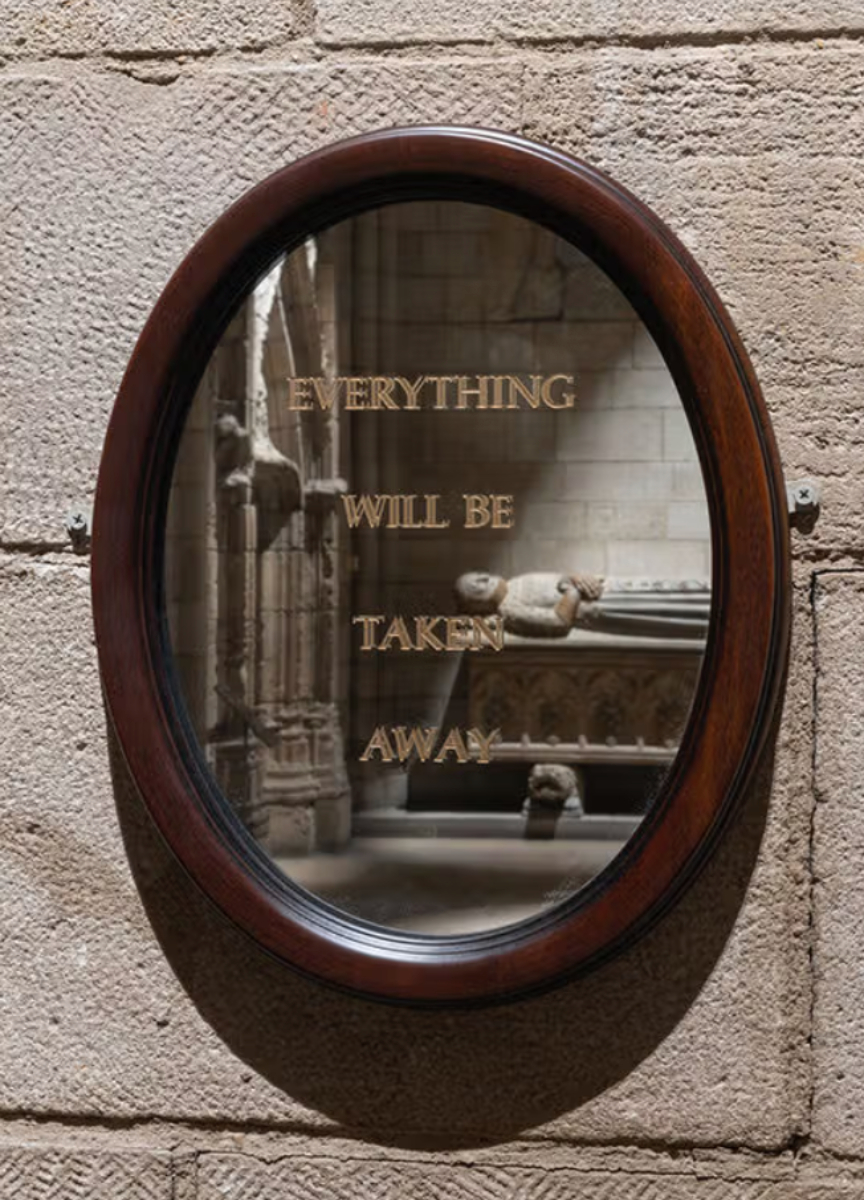 Adrian Piper, Everything #4, Edition 8, 2004. Photograph courtesy of The Metropolitan Museum of Art.
Loosely unifying the exhibition is Kevin Beasley’s haunting sound installation I. W. M. S. B. (I Want My Spot Back) (2014), which combines distorted voices of deceased rappers with ambient sound to address the fragility of life. As curator Andrea Achi observed, “Confronting death and envisioning the afterlife are topics that have intrigued and inspired artists and artisans for centuries. Grief is universal.” Contemplating death is not a morbid preoccupation; it is a reminder of life’s brevity, a memento mori, a Latin phrase which translates as “remember that you will die.” Death is the one inescapable truth that connects all humans past and present together. Afterlives invites us to consider how art can give form to our understanding of mortality, connecting us to those who lived and died centuries ago.
Catch the exhibition before it closes on January 10, 2027.
Afterlives: Contemporary Art in the Byzantine Crypt
Metropolitan Museum of Art
1000 Fifth Avenue, New York, NY

Michael Wolf
Michael Wolf is an NYC area artist whose work encompasses sculpture, installation, and drawing. Inspired by architectural forms, he uses them as a metaphor for the human experience. He has written for the platform Art Zealous and curated digital collections for the app Ask Arthur. For more information visit: http://www.michaelwolfsculpture.com/
view all articles from this author