Whitehot Magazine
October 2026
"The Best Art In The World"
"The Best Art In The World"
October 2026
Annie Chen Ziyao's The Cup Speaks at Flowing Space Gallery, NYC
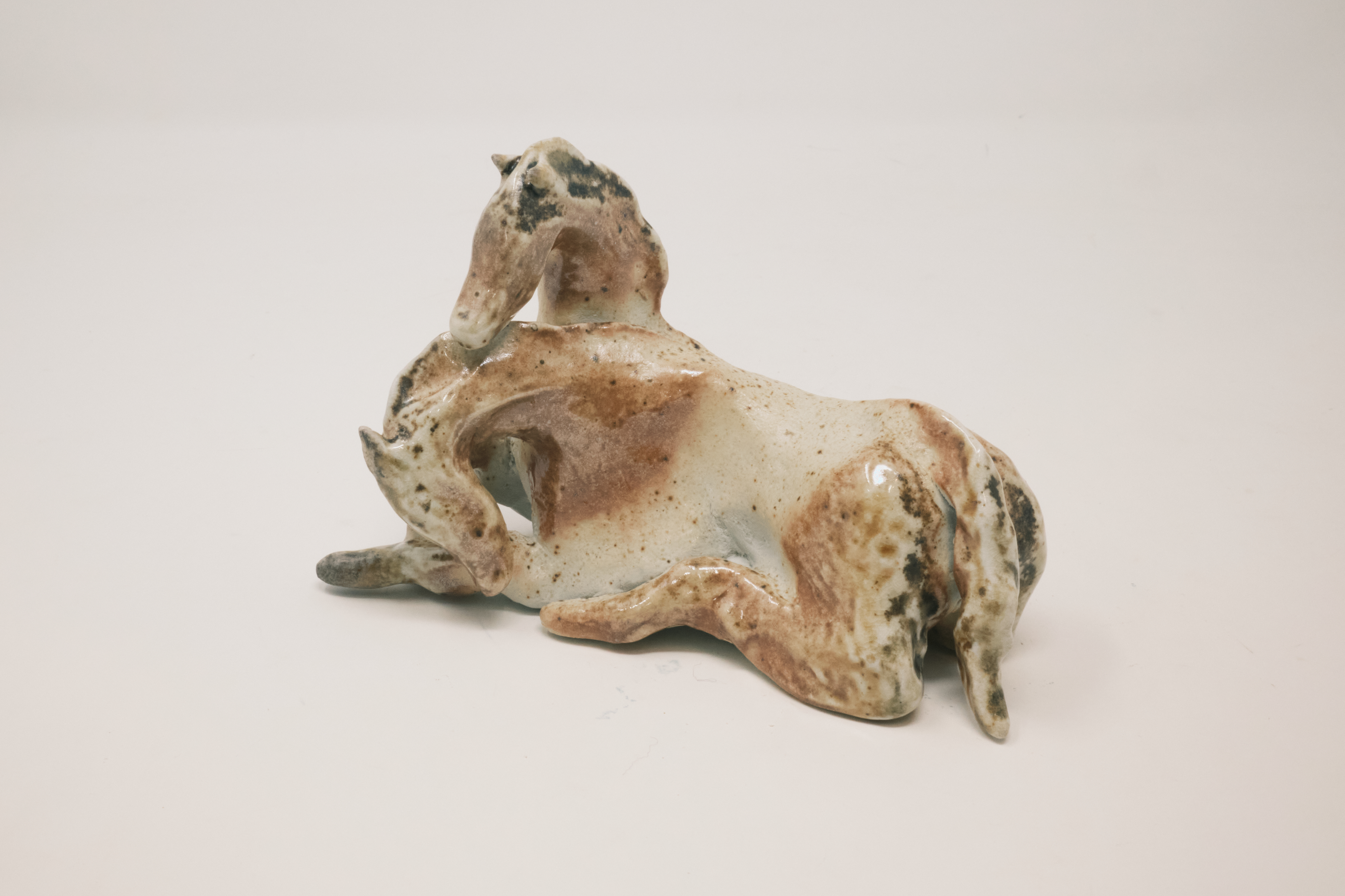
Anne Roffler
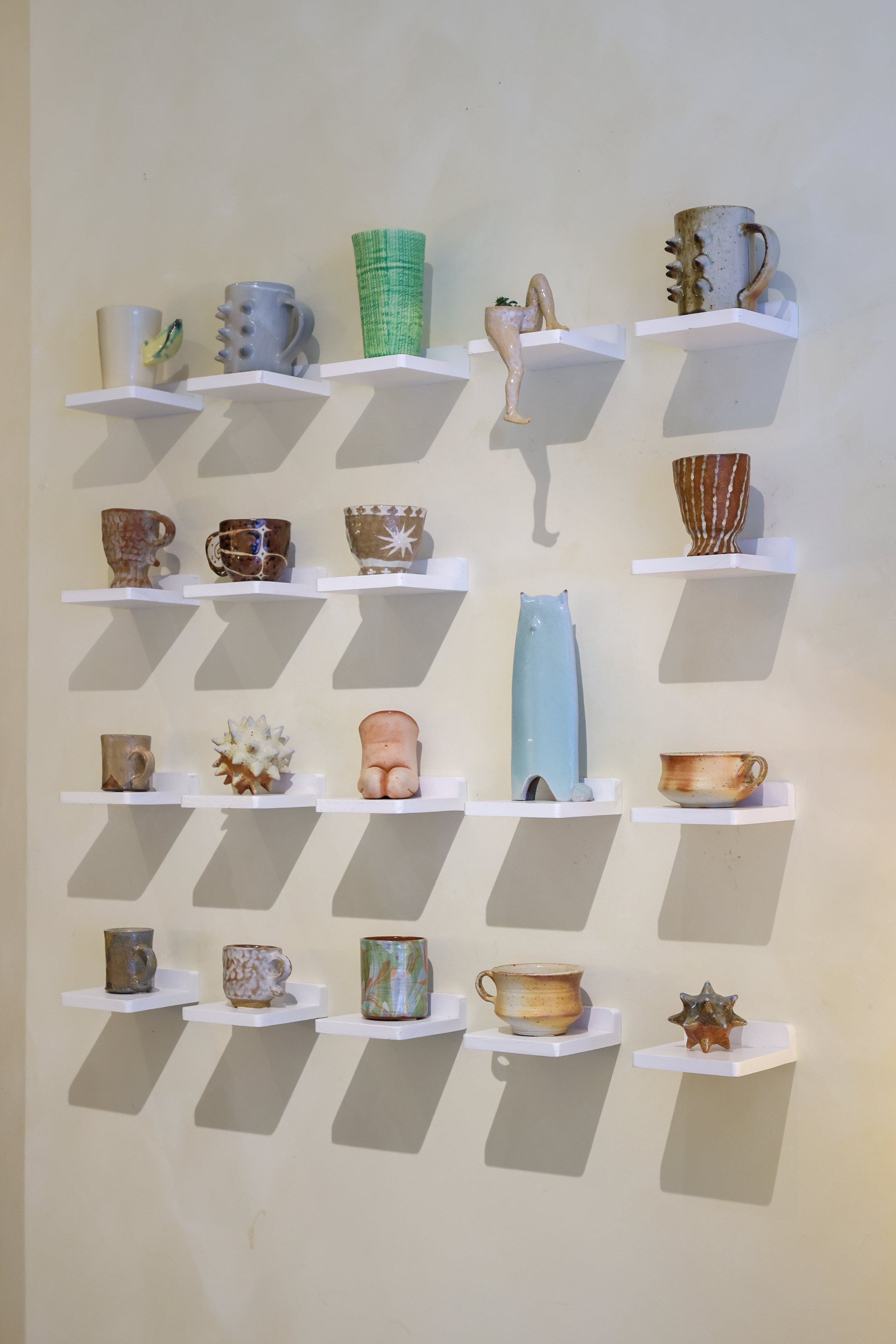
Exhibition Photo
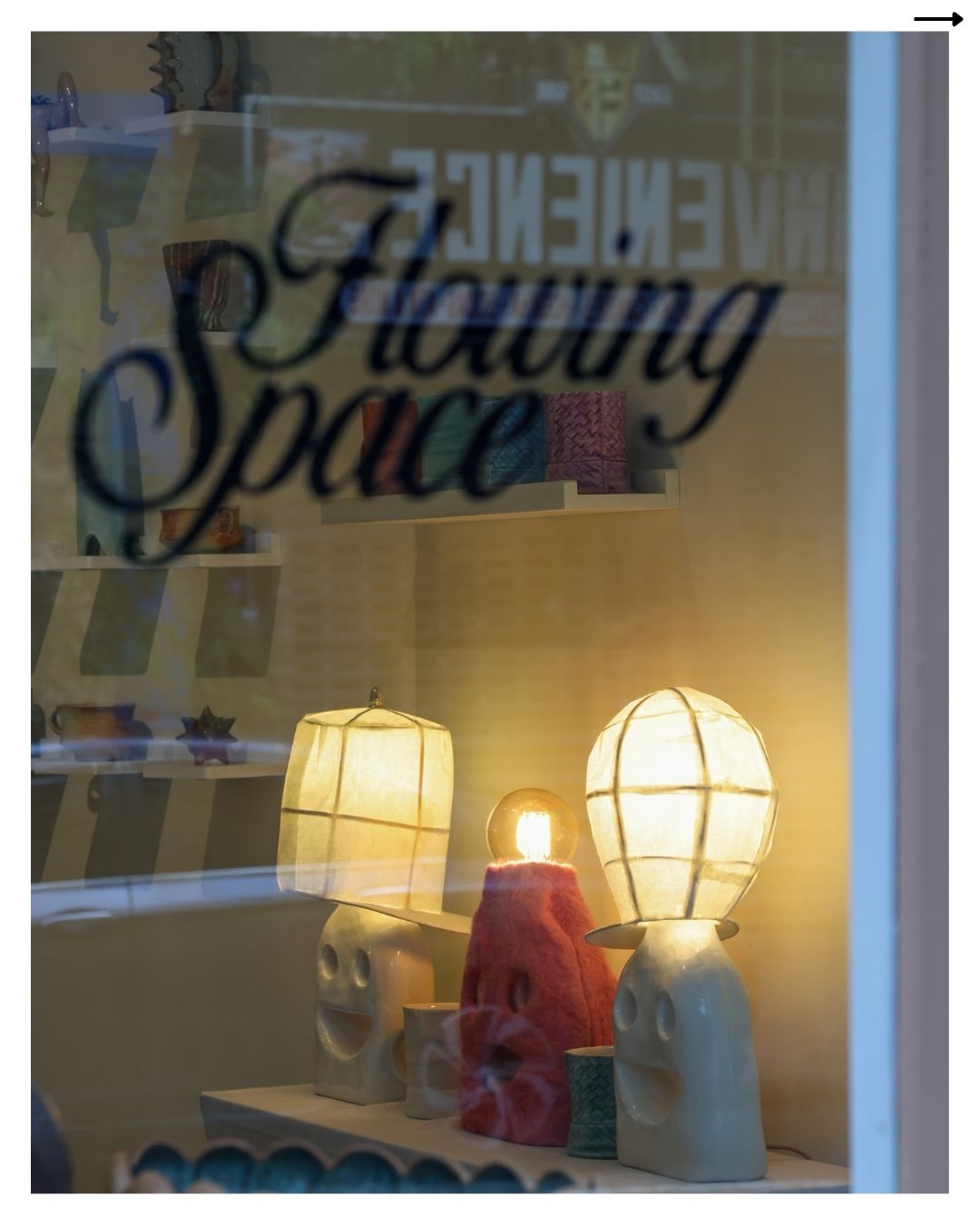 Soobin Jeon's lamps
BY SERENA HANZHI WANG June 17, 2025
You push open the door, and a wave of warmth greets you. Light filters in from the side windows, scattering fractured shadows across the floor. What meets your eye isn’t a grand installation—it’s a cup. Quiet, solitary, placed to the left of the gallery entrance, waiting for your approach. It’s heavier than expected. Its glaze is the yellowed white of sun-bleached stationery, rimmed with a faint irregular halo, like a watermark left by time. Inside, faint impressions of fingertips remain, not yet smoothed away by the fire. You can almost picture it, fresh from the wheel, lying on a clay-streaked table, handled again and again by its maker, as if the cup were being asked to confess a mood.
This cup wasn’t made to hold water. It was made to speak. It sits at the threshold of Flowing Space, murmuring at you: this is not merely an exhibition—it’s a conversation, about touch, about transmission, about living with. Titled The Cup Speaks, the show invites us to press our lips to the cup’s edge, to take something in—not just liquid, but memory, gesture, time. The cup is a narrative organ, telling of its firing, its weathering, its slow absorption of a maker’s private routine into soil and shape.
Curated Flowing Space co-founder Annie Chen Ziyao, the exhibition gathers work by over a dozen ceramicists. These pieces do not shout. They whisper. They move through the most ordinary of forms—cups, bowls, lamps—and speak in textures and weights about the poetics and politics of use.
One cup’s body did not begin as clay. Its origin was a thermal undershirt found at a thrift store. Cut into strips, stitched into shape, it became a pliant skin for a vessel-to-be. Artist Forrest Gard calls the series fabware: fabric-formed ceramic. But the resemblance is a trap—a delay mechanism. The softness of cloth imprinted on clay slows down the process of recognition. We look, we hesitate, we touch. The cloth leaves folds. The clay remembers. After six hours of stillness, those textile memories calcify.
This is not metaphor. It’s translation. The vessel, rather than submitting to the hand, resists it. It looks too soft to grip, its surface etched with micro-fractures—fire’s fingerprints, testifying to what it’s endured. It may or may not hold water. What matters is it holds something less containable: a wavering perception, collapsing and reforming.
For Soobin Jeon, pottery is not a statement but a witness. Her works are love letters not to anyone but from life itself—fire-licked, hand-pinched, briefly interrupted. "Handmade objects are honest," she says. Their truth is not in precision, but in their willingness to reveal: a crease, a blotch, a misaligned rim. Not all are emotionally rich. But each is a footnote in the text of being—a quiet timestamp of presence.
These aren’t declarations. They’re mutterings. Or, perhaps, a breath overheard from the next room. You approach, or you don’t. They do not demand. But if you touch them, they respond.
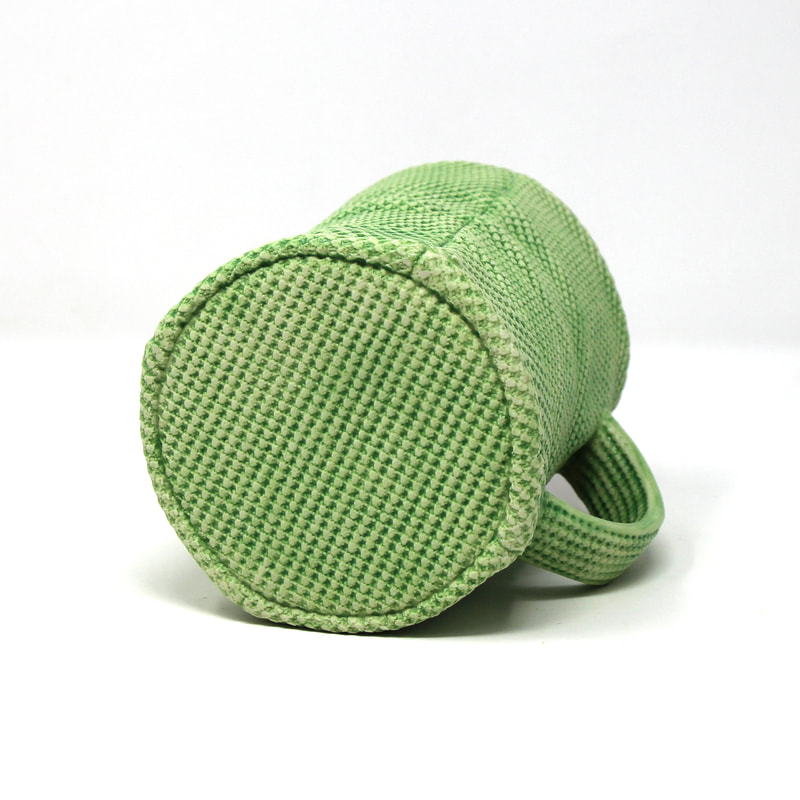
Forrest Gard fabric-formed ceramic cup
Deighton Abrams continues this grammar. His urn series, Urns to Contain and Dispel, are sealed containers. Smooth and cool at first glance, their surfaces sprout anatomical fragments—a twisted hand, a pink tongue, a spine studded with thorns. These aren’t symbols of mourning. They are the sculpting of grief itself. "Functional art naturally carries stories," Abrams notes. Some are spoken by the maker. Others, by the one who dares to use. It’s really, really fun to touch them.
Adriana Sousa’s works speak a different syntax. Spikes, rust-like glazes, and sharp silhouettes converge into objects that feel both medieval and futuristic. Her vessels perform aggression and allure. They don’t invite grace—they challenge it. In them, functionality is not comfort, but confrontation.
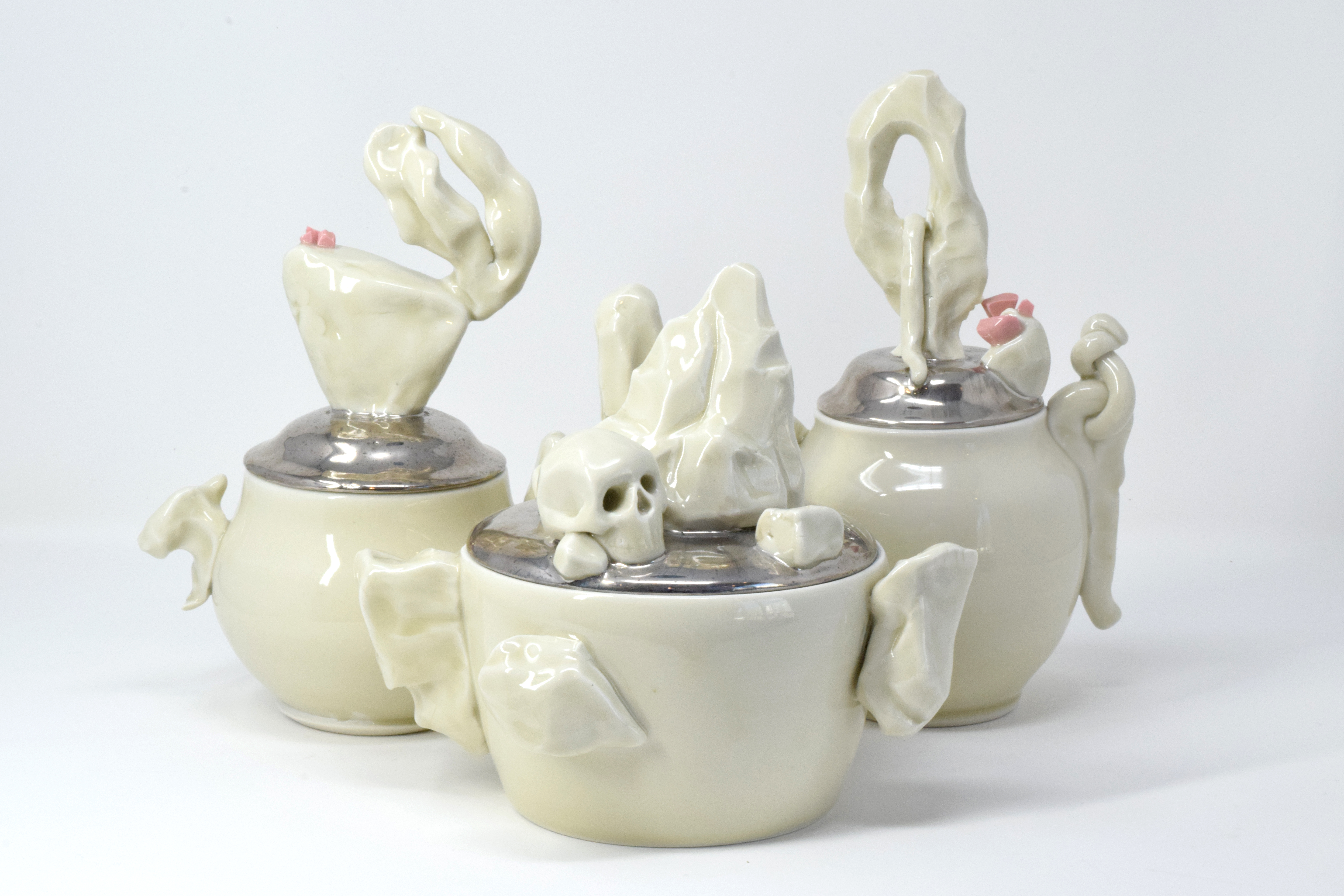
Deighton Abrams
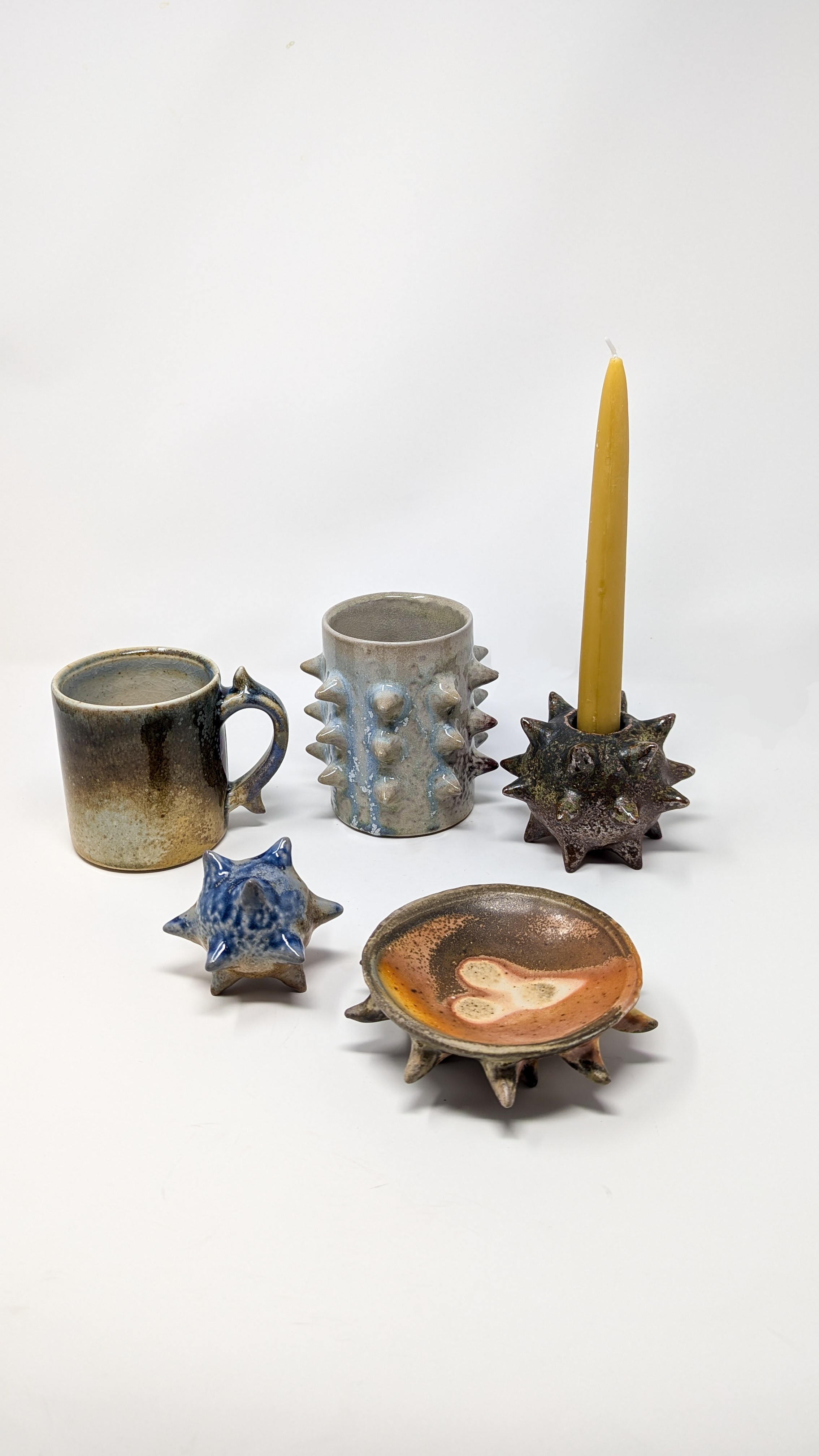
Adriana Sousa
Pamela Gorgone’s ceramic balls resemble sterile lab specimens—white, symmetrical, bristling. But shake one and it chuckles like a child’s toy. Inside each is a sound device, a heartbeat of mischief. Sculpture becomes interactive instrument. The moment you engage, it echoes back.
Ann Boyajian’s works are a portrait of persistence. A devoted cat lover nearing retirement, she crafts cups etched with feline postures—not to be cute, but to encode ongoing devotion. Her ceramics are tender dedications. The love she gives to cats lives in porcelain. Gen Z viewers resonate deeply; sincerity, it turns out, skips no generation.
Mary Kenny’s vessels didn’t start as pots—they were unfinished bodies. A pair of ceramic pants, shoes still on, frozen mid-step. One day, during a market, no one bought her figurines. So she hollowed the pants, tucked in a tillandsia. The roots curled like a napping torso. "Plants in pants," she calls them. A pun, a joke, a release. Functional and useless. Poignant in their absurdity, like life itself.
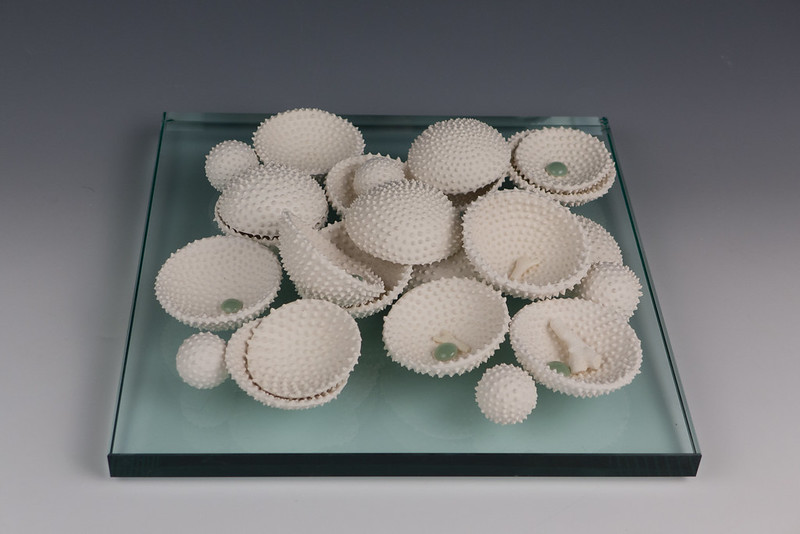
Pamela Gorgone
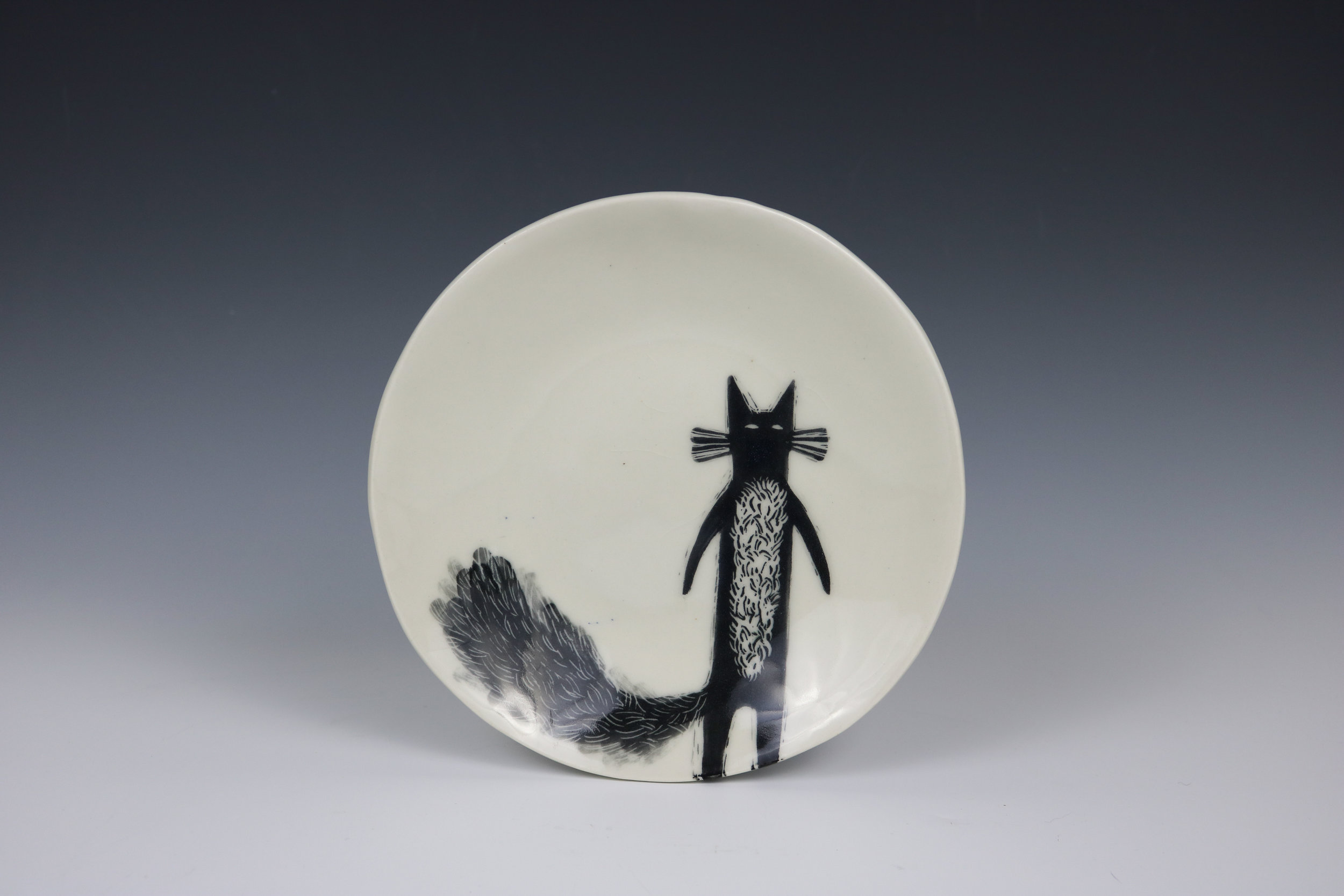
Ann Boyajian
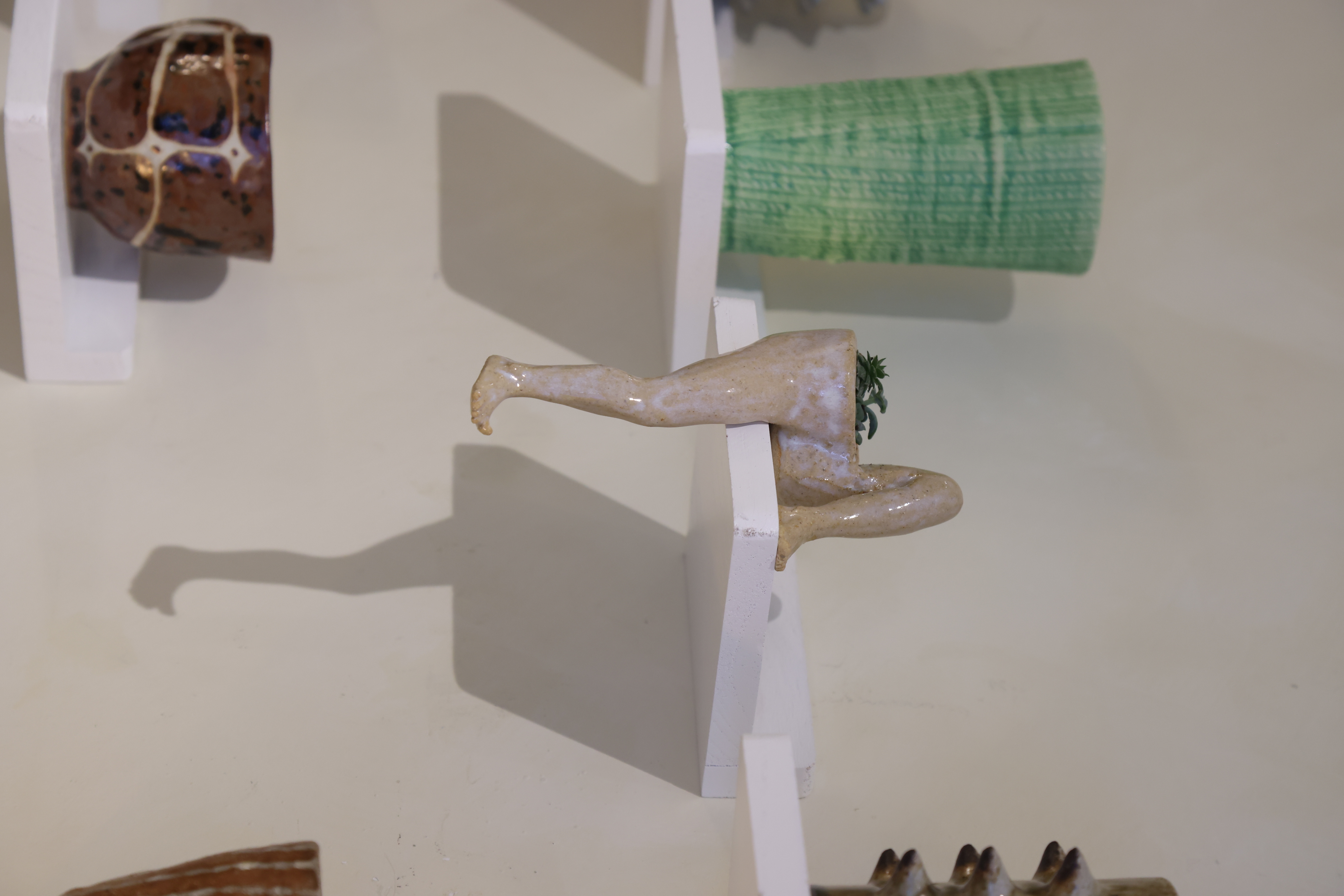
Mary Kenny
The cup isn’t designed to dominate function. Unlike teapots or bowls, it drifts—a tool of pause, of in-between. Picked up, set down, picked up again. Its familiarity doesn’t signify ceremony but presence. A minor anchor in the current of days. It doesn’t speak—but it listens.
In The Cup Speaks, cups become metaphor made tangible: textured, cracked, clumsy or precise. Some whisper, some mumble. Some look like cloth, others like bones. A few seem like poems burnt into clay, others like half-spoken jokes.
They explain nothing. They perform no thesis. They’re just there—like warm stones at the bottom of a riverbed. Made, touched, forgotten, reheld. Weaving, wordlessly, a low-frequency connection between bodies and world. Not unlike the emotional labor that goes unrecorded, yet undergirds all.
That’s why The Cup Speaks isn’t just a show. It’s a form of gathering. A way of continuing the warmth of the Harvard Ceramics Studio into a city that rarely pauses. A way of placing intimate craft into a setting where it can be held, used, and taken home.
Flowing Space is more than a gallery. It is a dialogical space—between clay and body, community and viewer, artist and algorithm. Founded by two Asian women, Flowing Space sustains the ethos of functional art. Here, tea ceremonies merge with exhibitions. Every cup, every vessel, is not a specimen but a trace of life. Not waiting to be seen—but intervening in the everyday. They generate meaning not by display, but by use.
In an often brutal world, Flowing Space offers a different tempo: come in, sit down, sip something. Live just a bit slower. It’s not nostalgia. It’s a quiet proposition for the future.
The Cup Speaks remains on view through June 22, 2025. Works are available for immediate purchase. Walk in, browse, and bring home whatspeaks to you.
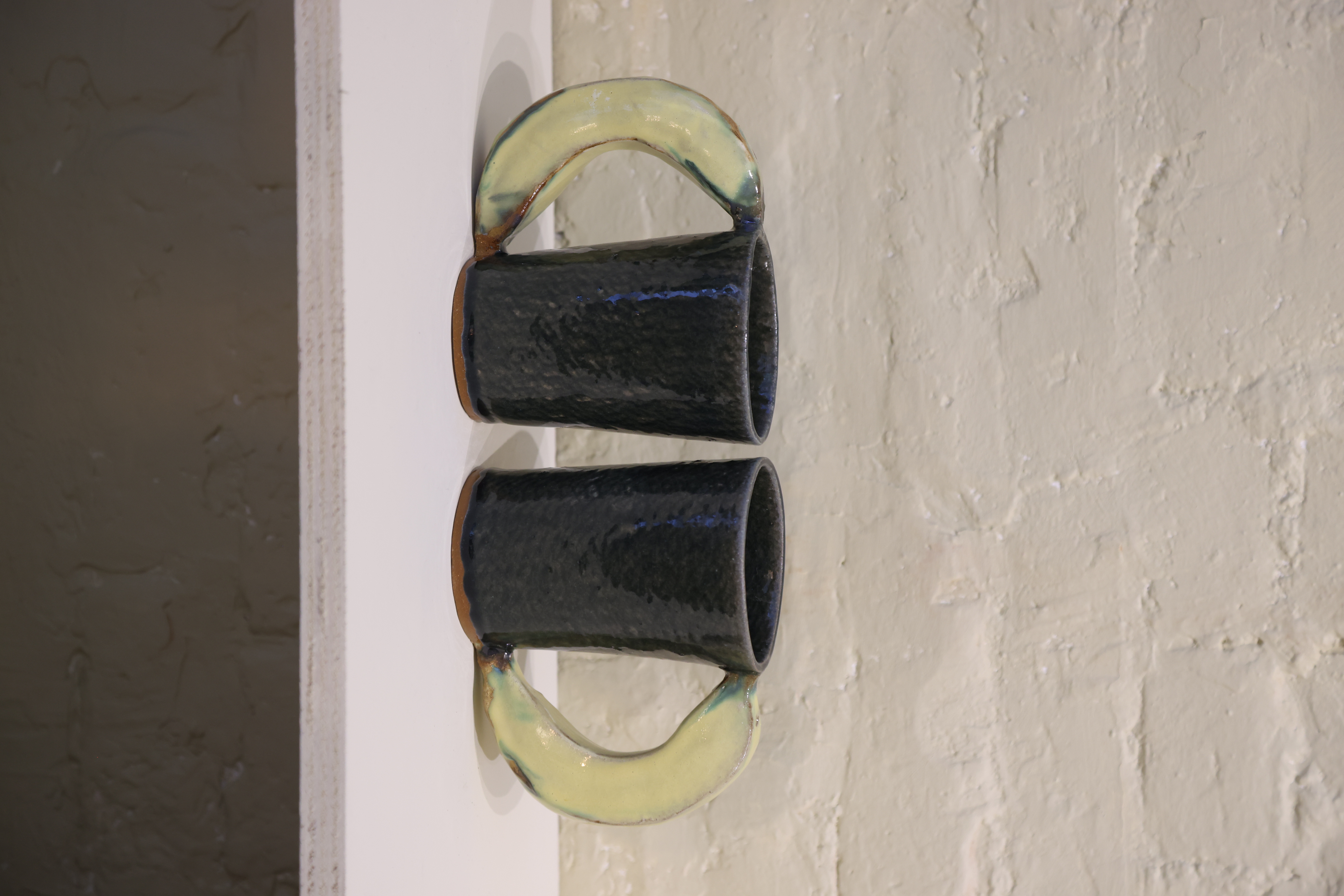
Mary Kenny
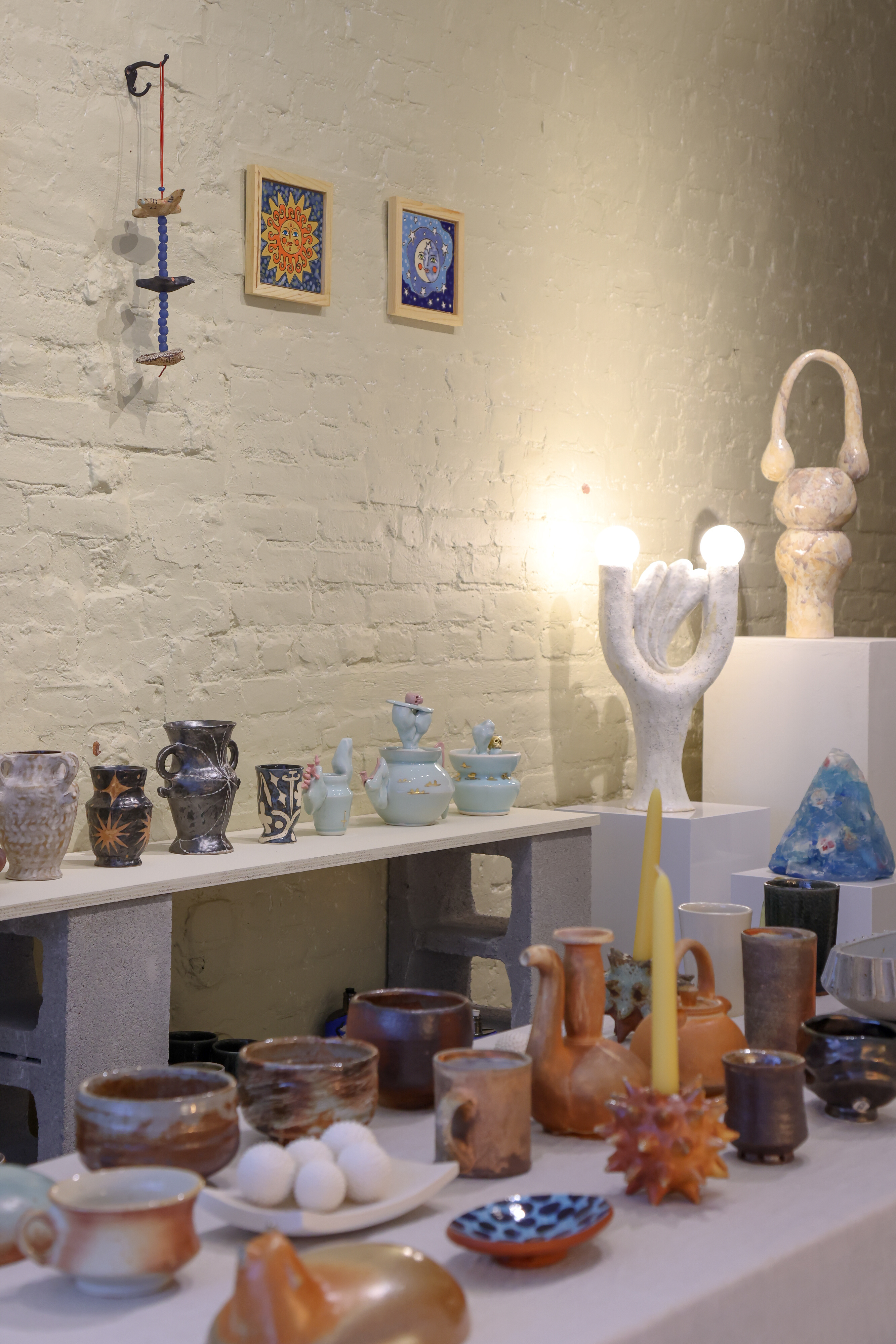
Exhibition Photos

Serena Hanzhi Wang
Serena Hanzhi Wang (b. 2000) is an award-winning art proposal writer, multimedia artist, and curator based in New York City. Her work spans essays, exhibitions, and installation Art—often orbiting themes of desire and technological subjectivity. She studied at the School of Visual Arts’ Visual & Critical Studies Department under the mentorship of philosophers and art historians. Her work has appeared in Whitehot Magazine, Cultbytes, SICKY Mag, Aint–Bad, Artron, Art.China, Millennium Film Workshop, Accent Sisters, MAFF.tv, and others.
view all articles from this author