Whitehot Magazine
October 2026
"The Best Art In The World"
"The Best Art In The World"
October 2026
Affinities: Anni Albers, Josef Albers, Paul Klee Abstraction and Léon Spilliaert at David Zwirner, Chelsea.
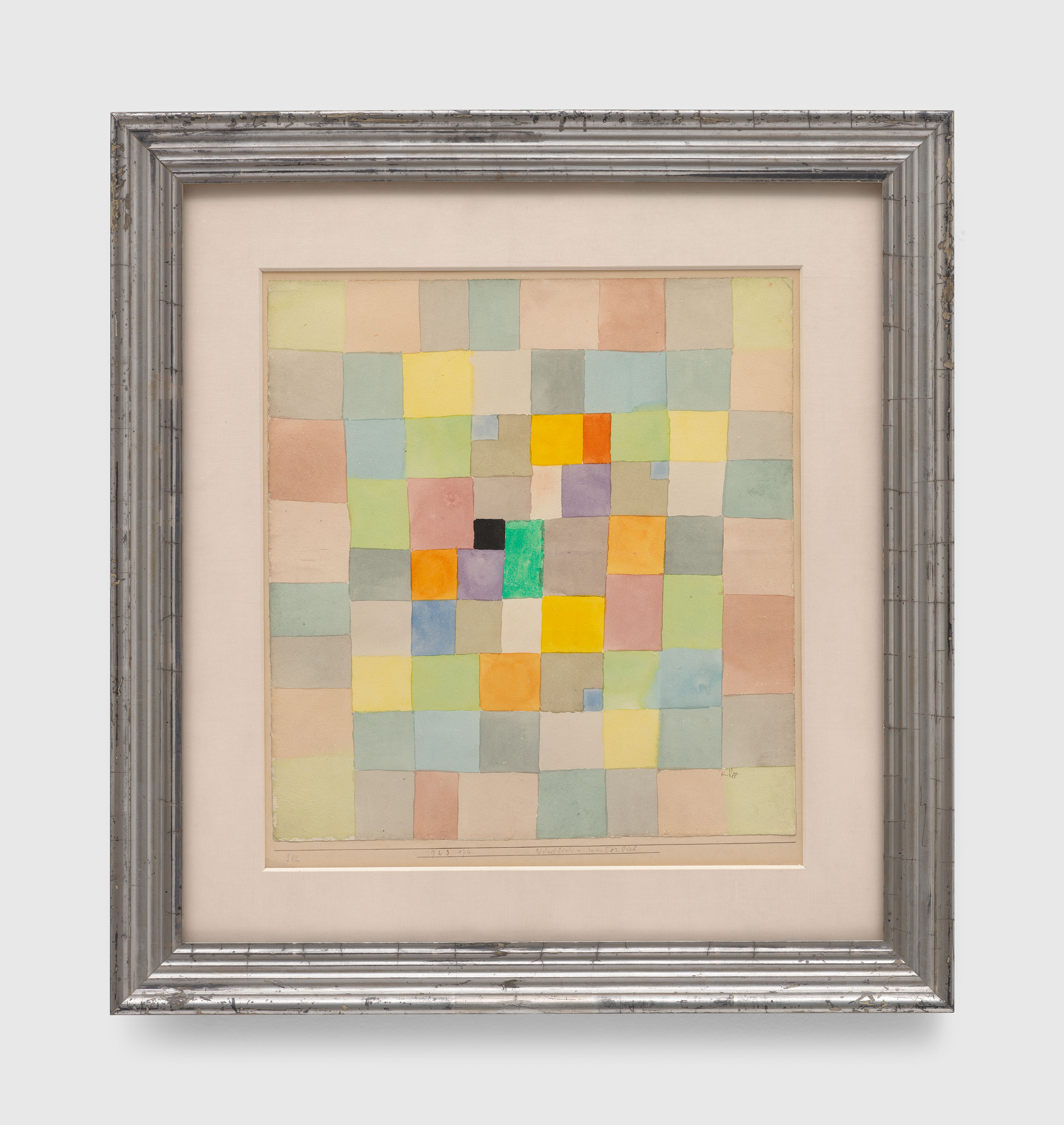 Paul Klee, Nördlich-winterlich (Northern-wintry), 1923
© Klee Family
Courtesy David Zwirner
By THALIA VRACHOPOULOS April 3, 2025
One of the most compelling exhibitions thus far in 2025, is at David Zwirner gallery in Chelsea, New York. Zwirner features two historically significant exhibitions that examine the intersections of abstraction, materiality, and the evolution of modernist sensibility. The first floor is dedicated to Bauhaus luminaries Anni and Josef Albers alongside Paul Klee, while the second level is dedicated to the Belgian artist Léon Spilliaert (1881-1946). These important exhibitions offer us a critical lens to reassess the formal innovations of artists from different eras.
Nicholas Fox Weber, who curated Affinities: Anni Albers, Josef Albers, Paul Klee assembled a remarkable selection from the production of these three figures, situating their respective practices within a dynamic interplay of structure, intuition, and chromatic experimentation. Anni Albers’ textiles, distinguished by their geometric rigor and material ingenuity, conversed with Josef Albers’ systematic investigations of color relativity and spatial perception. Anni Albers’ woven compositions, look especially fresh given the recent popularity of fabric arts. They reflect a synthesis of fine craftsmanship and modernist formalism, reinforcing the Bauhaus preference for unity between art and design. In contrast, Josef Albers’ explorations into color perception and visual relativity feel like a personal voyage into how we see and understand color by carefully balancing rational composition and chromatic variation. When faced with Albers’ Grid Mounted (1921-1922) for example, we can’t help but feel a musical undertow of fluctuating color and optical modulation.
On the other hand, Paul Klee’s works are infused with a lyrical sensibility, where tonal harmonies and sinuous lines dissolve rigid angles as seen in Nördlich-winterlich (1923), that exemplifies an idiosyncratic form of abstraction between line and rhythm. This colorful interplay of irregular shapes demonstrates symphonic forms where figuration dissolves becoming mystical experience. Klee’s compositions engage in poetic forms that incorporate rigor with an improvisational sensibility reminiscent of Kandinsky’s color as transcendental force. Weber’s curatorial precision and economic means reveal the formal synergies between these three Bauhaus artists, whose inquiries into abstraction remain foundational to contemporary art.
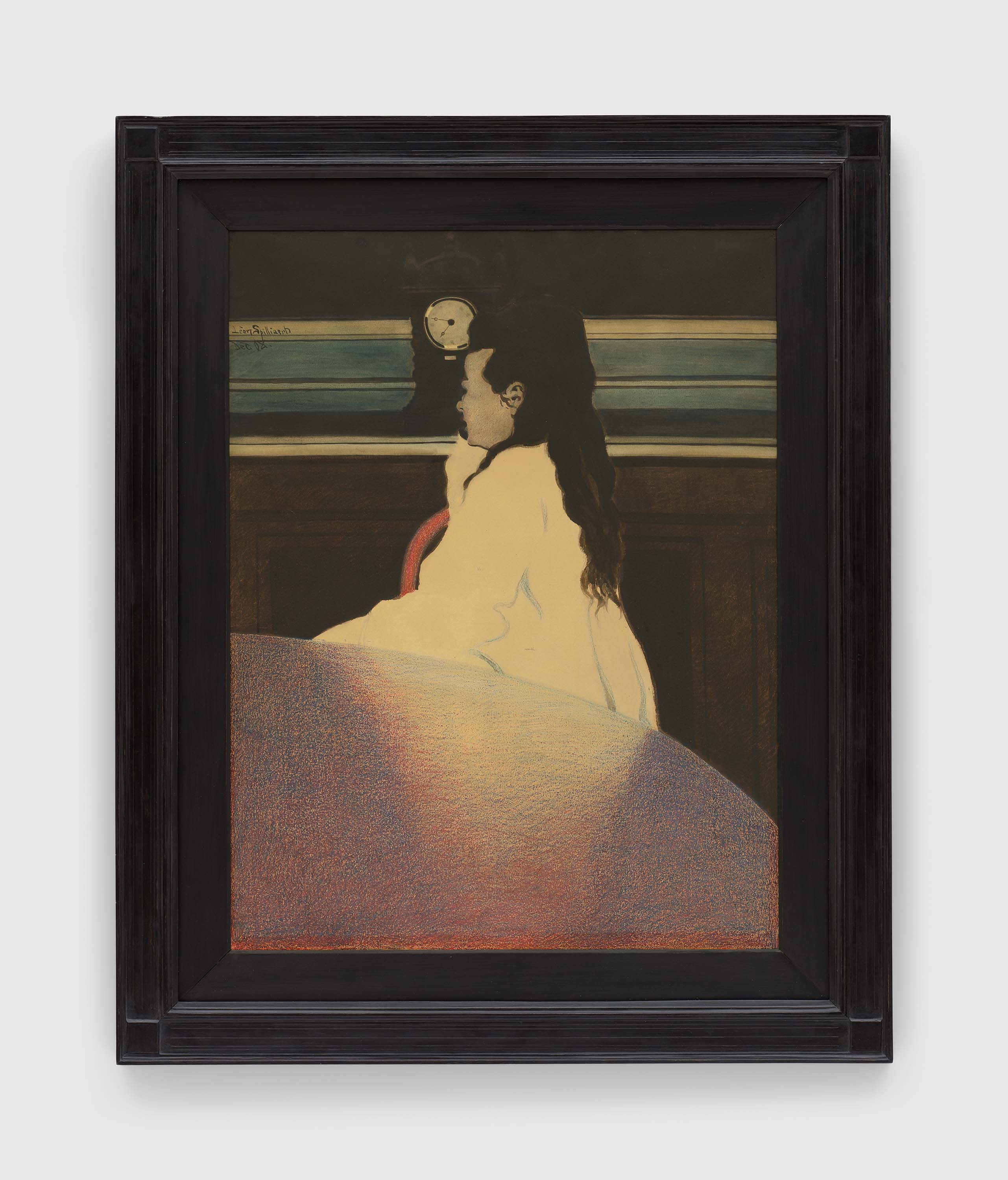 Léon Spilliaert, L'Attente (Waiting), 1908
Hearn Family Trust
Courtesy of Agnews, Brussels and David Zwirner
Concurrently running and curated by Dr. Noémie Goldman in collaboration with the Brussels-based Agnews Gallery, is Léon Spilliaert an exhibition of paintings and book illustrations which marks a long-overdue re-evaluation of this master’s work. Spilliaert’s haunting, misty Ostend seascapes and mysterious portraits captured my imagination when I first saw his exhibition 42 years ago in Paris. He is relatively unknown in the United States, yet his paintings are every bit as good as those of such famous Symbolists as Edvard Munch, Odilon Redon, or Toulouse Lautrec. Which brings up the question “why are some artists become known while others do not (or are recognized after their death)?” I’m not sure I know the answer but one of my favourite professors once responded to this question with, “there’s no particular formula, you just have to be in the right place at the right time.” Spilliaert’s low-key status may be because his style doesn’t comfortably fit into just one art category. He can be considered a Symbolist as his forms contain secondary meaning seen in the brooding, melancholy portraits he produced. Moreover, his use of color and line are abstract in the sense that they are not mimetic to the motif. These qualities in addition to his economic, sparse use of space and compositional design, also align him to the early modern abstractionists.
Spilliaert’s dimly-lit spectral landscapes, Waiting (1908) or The Bend of the Promenade (1908) parallel Edvard Munch’s psychological explorations of the human condition— exude an uncanny spatiality, where tangibility dissipates into dreamlike void. His introspective interiors, recall the meditative compositions of Vilhelm Hammershøi, deepening existential solitude, and transforming domestic space into an arena of spiritual unrest. The dimly illuminated Self-Portrait 2, November (1908) exemplifies this dissolution, where the light and shadow suspend the self within an eerie interval of being.
Léon Spilliaert’s phantoms of silence evoke a state of quiet reflection, detached from external turmoil. Yet his forms engage in a silent struggle of tragic proportions —a personal contemplation that reflects a more universal and tragic experience than the ones of either love, war or vengeance. Through its rigorous curation and historical engagement, David Zwirner’s programming demonstrates the enduring complexity of early modernist abstraction while reinforcing its relevance to contemporary artistic inquiry. WM

Thalia Vrachopoulos
view all articles from this author