Whitehot Magazine
October 2026
"The Best Art In The World"
"The Best Art In The World"
October 2026
Exhibition Review: “Harrison Haft - Nuclear Eden” at Collective Z Gallery, Chinatown
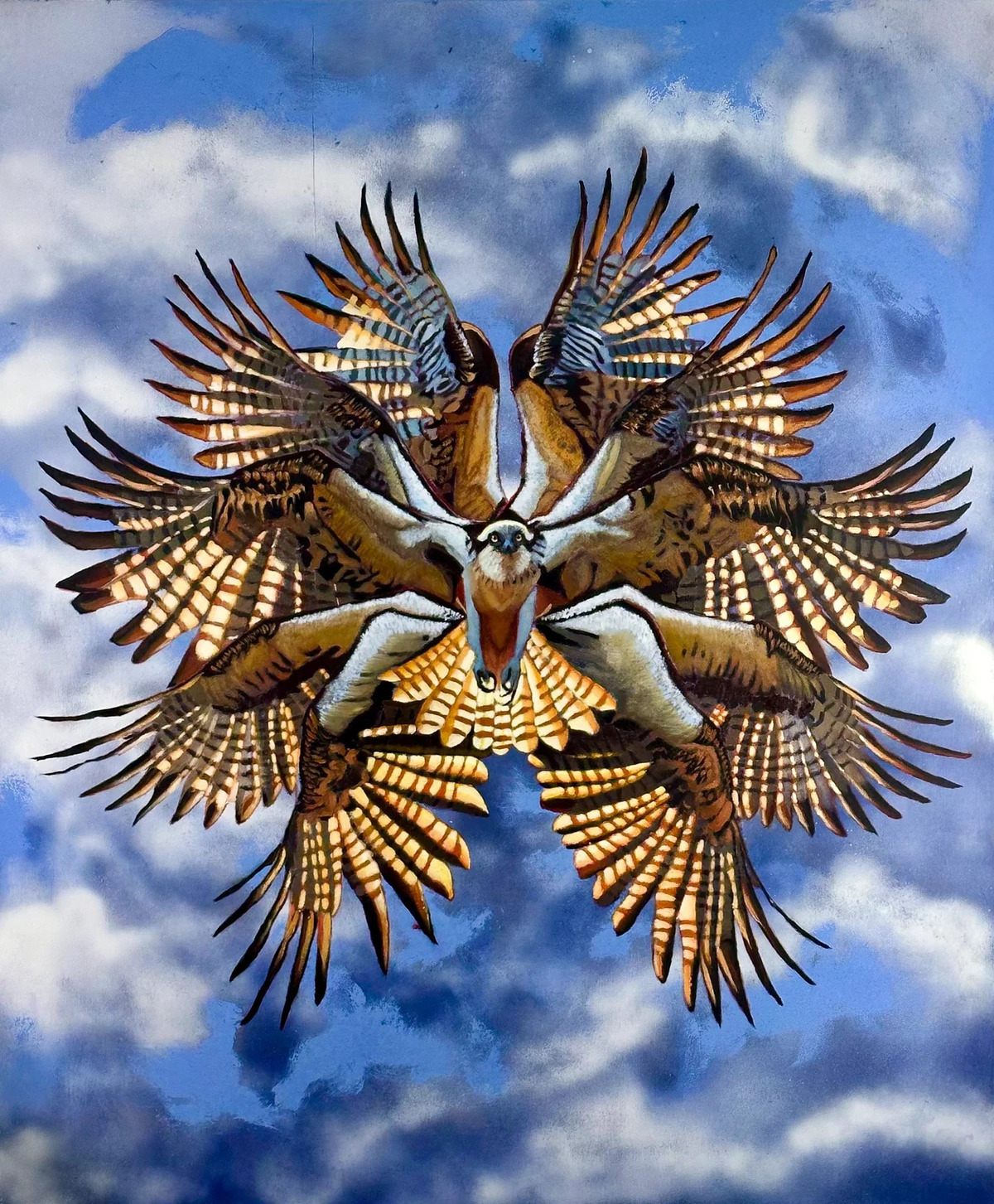 Harrison Haft, Halcyon, 2025, oil on panel; latex and spray paint ground. 48 x 40 x 2 inches. Image courtesy of the gallery.
By LIAM OTERO August 18, 2026
Mythology is often perceived as only a historical construct, but contemporary myth-making has its place in the undercurrents of today’s visual culture. Harrison Haft, an artist and filmmaker, recently unveiled a voluminous body of work in his debut solo exhibition Nuclear Eden that speak to of-the-moment issues and themes stemming from a more universalized and timeless nature. Passive glances have no place in the world of Haft, for provocation is the name of the painter’s game.
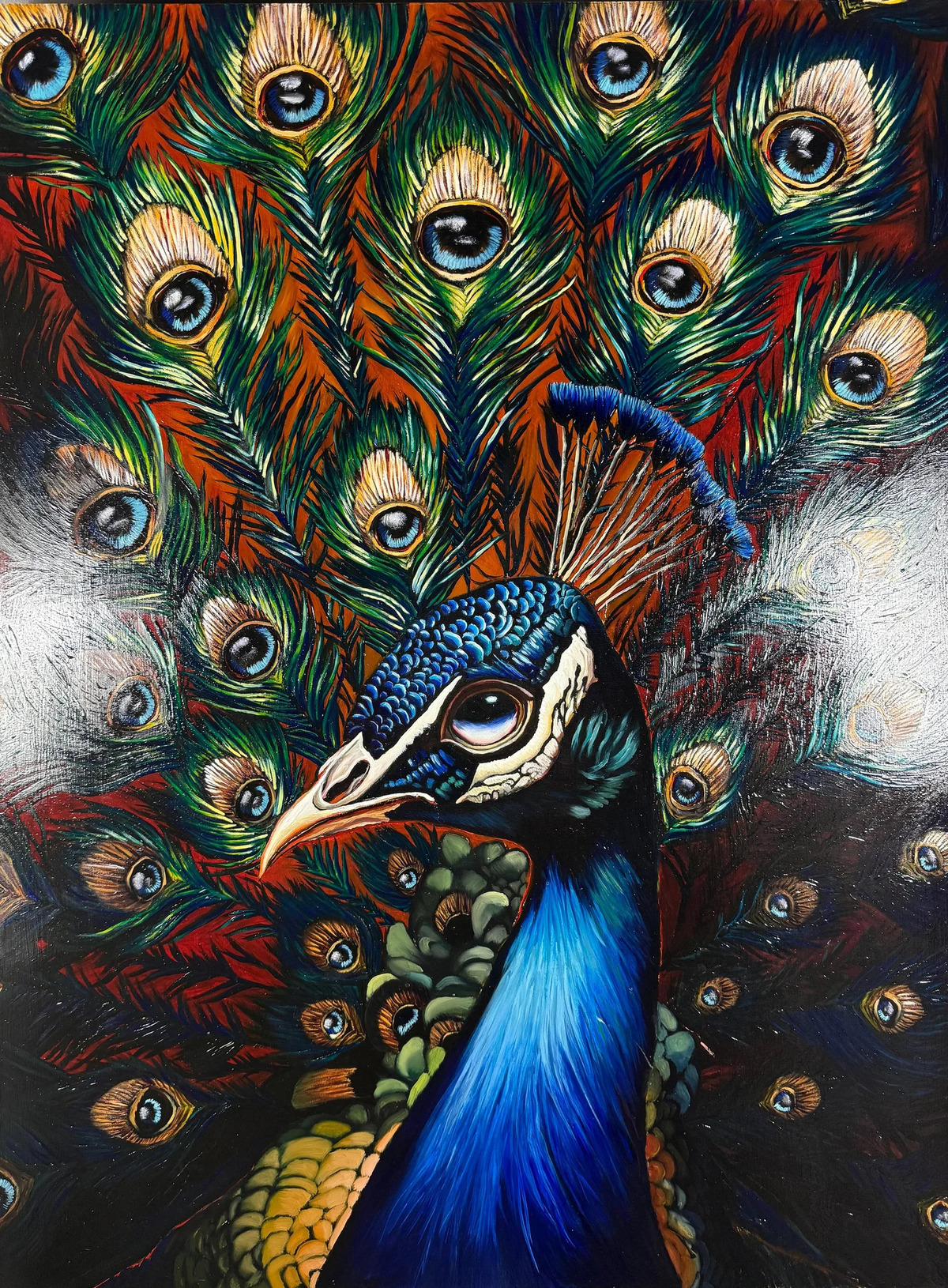 Harrison Haft, Hindsight, 2026, oil on latex-primed panel. 48 x 36 x 1.5 inches. Image courtesy of the gallery.
Direct, piercing, downright penetrating gazes oriented towards the viewer recur among each of his subjects: human, animal, and mutants. Hindsight (2026) is an oil painting whose luminescent glow is the result of the latex-primed panel upon which is the image of a peacock with its ostentatious feathers crowding the entire composition. The reflective eye of the peacock is not the only look we are receiving as the ocular patterns that cover the feathers amplify our awareness of being stared at. Something about this image gives off the visual embellishment of a 17th Century pronkstilleven painting, but with even more of an uncanny seriousness.
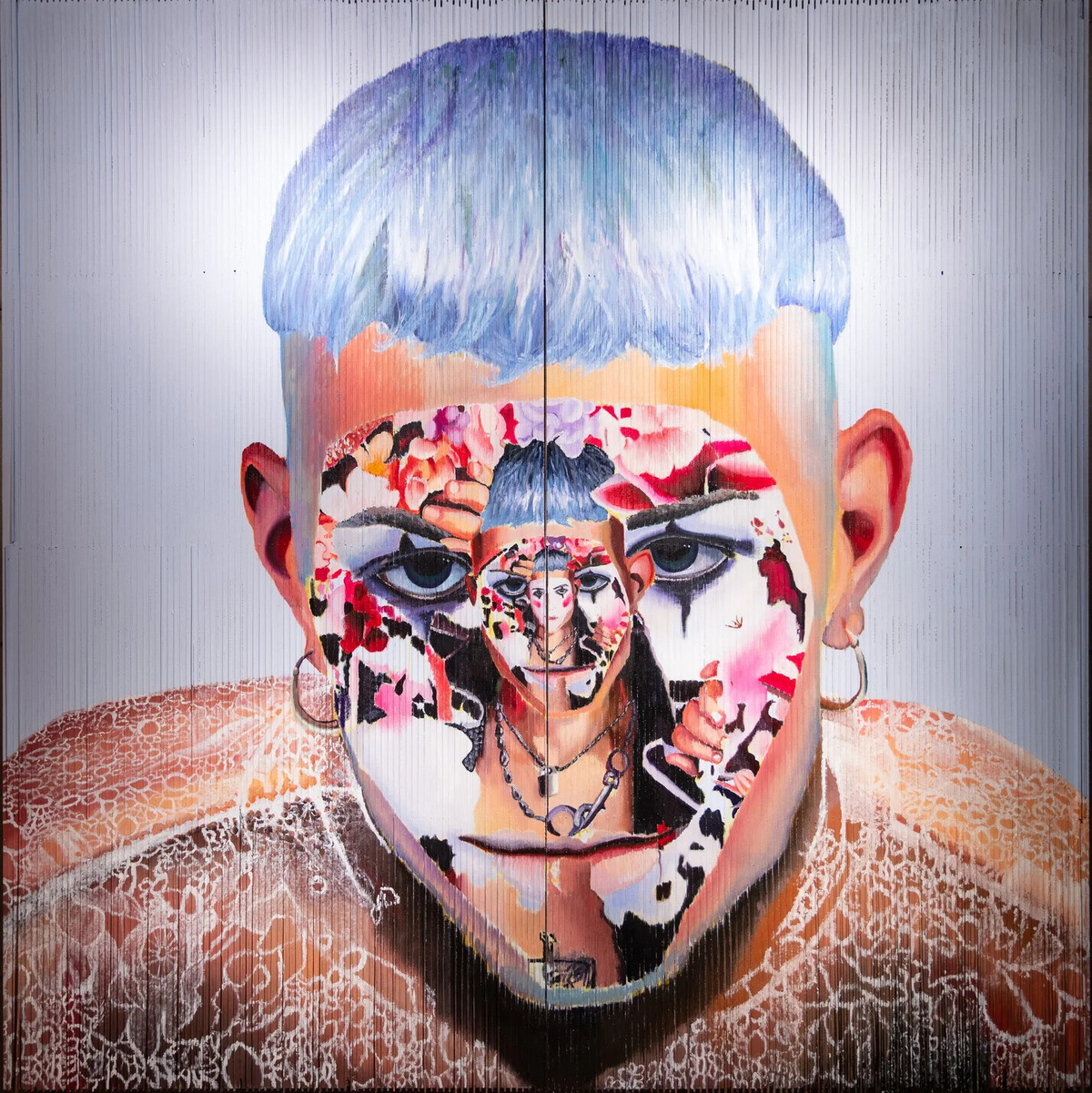 Harrison Haft, Agape, 2023, oil on slit particle board with 702 laser-cut plywood in-lays; vertical diptych. 96 x 96 x 3 inches. Image courtesy of the gallery.
Like the peacock, more beasts of the wild are singularly depicted in each painting: the multi-winged fury of an owl mid-flight; a pale-white octopus swimming through an acidly polychromatic sea; a fox with nine tails that each hold a candle; and a lamb with a third eye. These creatures - real and imagined - function as metaphorical figures. Haft, who is of Jewish heritage, makes a reference to this in the Menorah-like candle arrangement with the nine-tailed fox, while queerness is implied in the grand-scaled painting Agape (2023), which features the repeating, thrice portrait-within-portrait face of a figure whose personal style exudes a liberatory look with their platinum-bluish tinged hair and geisha-esque makeup. Less portrait and more of a mesmerizing oracle of the now.
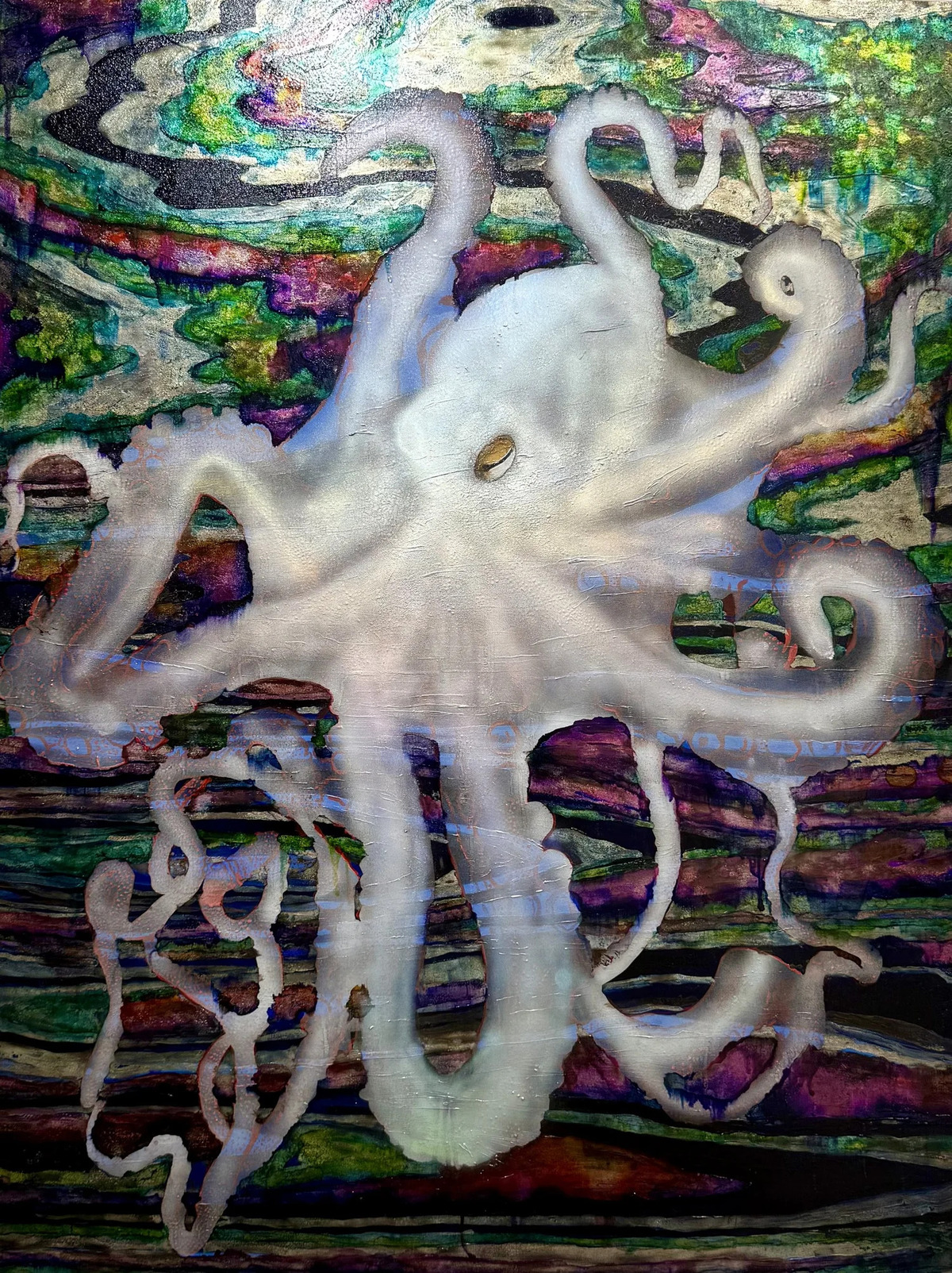 Harrison Haft, Chromatophoria, 2026, oil, torch-fired chrome, airbrushed lacquer, alcohol ink, acrylic glaze on panel. 48 x 36 x 1.5 inches. Image courtesy of the gallery.
Only a learned storyteller like Haft could devise such compelling titles for his works that read like chapters from a literary epic: Augury of Spring (2024), Noctivagant Providence (2025), Eat What You Kill (2026), etc. Each of his figures - human and animal alike - are responsible for their own destinies.
Myth-making aside, Haft’s paintings are also extraordinarily beautiful works to observe. Agape both overwhelms and enchants on account of its humongous scale - the largest work in the exhibition measuring at 96 x 96 inches and comprising 702 laser-cut plywood inlays rendered with oil paint over slit particle board. And then there is the more metaphorical imagery of Sciamachy with the presence of a ferocious brown bear’s head entering into view contained within a much bigger transparent face of a person that opens out into an autumnal forest.
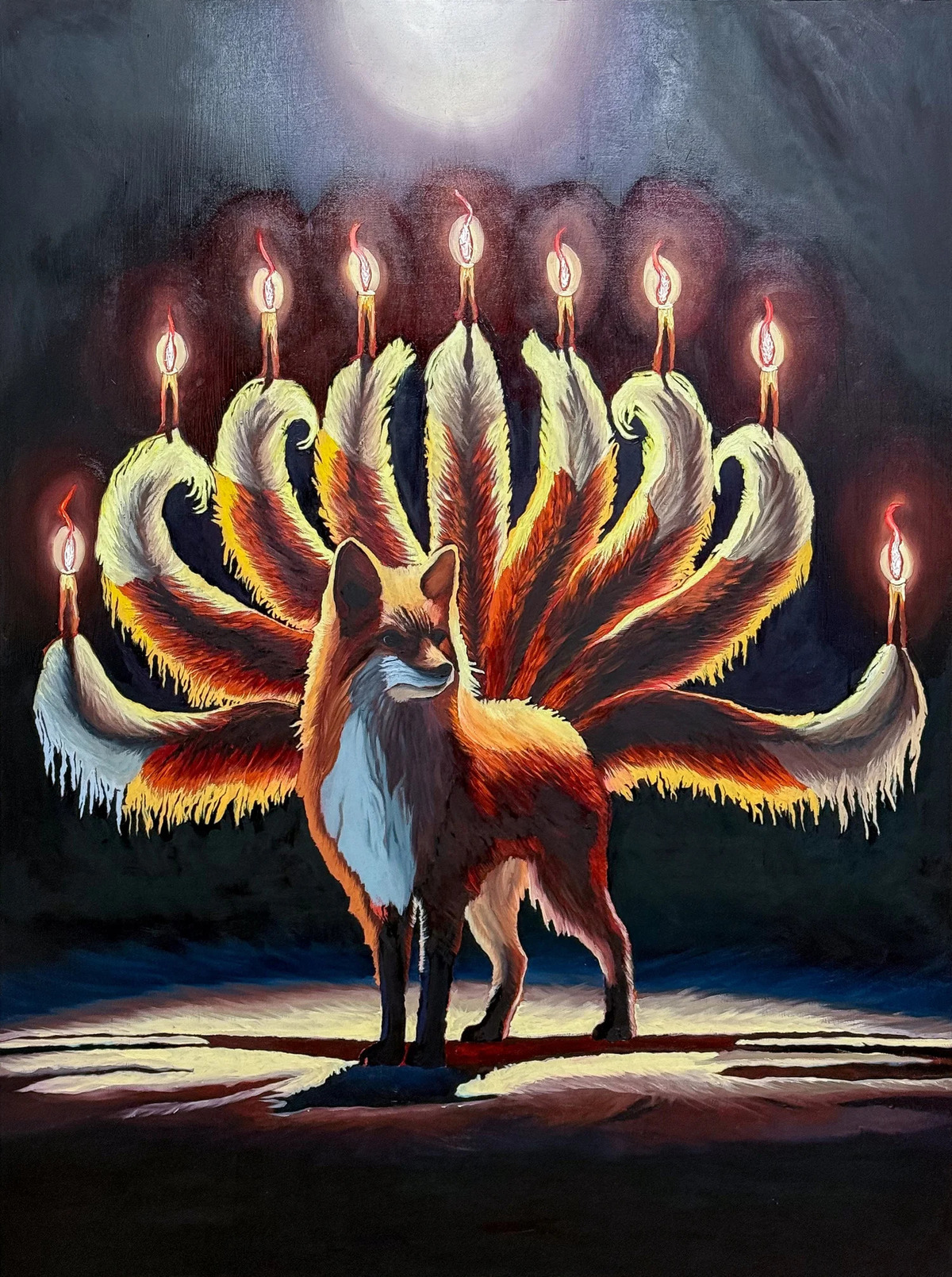 Harrison Haft, Noctivagant Providence, 2025, oil on latex-primed panel. 48 x 36 x 1.5 inches. Image courtesy of the gallery.
Haft’s works are intense - in their narrative capacity and in their formal presence. As was mentioned earlier in this review, the paintings have a penetrating tone to them, such that it may be disconcerting for some, seductive for others, or downright off-putting. All of the reactions they may elicit are equally valid and further proof in the pudding of Haft’s ability to draw out the most raw emotions from such a complex body of paintings. WM

Liam Otero
Liam Otero is a freelance art writer in NYC. He was recently named New York Editor of Whitehot Magazine.
view all articles from this author