Whitehot Magazine
October 2026
"The Best Art In The World"
"The Best Art In The World"
October 2026
Three Emerging Artists "Stepping Forward" at the Affordable Art Fair NYC
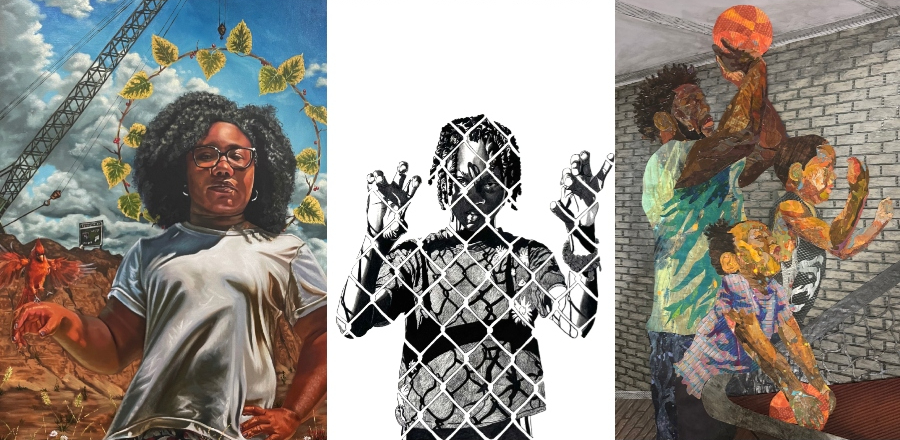
L to R: Kaylyn Elyse Webster "Liberty" (2025), Oil on canvas, 30 x 40 | Brandan Henry "AS IF SEEN" (2025), 30 x 20 Charcoal on paper | Lamar Bailey "TAKE THE SHOT" (2026), 24 x 18 Mixed Media collage on panel. Credit: Tanya Weddemire Gallery
By BYRON ARMSTRONG March 11th, 2026
This spring, the Affordable Art Fair New York returns with its mandate to “democratise the art world” and make contemporary art more accessible to a wider audience. Founded in 1999 in London, the art fair is a global phenomenon that’s since expanded to 16 cities. That’s in large part due to a model that fosters a more relaxed environment for both first-time buyers and seasoned collectors to discover original work by established artists and rising art stars. Among those ‘rising art stars’ are a trifecta of emerging artists whose practices are deeply rooted in personal narrative and community. Kaylyn Elyse Webster, Lamar Bailey and Brandan Henry (Webster and Bailey are repped by Tanya Wedddemire Gallery, while Henry is exhibiting with gallery), use their chosen medium to explore themes related to Black identity, memory, and family. Although all three hail from different parts of the U.S., they share a profound intimacy, thoughtfulness, and above all, respect for their subjects that can only come from a shared, lived experience.
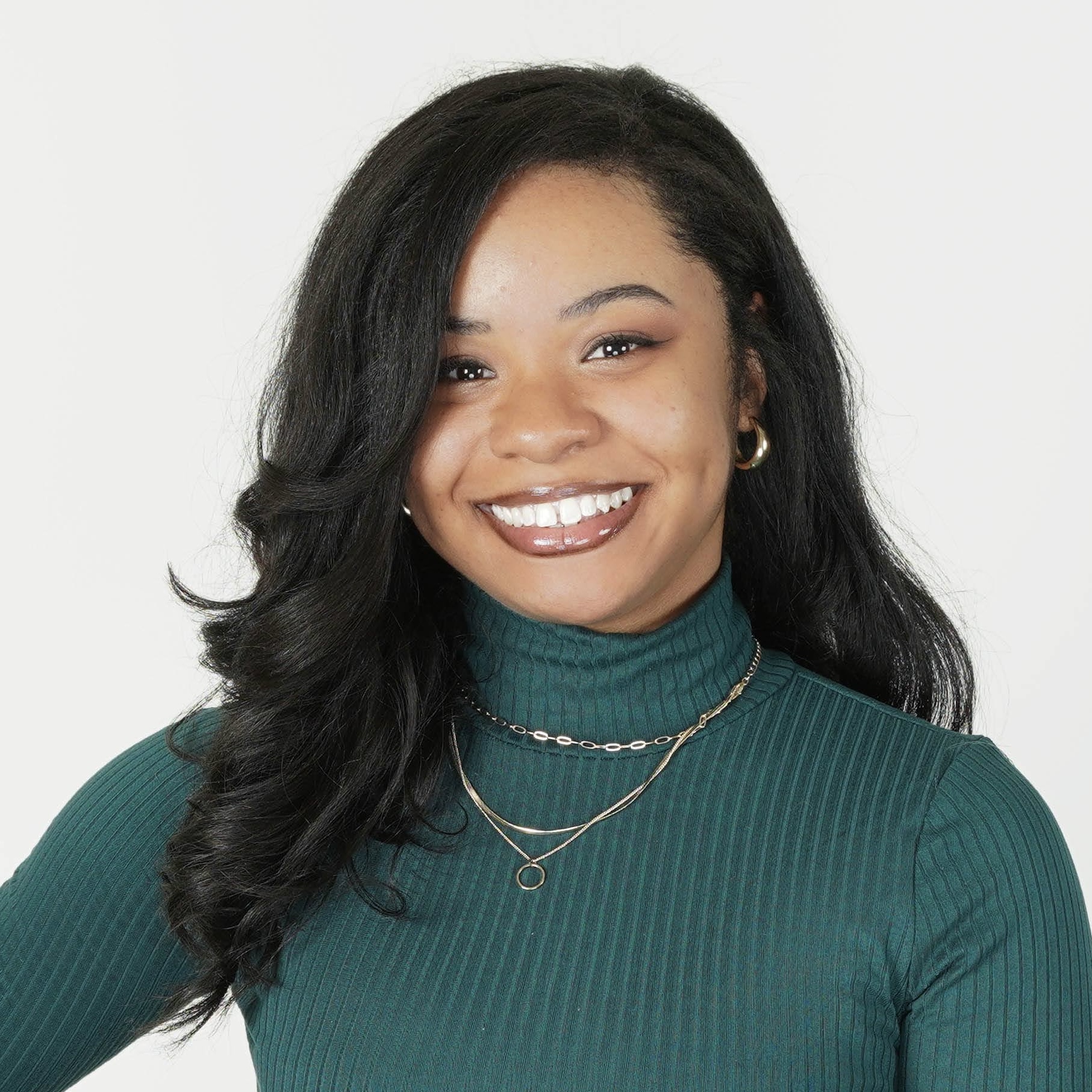 Kaylyn Elyse Webster. Photo Credit: Frederick Ford
Kaylyn Elyse Webster
Memphis-born oil painter Kaylyn Elyse Webster creates portraits of “everyday People of Color” that focus on what other artists may consider minutia; textural details of hair like kinks and coils, unique moles and freckles, as well as the myriad of shades that count as Black skin. Webster honed her technical skills under Professor Jamie Adams at the Sam Fox School of Design & Visual Arts at Washington University in St. Louis. However, her artistic impulses were seeded much earlier, in the creative arts programs of the Memphis grade school system. When she works in oil today, her subjects tend to be the people she knows best: her family and close friends. Working like this allows Webster to not only challenge an art historical tradition that relegates Black figures to background objects, foreground oddities, and servants, but her closeness to her subjects feeds the aforementioned meticulous attention to detail she pays her subjects.
“It feels good to paint my loved ones in a way that uplifts and honors them,” Webster says of her paintings, which employ signifiers of Western art like halos and central composition to create a sense of the sacred. For Webster, seeing her family’s portraits displayed on billboards — her nephews were the subject of a work commission by Urban Art Memphis in 2024 — is a powerful affirmation. It makes her work a true act of love, one that translates into something familiar and humane. “It shows my family, and people who look like them, that they’re worth being celebrated as they are.”
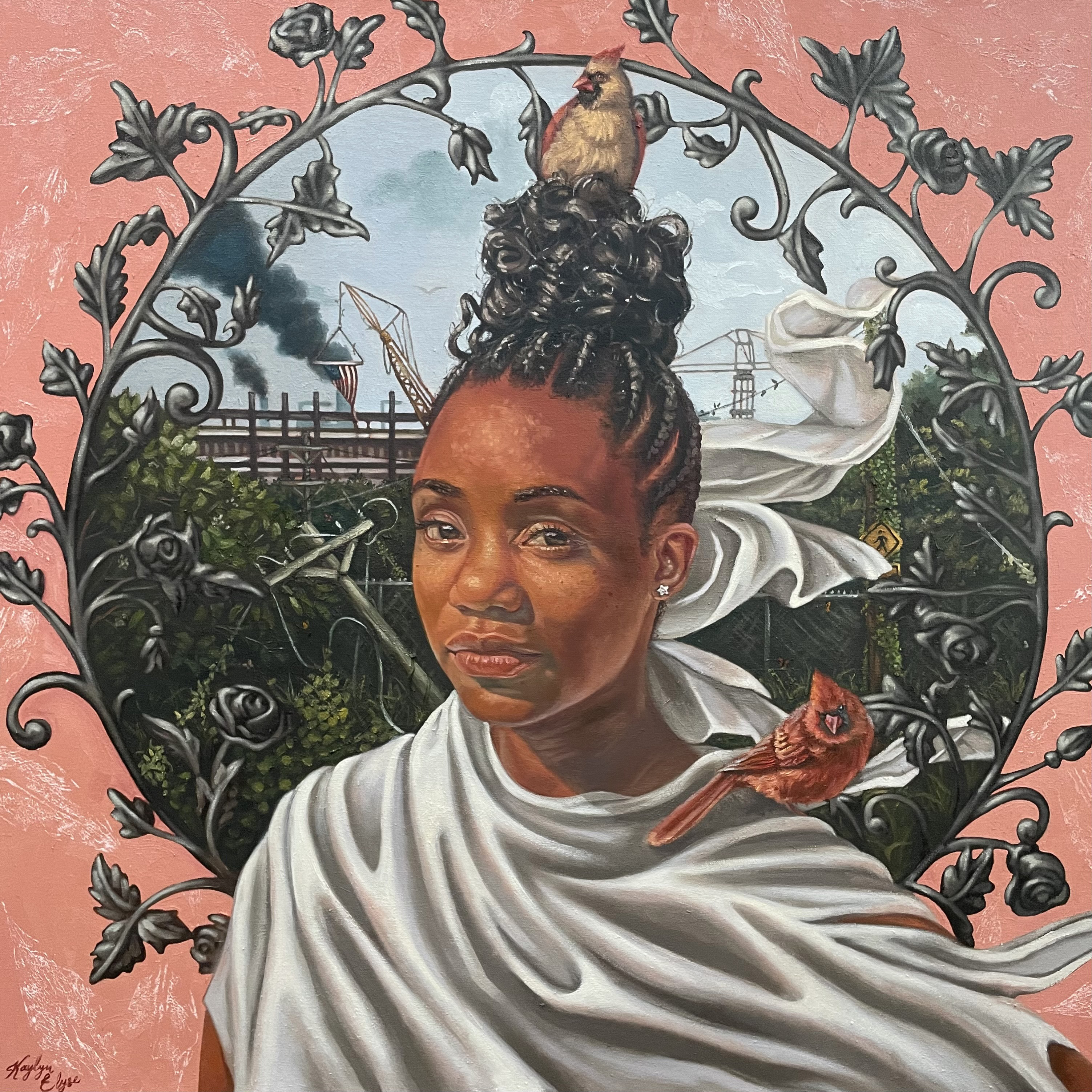 Kaylyn Elyse Webster "MANIFEST DESTINY" (2025), Oil on canvas 30 x 30. Credit: Tanya Weddemire Gallery
Although a traditional arts education would heighten her knowledge of Van Gogh, Picasso and other Old Masters, it was Black working artists on Instagram that would lead her to understand she could be a professional artist making artwork inspiring to her and people in her community. Her success and eventual gallery representation led to one of her biggest surprises about being a working artist. “I don’t think I initially realized how many organizations, groups, and individuals really want to see artists win,” says Webster, who remembers hearing the common refrain ‘art isn’t a real job’. “I think artists today don’t have to rely on traditional pipelines for everything in the art world, and with more artist-focused institutions and galleries that genuinely care about the artists they represent, artists have more opportunities to succeed than ever before.”
The support from her gallery has been transformative, providing not only access to a new audience but also invaluable advice on navigating the art world and ensuring fair value for her work. “For an emerging artist, the fair is an unparalleled opportunity to build an audience, gauge the market, and engage in direct dialogue with the public about their work,” she says of the opportunity that’s arrived sooner than expected. “Showing at the Affordable Art Fair NYC feels both great and a bit unreal.”
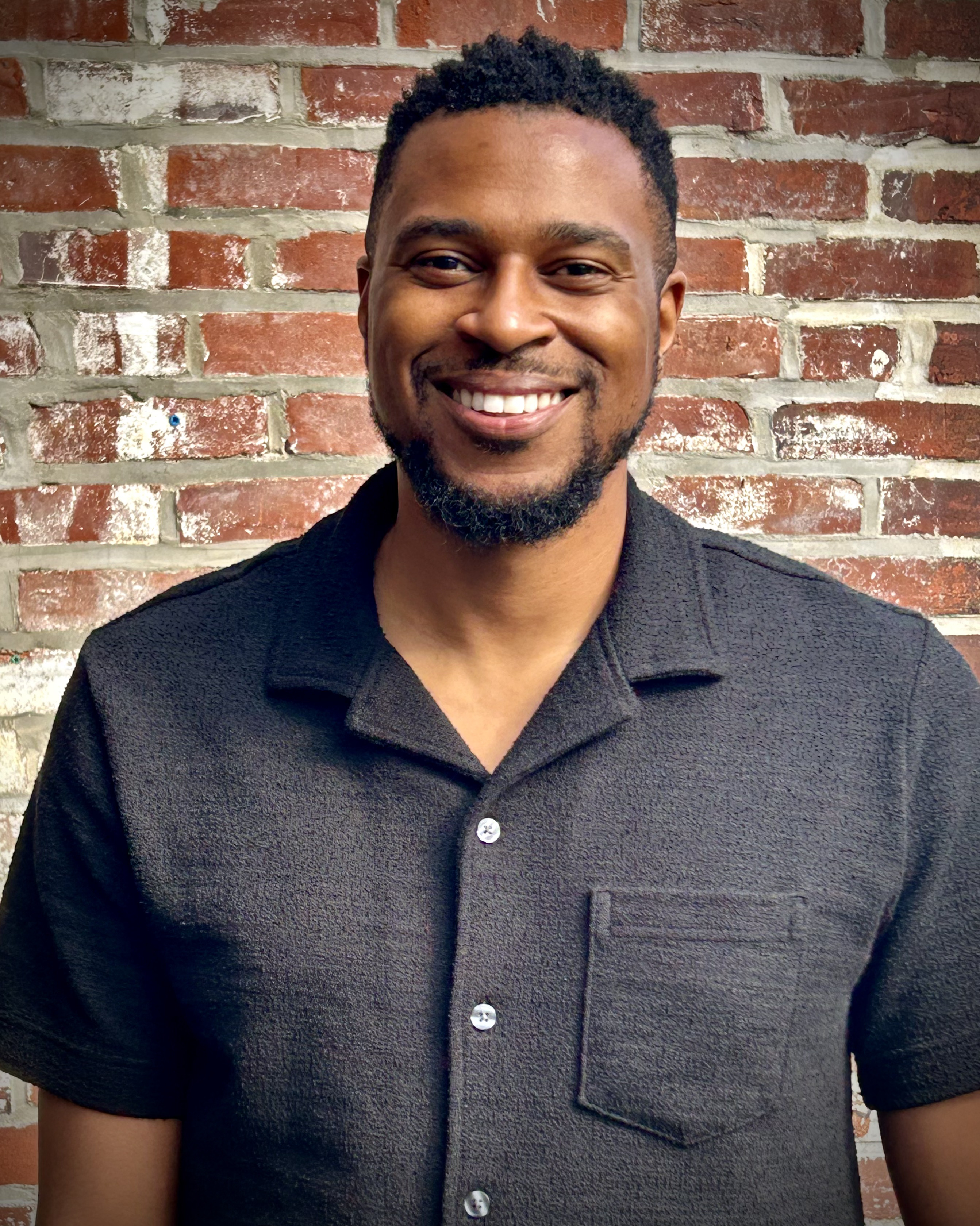
Brandan Henry. Photo Courtesy: Amy Hicks
Brandan Henry
Brandan Henry is a veteran of the U.S. Marine Corps whose non-linear path through education took him from community college to multiple PMI institutions, to an MFA from graduate school. An educator for the last five years, he defies the George Bernard Shaw saying, ‘those who can, do; those who can’t, teach.’ Working primarily with charcoal on paper, Henry describes his medium as “practical, direct, precarious, and always on the edge of change.” His process is “a meditation on control and collapse, where figures emerge through the accumulation of marks and can just as easily recede through erasure.” His fine art practice allows for slower paced thinking and deeper questioning, and is informed by a broad understanding of how bodies move through systems—postcolonial histories, inherited violence, and environments never designed with them in mind—and his experiences of working with people from different countries and cultures that shaped how Henry understands collaboration, empathy, and responsibility.
“The white space of the paper is not a void but an active agent,” Henry says, noting the influence by Black writers who understand the power of leaving things unsaid, and who use abstraction as a form of care rather than loss. “It pushes back, interrupts, and pressures the body, so when Black bodies enter that space, they disrupt it.”
This tension is the point. His figures, suspended or incomplete, are pressed against the white field. Yet, within this pressure, he finds room for care. He breathes charcoal dust across the surface, allowing breath to shape the body, making drawing “less about describing what’s there and more about mediating what’s felt, remembered, or projected onto the Black body.” “That space reflects the conditions many of us live inside,” says Henry. “I’m thinking about how Black bodies move through environments not designed for us, and how presence, care, and intimacy still get asserted within those constraints. Drawing allows me to sit with that tension rather than explain it away.”
Henry, whose work is a reflection of his life, has a recent focus on fatherhood and intimacy, or as Henry puts it, “the quiet systems that hold Black life together.”
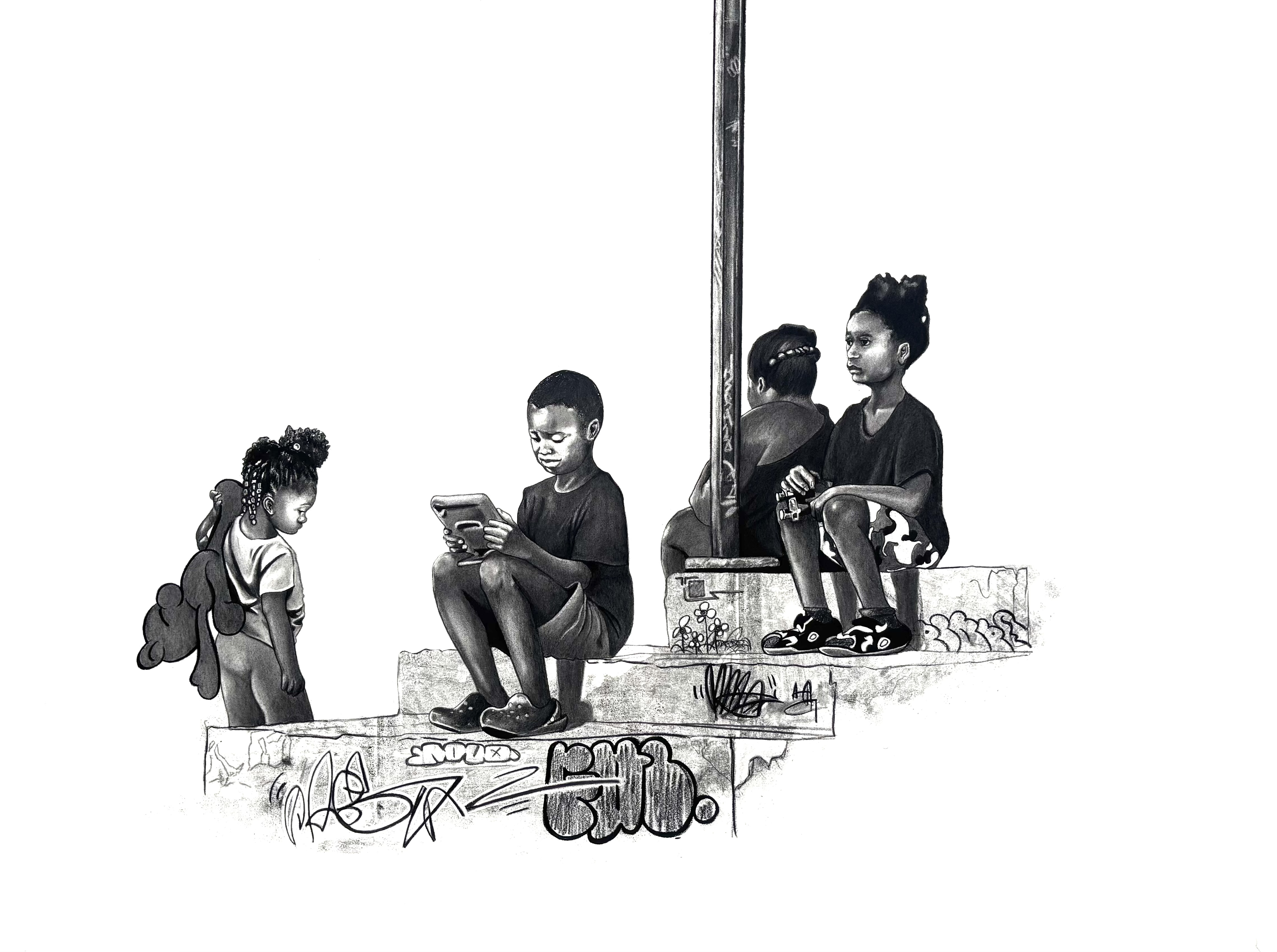 Brandan Henry, "Before Anywhere" (2025), Charcoal on paper, 22 x 30.
“As a Black man, an artist, and father, I’m constantly negotiating visibility, responsibility, and belonging,” Henry explains. “Drawing gives me a slow, private space to reflect on those negotiations without forcing resolution.”
Henry acknowledges his “complicated relationship with capitalism and the art market.” As someone whose education prepared him for the realities of the profession, so in his case, having gallery representation has been less about artistic guidance than it’s about presentation, sales, and access to market-facing opportunities. “NYC is pretty much still the Mecca of the art world here in the US,” notes Henry. “Showing at the NYC fair is about encountering new audiences and observing how the work behaves when it enters a broader, more public context.”
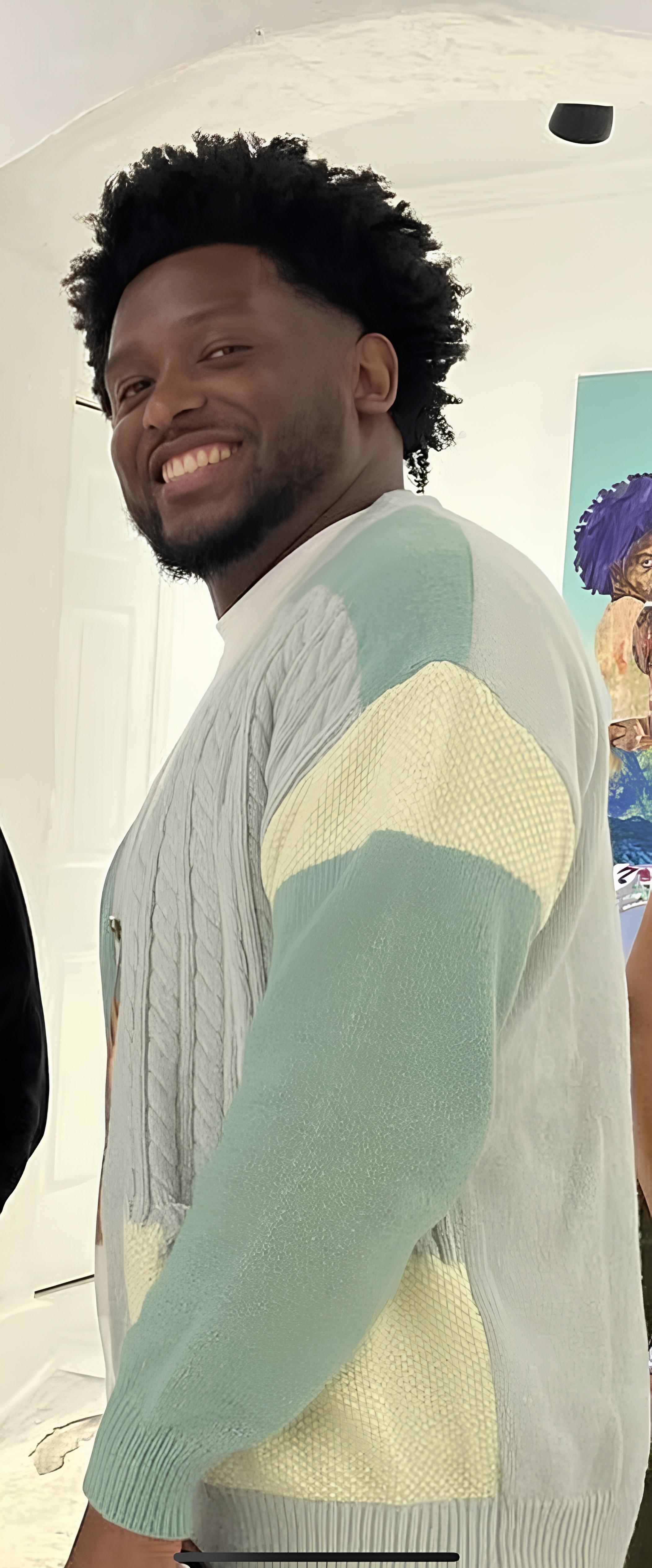 Lamar Bailey. Photo Credit: George Galbreath
Lamar Bailey:
Lamar Bailey’s mixed-media portraits are built, quite literally, from the ground up. Using everyday materials like cardboard, paper, and paint, he constructs figures piece by piece, layering patterns and textures to mirror the layered nature of Black experience. Bailey, who briefly attended Savannah College of Art and Design (SCAD) and was mentored by high school art teachers Kevin Cole and George Galbreath, is self-taught out of necessity. The cost of art school was too burdensome to continue. That has done little to limit Bailey’s practice, which is rooted in a desire to depict the fullness of Black life: fathers holding children, couples caught in intimate moments, men and women in moments of quiet reflection, joy, and vulnerability.
His personal story is the engine of his work. Growing up amid instability, Bailey met his wife in high school and witnessed a model of Black family life that was new to him—one of openness, stability, and tenderness. “It shifted something,” he recalls. Becoming a husband and father solidified that transformation. When he paints, he is not just documenting moments but “honoring the love I now experience and chose to build.” His use of layered materials is symbolic. “History, culture, joy, struggle, love,” Bailey says. “My pieces are about everyday Black life, but they are also about rewriting narratives, breaking cycles, and affirming that love because stability and tenderness belong in our story too.”
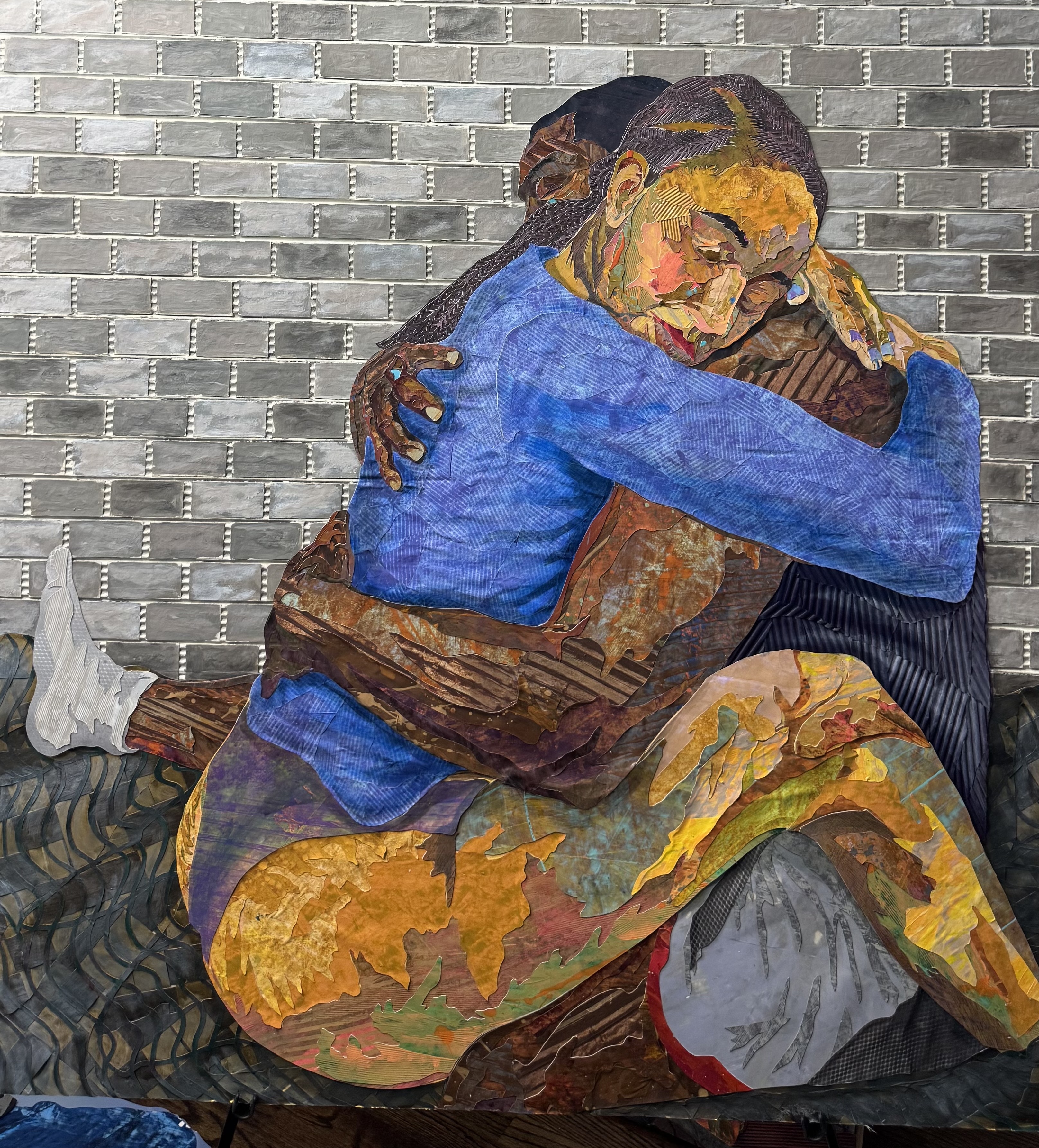 Lamar Bailey, "TELL ME YOU STILL CARE" (2026) Mixed Media collage on panel, 36 x 36.
Working with a gallery has expanded Bailey’s platform and pushed him to think strategically about the long-term arc of his career. “Showing at the Affordable Art Fair New York feels like a real step forward,” he says of the fair. While repeating the talking points of his colleagues about access to collectors and curators, more important for him, it facilitates conversation. “It’s about seeing how people respond to your work—what resonates with them, and how stories can travel,” Bailey says. “When someone shares that a piece reminds them of their childhood, their parents, or their own family dynamic, it reinforces everything. Art has the power to affirm identity and preserve memory.”
As the Affordable Art Fair New York opens its doors, the works of Webster, Henry, and Bailey will offer visitors into distinct yet interconnected practices, each dedicated to a slow, careful examination of Black life. These three emerging artists are not only building their own careers but also contributing to a larger, essential conversation about representation, value, and the stories we choose to tell. In a fair designed to make art more accessible, that’s already something valuable.
Affordable Art Fair New York
March 18th - March 22, 2026
Tanya Weddemire Gallery-Booth B36
Starrett Lehigh Building
601 West 26th Street

Byron Armstrong
Byron Armstrong is an award-winning freelance journalist and writer who investigates the intersections between arts and culture, lifestyle, and politics. Find him on Instagram @thebyproduct and on Linkedin https://www.linkedin.com/in/byron-armstrong
view all articles from this author