Whitehot Magazine
September 2026
"The Best Art In The World"
"The Best Art In The World"
September 2026
Vitrified Lux: Nefeli Massia’s Voyages of Light at the Museum of Modern Greek Art of the Municipality of Rhodes
By THALIA VRACHOPULOS August 13th, 2026
One of the notable global art events this summer was Helen Frankethaler’s show comprising monumental, post-Surrealist works at Gagosian Gallery in Chelsea. Her expansive canvases translate the Eastern Coast’s atmospheric light into abstract inners-scapes converting external geography and allusion into profound psychical topographies. At the Fondation Louis Vuitton in Paris, Armineh Negahdari the Iranian-born artist exhibited paintings. Her works reveal a profound scepticism toward the uncertainties of language, while embracing a pleiad of radical poetics in which images resist illustration in favour of spiritual experience. Negahdari’s bodies dissolve into fruit, landscapes emerge from flesh, and mountains become breasts.
Notwithstanding the intellectual and sensorial richness of that New York and Parisian encounters, the exhibition that proved most profound in a restorative way took place far from the established metropolitan navels of contemporary art at the Museum of Modern Greek Art of the Municipality of the Aegean island of Rhodes. At the island of the Colossus and the Knights Hospitaller, in the serene setting of the museum’s new wing is Nefeli Massia’s Voyages of Light solo exhibition curated by Kostas Prapoglou.
Massia’s exhibition demonstrates a turning point in her career wherein it is no longer enough to consider drawing, Plexiglas, light and space separately. What has become central is the relationship between them, and the way these relationships shape both the works’ form as well as, the conditions under which it is perceived. The form is not completed before the installation takes place. It develops through the encounter between material, light, shadow, gravity, architecture, and the duration of viewing.
Consequently, within a white marble building, are situated, Massia’s site-specific installations of slick acrylic slabs, mylar membranes, drifts of marble dust, and LED incisions. The latter, neither refract nor reflect illumination but rather rip it open, fracturing, swallowing, and bleeding it into the polished exhibition space. Razor-sharp planes pierce the darkness, while misty, vaporous textures hang suspended in the air like charged particles, animating a vivid choreography of diathlasis, where optical refraction acts, as a physical slash, forcing the visible world to continually disintegrate, pulsate, and reconstitute.
Nested within the unique geography of Rhodes, the exhibition interrogates the island's distinct radiance, shaped by the sculptural pressure of Mediterranean light, the inertia of stone, and the deep deposition of history. Drawing on over three decades of manual and empirical experimentation, Massia deploys a sophisticated material intelligence that bridges mathematical rigor —cultivated during her studies at the University of Pennsylvania— with an intuitive sensitivity to optical frequency. Anchored by the subterranean resonance of Daedalus and Icarus, the exhibition deploys classical mythology as a counter-diagnostic tool against the regime of algorithmic acceleration, automated optimization, and technological abstraction.
What struck me most besides the elegance of the neoclassical building was its simple extraordinary light vitality. It did not merely illuminate the marble surfaces; it animated them, ricocheting across polished stone, dissolving into shadow, and returning as a restless, almost sentient presence that appeared to breathe through the structure. Against this living interplay of marble, space, and uncanny radiance, Voyages of Light reveals itself as an immersive meditation in which Massia transforms the building into a vessel for the becoming of light.
One of the sculptural pieces in the series Voyages of Light (2024, 78 by 60 inches, plexiglass, metal shavings, resin), exists as a compelling instantiation of Massia’s broader ontological concerns. Suspended directly from the ceiling, the artwork’s spatial elevation immediately precipitates a dramatic interplay of shadow; a form of mystical tenebrism that reconfigures the surrounding architectural threshold. The piece asserts itself as a petrified paradox. An inorganic rock, a mineralized stalactite suspended in space, but still pulsating with the primordial fluidity of an organic crystal. Through its dense amalgamation of golden resin and metallic particulate, the work functions as a brutalist monument in miniature; rigid, uncompromising, and monolithic, yet intricately etched with the delicate and branching logic of an organism.
Vacillating between the brute materiality of a geological formation and the ethereal complexity of a vitrified memory, Massia’s construction of an object suspended between the opaque solidity of marble and the transparent elusiveness of glass achieves a rare synthesis where light acts as the primary form and essential medium of expression. Possessing an intrinsic luminosity, the piece projects its internal configurations outward, casting upon the adjacent walls an array of intricate markings and convoluted geometrical striations deeply reminiscent of biomorphic insect wings. The amber resin bound within the plexiglass matrix refracts a transcendental luminescence that complicates simple optical categorization, presenting a condensed explosion of light.
Through this very compression, light creates dimensionality, expanding space from its primordial point and generating the very fabric of matter. The composition thus transforms the spatial plane into an arena of luminous, tectonic tension, simultaneously evoking both the mineral earth of Rhodes, with its ancient geological structures, and the distinct, potent quality of Rhodes's luminous environment, which seems to crystallize within the material.
This spatialized interplay of light and petrified form finds its graphic counterpart in the monumental installation Voyages of Light (2026, 40 inches by 50 feet, graphite on Dura-Lar). Here, Massia extends her investigation into an expansive, suspended landscape of psychogeography. Stretching across a fifty-foot duration, the translucent substrate’s undulating, wave-like folds abandon flat planarity to construct a shifting terrain, mapping space not through static Cartesian coordinates, but through bodily movement, emotional drift, and atmospheric frequency. Dense, horizontal sweeps of graphite and delicate, organic cross-hatchings catch and bend the ambient illumination, establishing a visual syntax of sedimented topographies and oceanic currents where line, shadow, and reflection continuously interpenetrate.
Elevated upon the museum’s vertical expanse, the composition channels the mythic ascendance and perilous aerial trajectory of Daedalus and Icarus, while operating as philosophical construct imbued with renewed contemporary urgency. Hovering above the viewer as weightless yet formidable structure, the suspended resin form, a wavy fifty-foot scroll, converts the room’s airspace into an arena of high-altitude risk. Here, spatial elevation becomes a visceral inquiry into calibration and human measure; a fraught negotiation of threshold, tension, and descent that pits the soaring ambition of technological acceleration against the irreducibility of embodied awareness, capturing the exact moment where celestial ascent confronts the inescapable pull of terrestrial gravity.
In a sense, Massia’s unique work radiates all the brighter when set against that of Rebecca Horn, as presented in her retrospective at Skulpturenpark Waldfrieden in Wuppertal. Here the artists’ suspended apparatuses enact fundamentally opposing luminous and structural strategies. Horn’s Concert of Anarchy (2006), a suspended kinetic sculpture of a grand piano, relies on the external, ambient daylight filtering through the surrounding woodlands, to expose the raw mechanical drama of motorized extensions within the temporal shifts of the outdoor landscape. Conversely, Massia bypasses mechanical motion entirely, turning the suspended artwork into an active producer of radiance.
Where Horn’s installations receive the external sun of the Wuppertal site, Massia’s airborne structures treat light not as an environmental backdrop, but as a primary and malleable medium; capturing, condensing, and bending illumination from within their synthetic and mineral matrices. Massia’s motionless, elevated creations emit brightness as tangible stuff, producing a self-contained zone of optical fracture that asserts its own independent site of projection against the surrounding room. Ultimately, in Voyages of Light, Nefeli Massia does not merely illuminate space but resurrects Robert Grosseteste’s medieval cosmos where lux is made corporeal, turning light itself into the very material that matters.
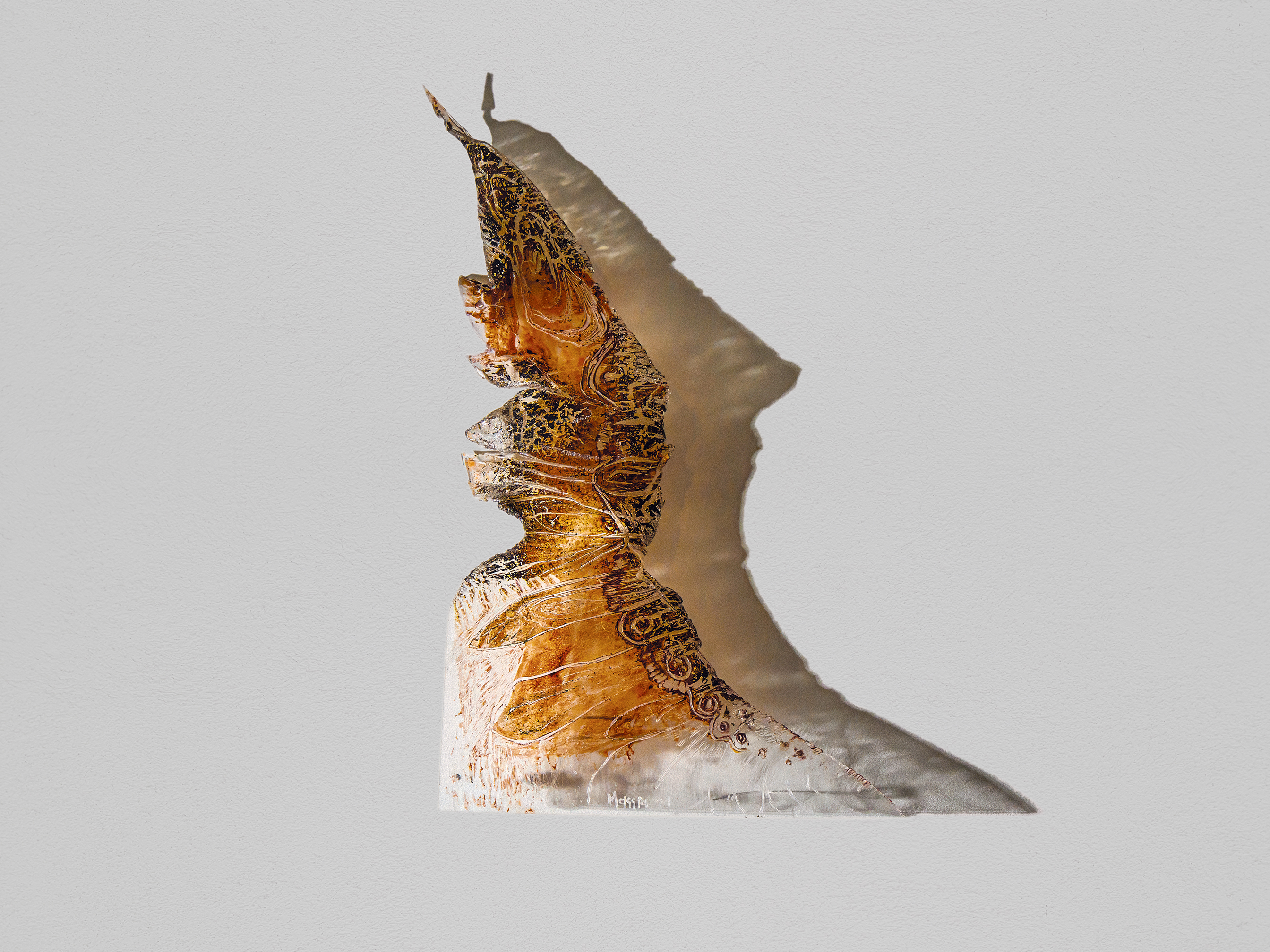 Nefeli Massia, ‘Voyages of Light’, 2024, 78 by 60 inches, plexiglass, metal shavings.
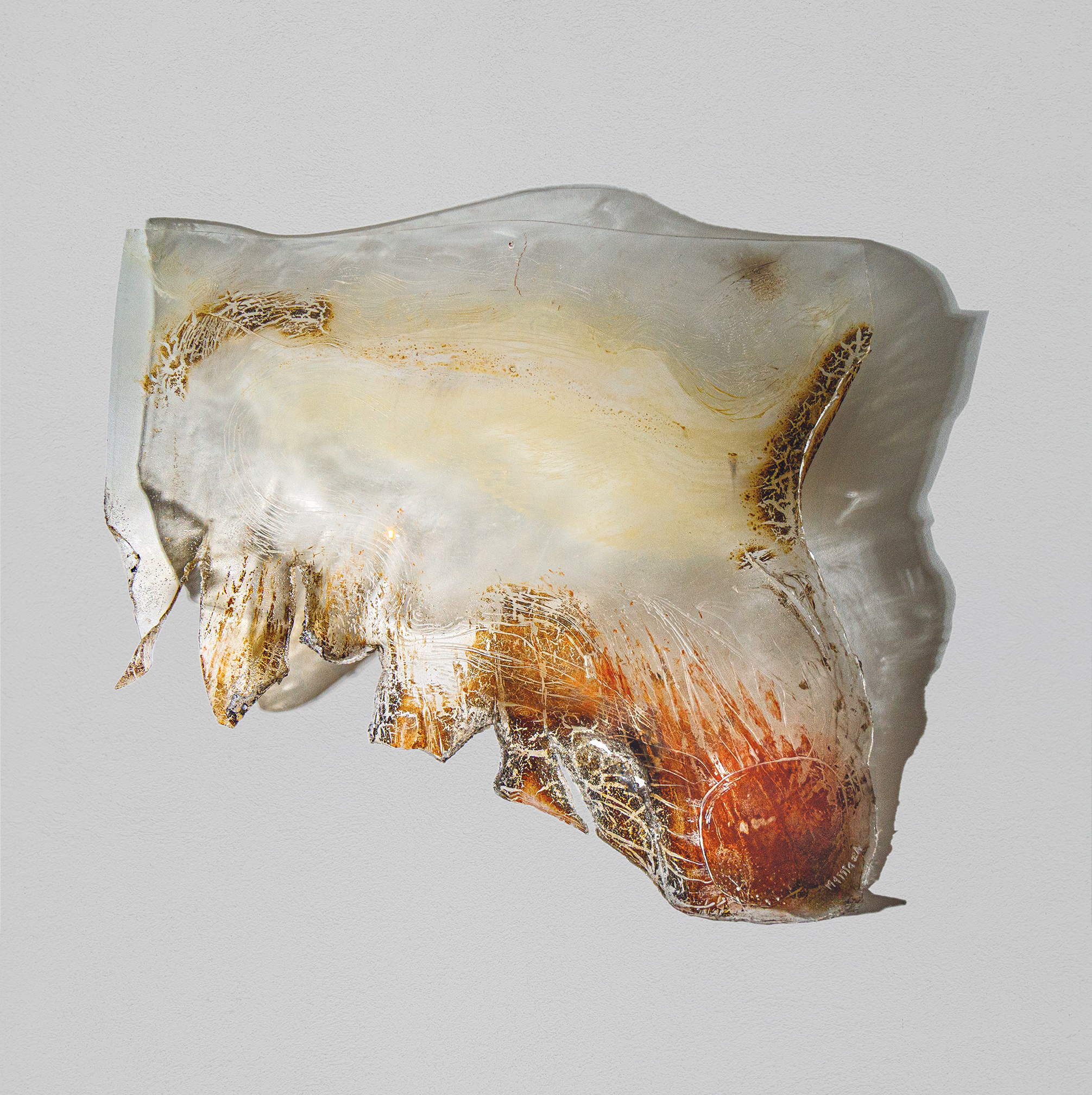 Nefeli Massia, ‘Voyages of Light”, 2024, 78 by 78 inches, plexiglass, metal shavings.
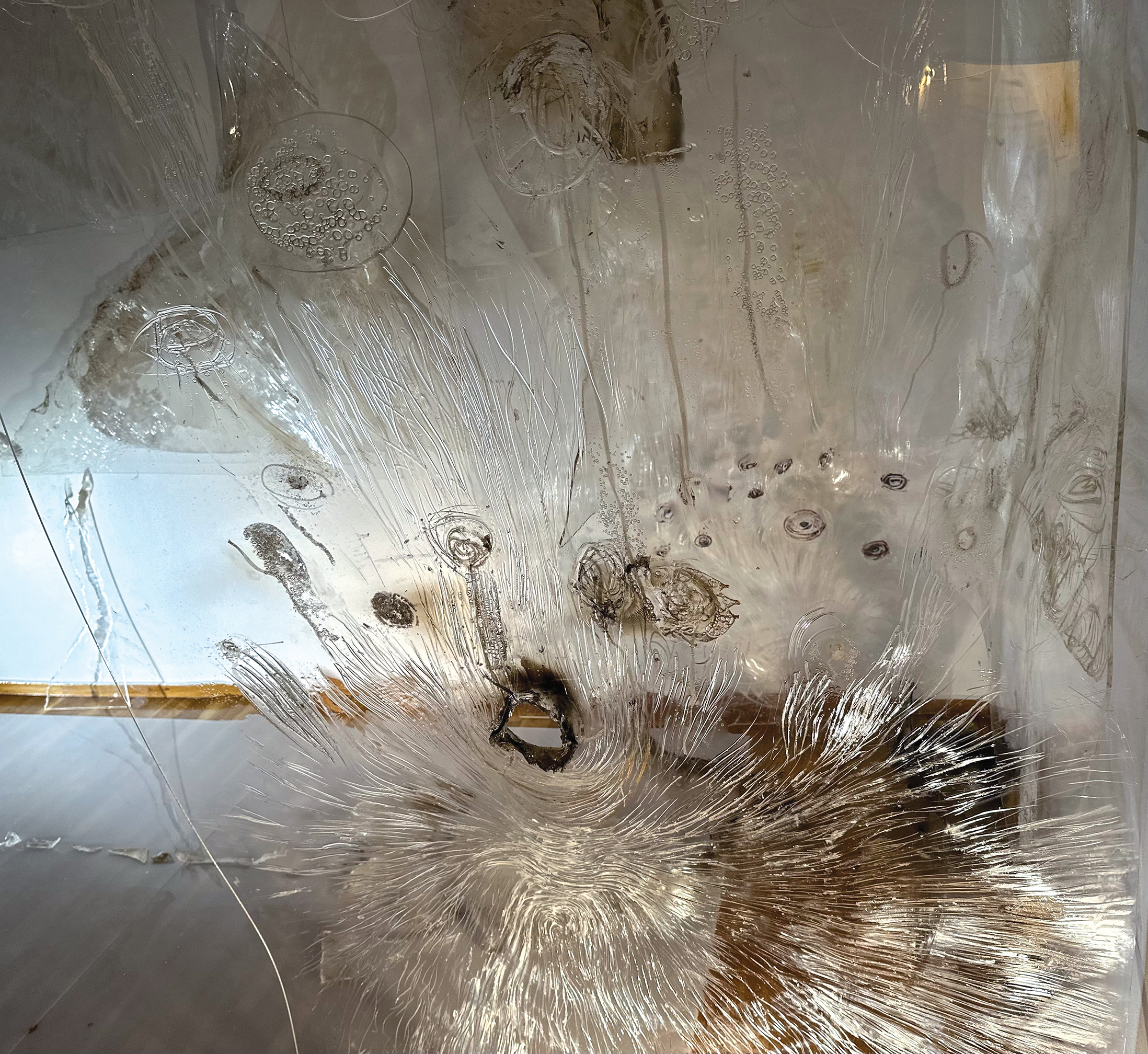 Nefeli Massia, ‘Voyages of Light’, 2025, 78 by 41 inches, burned and engraved plexiglass.
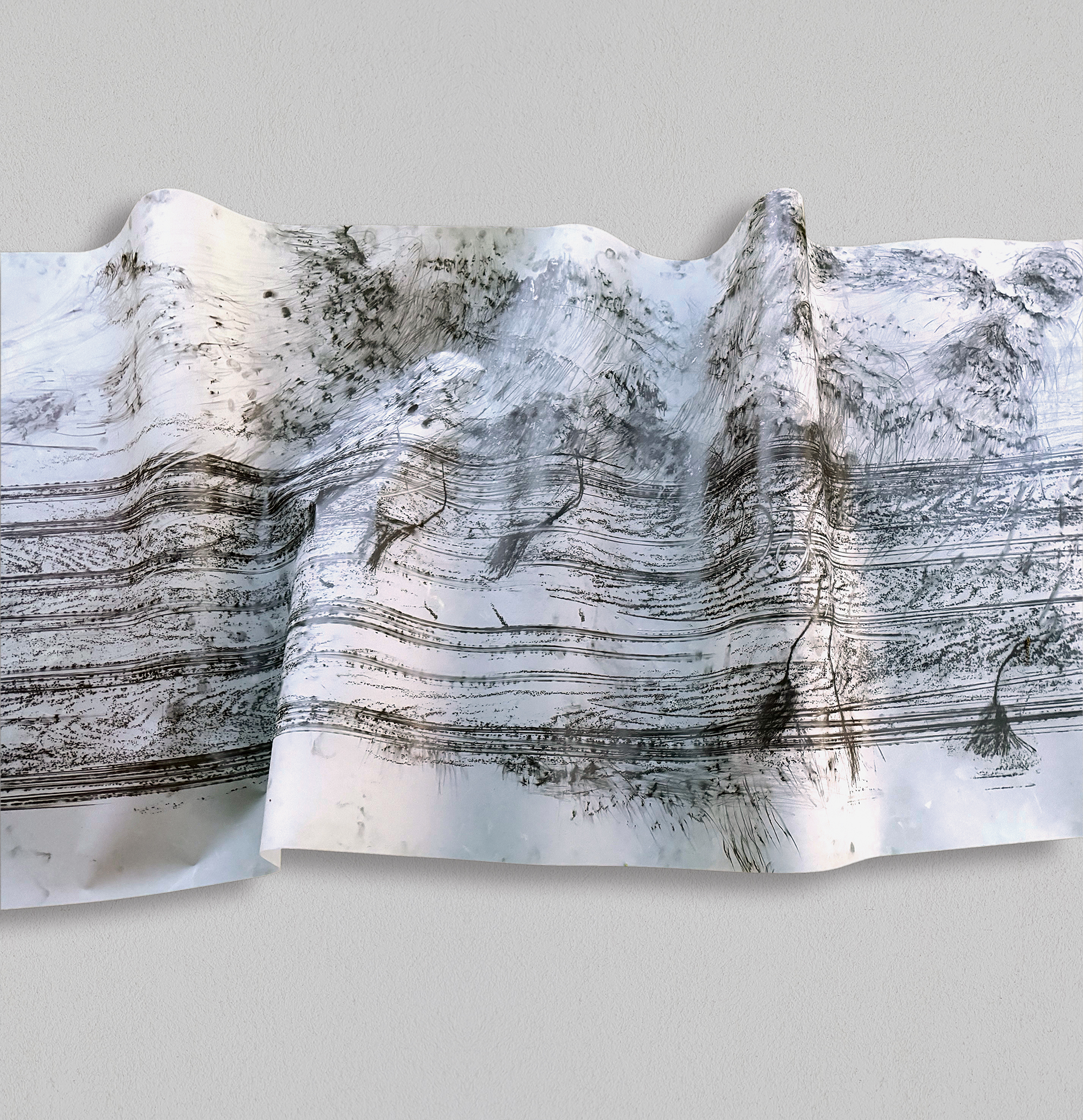 Nefeli Massia, “Voyages of Light”, 2026,40 inches by 50 feet, graphite on dura-lar.
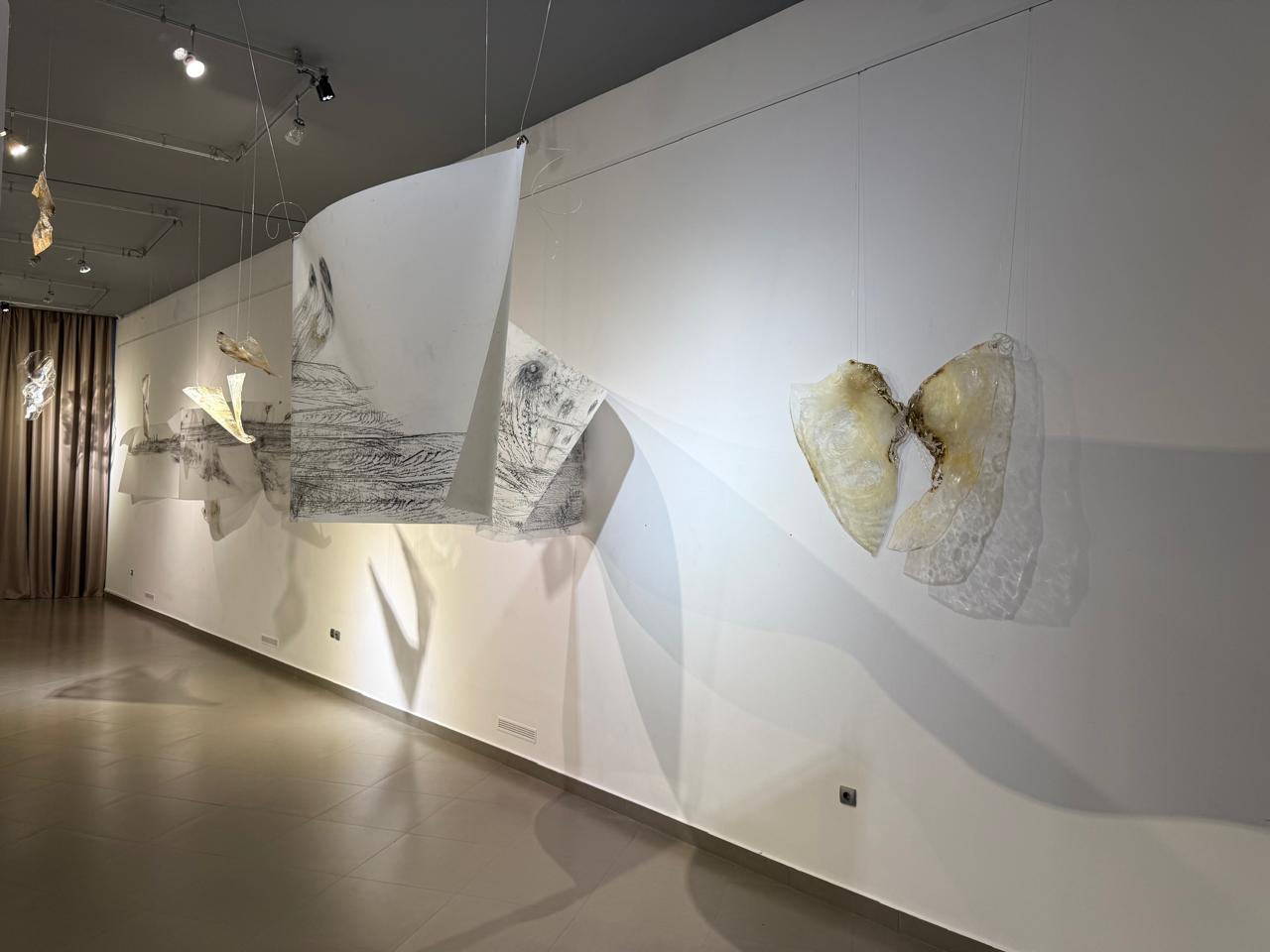 Nefeli Massia, “Voyages of Light” Exhibition at the Museum of Modern Greek Art of the Municipality of Rhodes, Photo by @Kostas Prapoglou
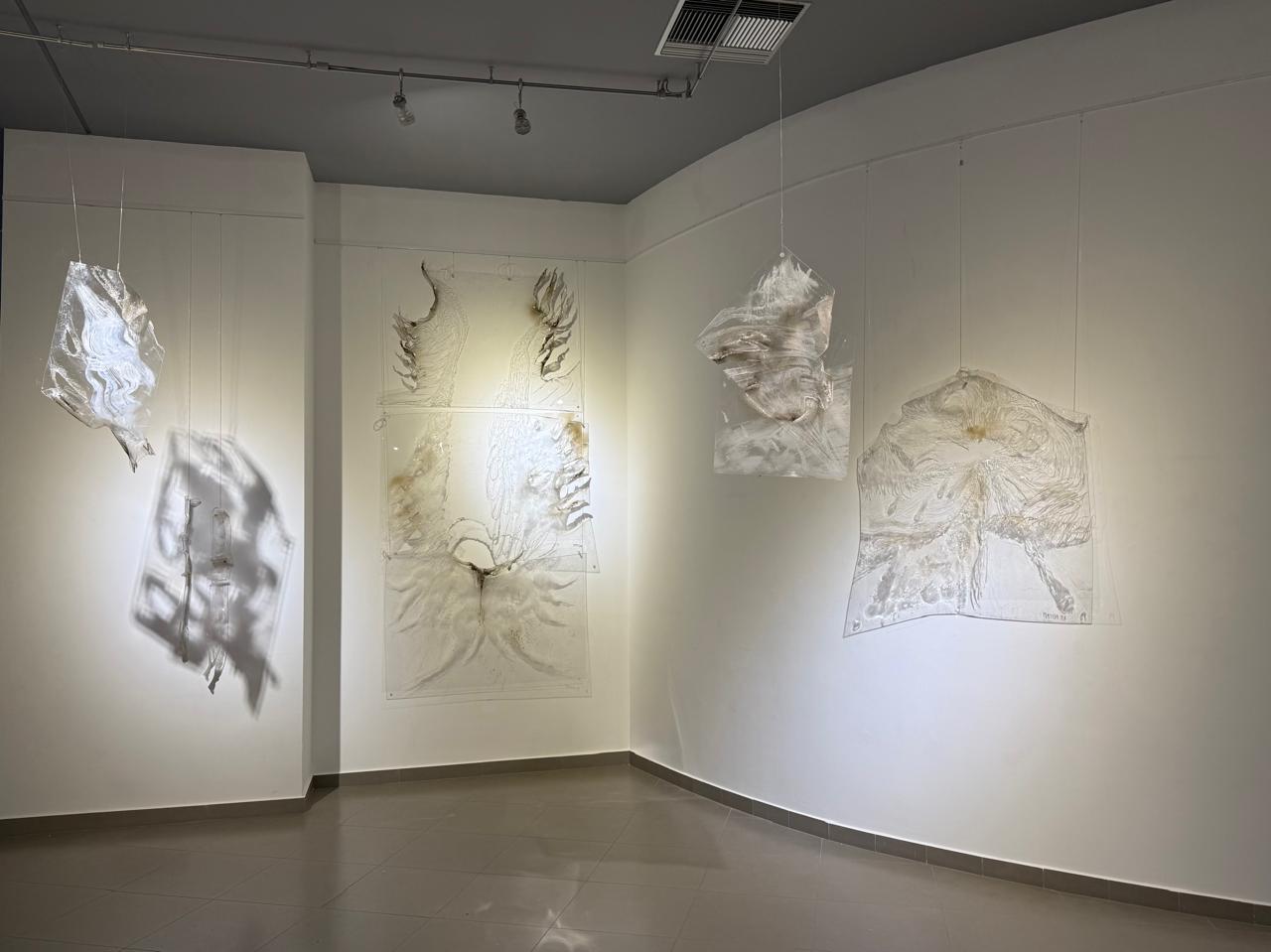 Nefeli Massia, “Voyages of Light” Exhibition at the Museum of Modern Greek Art of the Municipality of Rhodes, Photo by @Kostas Prapoglou
New Wing of the Nestorideion Melathron Paola Nestoridis (ex-Kos) Street, 85100,
Rhodes Museum of Modern Greek Art of Rhodes
9 July – 29 August 2026

Thalia Vrachopoulos
view all articles from this author