Whitehot Magazine
October 2026
"The Best Art In The World"
"The Best Art In The World"
October 2026
You Are a Bright Light, Don’t Lose Yourself for Anything or Anyone - Exhibition Text by Serena
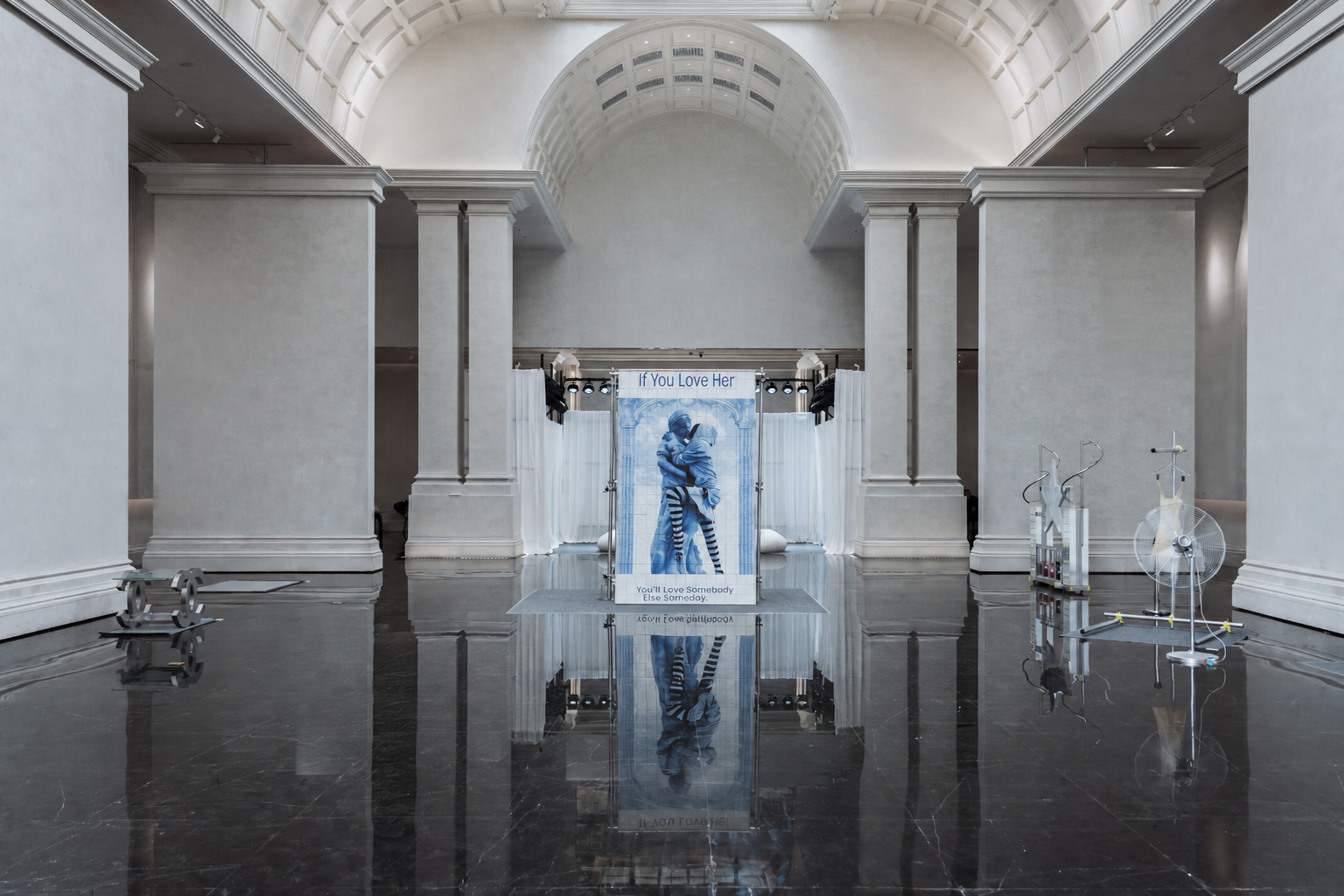 Installation View of You Are a Bright Light, Don’t Lose Yourself for Anything or Anyone. Courtesy of the artist and Floating Art Museum, Tianjin, China
BY SERENA HANZHI WANG May 9th, 2026
I can’t sleep again. It’s 3:47 AM and I’m writing this like a fever dream email to myself, maybe to you, whoever you are. My screen glows soft and blue on my face. Soft, everything lately is soft, the way my artist is overly understanding, giving me more time to write this exhibition text because my grandma passed away, softness is like a bruise. The feeling of losing someone never lands in a straight line. Instead, it moves like a mark in a tree ring, something that doesn’t completely disappear, but is carried outward as the circle grows, settling somewhere beneath the skin. Of course, as the circle gets bigger and bigger, it hurts less and less. As we keep circling through life, sometimes we drift far enough to pass around it, and sometimes, we cross it again. Despite knowing that, I still want to understand whether grief is a submission or a resistance, whether being pliant is a kind of power or just giving up. At this hour, I’m honestly not sure I can find out.
I know we’ve been here before. Grief can feel ground-breaking, like it opens something up, but it’s exhausting too. At some point it stops feeling like something that just happens to you. You realize you have to do something with it. But loss doesn’t come in one form. In my case, I read my grandma’s old diary. I go through her photos. I keep touching what’s left as if it could answer back. But in Joi’s case, the kind of loss she went through is different. It doesn’t need to be savored anymore. It needs courage. The courage to crystallize memory and not ask for anything back.
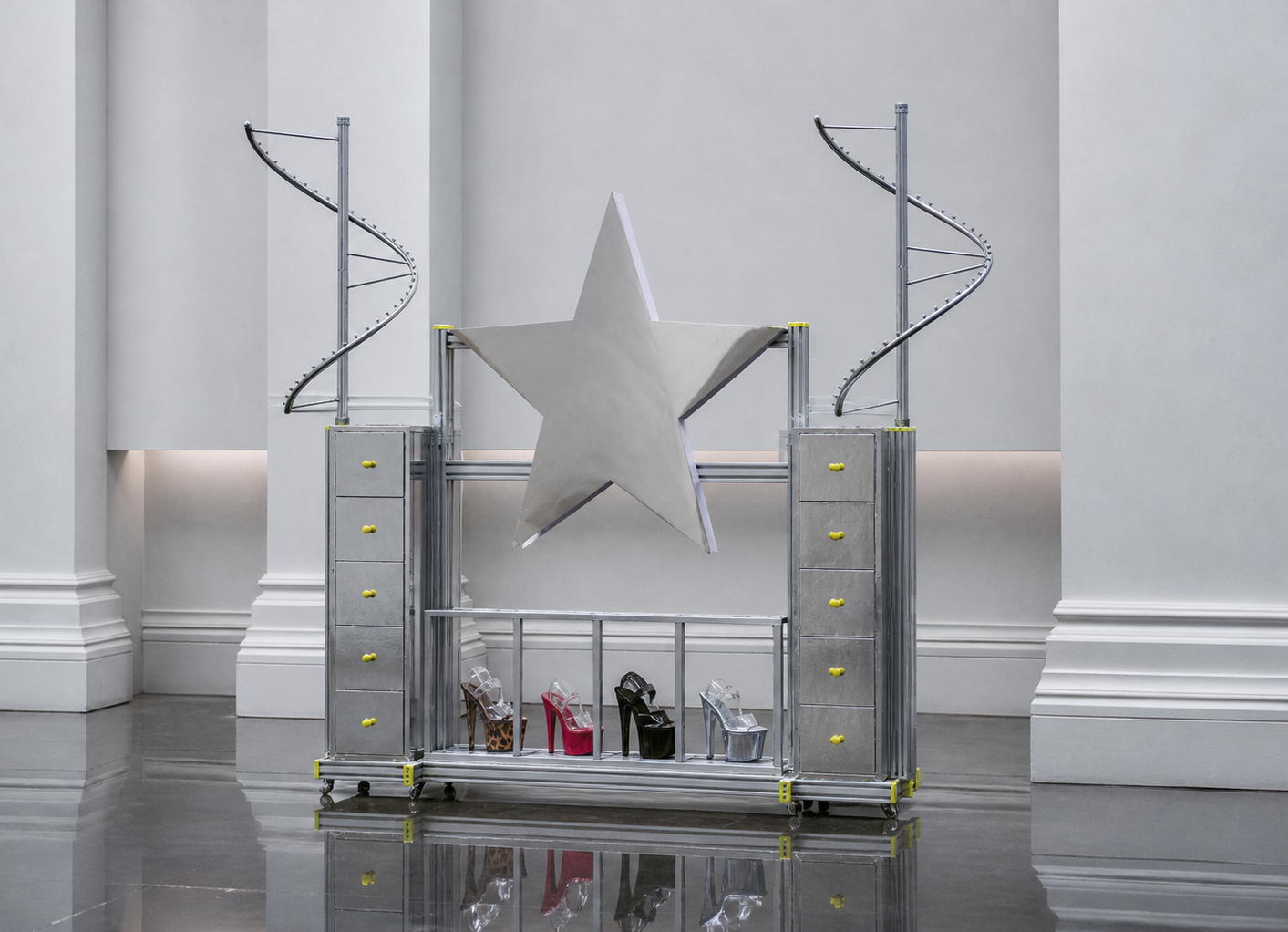 Joi Li, My room (portable vanity), Installation View of You Are a Bright Light, Don’t Lose Yourself for Anything or Anyone.
(Fade in, 52 E 2nd St, New York, NY 10003)
Flashlight. Flashlight. New York City, baby.
Freshman, Sophomore, Junior, Senior,
Mine, mine, mine. You are mine, baby.
I love you so much that sometimes I forget you are your own person.
You are a part of me. My pinky, my collarbone.
When my finger bleeds, when my bone breaks, I suffer. I turn numb.
No light. No light. In that apartment, baby.
I love you so much that sometimes I forget I’m my own person.
I’m yours. I’m yours. I’m yours.
Hope and desire, I’m the spark in your eyes.
I’m your jealousy, greed, guilt, shame,
and the dirt under your fingernails,
and all your other small, dark things.
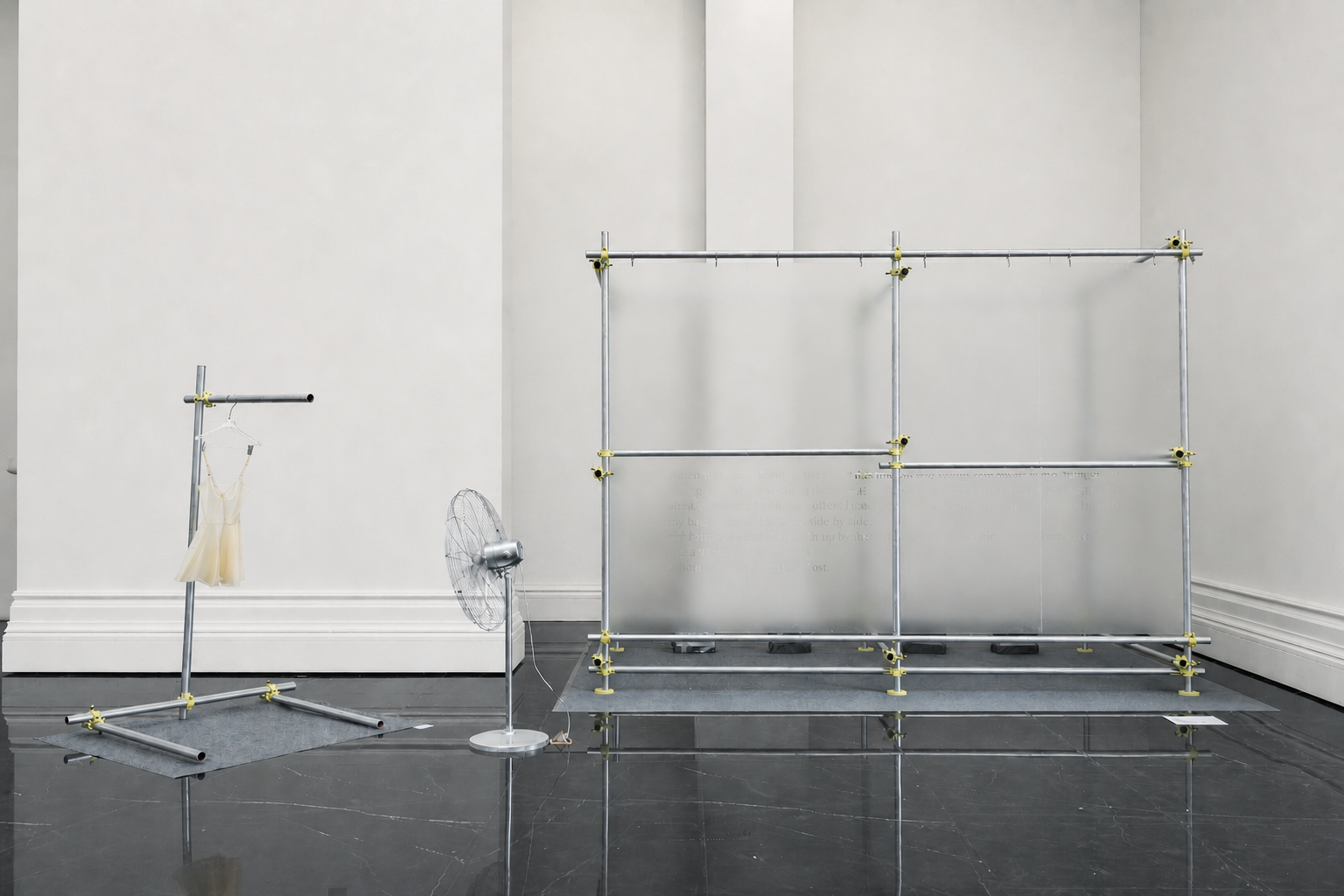 Joi Li, We were walking on the street that day. Installation View of You Are a Bright Light, Don’t Lose Yourself for Anything or Anyone.
The interesting thing about crystallization is that it can be described as a metastable system approaching a phase transition, where ΔG_total = ΔG_volume + ΔG_surface, and only when a fluctuation produces a nucleus exceeding the critical radius r* does the system cross the threshold from reversible dispersion into irreversible lattice formation, after which growth becomes energetically favorable and self-propagating.
I mean, of course no one is interested in that.
What I’m actually thinking is that to crystallize something means it has been building for a long time. It doesn’t look like anything yet. It still feels soft, like it could go either way. And then it hits a point. Not a breaking point exactly, more like a matching point, where it can no longer remain the way it was. And in that instant, it locks. It becomes something else. It crystallizes.
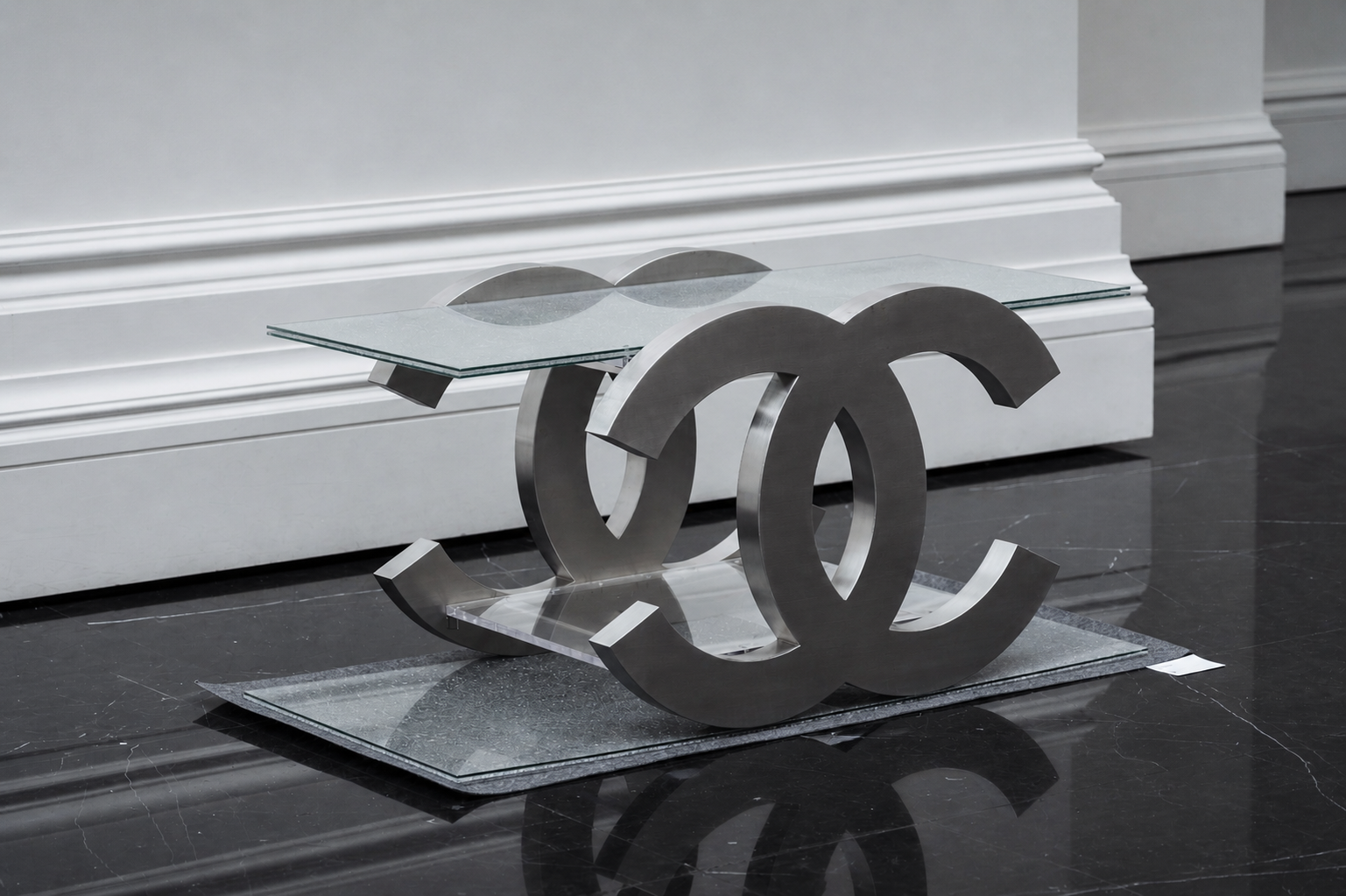 Joi Li, Chanel Table. Installation View of You Are a Bright Light, Don’t Lose Yourself for Anything or Anyone.
In this exhibition, Joi attempts to crystallize memory as a way of reaching closure. If there is one work that most clearly embodies this, it is the dressing table - My room (portable vanity). Maybe it’s because I know this was an object Joi lived with for a long time in her New York apartment. The star-shaped mirror once witnessed intimacy, touch, kisses, presence, all of which have now been compressed into a structure that no longer needs to operate. In this exhibition, the mirror will only reflect you, a stranger. But that’s fine. The crystallization is already complete.
The endless scroll, the can you see me posts, the quiet labor of making my love legible, repeatable, consumable. And then this is where it ends: If You Love Her, You’ll Love Somebody Else Someday. It’s stupid, but also very honest. And this image, nothing gets more feburarytrash than this. Printed onto ceramic, fixed, sealed, as if this feeling deserves to be a relief, which makes it feel like a permanent human theme (hopefully not). Maybe this is what all happiness and sadness look like at the end, flat enough to stay.
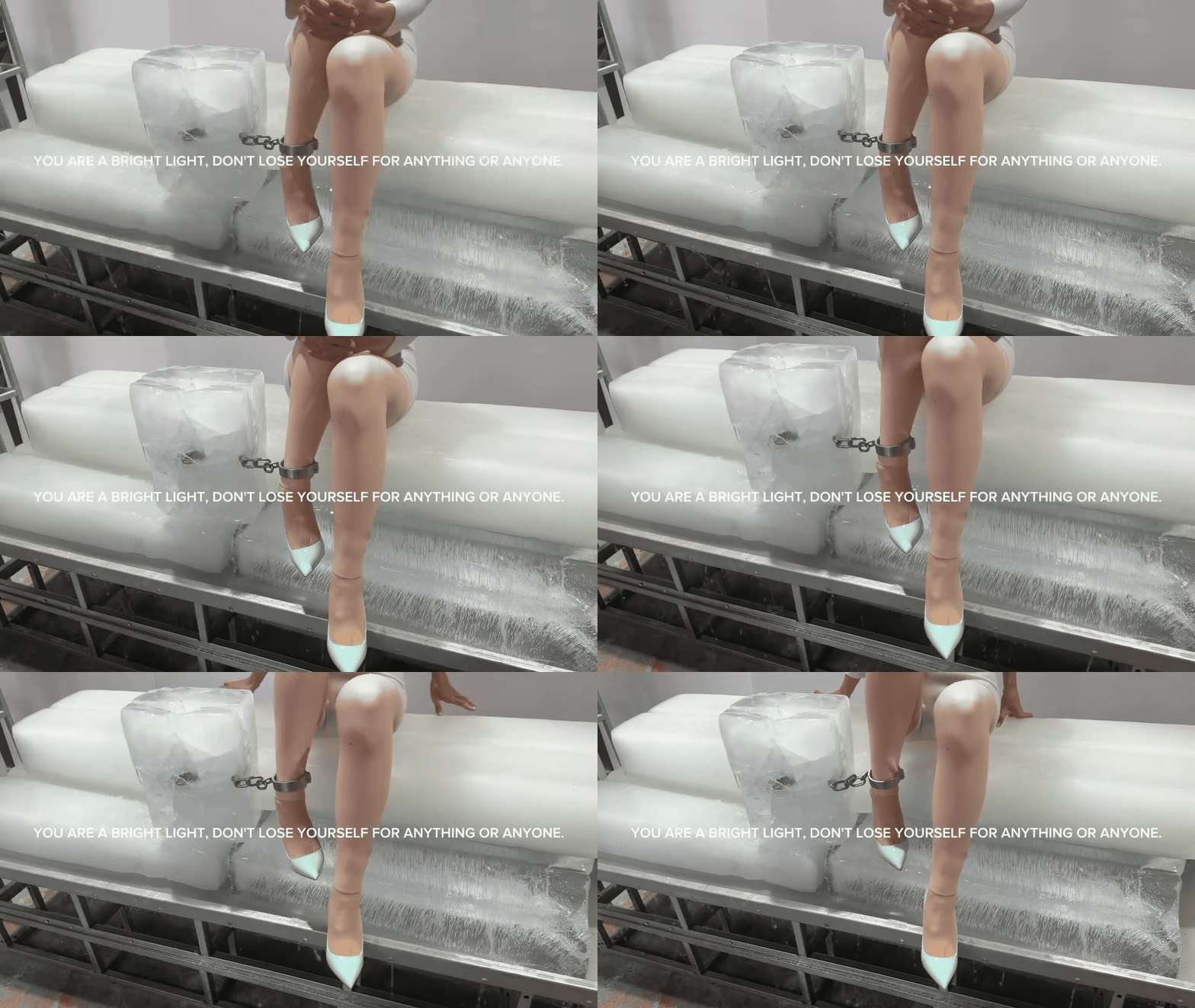
If you run time backwards, the ice sculpture performance starts to make sense. Joi keeps returning to the sculpture, holding it as it melts, maybe because she’s afraid of it disappearing, or maybe just to stay with it for that tiny moment before it’s gone. What she’s holding is never really a stable form. And in that contact, what disappears isn’t just the ice, it’s also all those attempts to hold on, and the feeling that maybe it could have stayed.
And yet, within this burnout, embers glow. This exhibition is a search for those embers, a messy, feverish search. We try to recharge loss through edited memory, to find authenticity in the artificial, the sacred in the profane. If the pain of loss hurts this much, we turn it into guerrilla theatre, make it hurt more, then turn it into crystal, and keep it that way. Joi Li’s work suggests that if our eros has been weaponized against us, we weaponize it right back. These works are sticky with ambiguity: tongues-in-cheek (literally), sugar and salt, pleasure and abjection. We toy with the aesthetics of girlishness mixed with American Psycho, until they start to leak truth. Digital goddesses with aching feet. The gallery becomes a memory palace. It’s poetic and perverse, a bubblegum banquet on the edge of a breakdown.
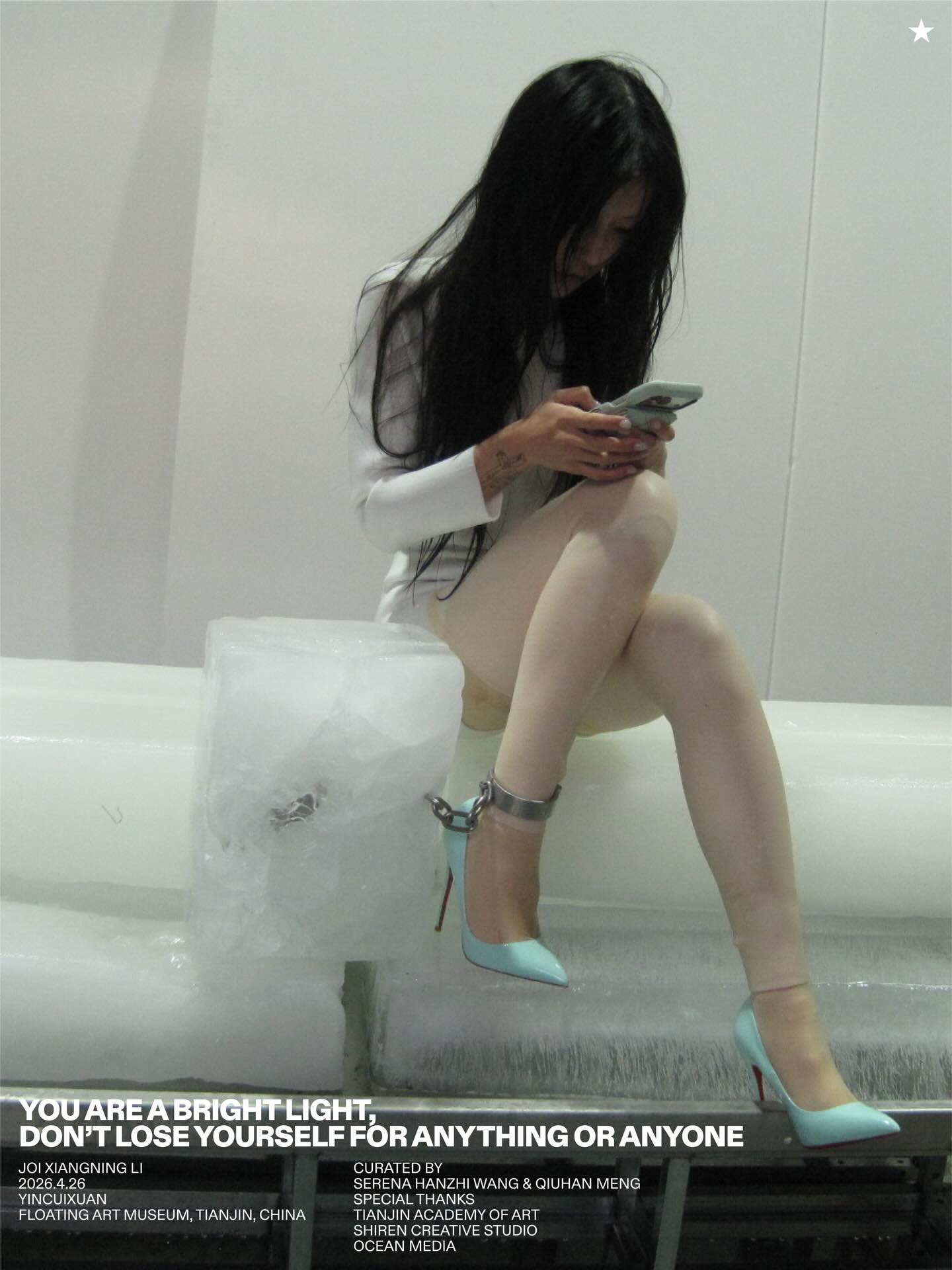
Artist Statement
Joi Li (b. 2001) is a artist based in New York City. She holds a BFA from Parsons School of Design. She works across sculpture, fashion, and performance, but her practice is not grounded in self-expression. It operates on two levels simultaneously: Joi Li herself, and the online persona she constructs, februarytrash. Februarytrash appears as a familiar “internet It Girl” figure, obsessive, emotional, and continuously producing controversial content. It responds to capitalist consumerism we live now. “On paper, it’s art; online, it’s just a post.” Circulation, viewing speed, and audience projection all become conditions of the work. She does not attempt to step outside of social media, but operates directly within it.
Curator Statement
Serena Hanzhi Wang (b. 2000) is a curator based in New York City. She holds a degree in Art History and Conservation from the School of Visual Arts. She is a recipient of the National Land Art Proposal Competition hosted by the Museum of Outdoor Arts and has worked as a regular guest curator at Millennium Film Workshop, a non-profit arts center dedicated to avant-garde art since 1969. Alongside her curatorial work, she writes art criticism, with reviews regularly published in Whitehot Magazine, Cultbytes, and Civil Art publishing etc. Wang approaches her curatorial and writing practice through philosophical and technological frameworks, reflecting on the conditions shaping our generation.
Location: Floating Art Museum, Tianjin, China
Date: April 26, 2026 - June 1, 2026

Serena Hanzhi Wang
Serena Hanzhi Wang (b. 2000) is an award-winning art proposal writer, multimedia artist, and curator based in New York City. Her work spans essays, exhibitions, and installation Art—often orbiting themes of desire and technological subjectivity. She studied at the School of Visual Arts’ Visual & Critical Studies Department under the mentorship of philosophers and art historians. Her work has appeared in Whitehot Magazine, Cultbytes, SICKY Mag, Aint–Bad, Artron, Art.China, Millennium Film Workshop, Accent Sisters, MAFF.tv, and others.
view all articles from this author