Whitehot Magazine
October 2026
"The Best Art In The World"
"The Best Art In The World"
October 2026
Risking Blackness: Arthur Jafa's I Am Tony at The New Museum
 Installation View of Arthur Jafa: I Am Tony at the New Museum, Photo courtesy of The New Museum
By MYLES FUCCI, October 16, 2026, at 6:10 p.m. EST
“Temporal, sonic, kinetic, haptic, and visual” are all terms used by Tina Campt in her 2021 book A Black Gaze to describe the work of Arthur Jafa. While Jafa does not consider himself an archivist, his work functions as a repository for Black visual identity. It is important to distinguish between an archive and a repository: an archive focuses on long-term preservation and historical record-keeping, whereas a repository prioritizes active use, distribution, and access. Jafa’s practice reflects a discontinuous repository, drawing from both historical and contemporary Black media to establish what John Akomfrah terms “affective proximities.” By exhibiting these affective proximities, Jafa offers an intimate view of Blackness in its wholeness—a wholeness that neither seeks to inspire hope nor induce despair but instead introduces the concept of risk. As Rinaldo Walcott notes, “Risk is the potential to put into actuality that which is imagined; and risk goes against that which is held up as the ‘norm’ or standard.” By bringing together diverse images, videos, and materially charged items, Jafa does not reinvent our understanding of Blackness; rather, he opens up alternative ways in which Blackness is lived with and engaged. He is not interested in creating a palatable visual experience for audiences—whether familiar or unfamiliar with the Black experience—but is instead preoccupied with delivering something raw and unbridled that forces us to come to grips with how Blackness exists, is perceived, and is responded to.
When looking closely at Jafa’s work, both within an exhibition setting and at large, we must also account for the fundamental connection between Blackness, movement, sound, and form. Jafa frequently speaks about wanting Black cinema to mirror the alienation of Black music, even coining the term “Black Visual Intonation” (BVI) to bridge the two. Crucially, Jafa does not view Black alienation as an isolated condition but as an exteriority that is both generative and expansive. Black music relies on variations in pitch, tone, rhythm, and vocal inflection to stage a refusal of traditional compositional structures. Much like jazz, it operates in a controlled freefall, bending and staggering in directions that directly counter the white Western musical canon. Mirroring Walcott’s assertion that “risk demands a sensibility already evident in Black diasporic cultural practices to do things other than the ascribed norm,” BVI extends far beyond formal technique. Like Black music itself, BVI is intuitive and adaptive, embodying the very risks Jafa’s practice takes. It invents and reinvents outside of normative frameworks, as seen in works like Love Is the Message, The Message Is Death, where viewers confront what Saidiya Hartman calls “the entanglement of absolute joy and absolute pain.”
 Installation View of Arthur Jafa: I Am Tony at the New Museum, Photo courtesy of The New Museum
As one enters the exhibition, the first thing that becomes apparent is the incessant noise echoing from the surrounding dark rooms. Stepping into the space feels like entering a cacophony of Black sound, not in an overwhelming or unpleasant sense, but in a way that feels almost gestational, like echoes resonating from within a womb. This sonic atmosphere is coupled with objects and films that feel excavated, as if unearthed from an abyss. Before directly engaging with any individual artwork, you hear the films playing simultaneously, weaving together a dense visual and auditory landscape.
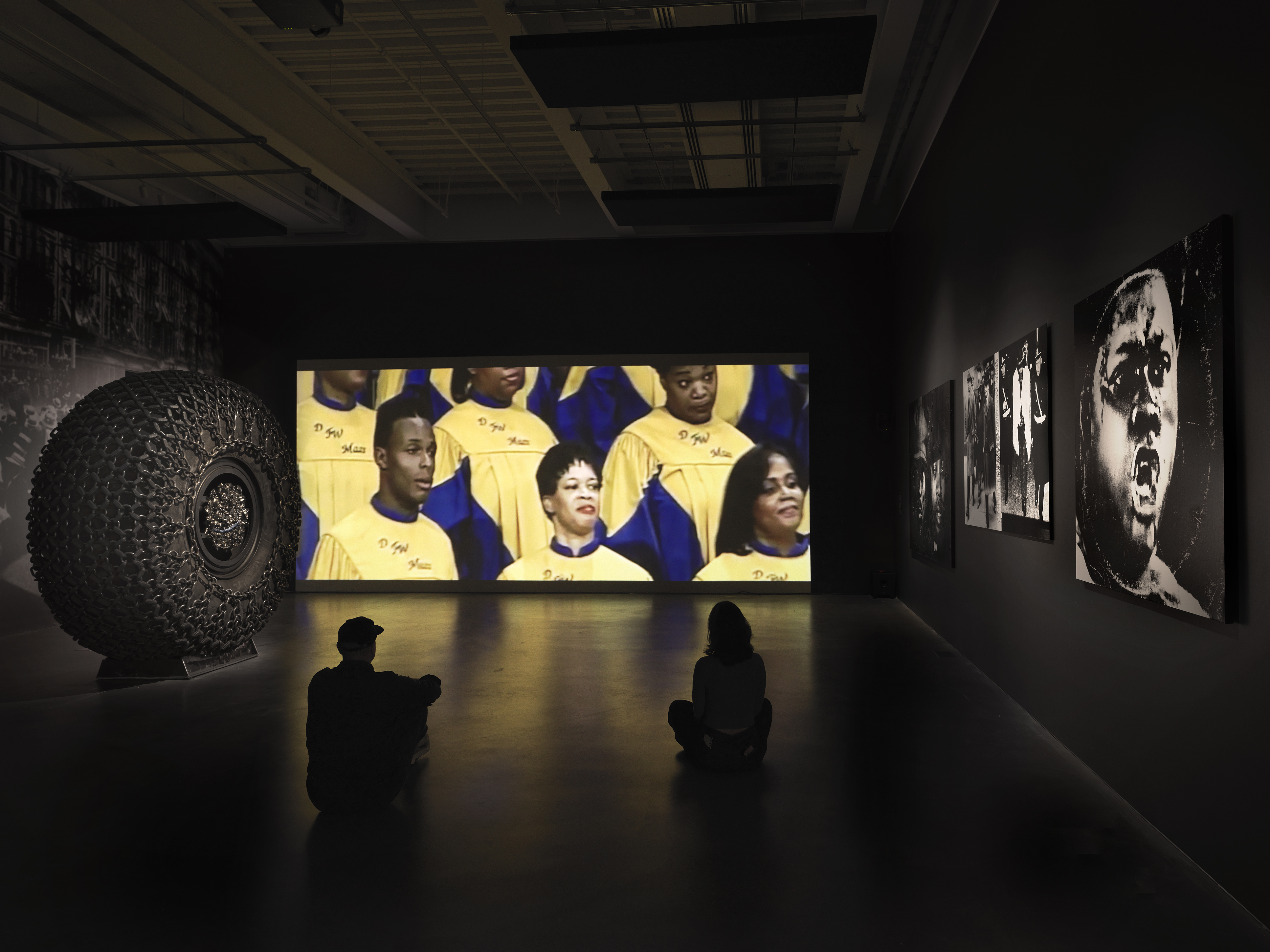
Upon entering a room on the third floor of the museum, I was immediately drawn to akingdoncomethas, a film featuring nearly two hours of footage encompassing sermons and songs from predominantly Black churches, a performance by Al Green, wildfires in California, and depictions of black holes. The videos of Black congregations singing provide commentary on African American religious services and their foundational influence on gospel and soul music, while simultaneously inviting the viewer to bask in the “absolute joy” captured in those moments—a feeling mirrored in the clip of Al Green performing “Jesus Is Waiting” on Soul Train. This jubilation, however, is sharply juxtaposed with a fade into footage of California wildfires while the gospel choir audio continues, alongside imagery of black holes. This contrast alludes to the idea that the intensity of Black imagination and mythmaking can cultivate beliefs so powerful they threaten to consume us, much like a black hole.
Here, I return to Walcott’s commentary on the power of risk: “To take risk is to invent, to make present that which we already know but might be suppressed, discredited, or repressed.” Jafa’s editing does not necessarily construct something entirely new; rather, it guides us toward an omnipotent reality within the Black experience: the realization that intense belief and creation carry absolute states—absolute joy, absolute pain, or even absolute death. When Black people will something into existence, there is no subtlety; it is brought forth with an intensity that inherently carries risk, and that risk holds the power of life or death.
 Installation View of Arthur Jafa: I Am Tony at the New Museum, Photo courtesy of The New Museum
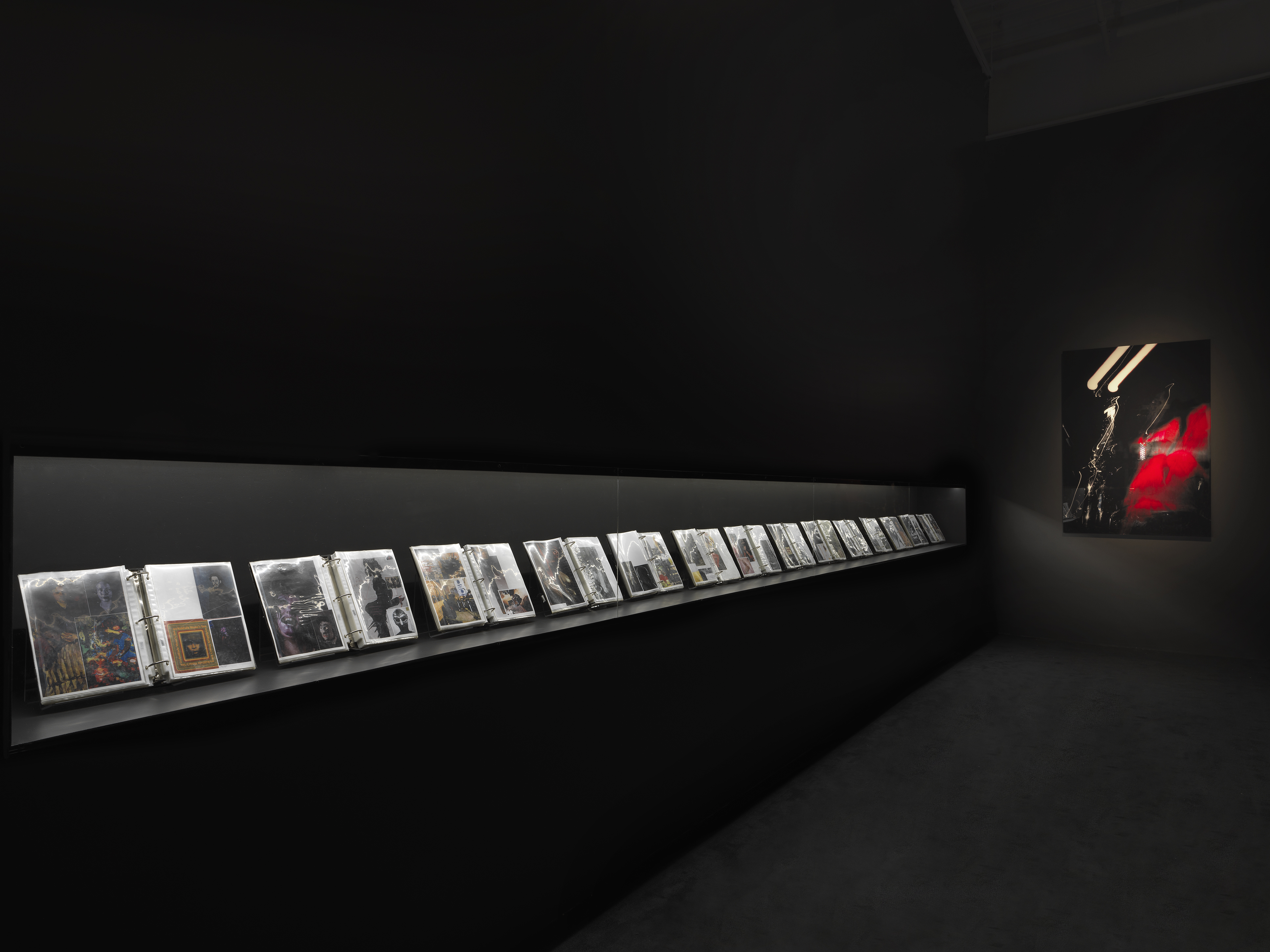
As I continued through the exhibition, I noticed that other films employed editing styles that differed significantly from akingdoncomethas. Rather than relying on its subtle, undulating fades, works like Love Is the Message, The Message Is Death and The White Album utilize Jafa’s signature collage technique. From a materially charged perspective, this logic is anchored in Notebooks (1988–2007), a collection of physical cutouts that holds central importance in the exhibition. Notebooks provides essential context for the video collaging that defines his contemporary work, serving as a foundational reference point dating back to his cinematography on Julie Dash’s Daughters of the Dust. This collaging method is itself a site of risk and reinvention. The binders feature juxtaposed cutouts, such as British rapper Tricky in a traditional Native American headdress set against Marvin Gaye’s Here, My Dear album cover, or Jimi Hendrix paired with a self-portrait by Japanese contemporary artist Yasumasa Morimura. Though originally assembled on physical binder pages, this visual strategy directly translates into the video editing of Love Is the Message, The Message Is Death and The White Album.
While Love Is the Message, The Message Is Death (LMMD) is arguably his most notable post-2010 work—marking an informal reentry into the art world after a long hiatus—the collage technique in this film mirrors his approach in Notebooks. Here, he showcases the beauty of Black life juxtaposed with the afterlife of slavery. Because the film moves at such a rapid pace, its subjects evade capture. The film shines a light on the beauty of Blackness but also illuminates the dark by having the clips contrast with one another: one clip is a video of Obama singing “Amazing Grace,” the next a minstrel show, the next Miles Davis, then a clip of the eulogy given after the 2015 Mother Emanuel church shooting. This piece was one of my first introductions to Jafa’s work, and it reinforces a particular idea already mentioned. The film perfectly encapsulates Sharpe’s concept of “the wake”—the idea that anti-Blackness post-chattel slavery leaks into contemporary Black life. This exhibition of the perils of anti-Blackness is deeply uncomfortable in that it uses BVI to show the staggers that characterize Black life. African Americans have always had to fight to be humanized by the rest of the world, and this film conveys that struggle in a way that mirrors the experience of listening to Ma Rainey or Miles Davis. There is no textual explanation; rather, there is an emotional resonance that, in my opinion, is the easiest way to help non-Black people understand the struggles we have experienced historically and continue to experience today, but the hardest for us to watch, as we must bear witness to our struggles in this way.
 Installation View of Arthur Jafa: I Am Tony at the New Museum, Photo courtesy of The New Museum
The White Album does something extremely similar but differs in terms of subject. This film focuses more on the cultural artifacts of whiteness as well as the historical concept of mixing. Mixing, to me, operates much like risk: it takes an existing thing and creates new life. In terms of Jafa’s project here, we can apply the same logic: Blackness is constantly perceived as a risk and is at risk in relation to the world around it. In this work, mixing can be understood through the ways risk operates within whiteness, both subtly and explicitly. This is exhibited in clips of Celtics fans dancing to Bon Jovi, cybergoths dancing to “Mask Off” by Future, or Dylann Roof entering and exiting Mother Emanuel Church. It left me with the feeling that, as much as whiteness in America wants to feel inextricable from Blackness, it serves as a reminder that a majority of white American identity is built on the idea that it is uninfluenced by Blackness. Yet, Blackness can be both subtle and overt as it profuses through contemporary culture. Whiteness does not operate at risk; it operates under the assumption that it alone is at risk. The risk within which Blackness resides and exists is constantly being watched by whiteness and white culture. If this film leaves you with anything, let it be that whiteness is predicated on what we do, forming new ideas about how to operate in the world in direct response to us.
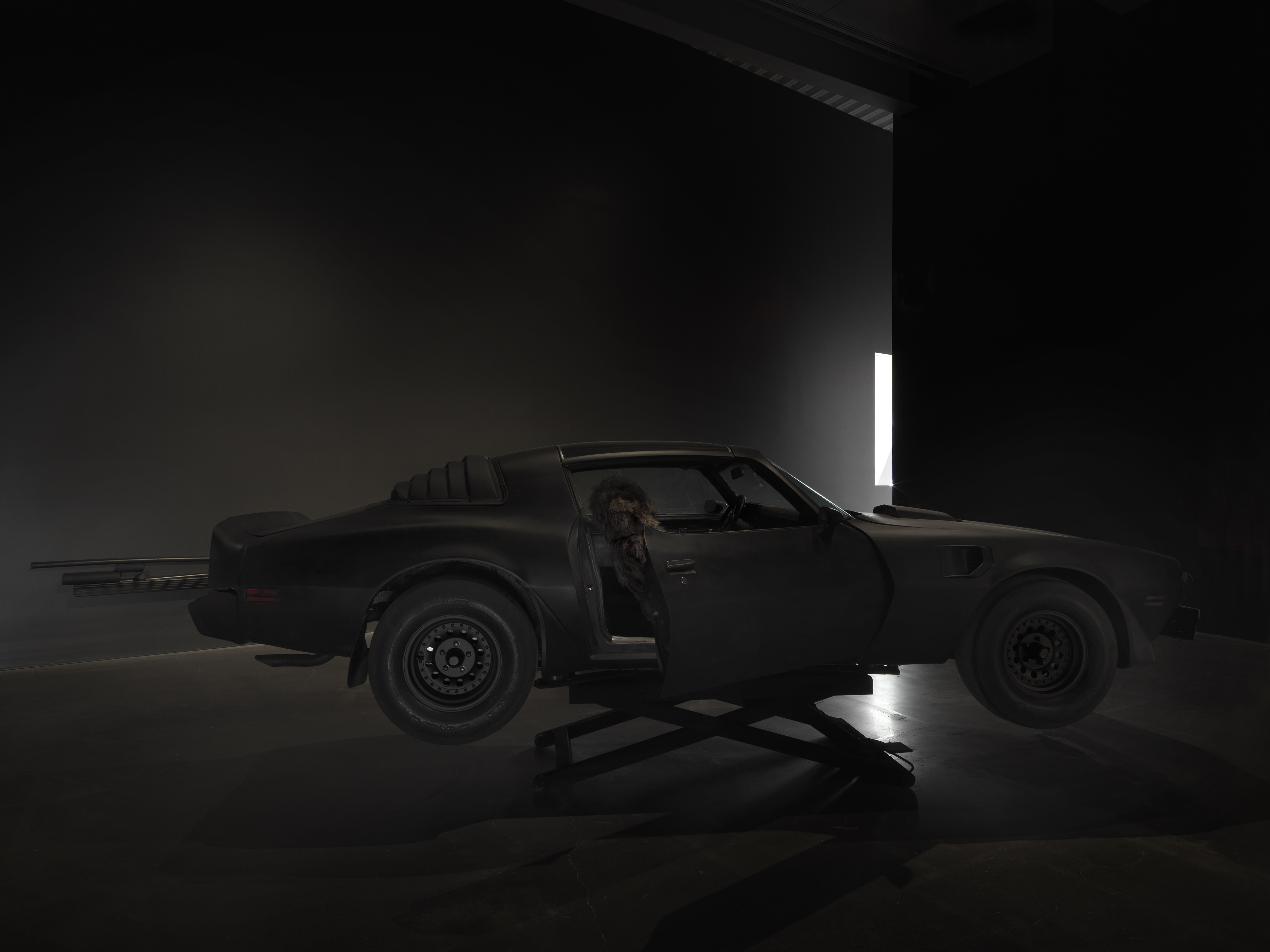
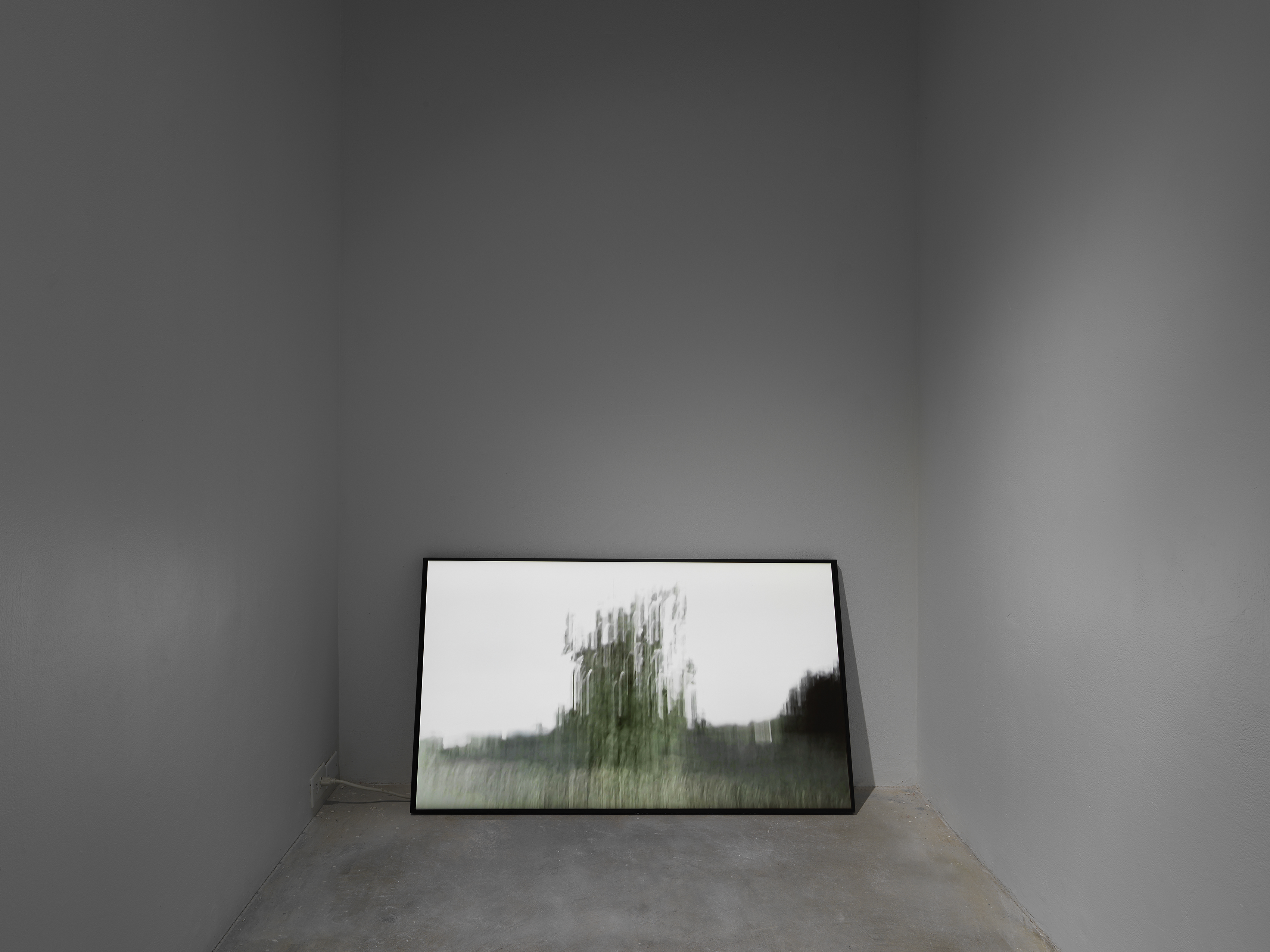
Much like the idea of risk present in BVI, this concept of risk mirrors that of the term worry. To worry means to touch, shake, pull, or bite something repeatedly, or to adjust or move it with persistent effort. To risk the creation of film, images, and other artwork is to engage in that same kind of worry. Both terms operate as nouns, but they can also function as verbs in the context of this exhibition. In the same way that Blackness is inherently a risk in what it is and what it produces, we can “worry” Blackness in a similar light. Three works exhibit this sense of worry as well as risk: AGHDRA, MBD_Trans_Am, and Tree.
 Installation View of Arthur Jafa: I Am Tony at the New Museum, Photo courtesy of The New Museum
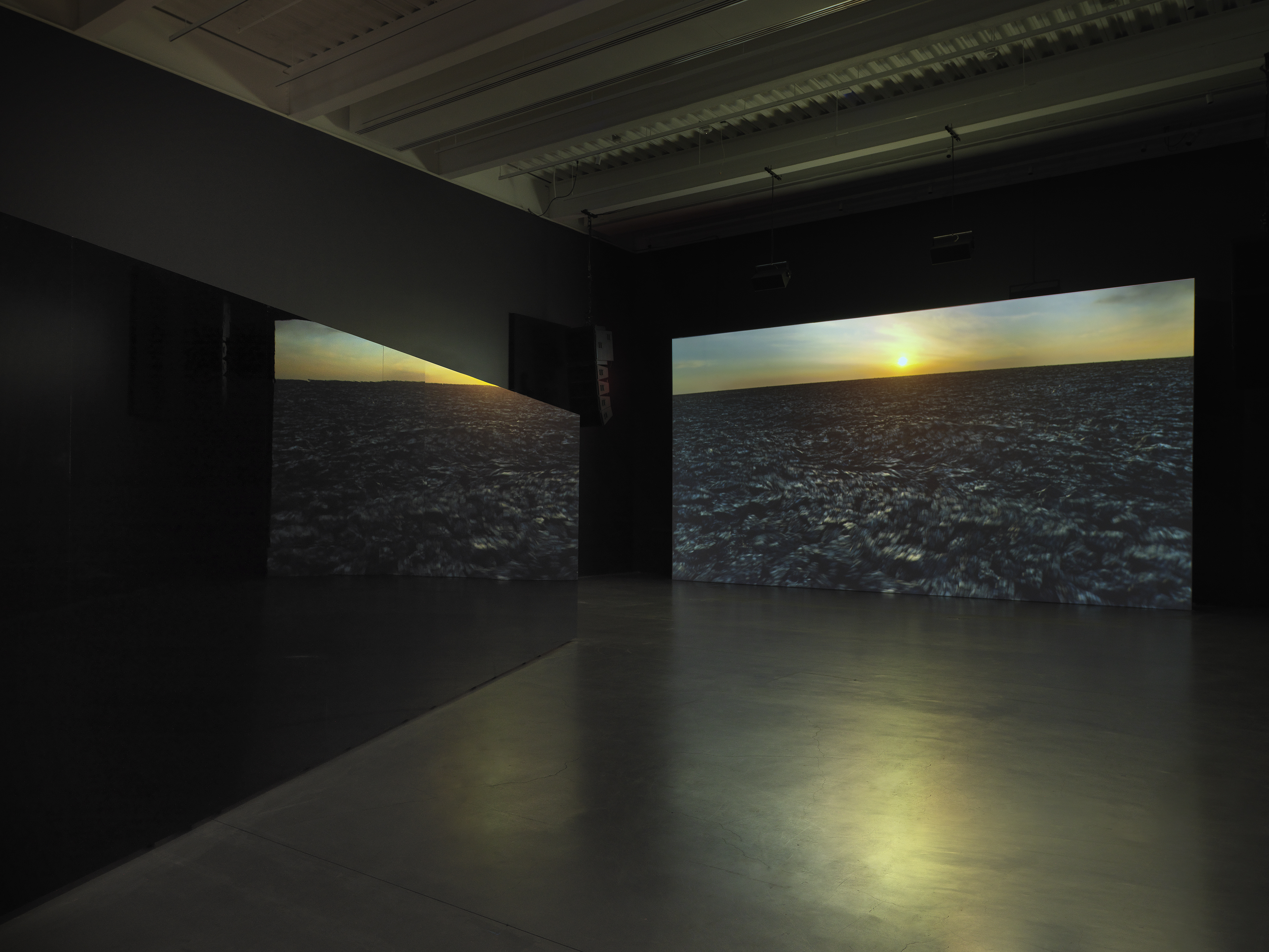
AGHDRA is a booming, large-scale film featuring the deep bass of tracks by Roberta Flack and The Isley Brothers, a bright setting sun, and scaled black rocks moving like waves. This piece operates as a visual from the bottom of the Atlantic, mirroring the mutative journey created by the transatlantic slave trade. AGHDRA draws attention to the persistence with which Blackness operates and moves; it has never been still, yet this reimagined Atlantic worries our understanding of Blackness in a contemporary context by moving with persistent effort. MBD_Trans_Am does something similar through sound, with an undulating and worrying bass emitted from a floating vehicle. In this context, parts of the vehicle have been dismantled, leaving behind scars and crushed areas. The car operates as a worry, speaking not only to its deconstruction and reconstruction but also to the perseverance and adaptations Blackness has undergone throughout time. Tree embodies this concept of worry by taking something as simple as a video of a tree and manipulating the frame rate while leaving the audio unedited. While this technique is characteristic of Jafa’s cinematography, the video of the tree is worried through subtle adjustments that bring specific details into focus: a blur of leaves, the sound of an approaching helicopter altering the perceived speed of the footage, the camera operator’s shadow appearing, and so on. This simple technique shakes the video in ways that allow it to persist and stagger, much like BVI. It felt like watching the visual adaptation of a Dorothy Ashby track. This piece also felt like the perfect representation of the entire exhibition: it not only worries Blackness within the context of the 21st century but is also persistent and temporal in how it operates.
 Installation View of Arthur Jafa: I Am Tony at the New Museum, Photo courtesy of The New Museum
Returning to the idea of risk, this exhibition was executed in a way that is deeply fitting of Jafa’s practice. Every piece felt like an act of discontinuously bringing something into existence through risk. In A Black Gaze, Tina Campt discusses how unstable temporalities can produce new beginnings. Jafa’s ability to conjure a new type of Black visual identity into existence is subversive yet explicit. While I still question the necessity of showcasing Black identity in a negative light, especially through the use of violence, I believe it is crucial that such representations be executed with precision and worry. Nothing about Black identity has remained stable historically, so I hope Jafa continues to worry us and the rest of the world as a reminder that Blackness is risk—and risk holds the power to show the world what happens when you fuck around and find out.

Myles Fucci
Myles Fucci is a curator, writer, and model based in Brooklyn, New York. His interdisciplinary practice explores discontinuous Black diasporic narratives and the ways memory, kinship, and archives shape our understanding of the past and possibilities for the future. While grounded in an interest in Black diasporic life and cultural production, his work remains attentive to broader questions of history, relation, belonging, and symbolism.
view all articles from this author