Whitehot Magazine
October 2026
"The Best Art In The World"
"The Best Art In The World"
October 2026
Gelitin: "All for All" at Perrotin New York
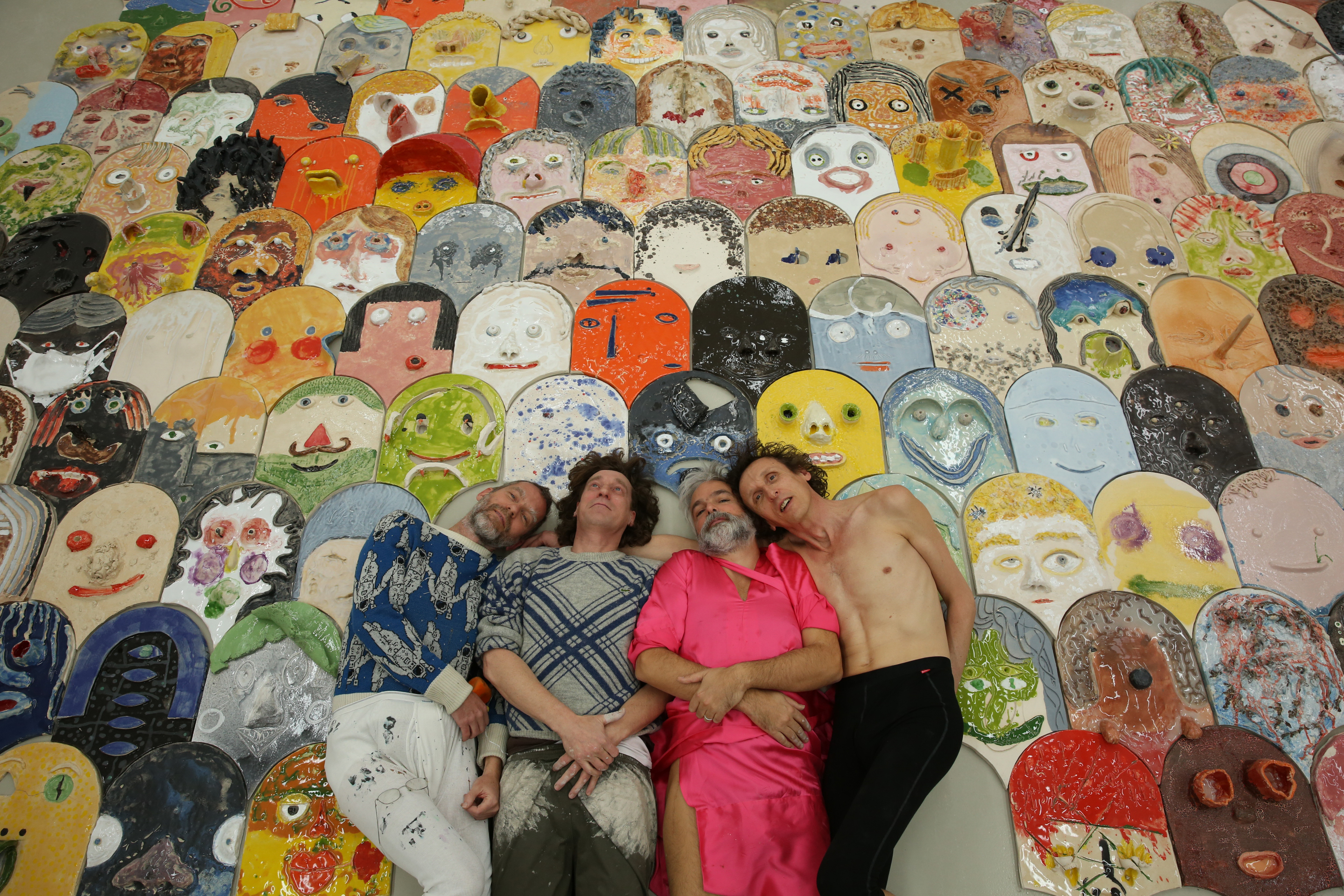
Portrait of Gelitin. Photo: Julian Mullan. Courtesy of the artist.
By MADELEINE CRONN April 19, 2026
Up a flight of stairs on the second floor of the Perrotin New York art gallery, you will find Gelitin’s latest New York-based exhibition: All for All, composed of a combination of their latest sculpture series All for All and sketches from past project WirWasser.
Gelitin, a Vienna, Austria based self described “non-collective,” consists of members Wolfgang Gantner, Ali Janka, Florian Reither, and Tobias Urban. Four people who make up one artist. I recently spoke with Ali Janka and Tobias Urban of Gelitin on their latest series All for All, and the art of human connection.
Gelitin’s work is community-focused, accessible, and inherently social in its practice. “We try to be very direct, very accessible, not complicated. It's not like you need this very expensive process,” Tobias Urban said. “Clay is $10 a package, and you can make four faces out of it.”
All for All is inspired by a past exhibit of Gelitins, of the same theme and form, which they made for a primary school in Munich, Germany. Upon entering the first showroom, a wall of evenly spaced clay faces greets you at eye level. Each face is different from the next, portraying the inherently different ways in which we all exist and interact with each other as human beings. “You can have any face, and that is okay, any look, any color, everything is okay,” said Tobias Urban. “The idea was that everybody's connected to everyone.”
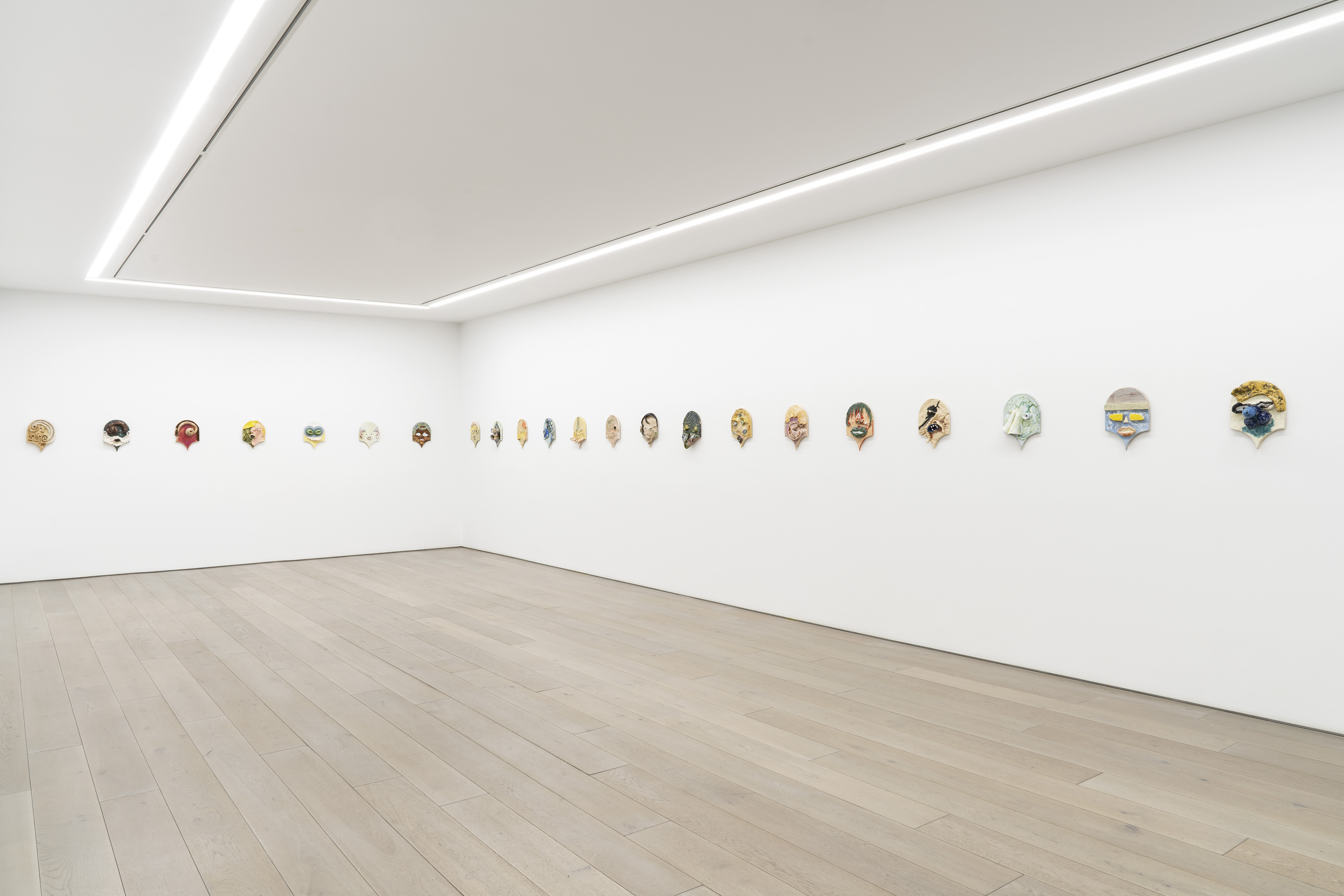
Installation views of Gelitin's exhibition All for All at Perrotin New York, 2026 Photographer: Guillaume Ziccarelli Courtesy of the artists and Perrotin.
Some of the sculpture faces are beautiful, others are scary, ugly, hilarious, or vulgar, but they are all hung at the same level, looking directly at gallery guests as they peruse the two-room exhibition. “There's the bully, and then there's the asshole, and then there's the always smiley-guy, and then there's all kinds of people you can think of. Anything you can think of, we try to integrate,” said Urban. “Bad and good is subjective.”
The relationship between bad and good, and its subjectivity, is inherent to Gelitin’s practice. This concept manifests in both their work and in their group dynamic. “I mean, there's four people, and everybody makes something different,” said Urban. “ The whole thing creates the work, not what you like or don't like, what's your taste or your not taste, not the ugly one or the pretty one, or the nice one or the nasty one,” said Urban. “They're all together, and then it works.”
In All for All, Gelitin includes all types of the embodied human disposition, not just those that are pleasant. Without that variety, something would be missing. “In the groups, you sometimes need one that wouldn't work alone, as itself, but the group needs it to be interesting,” said Ali Janka.
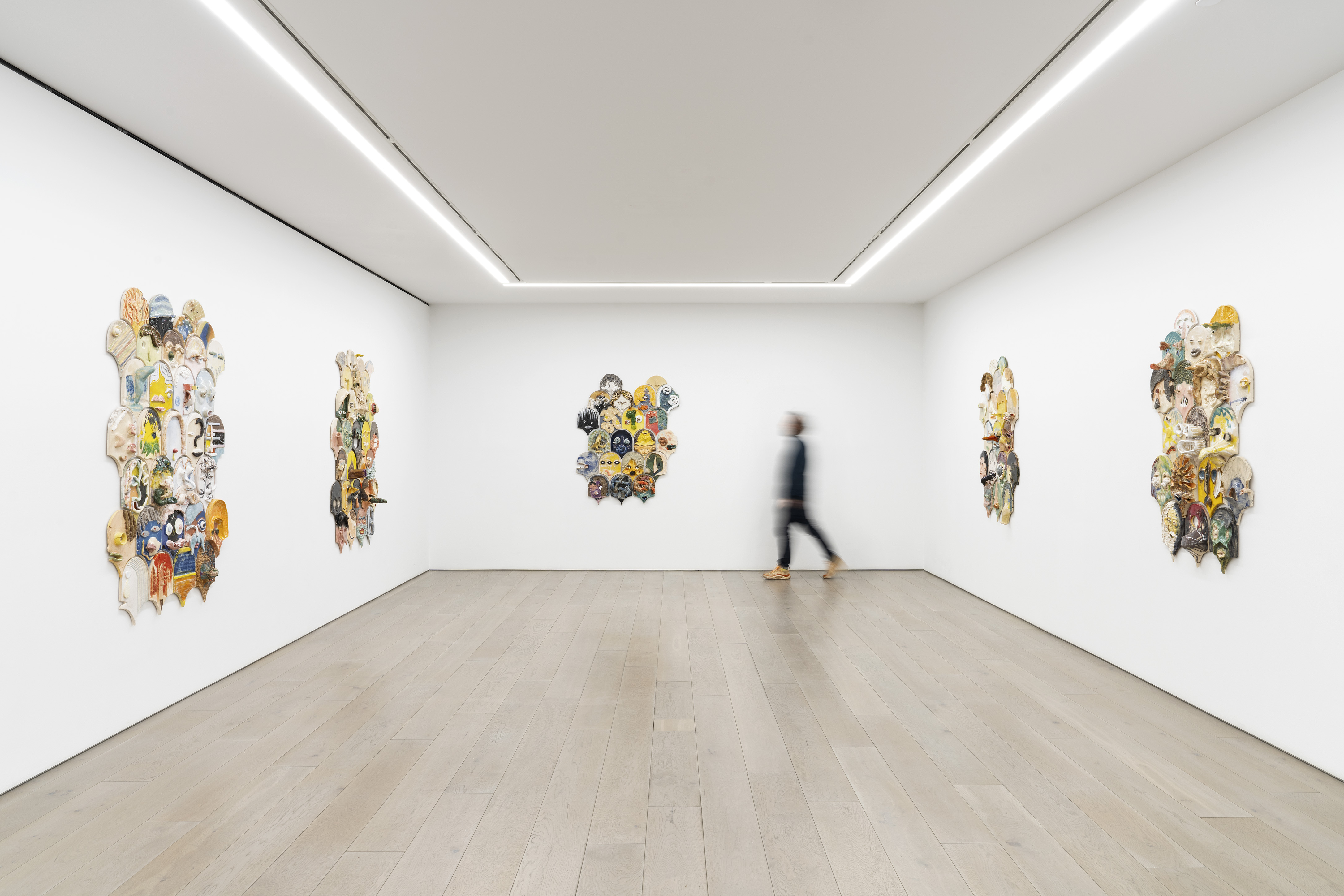
Installation views of Gelitin's exhibition All for All at Perrotin New York, 2026 Photographer: Guillaume Ziccarelli Courtesy of the artists and Perrotin.
Walking into the second room, the viewer is met with clusters of faces, contrasting the evenly spaced singular entities adorning the walls of the first room. Similarly to how, in New City, while being met with an intense culture of loneliness and individuality, people can still find a way to form a community. “New York is the best place for this work, I think,” said Urban.
How the difference between public and private spaces dictates connection sparks inspiration for Gelitin’s work on All for All. “Of course, it has to do with the individual and the public sphere,” said Janka. “There is no idea of public space in the U.S. like it is in Europe. It's just much less present.”
Although our societal reality does run through the minds of Gelitin, they argue that their artwork comes from a different place entirely, “We think more about what is a good artwork instead of what social context we want to display,” said Urban.
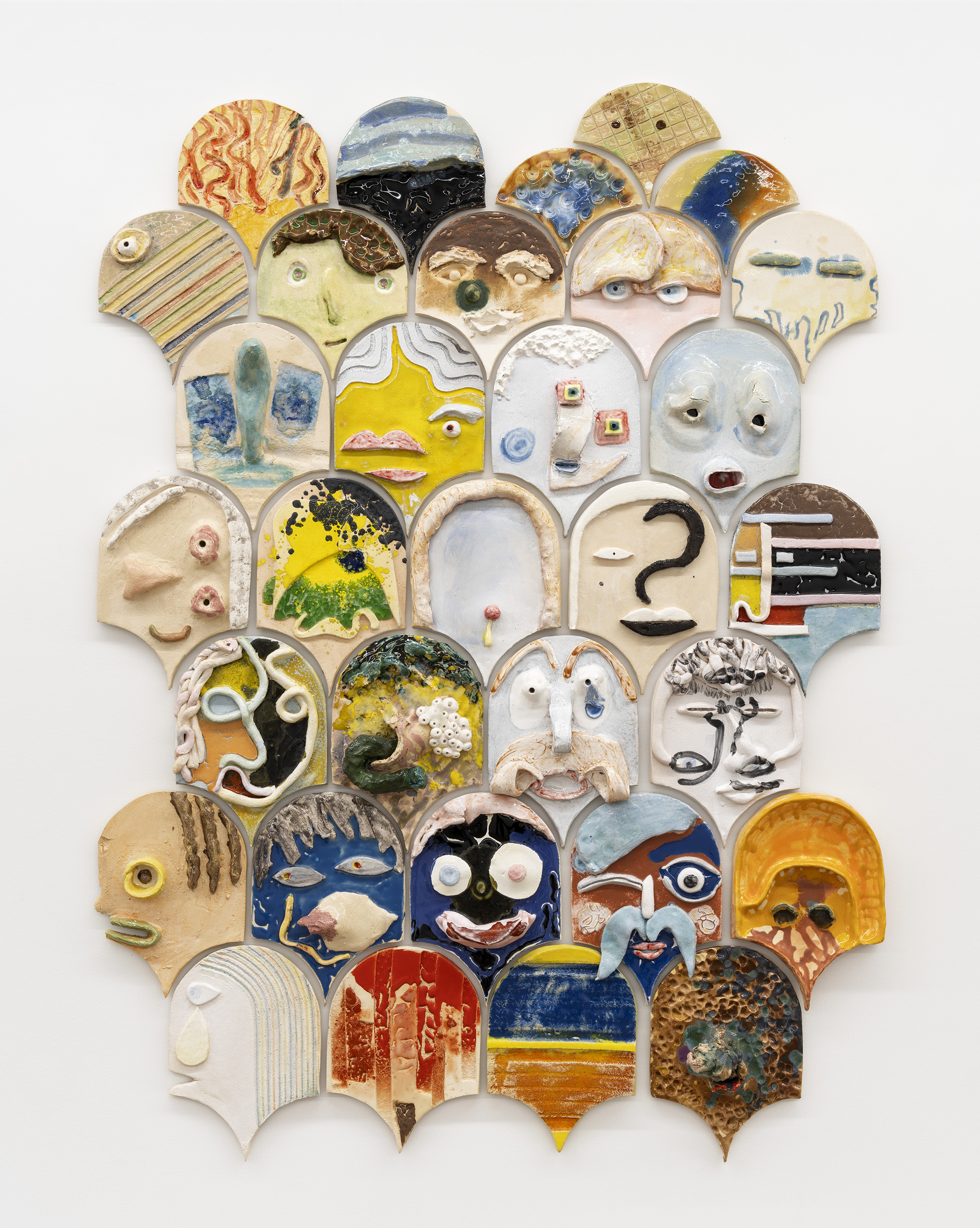
All for All, 2025 Glazed ceramic tiles 71 5/8 x 52 3/8 inches Photographer: Guillaume Ziccarelli Courtesy of the artists and Perrotin.
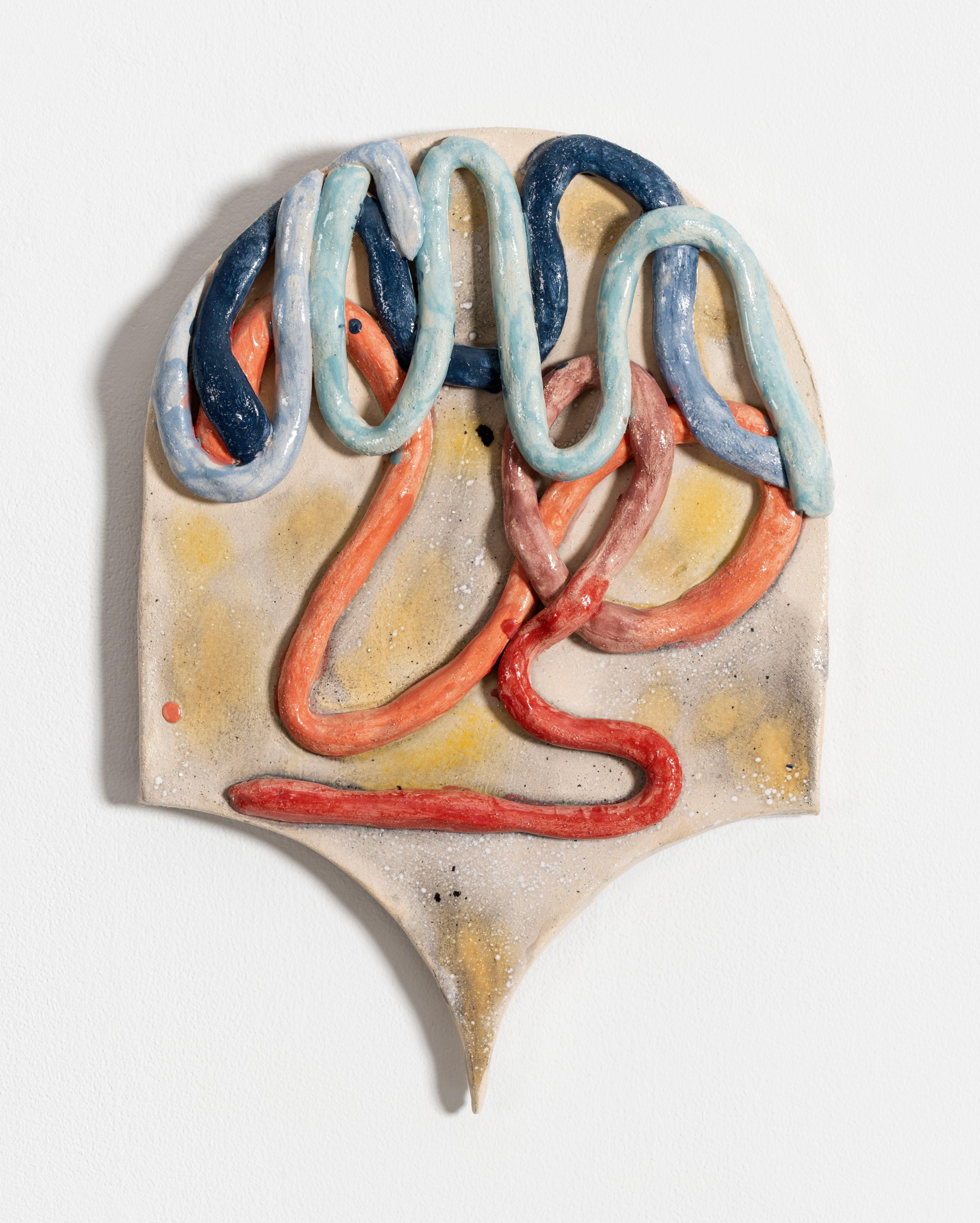
All for All, 2025 Glazed ceramic tile 14 3/16 x 9 13/16 x 1 9/16 inches Photographer: Guillaume Ziccarelli Courtesy of the artists and Perrotin.
Gelitin is primarily known for their striking performance art, but in All for All, their performance lives on the walls of the gallery. “People usually ask us: So when does the performance start?” said Urban. “But I think our approach to sculpture is, in a way, performative.”
The act of creating a performative entity outside of themselves, one that others can also connect to and participate in, remains a goal for Gelitin. “In our work, we always look to create a concept, an idea that people can link into very well and contribute with their personal expression,” said Janka. The group is currently working alongside staff and inmates at a correctional facility in Tromsø, Northern Norway, to co-create a public art commission for the prison, capturing their personal expressions in the same form of a clay face. “You sit around the table, a big table, and then you do your thing. You talk, you start talking, also doing this process, and you also have talks like, what is freedom?” said Urban.
To Gelitin, the act of art making is a joyful process, meant to bring us together and to symbolize what togetherness means. “We like it when it's so easy and simple that you say, my four-year-old daughter can do the same,” said Urban. “It’s like a party, if there's somebody dancing so embarrassingly that you also feel free to dance too.”
In Ali Janka’s words, Gelitin’s work realises “the ongoing joy of being together.”
“All for All” ran at Perrotin New York from March 5th to April 11th, 2026.
Madeleine Cronn
Madeleine Cronn is a New York City-based journalist and creative who writes on culture and the arts. Her fashion design work has been featured in Vogue Australia, Harper’s BAZAAR, Grazia. She has bylines in Schon! Magazine, TEETH Magazine, and Whitehot Magazine.
view all articles from this author