Whitehot Magazine
October 2026
"The Best Art In The World"
"The Best Art In The World"
October 2026
Exhibition Review: Accent Sisters Celebrates the Beauty of Rejection
By COLLEEN DALUSONG July 5, 2025
Reject Me Harder, an exhibit curated by Chiarina Chen and presented at Accent Sisters, is a celebration of the bittersweet humor and lingering emotions to be found in the aftermath of rejection. I had pitched this review to a popular Asian-American arts magazine in the hopes that this exhibit would reach a bigger audience. Despite the editor emailing me back almost immediately to ask for more details, my pitch was still rejected after a lengthy conversation because they “unfortunately do not have the bandwidth to cover this exhibit,” whatever that meant. Normally, I would be extremely annoyed, because I hate having my time wasted even more than I hate being rejected. However in this instance, I was able to find the humor in my pitch for an exhibit about rejection getting rejected itself.
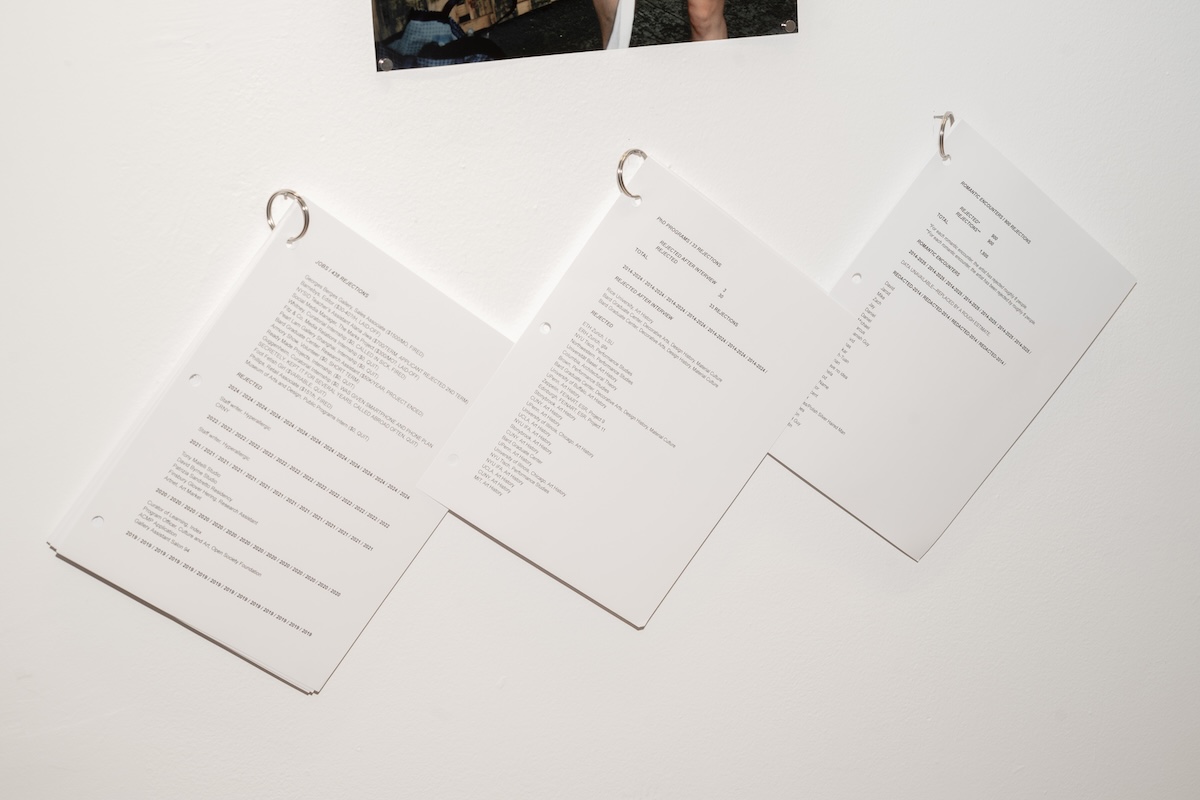 Anna Mikaela Ekstrand. "Rejection is a Pain, But Not the Greatest Pain." Photographed by Hector Yu Shengxuan.
I was unsure if I wanted to laugh or cry while I flipped through Anna Mikaela Ekstrand’s Rejection is a Pain, But Not the Greatest Pain: a meticulous record of every professional (438), academic (33), and romantic (900) rejection that the artist experienced between 2011 and 2025. Above is a Hannah Arendt quote declaring, “pain is [...] the most private and least communicable [feeling] of all.” I thought about my own list of painful rejections, and all the cover letters for failed job applications I’ve hidden away deep within my Google Drive. In Wrung Way, Jie Shao evokes a similar impulse of wanting to put anything anxiety-inducing out of sight and out of mind. Inside a half-opened drawer, a crumpled golden letter lays on top of mulch spray-painted to resemble a race track, illustrating the conundrum of wanting to forget about the stress of rejection, yet still being forced to participate in the competitive process of submitting applications.
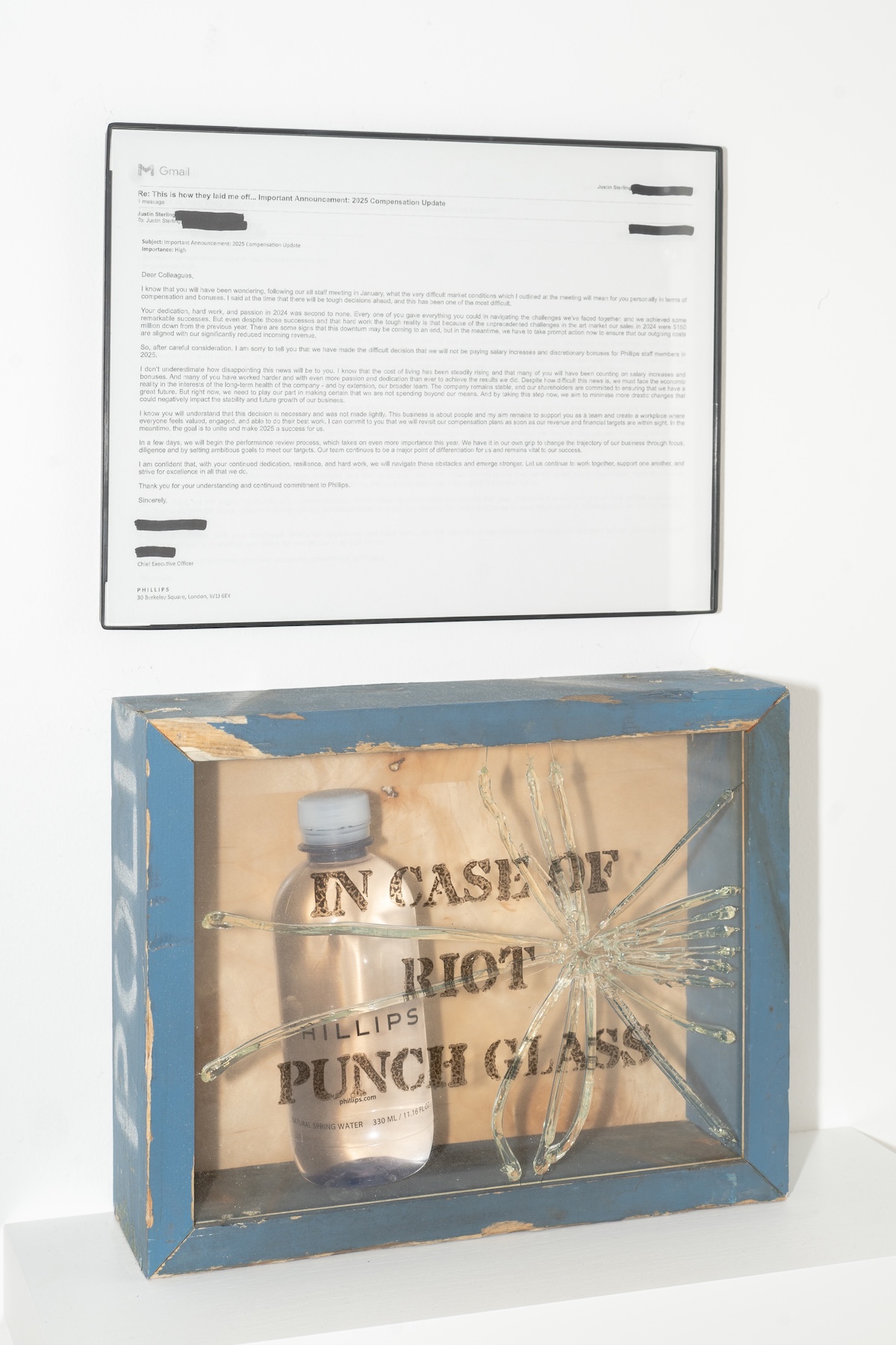 Justin Sterling. "Riot Box (Phillips)." Photographed by Hector Yu Shengxuan.
In this exhibit, the rejection letter acts as both the subject matter and the medium. Yuhan Pan’s Certificate of Achievement humorously turns the tables by writing feedback directly onto printed copies of rejection emails she has received. She criticizes the overreliance on automated templates and keywords, highlighting the lack of emotional sincerity to be found in these devastating rejections. Justin Sterling responds to a layoff email he had received from his former employer with Riot Box (Phillips), in which he places the complementary branded water bottle often offered to the auction house’s rich patrons inside a shattered glass case, thus utilizing his art practice as a means of catharsis.
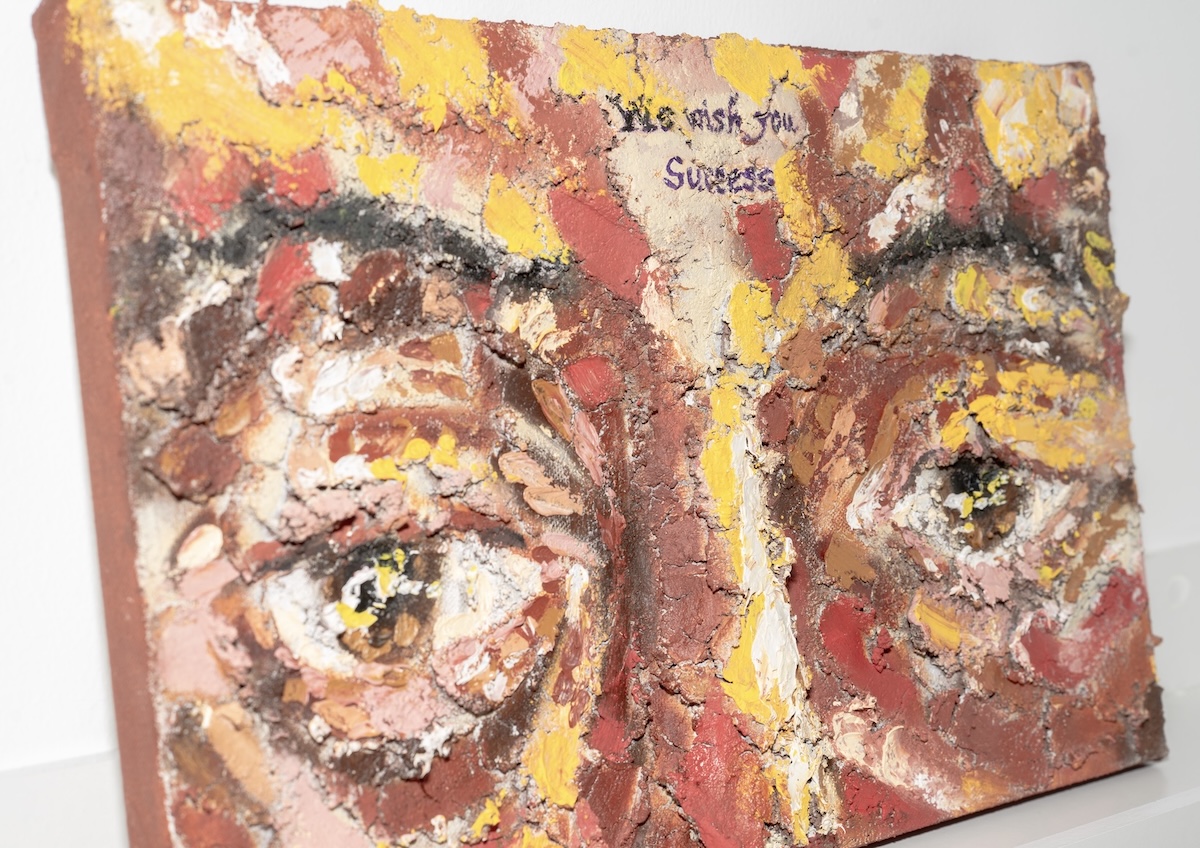 Anoushka Bhalla. "We Wish You Success." Photographed by Hector Yu Shengxuan.
Numerous artists deal with the anger and dissatisfaction caused by rejection. In Zhenzhen Qi’s PayPayPay, the audience is asked to aggressively shake an iPhone in order to make a bug-shaped avatar excrete gold coins. The title is also a pun on “呸” (pēi), meaning “annoyance” or “disapproval,” offering a commentary on the lingering resentment that an artist may feel when they must self-exploit themselves in pursuit of career advancement. This endless chase is further explored in We Wish You Success by Anoushka Bhalla, which depicts a fatigued pair of eyes belonging to an elderly person who has spent an entire lifetime wishing and waiting for success to finally come their way. Likewise, Siyu Chen’s Waiting depicts an overturned table weighing down on a pristine egg, with phrases such as “after-party coat checker” and “art deinstalling handler” written scattered white feathers. These phrases denote proximity to an aspirational position, yet Chen is still waiting for her turn to be the invited guest rather than the coat checker, or to be the artist being exhibited rather than the art handler.
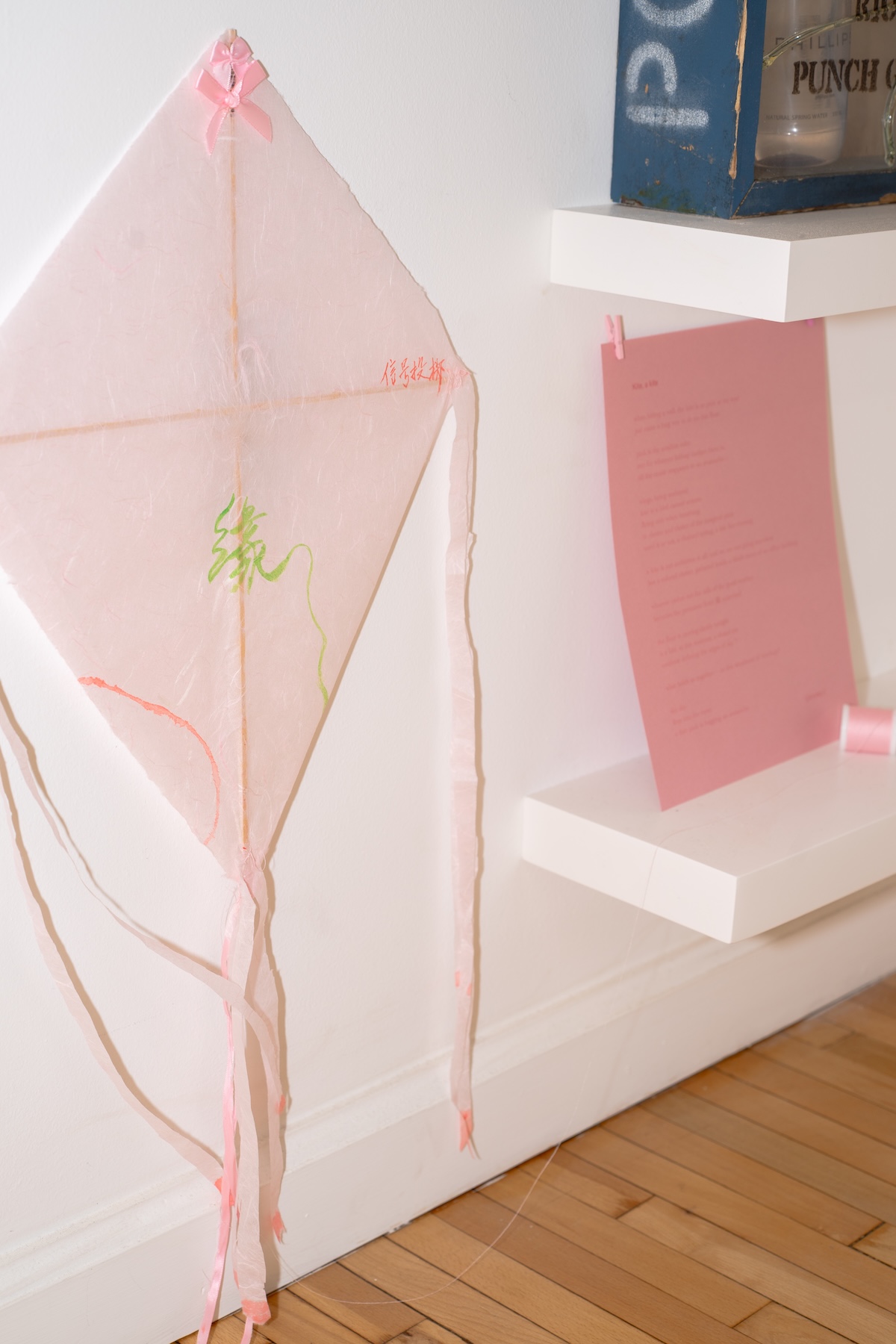 Jiaoyang Li. "Kite, a Kite." Photographed by Hector Yu Shengxuan.
Rejection also occurs in more personal and abstract forms. 29:51 (8 or 4 or 5 years later) by Sixing Xu is inspired by the abrupt end of a friendship, which is represented by a copper plate split down the middle with no hope for a full reconciliation. Bureau of Cloud Management-Nephophile by Alternative Systems rejects the moronic assumption that AI is always correct and logical, choosing to prioritize a more flawed yet humanistic way to make sense of the world surrounding us. Jiaoyang Li’s Kite, a Kite hovers only a few inches off the ground, rather than soaring freely in the sky. This suppression is emphasized by the use of pink ink on pink paper, further concealing Li’s poetry and forcing readers to kneel in order to engage with her artwork. Similarly, Untitled (Nonfiction) by Wei is a challenging reading experience. Wei’s letter to their family is partially obscured by the wax medium and the illegible font, effectively hindering communication. The audience is only able to glean a few bits of information, which mirrors Wei’s experience as a queer individual who is unable to fully express their situation to their parents, who don’t speak fluent English.
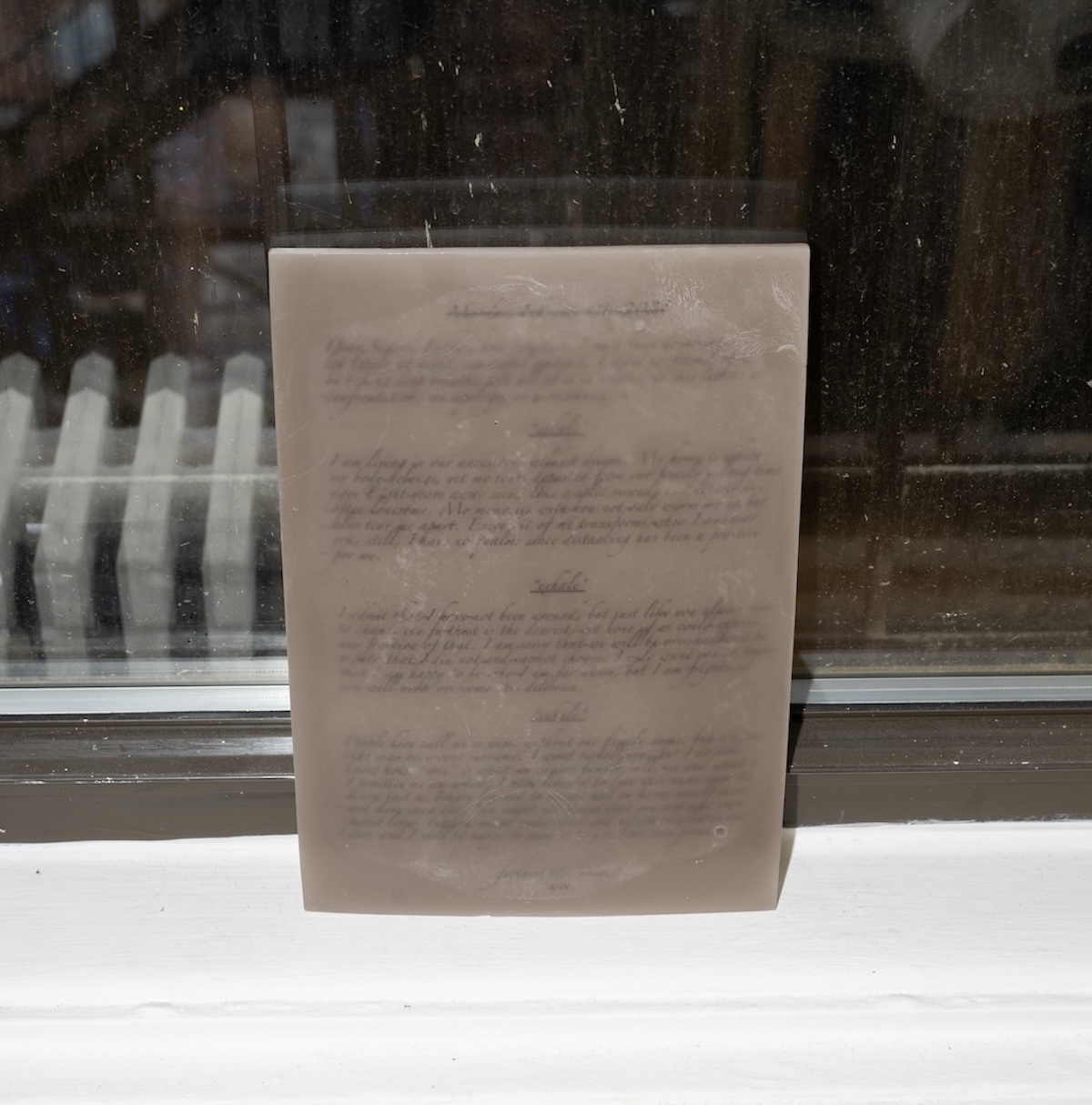 Wei. "Untitled (Nonfiction)." Photographed by Hector Yu Shengxuan.
Nevertheless, being rejected does not equate to hitting a dead end. In Ride or Die by Yoshie Sakai, a grandmother and her grandchild bond over being rejected by general society on the basis of being too old or too young. Wendi Men’s personal notebook pages are transformed into a new abstract painting which captures her swirling emotions of frustration, confusion, and courage in what if we decided to survive more. For The Work Didn’t Care About Rejection, Sizhu Li weaves together scraps of emails and images of her proposal for a large-scale installation project. Although Li’s proposal was rejected multiple times, it was eventually accepted and became fully realized. However, this artwork resists being constrained within the linear narrative of proposal, acceptance, and fruition. Instead, the entirety of Li’s experience finds new life within this artwork, embracing the chaotic totality of disappointment mixed with hope that all artists must learn to coexist with.
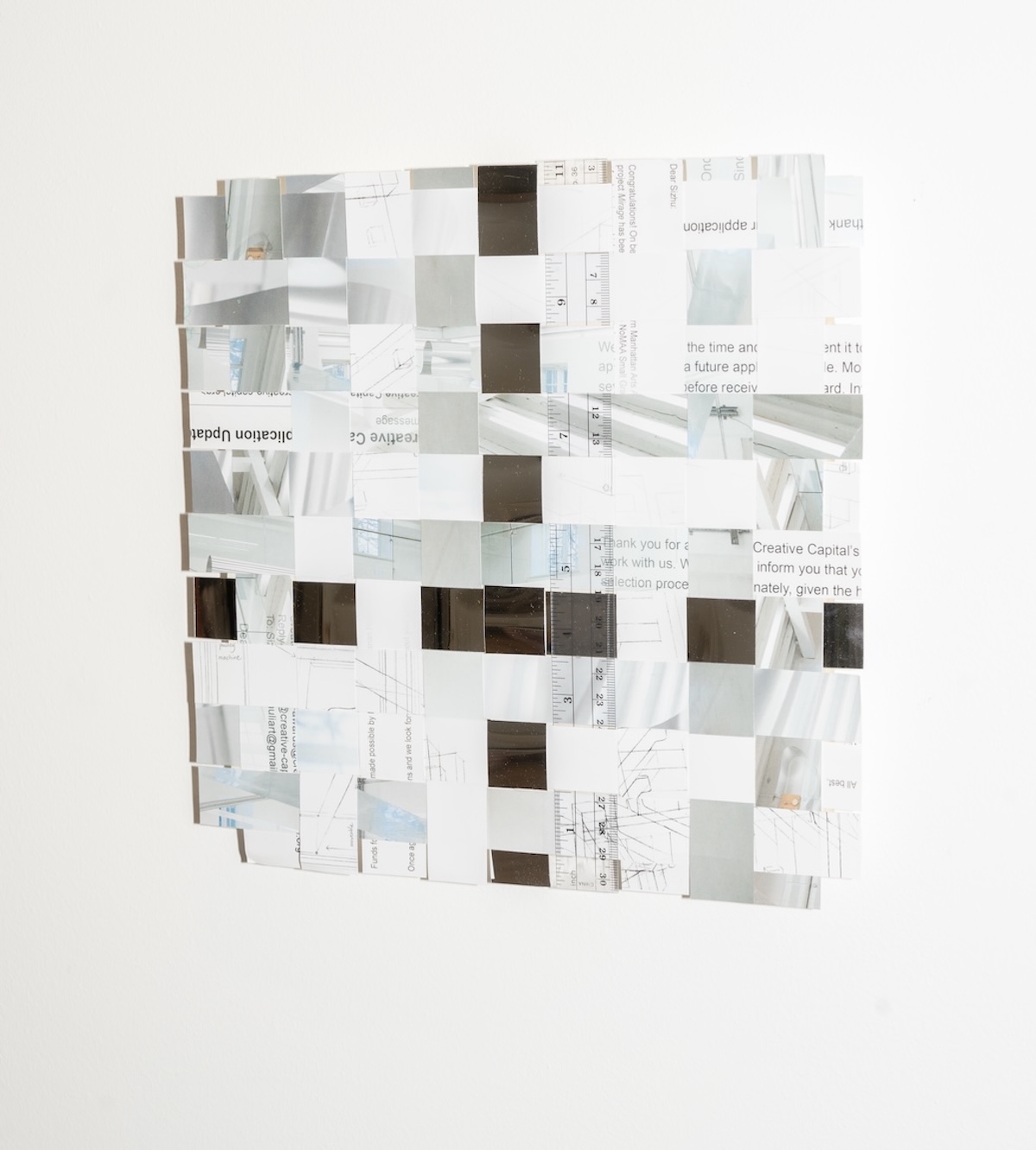 Sizhu Li. "The Work Didn't Care About Rejection." Photographed by Hector Yu Shengxuan.
It’s never a pleasure to be rejected, and it’s often a source of shame or anxiety. Reject Me Harder seeks to reimagine what we can do after being excluded, overlooked, or denied. Rather than dwelling in anger and self-pity, the artists in this show invite us to approach rejection with humor and camaraderie, hopefully preparing us for the next time we are greeted with the dreaded, “Thank you for your interest. Unfortunately, we regret…”
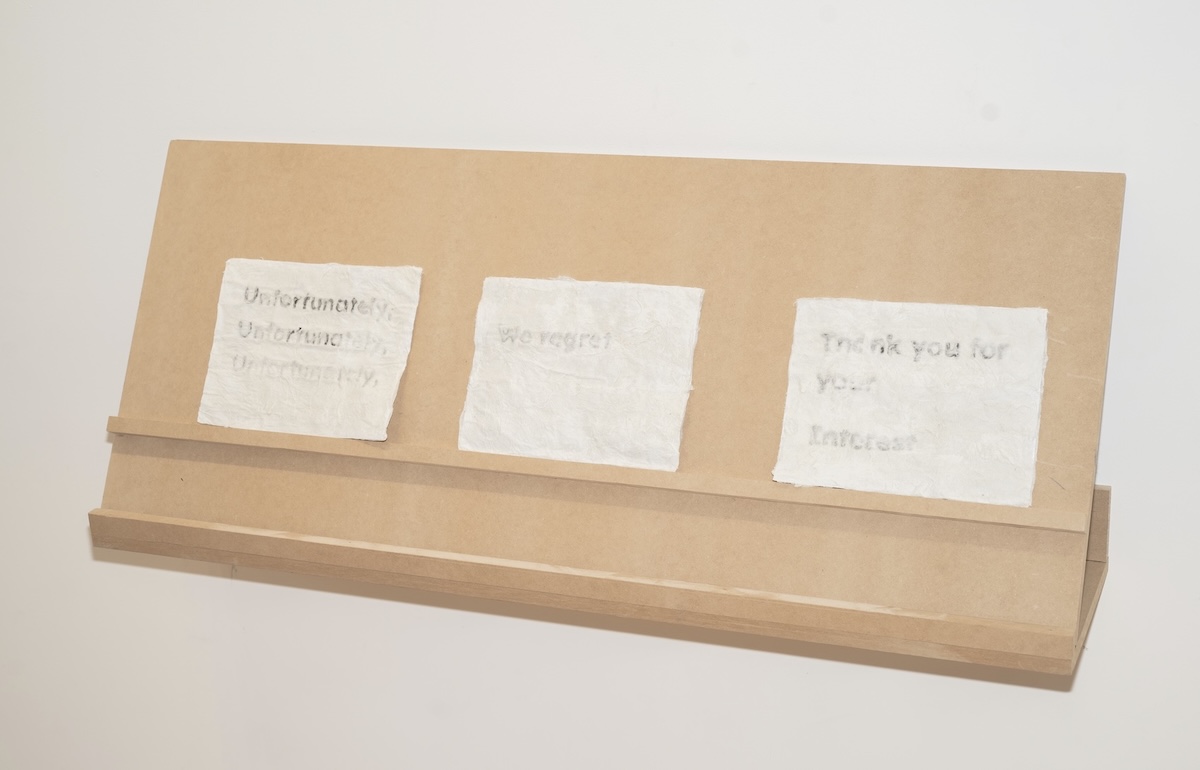 Yuhan Pan. "Unfortunately, we regret. Thank you for your interest..." Photographed by Hector Yu Shengxuan
Reject Me Harder is open through July 12, 2025 at Accent Sisters, 89 5th Avenue, Suite #702, New York, NY.

Colleen Dalusong
Colleen Dalusong is a curator and writer based in New York City. She is the co-founder of Fruitality Magazine, and has curated exhibits at Think!Chinatown. She has previously been published in Cultbytes and Mercer Street.
view all articles from this author