Whitehot Magazine
October 2026
"The Best Art In The World"
"The Best Art In The World"
October 2026
A vast exhibition of urology themed art in various media from more than 60 artists across the globe.
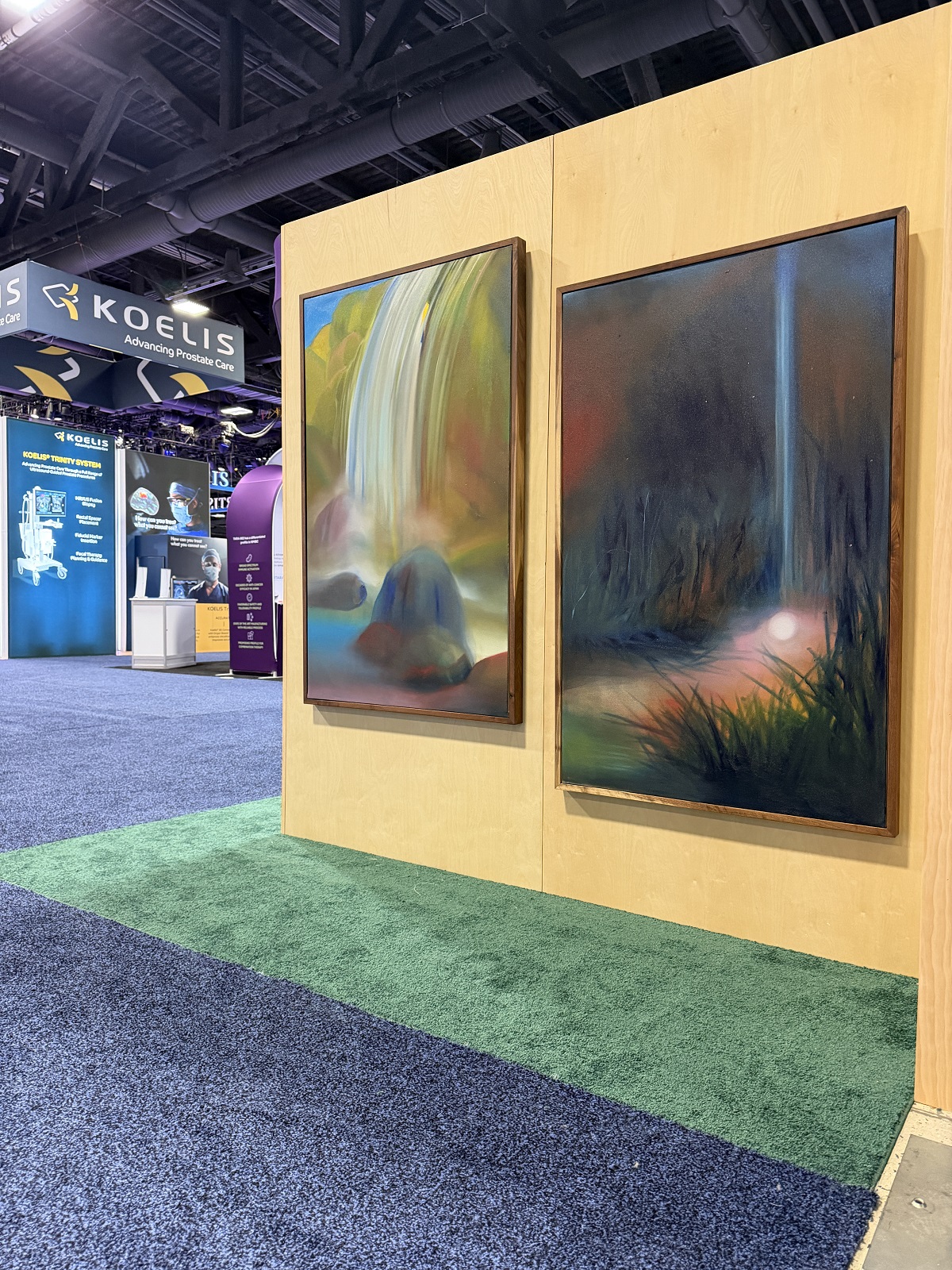 A diptych by artist Boy Kong showing differing flow rates
By ADAM ZUCKER May 20th, 2026
When I was in graduate school, I saw a doctor who took a unique interest in me, not because of any health issues, but rather my focus on art history. He was somewhat of a scholar of Renaissance art himself and enjoyed chatting with me about our respective experiences in the field of visual culture. His heightened enthusiasm for art is indicative of how the medical community has embraced the arts as a way to enhance their work, as well as decompress from its demanding nature.
Efforts to incorporate the humanities into medical pedagogy and professional practice is ongoing. Some medical schools already have humanities requirements for students, which include art history classes and basic studio art instruction. At the University of Colorado Anschutz Medical Campus, the Colorado Resiliency Arts Lab (CORAL) studies tangible data showing how engaging with visual, performing and literary art helps relieve stress and prevent burnout among practicing healthcare professionals. In addition to boosting doctors' morale, the arts are a significant outlet for being more understanding of other people's experiences and feelings.
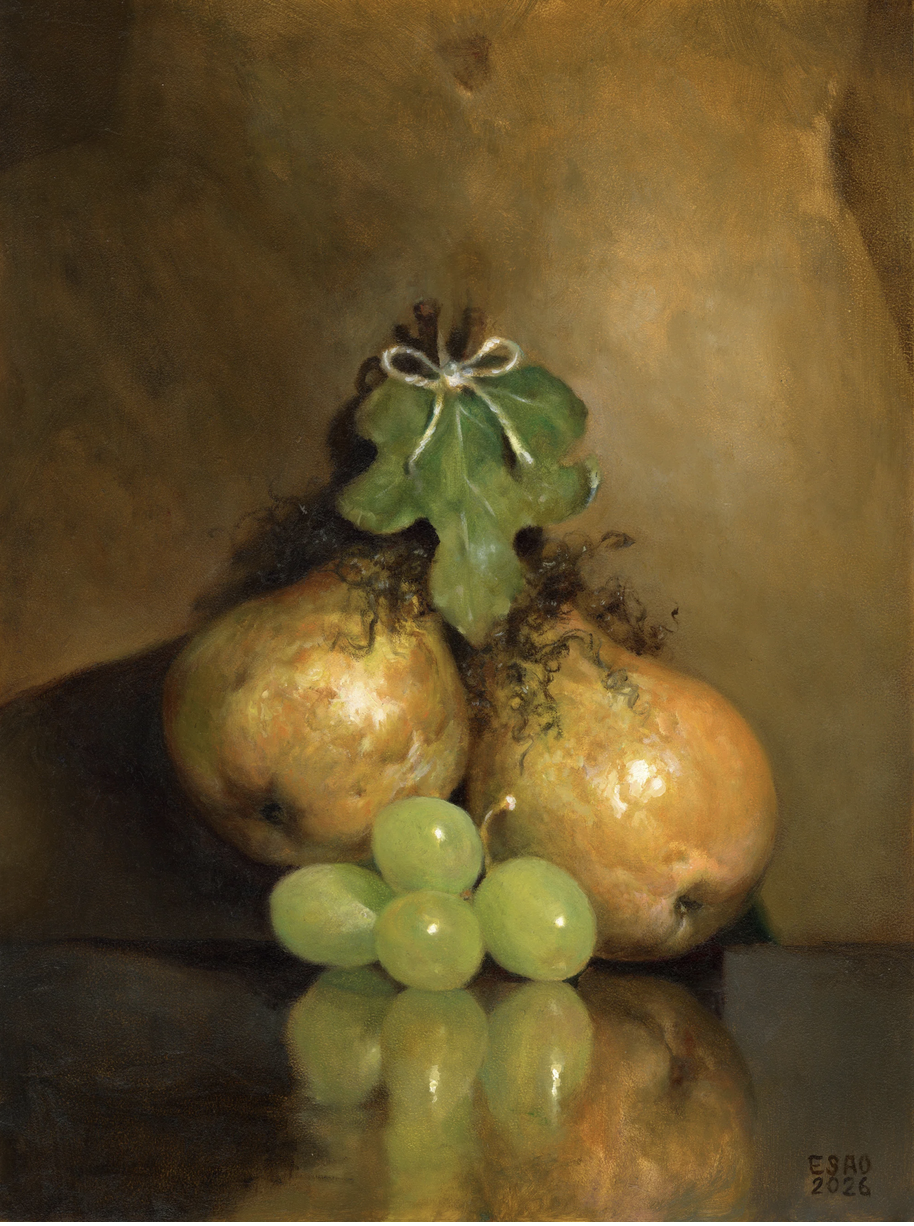 Esao Andrews, Package, 2026, oil on wood, 9 x 12 inches. Courtesy of the artist.
In April of 2024, Avi Gitler was visiting his cousin, who is a urologist in San Antonio, and accompanied him to the American Urological Association (AUA)'s annual convention. Gitler remarks, "It may sound strange, but urology is something of a family business. There are no less than five urologists in the family, including three pediatric practitioners, so it wasn't too weird to find myself walking around the convention center with my cousin, Daniel."
As an arts professional meandering through the medical convention, Gitler realized the potential for adding some artistic flair to the traditional AUA format. For this year’s conference, among hundreds of booths showcasing the latest advances in urologic medicine, his company Gitler & ____ organized a vast exhibition of urology themed art in various media from more than 60 artists across the globe. The salon-style display features work that communicates aesthetic and conceptual themes of medicine, health, science, self-care, and the complicated relationship we have with our bodies. The booth has a healthy balance of sincerity and absurdity.
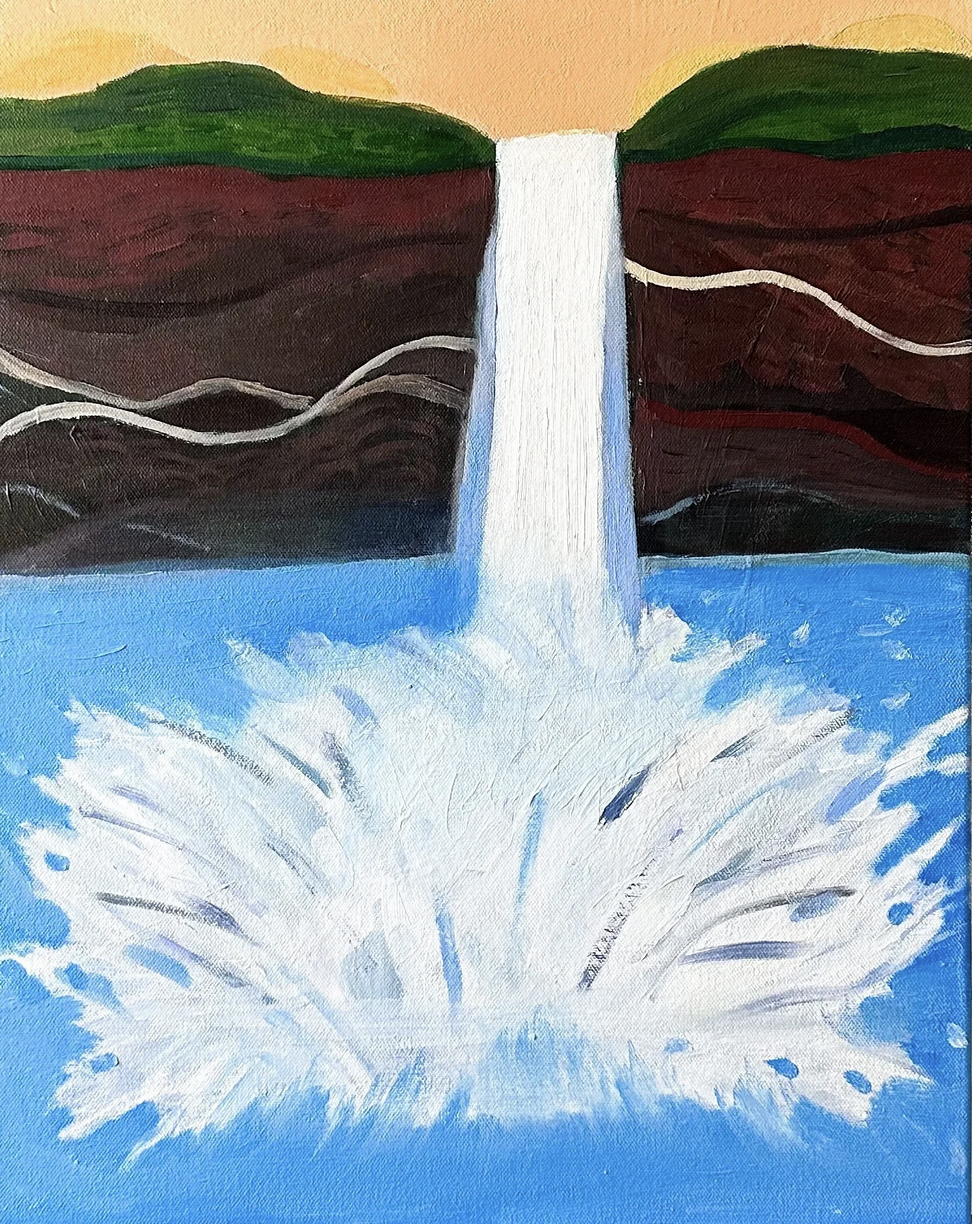 Polly Shindler, Waterfall, 2025, Oil and acrylic on canvas, 20 x 16 inches. Courtesy of the artist and Deanna Evans Projects.
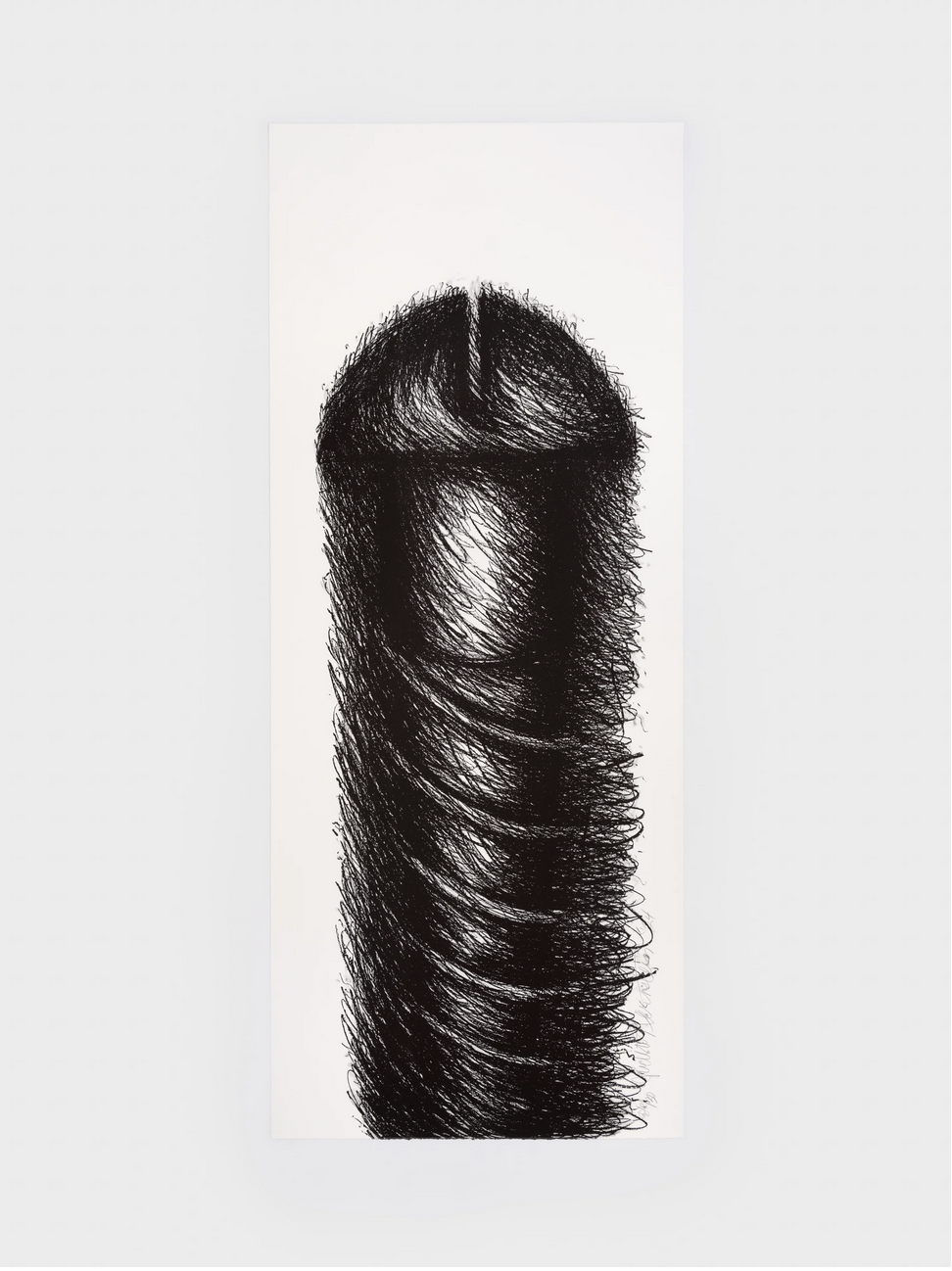 Judith Bernstein, Screw, 2024, Lithograph, 61 3/8 x 25 1/4 inches. Courtesy of Olney Gleason and the artist. Photography by Charlie Rubin
As you’d expect, there are a lot of genitalia depicted. Judith Bernstein's lithograph Screw (2024), features a black, vertically erect spiral screw that makes a not-so-subtle allusion to a penis. This print hearkens back to a series Bernstein began in the 1970s as a sardonic critique of the patriarchy's forte of screwing up worldly affairs.
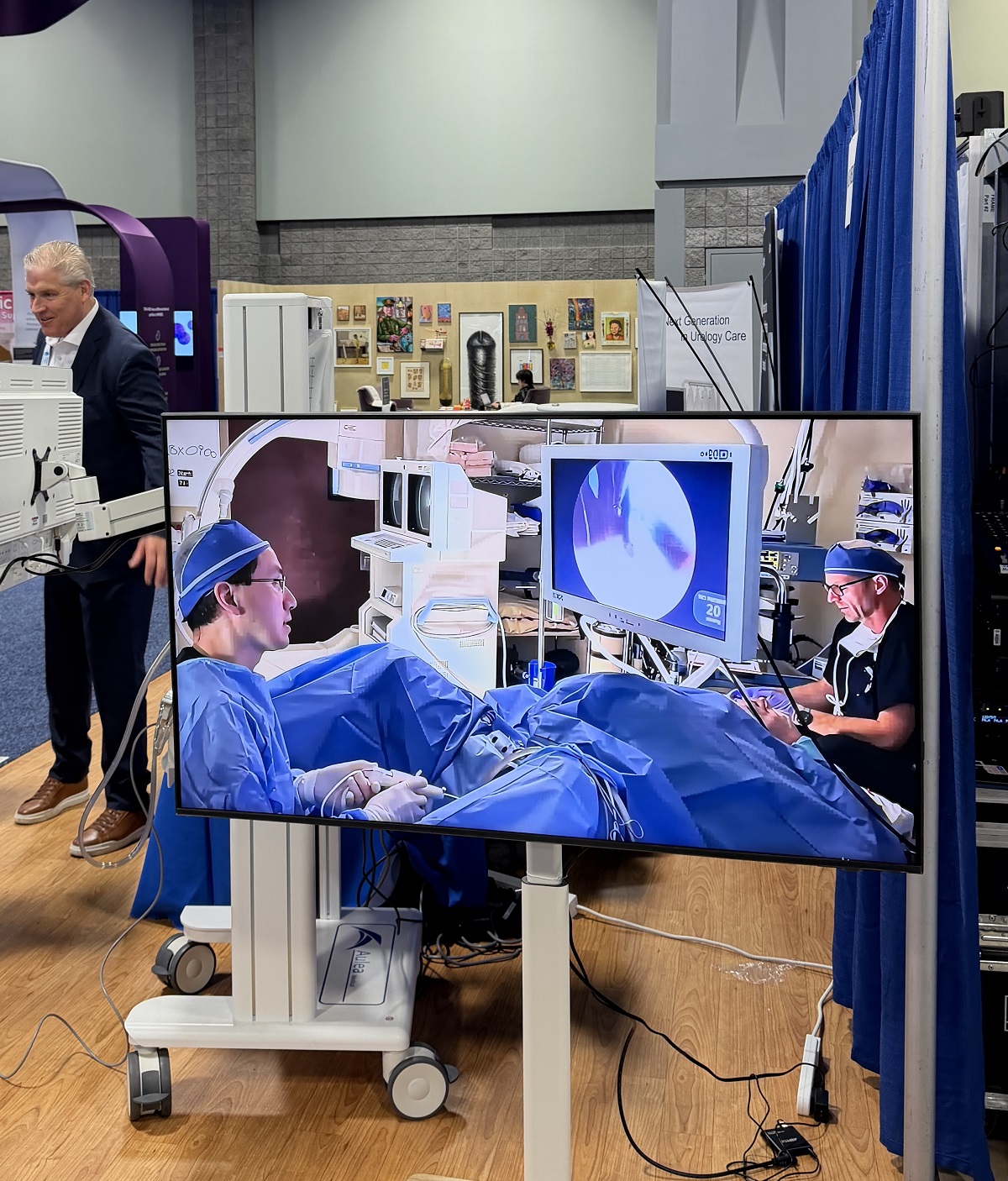 Gitler &_____ booth in the background
Esao Andrews’ Package (2026) is a still life in the Dutch tradition, with a fig leaf, two pears and vine of grapes clearly arranged to resemble the proverbial male package.
Alexandra Rubinstein’s Thirsty (Jim) (2016) is a painterly thirst trap. It’s an erotic portrait of a nude man holding a beer, but in the place of his genitals the artist has affixed a bottle opener, inviting viewers to crack one open and quench their thirst in more ways than one.
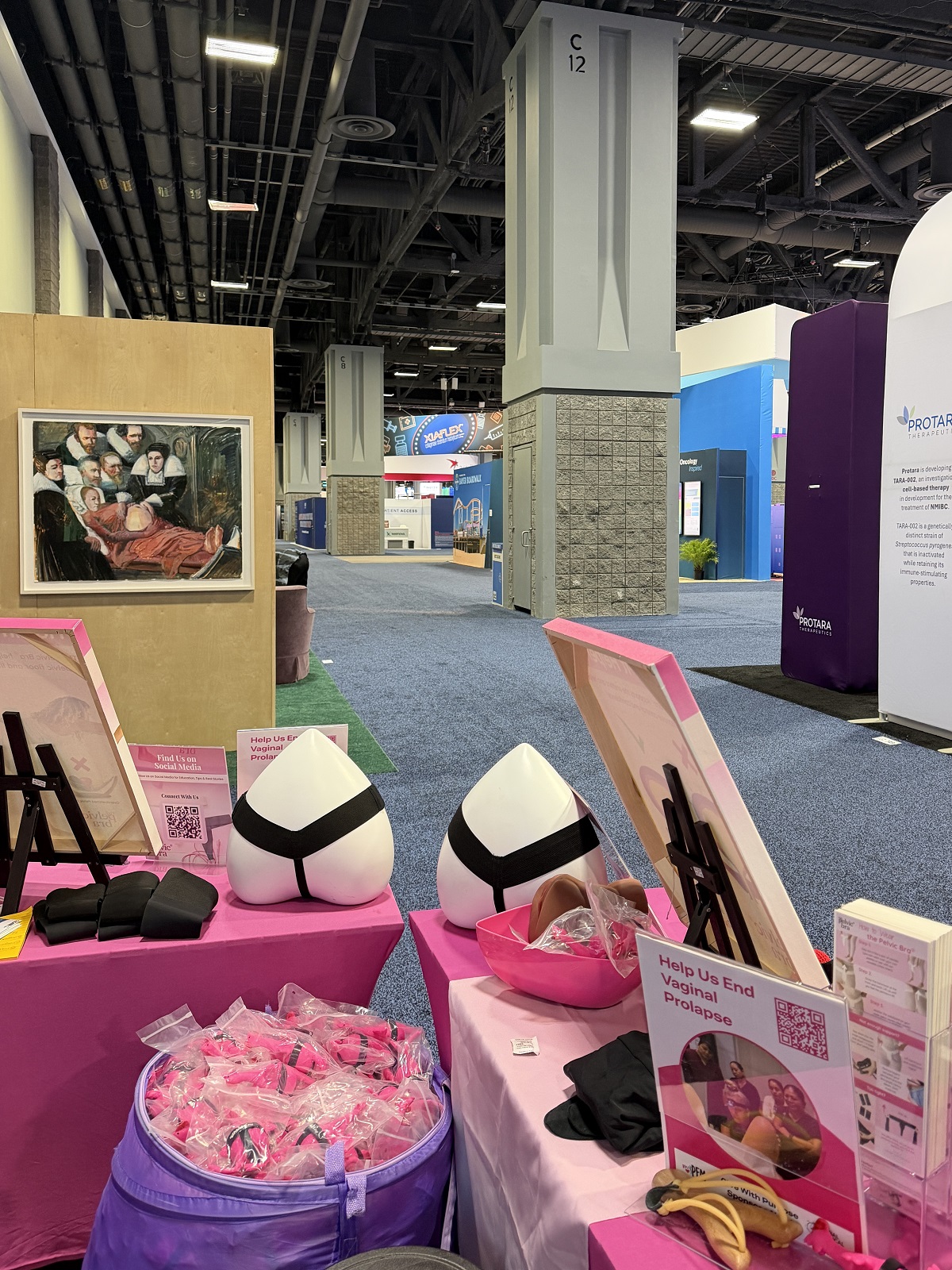 Tirtzah Bassel's work was chosen due to proximity to the Pelvic Bra booth
Another witty penis themed artwork is Chris Ofili’s Skateboard Deck (2014), wherein a cartoony rendering of a long penis with a smiley face on its head is painted on the deck of a skateboard. The painting is a double entendre to the skateboarding slang word “pushing wood,” which refers to a non-technical skater, by implying they just ride around (i.e. “push”) without doing tricks.
While sexually charged imagery may seem far outside the realm of a professional medical event, eroticism in art is befitting of a urological conference, because urologists are the primary experts for diagnosing and treating sexual health issues in men.
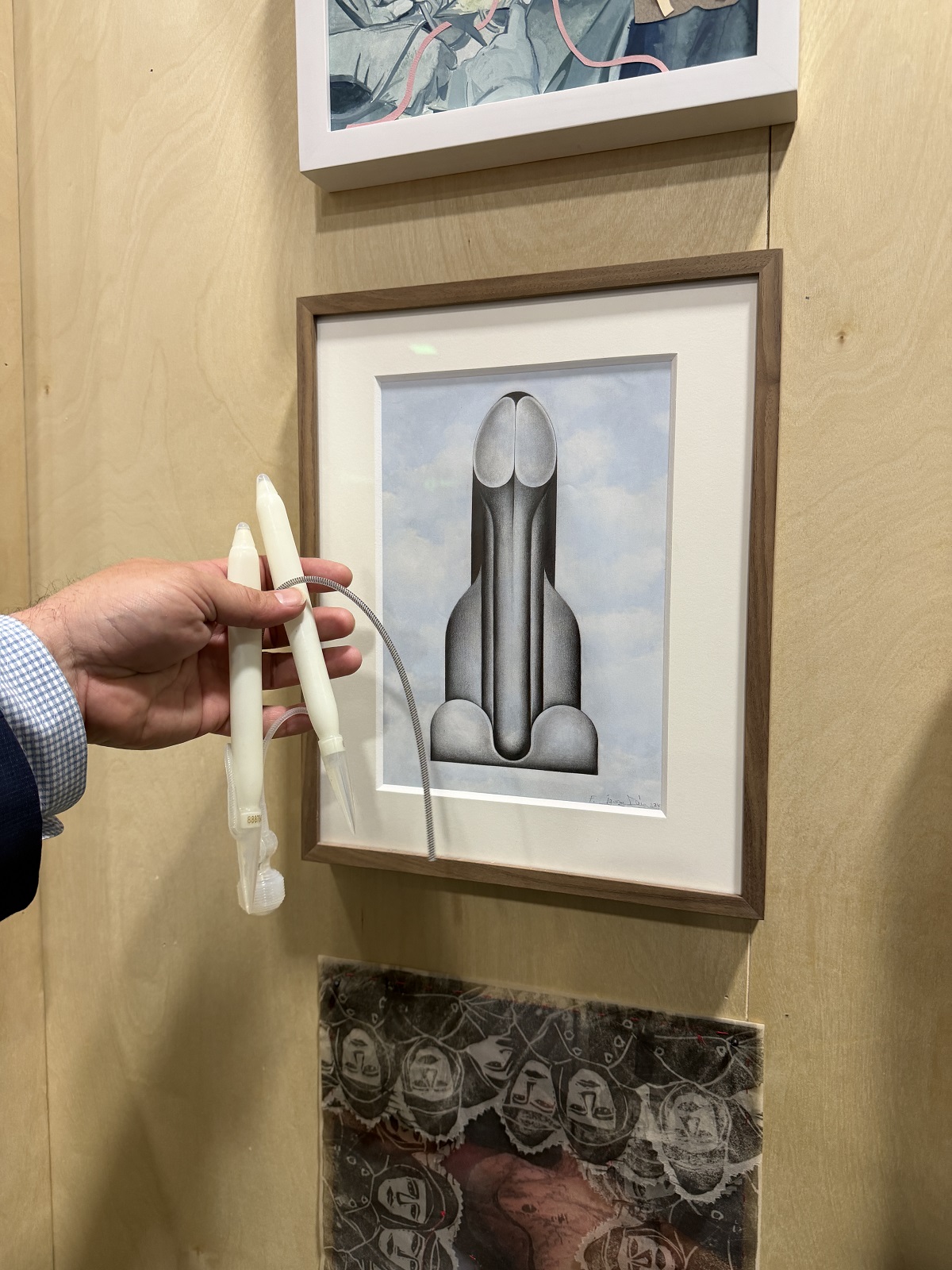 Penile Implants juxtaposed alongside a work by Francesco Igory Deiana
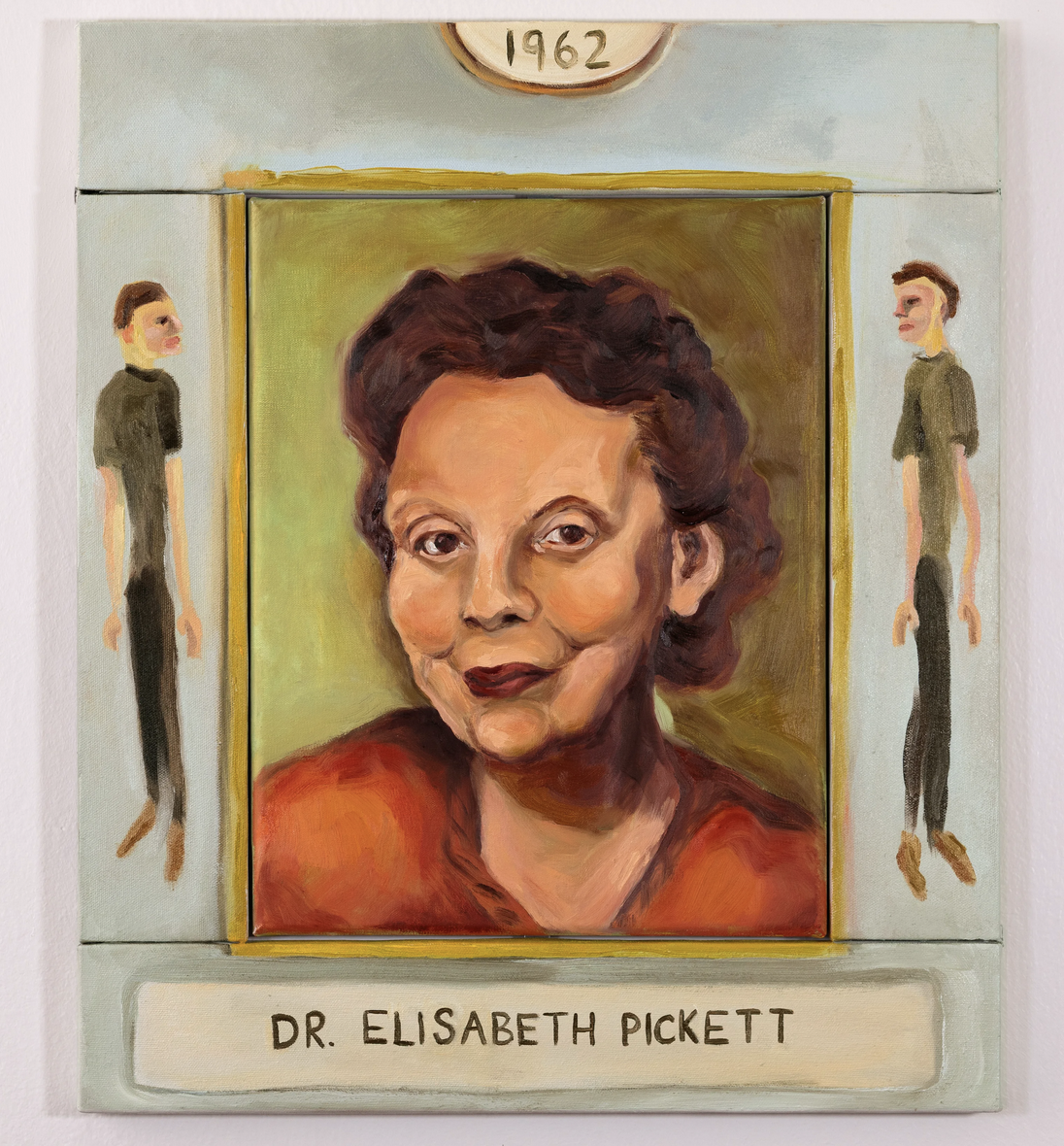 Claire Boyle, Dr. Pickett, 2026, oil on canvas, 17 1/2 x 20 inches. Courtesy of the artist.
There’s also a fair share of art that is inspired by urologic practice and illuminates people, products and techniques that are essential to the field. Claire Boyle’s portrait of Dr. Elisabeth Pickett, the first board certified female urologist, is a reminder of how the field of medicine has progressed, but that there is still a gender gap. In a Journal of Urology article published in 2007, the authors note that “Despite the benchmark set by these early pioneers the American Board of Urology currently lists only 324 female board certified urologists, 86 female candidates and 20 board eligible individuals as of the year 2006.” The latest statistics I’ve found via an American Urological Association (AUA) Census taken in 2023, indicates that this number has grown to approximately 1,672 female urologists in the United States. However women still only make up 11.8% of the total urology workforce.
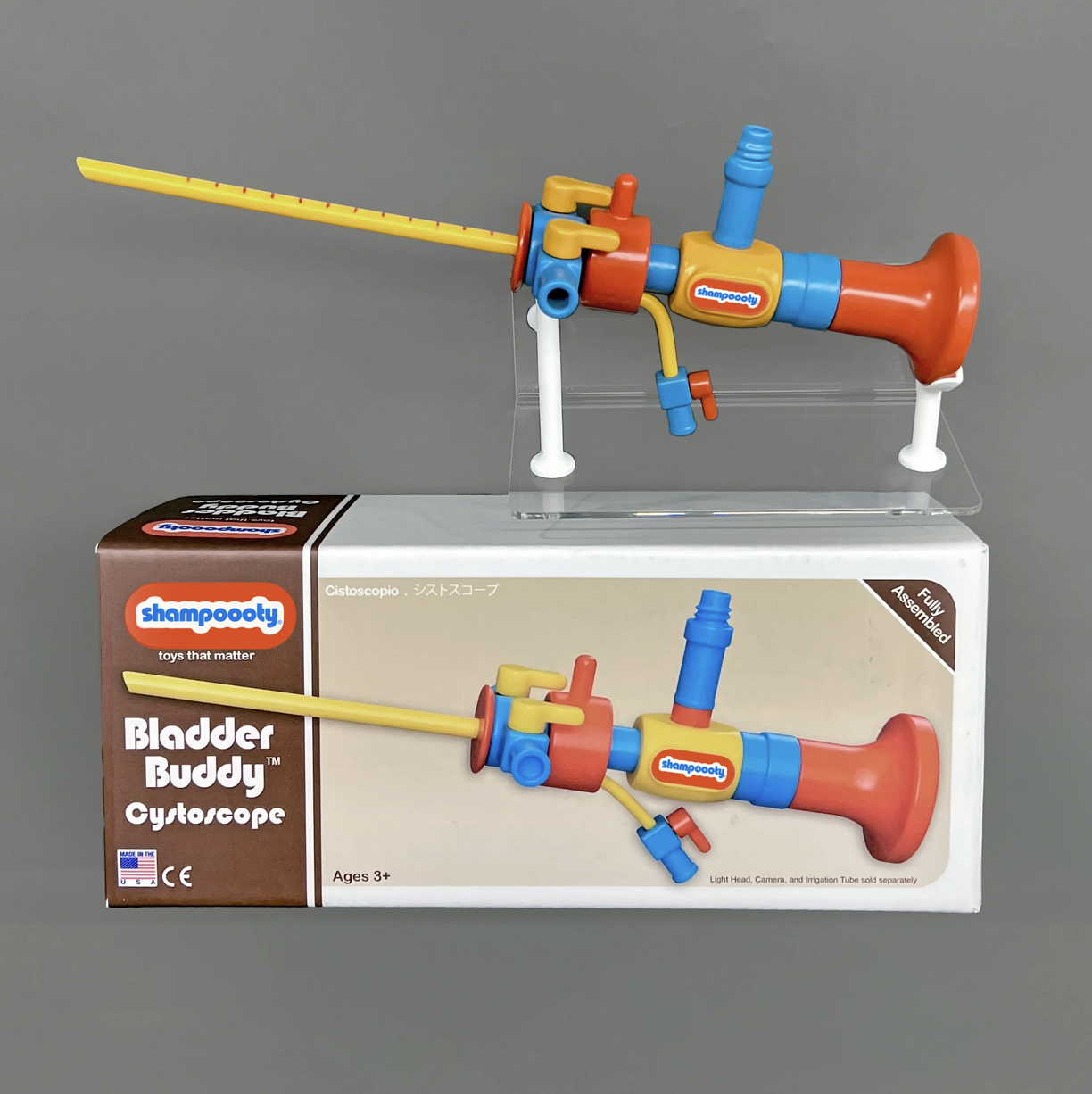 Shampoooty, Bladder Buddy Cystoscope, 2026, Mixed media assemblage, 14.5 x 6 x 4.5 inches, Edition of 10. Courtesy of the artist.
Tom Sanford pays homage to Hugh Hampton Young, another important figure in urology. In Sanford’s portrait, the doctor is shown dressed in a military uniform equipped with his urological inventions, such as the "boomerang needle," a type of surgical needle designed for working with deep incisions. He is performing a procedure on a patient, filling up a syringe with antiseptic merbromin, which is another product that he was responsible for developing.
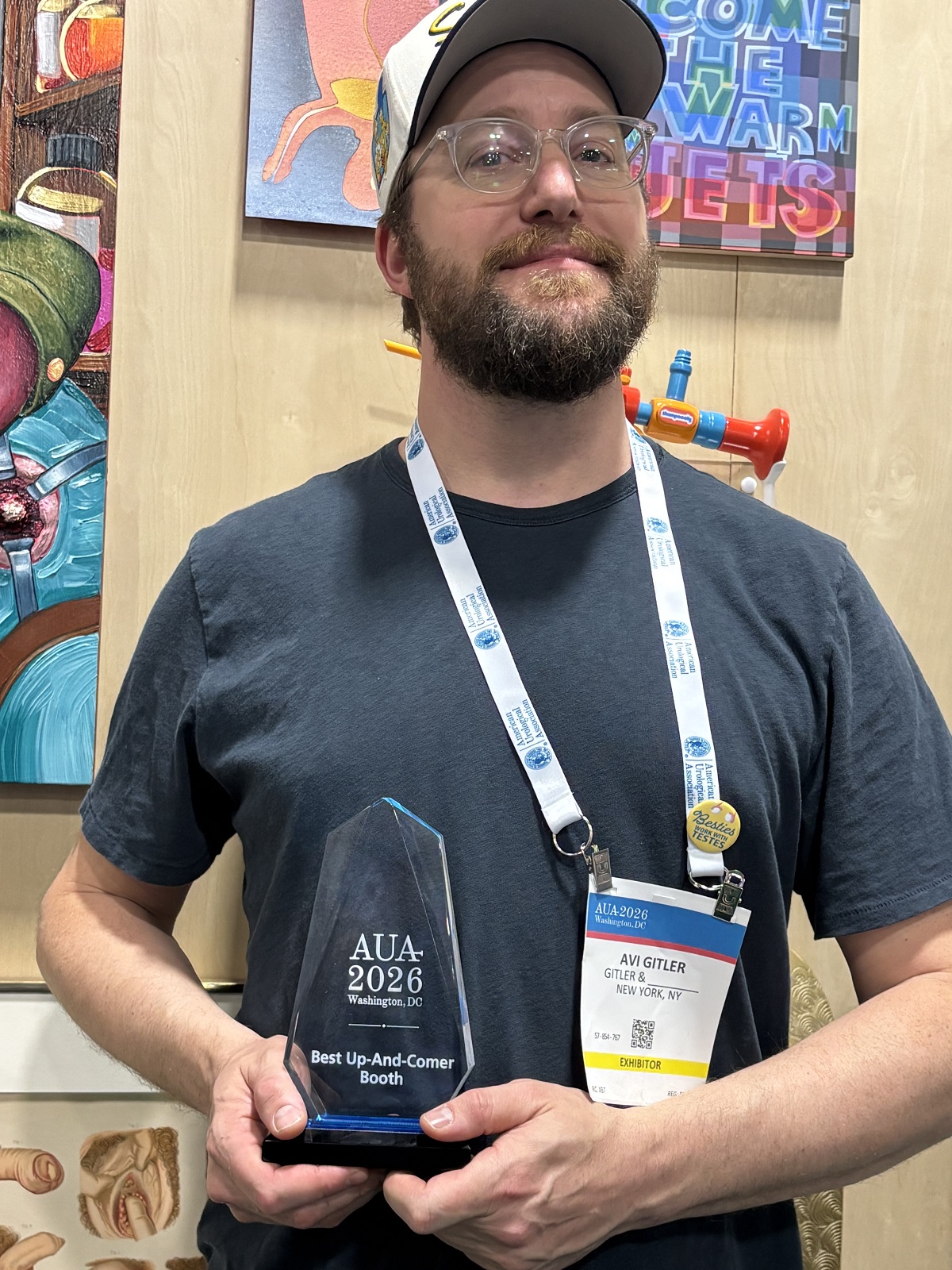 Winners of the best new booth
Other works of art mentioning urological tools include Shampoooty’s sculpture Cystoscope, which re-presents the tube-like instrument with a camera and light that’s used to examine the inside of the bladder and urethra as a child’s toy.
Melanie Vote’s It’s All Connected (2026) is an artful transformation of a urological diagram as a painting of an orchid’s root and seed system. This is the kind of painting that would truly liven up an examination room, by juxtaposing the often drab medical charts and schematics depicting various biological systems.
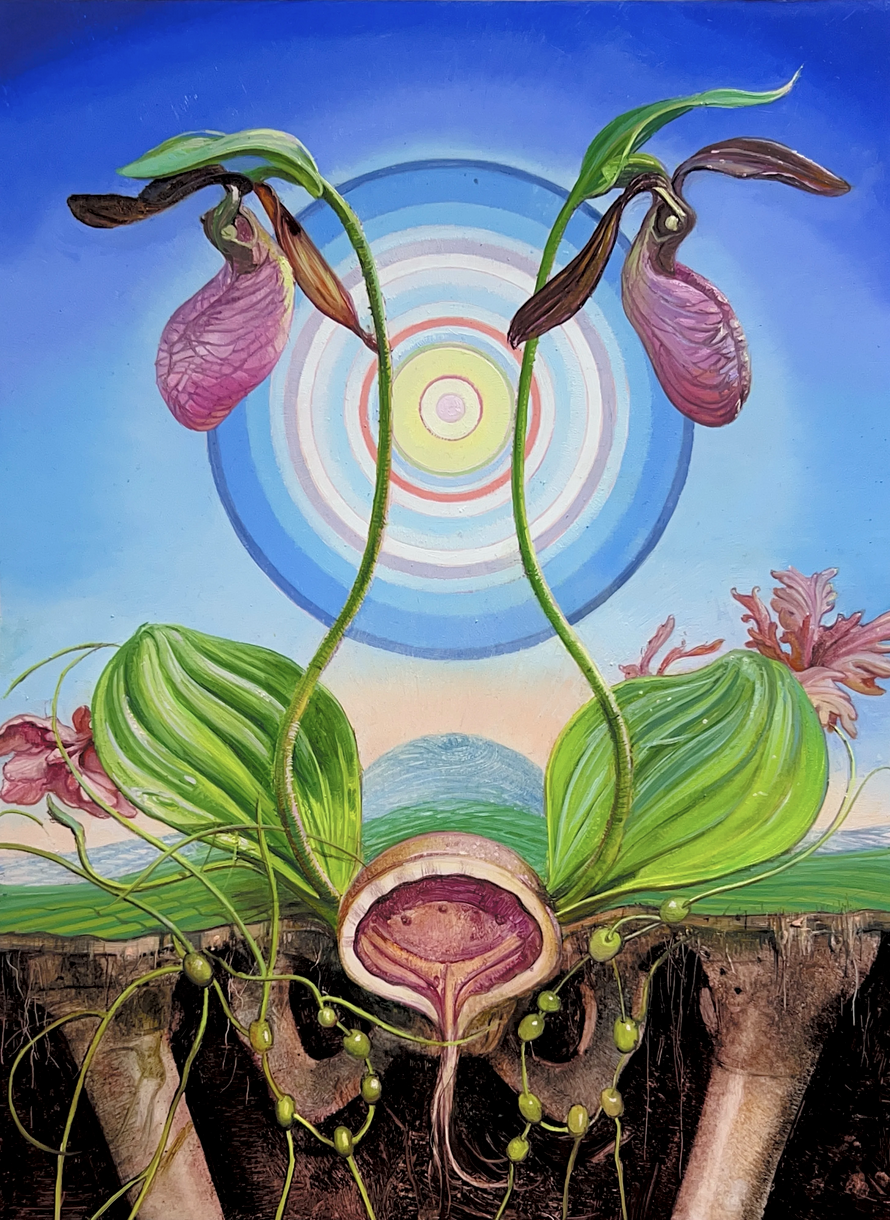 Melanie Vote, It’s All Connected , 2026, oil on paper on wood panel, 16 x 12 inches. Courtesy of the artist.
Allison Hill-Edgar’s You're in Analysis? (2026) is a realistic oil painting of urine samples being analysed, but it’s also a homage to color theory, and how the conscious application of hue and value are important in the medical community. Color schemes have an important function in medicine for color-coding various test results, enhancing surgical precision and defining institutional branding.
When nature calls, both artists and urologists respond. Allusions to urine and the act of taking a piss are well represented by pleasing paintings like Polly Shinder’s Waterfall (2025) and Boy Kong’s “Sleepy Land” series. Each of these paintings are luscious oils depicting one of nature’s most majestic phenomenon, but in the context of the AUA, it’s also apt to connect them to potency of the urinary system.
There’s likely something that will pique every urologist’s interest in Gitler & ____’s AUA booth. Amidst the institutionalized format of medical conferences, the display provides a moment of respite, personal reflection and a wholesome dose of humor and prestige to honor a profession that deals with highly sensitive and dire circumstances.
Adam Zucker
Adam Zucker is an artist, art historian, curator and physical fitness educator based in Queens, New York. He is the publisher of Artfully Learning, a blog about the intersection of art education and contemporary visual culture.
view all articles from this author