Whitehot Magazine
October 2026
"The Best Art In The World"
"The Best Art In The World"
October 2026
Robin Levy: American Model April 4th – April 26th SMITH contemporary
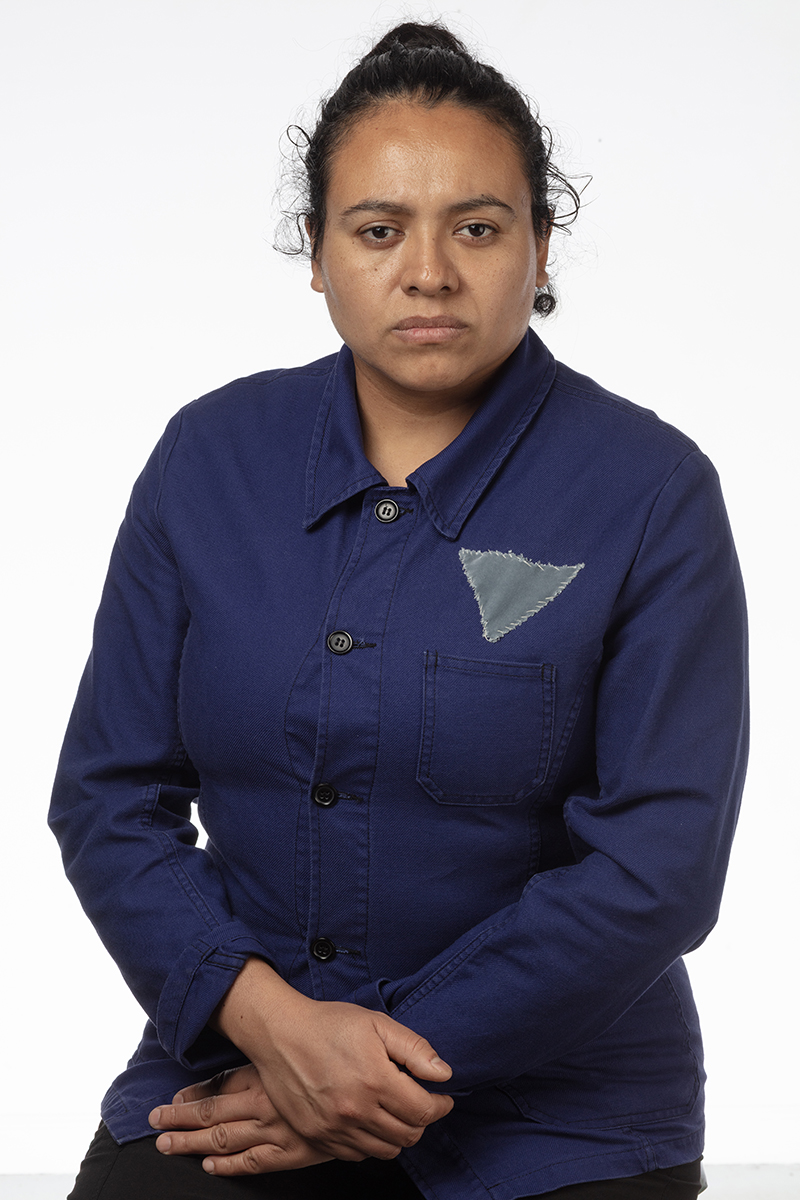 Robin Levy, Face To Face, (Portrait Series), 2026 Archival Print 40 x 60 inches Edition: 1 of 5
By ADAM FALIK April 24th, 2026
The Nazis were clever in their simplicity. In the Concentration Camps, a system of blunt triangles hued in primary colors that any child would have in a box of crayons was all that was necessary to form the basis of Identity. A black triangle stitched into coarse, ill-fitting prison garb would classify the political dissident, while a pink triangle would distinguish the homosexual. Jews, Nazi Germany’s primary target, earned a double yellow triangle in the shape of the Star of David. These identifiers were useful to guards administering punishment (and death) as well as fellow prisoners seeking snap affiliations. Since the 1980s, when America shifted from a melting pot to a hyphenated culture of identity politics, our heritage, gender and race – broadly: our Identity – has become a broach of pride versus shame. We flaunt our identities and embrace the slogans (Gay Pride, Black Power, Trans Rights, etc.) that further the momentum of mere appearances. We should recall that in Nazi Germany and its conquered territories, identification marks could prove a death sentence. We should recall this as America’s proudest fascist-leaning government agency, ICE (United States Immigration and Custom Enforcement), targets immigrants and Americans alike strictly on identity. This past year its object has been Latin Americans, with some Haitian and Somali persecution mixed in for good measure, while next who knows what whim will initiate the discriminatory ire of our leaders.
Robin Levy’s show American Model at Smith Contemporary (April 4th – April 26th) attempts to create a space that connects the sins of the past to the persisting offensives of the present. On the walls there are lots of color-coded triangles made from repurposed World War II-era velvet that serve to both echo the Nazi system as well as its reclamations, such as the up-turned pink triangle that marked the “Silence = Death” campaign, originally created by a collective of artist/activists, then widely adopted by ACT UP, which sought to counter Reagan-era stigmatization of people with HIV/AIDS.
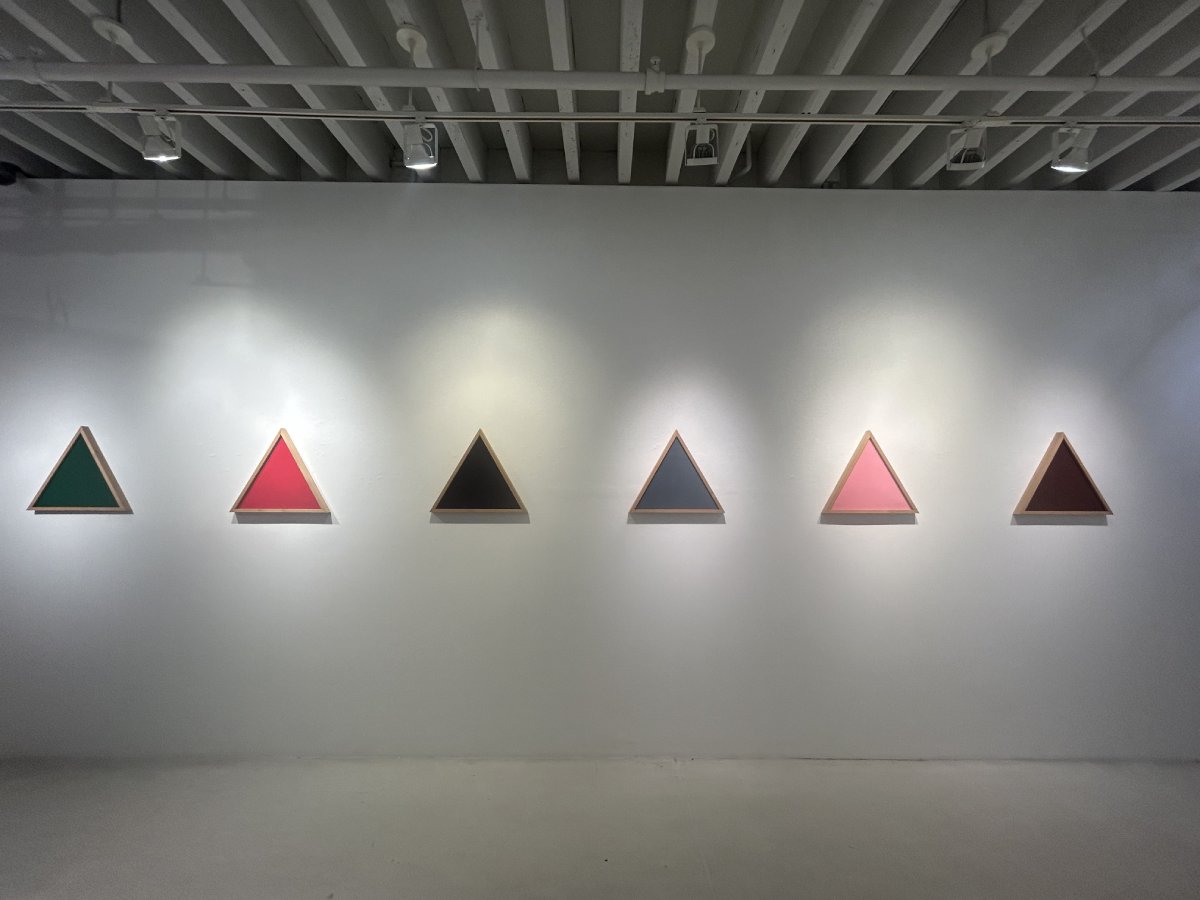 The Virtues of Strength 22.5 X 19.5 inches Fabric and Wood (7 Variations) 2026
In addition to the triangles on the walls, there’s a rack of prisoner jackets with affiliations to a World War II garment manufacturer. Gallery visitors can try on these jackets to have their Polaroid pictures taken and pinned to the wall.
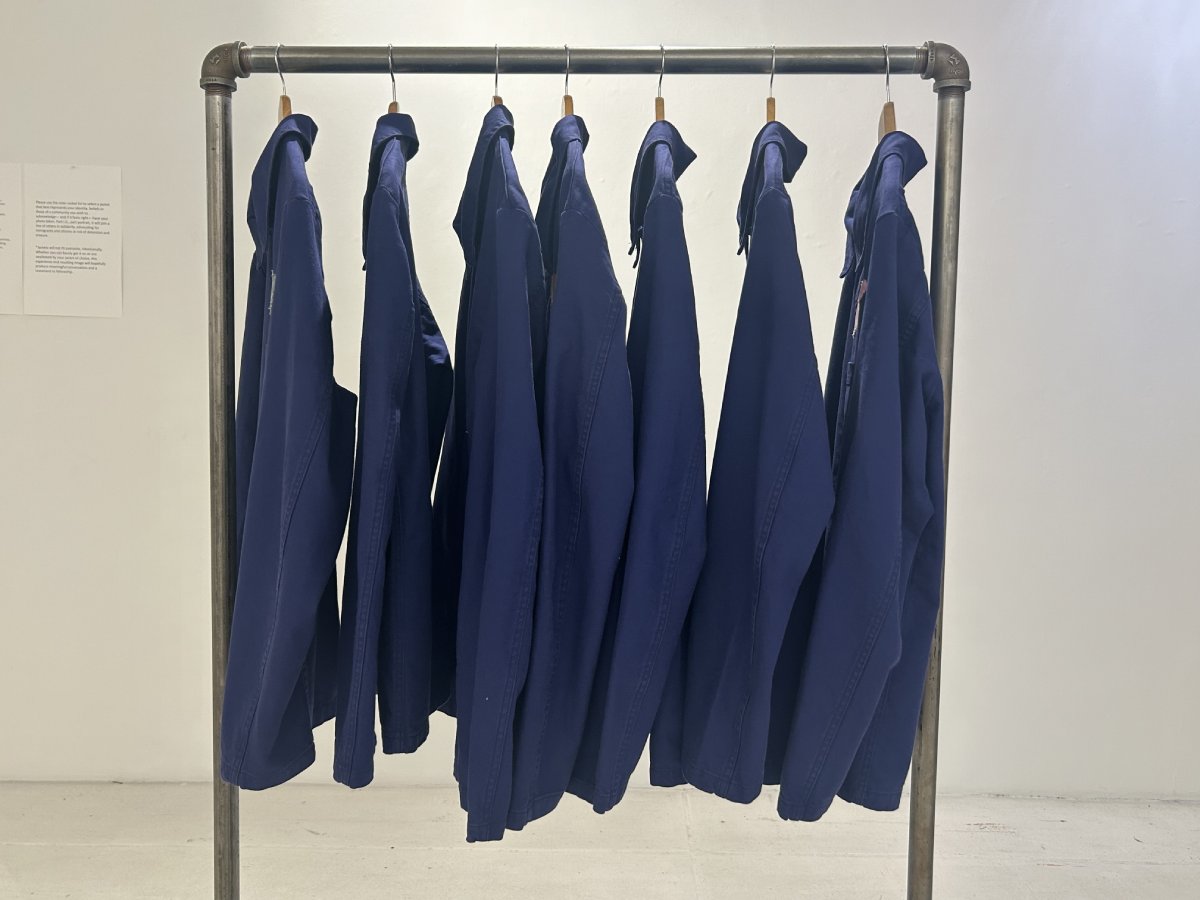 Hanging By a Thread 2026 Dimensions variable fabric, wood, metal and photos
There’s also a yellow-painted bench, discovered and purchased from a dealer in Texas, that Jews were permitted to sit on in German city parks, with a new mass-market edition of James Q. Whitman’s Hitler’s American Model, again connecting the Unites States to Nazi Germany.
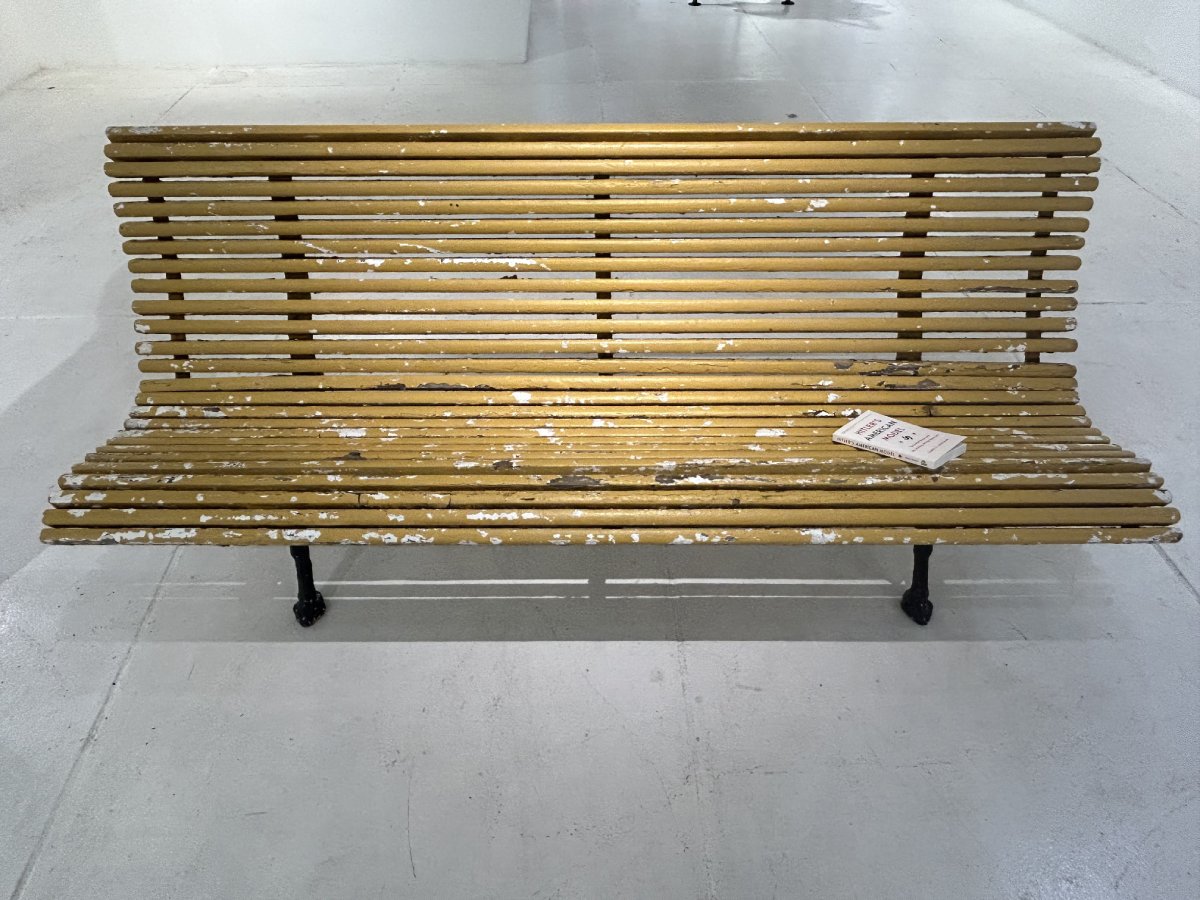 A Jew A Book and A Bench 2022 33.25 x 79 x 30 inches Wood, metal and printed matter
The most potent wall brandishes four large-scale photographs of straightforwardly identified contemporary individuals attired in those prisoner jackets tagged with appropriate triangles. There’s the Latinx woman, the Jew (the artist’s Holocaust-surviving mother), the homosexual, and the black male. These portraits (is this portraiture?) are every bit as truthful and compelling as Richard Avedon’s superstar and blue-collar portraits still celebrated on museum and gallery walls today.
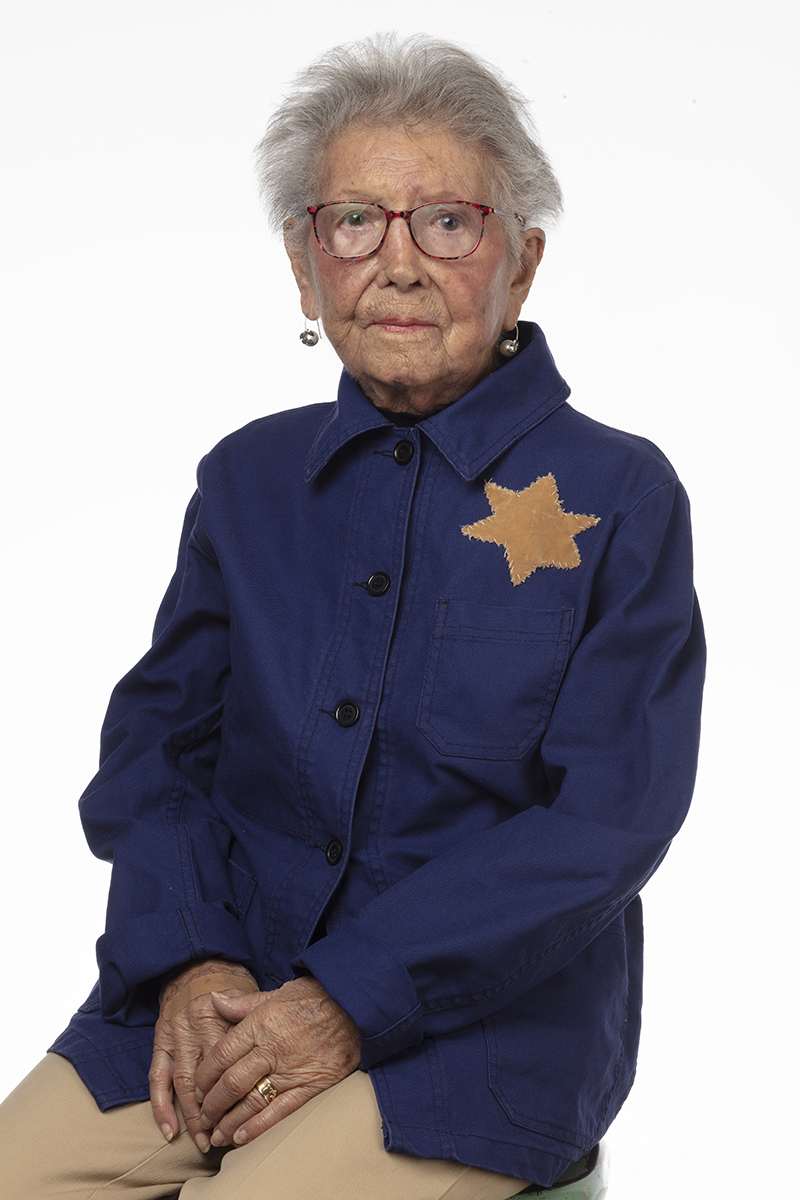 Face To Face (Portrait Series)2026 Archival Print 40 x 60 inches Edition: 1 of 5
This is an artist for whom the oppressive, murderous past still reigns, and this past is met again in shifts towards right-wing American totalitarianism where minorities are victimized and potentially vanquished. This necessary correlation is contemplated in a cool, comfortable, urban space where visitors meander, cup of wine in hand, trying on misfitting recreations of prison-wear, having their pictures taken and pinned to a white wall as public performance as opposed to police station propaganda. Are we remembering or enacting? Are we refusing to forget? The art gallery is a safe place to have one’s picture publicly hung on wall, where once it would have been a death warrant.
Regardless, the show is earnest and delivers a message the contemporary art gallery is still (for now) permitted to offer.

Adam Falik
Adam Falik is a writer of fiction, drama, and cultural criticism. He has been a contributor to Artvoices Magazine, Art + Design, Hyperallergic, and wrote the forty-one essays for The Saratoga Collection (UNO Press). He is an Associate Professor at Southern University at New Orleans.
view all articles from this author