Whitehot Magazine
October 2026
"The Best Art In The World"
"The Best Art In The World"
October 2026
Exhibition Review: “The Secret Sculptures of Andy Warhol & Victor Hugo: An Investigative Journey (c. 1978 - 1980)” at Westwood Gallery, The Bowery, New York (April 26 - June 14, 2025)
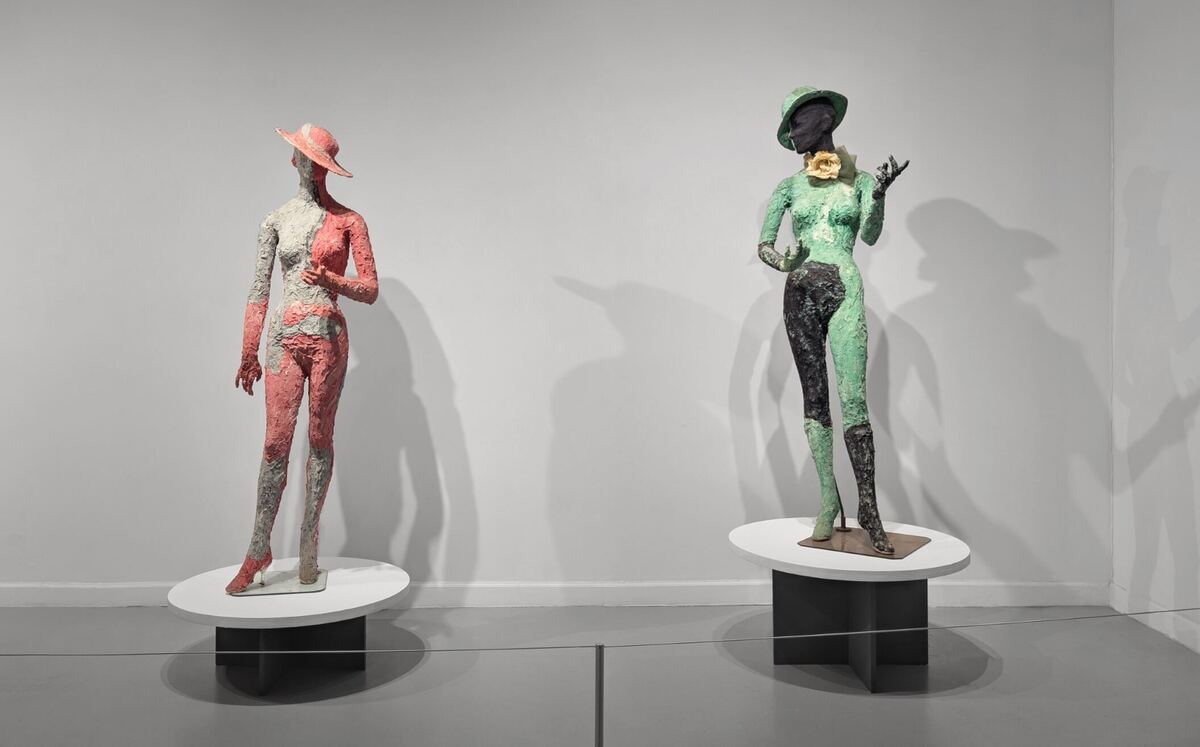 The Secret Sculptures of Andy Warhol & Victor Hugo: An Investigative Journey | Installation View, Westwood Gallery, New York, 2025. Photo: Westwood Gallery NYC
By LIAM OTERO June 24, 2025
2025 is a milestone year in Andy Warhol studies - more specifically, his work of the late-1970s: Dia: Beacon has been exhibiting his Shadows abstract series (1978 - 1979); Skarstedt Gallery in Chelsea is showcasing the Oxidation paintings (1977 - 1978); and, Westwood Gallery recently exhibited, arguably, Warhol’s most unusual body of work, The Secret Sculptures (c. 1978 - 1980). It is extremely rare to hear Warhol in the same sentence as sculpture; the one exception being his famed Brillo Boxes (1964), but these feel more like three-dimensional extensions of his Pop Art pursuits rather than pure sculpture. The Secret Sculptures are a group of female fashion mannequins whose figures were covered in thick layers of modeling paste and acrylic paint with a further zhuzhing of mixed media and fashion accessories. This brief series originated in a complex yet creatively rich triangulation between Andy Warhol (American, 1928 - 1987), fashion designer Halston (American, 1932 - 1990), and window dresser and Halston lover Victor Hugo (Venezuelan-American, 1948 - 1994).
In the late-1970s, much of Warhol’s fame was ascribed to his work in photography, filmmaking, and painting (especially his silkscreen portraits which provided a steady stream of income for Warhol and The Factory). However, Warhol was keen on pursuing what many perceived to be the unthinkable: sculpture. This interest in sculpture is multifaceted and, as of the writing of this review, an area undergoing further research by Westwood Gallery. However, it is certain that Warhol’s preoccupation with sculpture was a result of his admiration for Victor Hugo’s window designs for Halston’s Madison Avenue boutique, which were known to be surrealistically baroque displays, including: a recreation of the Patty Hearst trial, mannequins giving birth, mannequins committing suicide, and even a dramatic interpretation of the infamous 1975 LaGuardia Airport Christmas bombing. Warhol described these ostentatious sculptural pageantries as “theater in the street” and later invited Hugo to partake in the creative activities at The Factory.
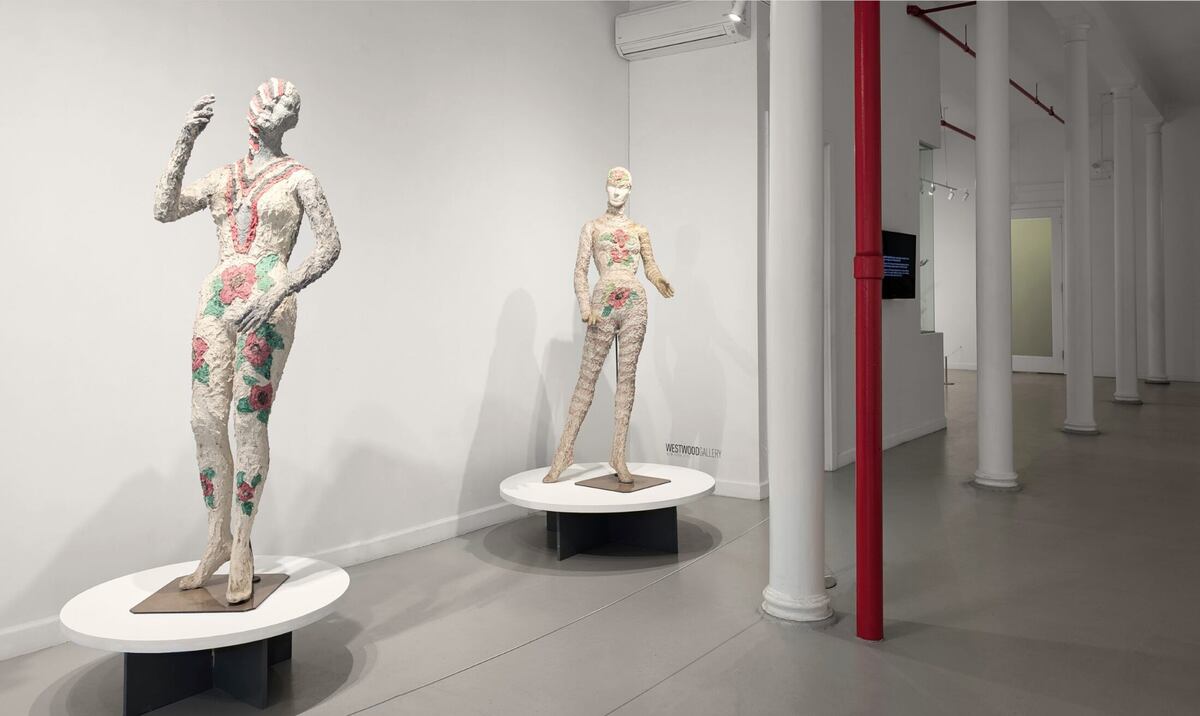 The Secret Sculptures of Andy Warhol & Victor Hugo: An Investigative Journey | Installation View, Westwood Gallery, New York, 2025. Photo: Westwood Gallery NYC
It should be underscored that Warhol’s admiration was not only limited to Hugo’s window displays, but also Halston’s fashion designs. In 1972, Warhol collaborated with Halston in orchestrating the designer’s runway presentation for the Coty American Fashion Critics’ Awards at Lincoln Center in which he coordinated the models to perform a variety of tasks while wearing Halston gowns, from cooking breakfast to bongo playing and tap dancing. And thus, Warhol and Halston became close friends and artistic collaborators.
Turning over to the sculptures, 12 of these mannequins were on view and are believed to be vintage mannequins dating from around the 1950s or 1960s. As if you were stepping into a grand sculpture hall, each figure stood atop a white circular plinth while engaged in theatrical gestures, which made them akin to runway models striking a pose or an homage to a Hugo window display. Each sculpture is markedly different from its neighbor based on the individualized applications of modeling paste and acrylic paint: loose striations of red, white, and blue along the breasts, neck, and left leg of one mannequin comes across like a never-realized David Bowie persona; another mannequin whose body is roughly 3/4 minty green and the remaining quarter charcoal black while wearing a Halston hat and floral neckerchief: or even one mannequin who dons a dusty rose / deep mauve silhouette dress and matching floppy hat (another nod to Halston designs).
For as stunning as these works appear, they were a source of immense internecine conflict within The Factory and among select members of Warhol’s circle. According to research conducted by Westwood and the fashion historian & former Halsonette model Christine “Chris” Royer, the sculptures were met with considerable apprehension by much of Warhol’s staff simply because they were perceived as an unnecessary passion project that would never be profitable like that of the screenprints. Furthermore, Hugo was known for being a wild card in his social environs, from wearing Halston womenswear in a parodic manner to unleashing a chicken with paint-covered feet into Halston’s white-carpeted apartment. Considering Warhol’s personal investment in the sculptures and fascination with Hugo’s work & personality, it became a source of continual consternation by members of Warhol’s inner group and Halston, which explains why this series became enshrouded in a veil of secrecy.
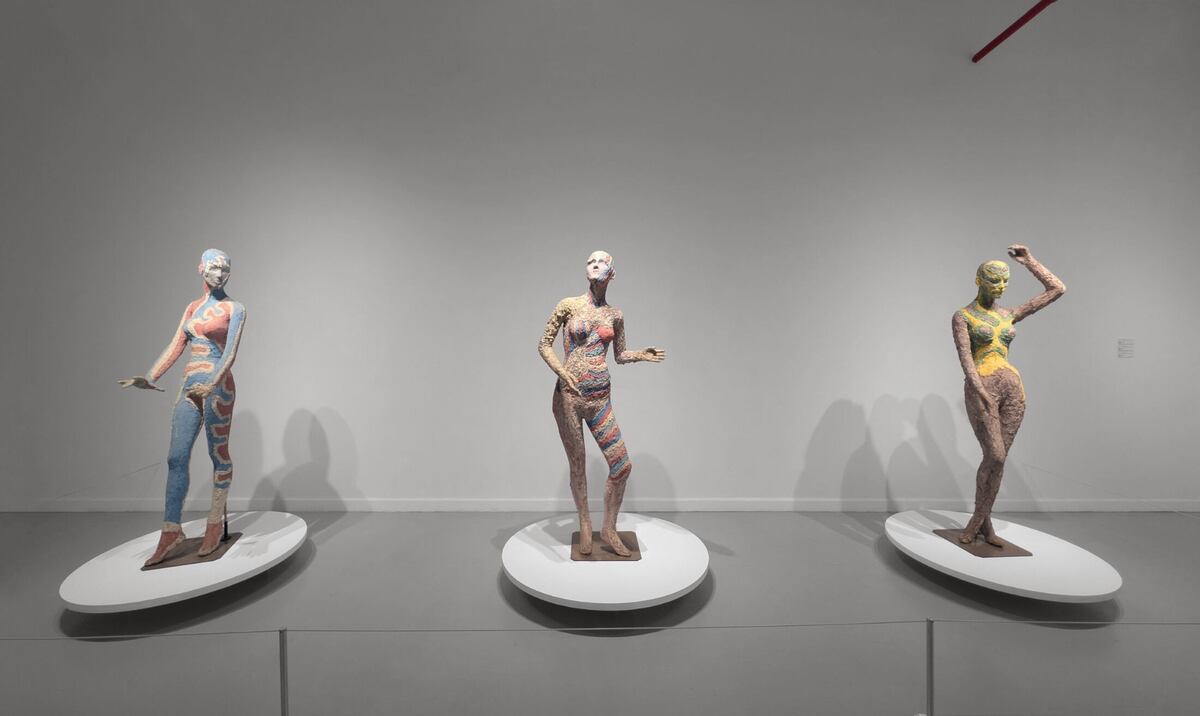 The Secret Sculptures of Andy Warhol & Victor Hugo: An Investigative Journey | Installation View, Westwood Gallery, New York, 2025. Photo: Westwood Gallery NYC
So what became of the sculptures? In the mid-1980s, the sculptures first went in the hands of Esther Carroll, an eccentric antiques dealer who frequently sold to Warhol at the Chelsea Flea Market. In 1999, art historian George Holmes purchased the sculptures from Carroll and later staged them in a 2007 exhibition at the now-defunct Milk Gallery in New York. From there, the sculptures entered Westwood Gallery’s collection by way of its co-founder James Cavello. Captivated by this strange series, Westwood immediately set to work in researching the full story behind these sculptures (Holmes had already gotten underway with research thanks to the work of Royer in the early-2000s). The gallery submitted two of the sculptures to the Andy Warhol Art Authentication Board in 2008 to determine the exact authorship of The Secret Sculptures. The Board later stated that they believed these works to be “by another artist” instead of Warhol and the Authentication Board was later disbanded in 2011. However, Westwood Gallery’s penchant for expanding scholarship on understudied topics in Modern & Contemporary Art led to their uncovering of far more details about the connections between Warhol, Hugo, and Halston along with further inquiries on Warhol’s goals for creating a never-realized sculpture hall, his interest in robots (especially along the lines of automata), and striking similarities between the artistic trio that have rarely been acknowledged (such as their respective origins as window dressers and interest in the art & philosophy of Marcel Duchamp).
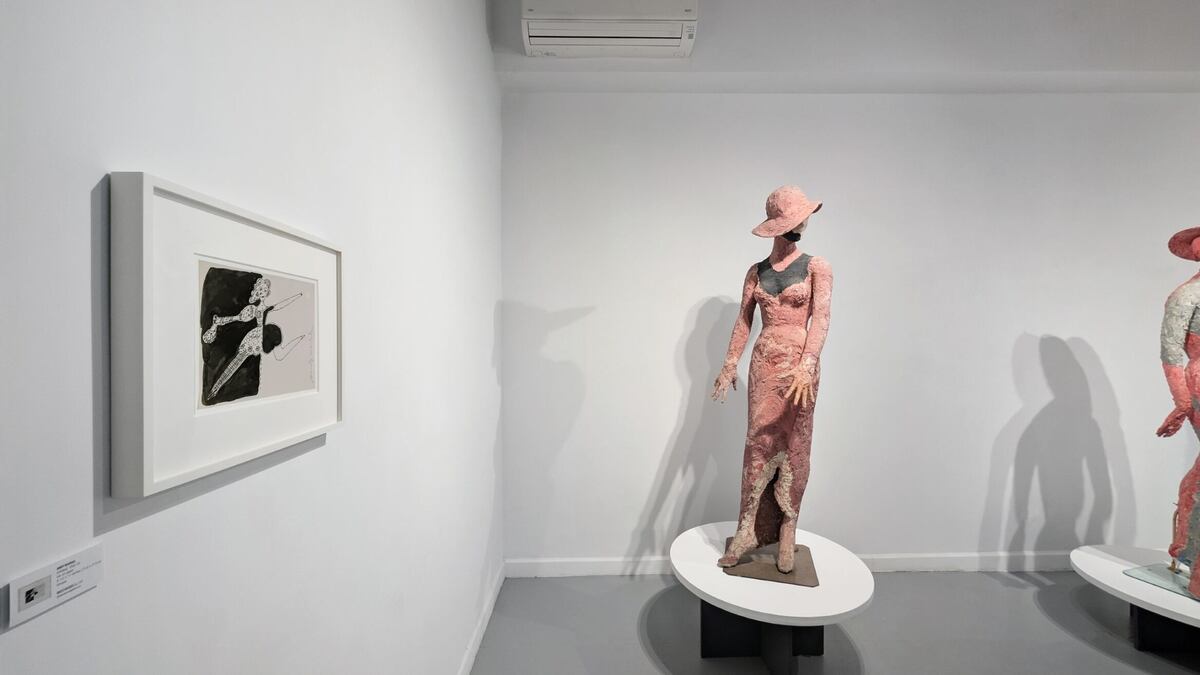 The Secret Sculptures of Andy Warhol & Victor Hugo: An Investigative Journey | Installation View, Westwood Gallery, New York, 2025. Photo: Westwood Gallery NYC
Having personally grown more interested in Warhol’s art over the years, I made about 9 separate trips to Westwood to see this exhibition and was graciously extended many deeply engrossing conversations with the staff on the origins of the sculptures and the research they have undertaken. “An Investigative Journey” is an apt addendum to the exhibition’s title as this is an ongoing project that persists even after the show’s closing as there remains much to unearth about The Secret Sculptures (which is an important reason why the sculptures were not for sale). Around my third or fourth trip, more exhibition didactics were added to indicate the organicism of Westwood’s research process.
James Cavello and Margarite Almeida, the co-founders of Westwood Gallery, invited me for a private viewing of a filmed interview recorded on the night of the exhibition opening featuring Stuart Pivar, an art collector and close friend of Warhol’s from the 1970s through the artist’s death, Jamie Warhola, Andy Warhol’s nephew, and the English-American art critic Anthony Haden-Guest. This never-before-seen footage was recorded in anticipation of a forthcoming documentary being prepared by Westwood Gallery on The Secret Sculptures. One of the most remarkable aspects of this viewing was that Pivar and Warhola, who were aware of each other’s existence, had never previously met until the opening of this exhibition. The pair spoke at length about The Secret Sculptures, the conflicts that arose at The Factory over how Hugo and the sculptures were seen as distracting Warhol from his other projects, Pivar’s recollections of going to the flea market with Warhol every Sunday afternoon, among a slew of other topics.
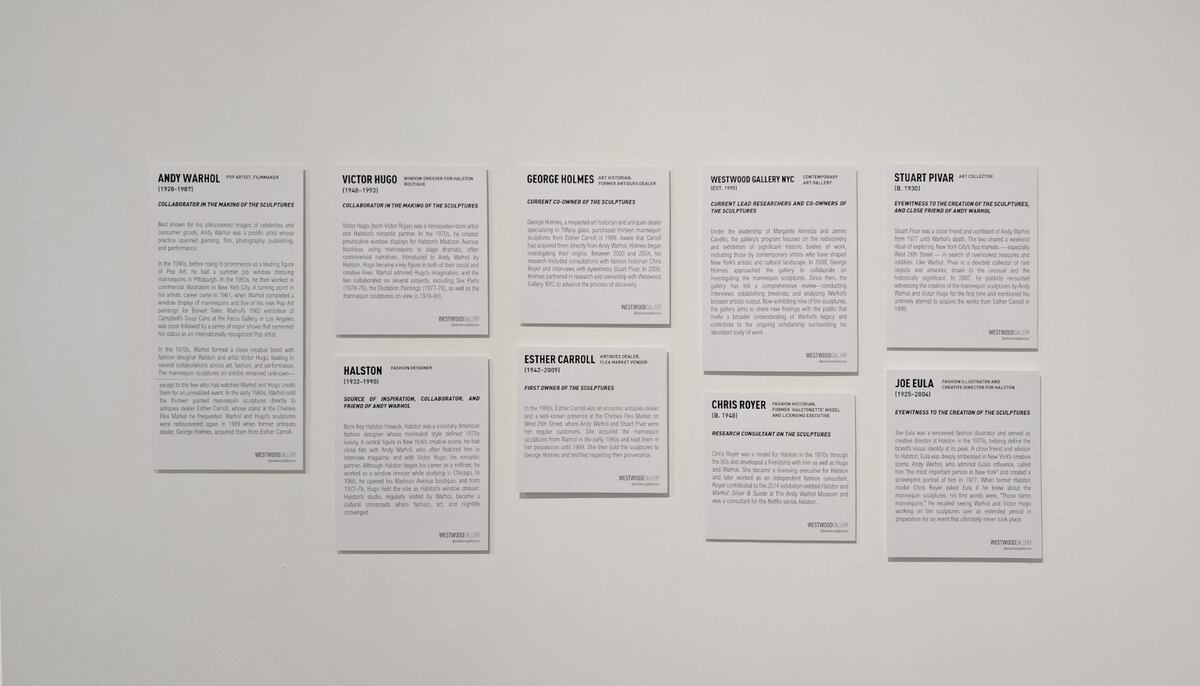 The Secret Sculptures of Andy Warhol & Victor Hugo: An Investigative Journey | Exhibition Didactics, Westwood Gallery, New York, 2025. Photo: Westwood Gallery NYC
Because Westwood Gallery has been so intent on shedding new light on this vastly overlooked area of Warhol’s career, their entire basement-level viewing room became a bonus in that additional Warhol and Warhol-related works were displayed to provide further context, including his 1950s ink drawings of cavorting figures whose gestures are uncannily similar to the mannequins and Bob Adelman’s behind-the-scenes photographs of Warhol at The Factory.
Though the exhibition may have ended, Westwood Gallery persists with their assiduous research efforts as much remains to be seen on what these Secret Sculptures signify for Warhol, Hugo, and Halston. This is all the more timely as, in addition to the aforementioned exhibitions in my introduction, the Warhol Catalogue Raisonné is currently on the period of 1979 - 1981 (the seventh volume to be published by Phaidon and the Warhol Foundation). I have high hopes Westwood Gallery will be filling a major lacuna in not only Warhol’s career but that of Art History, Fashion History, and Queer History.
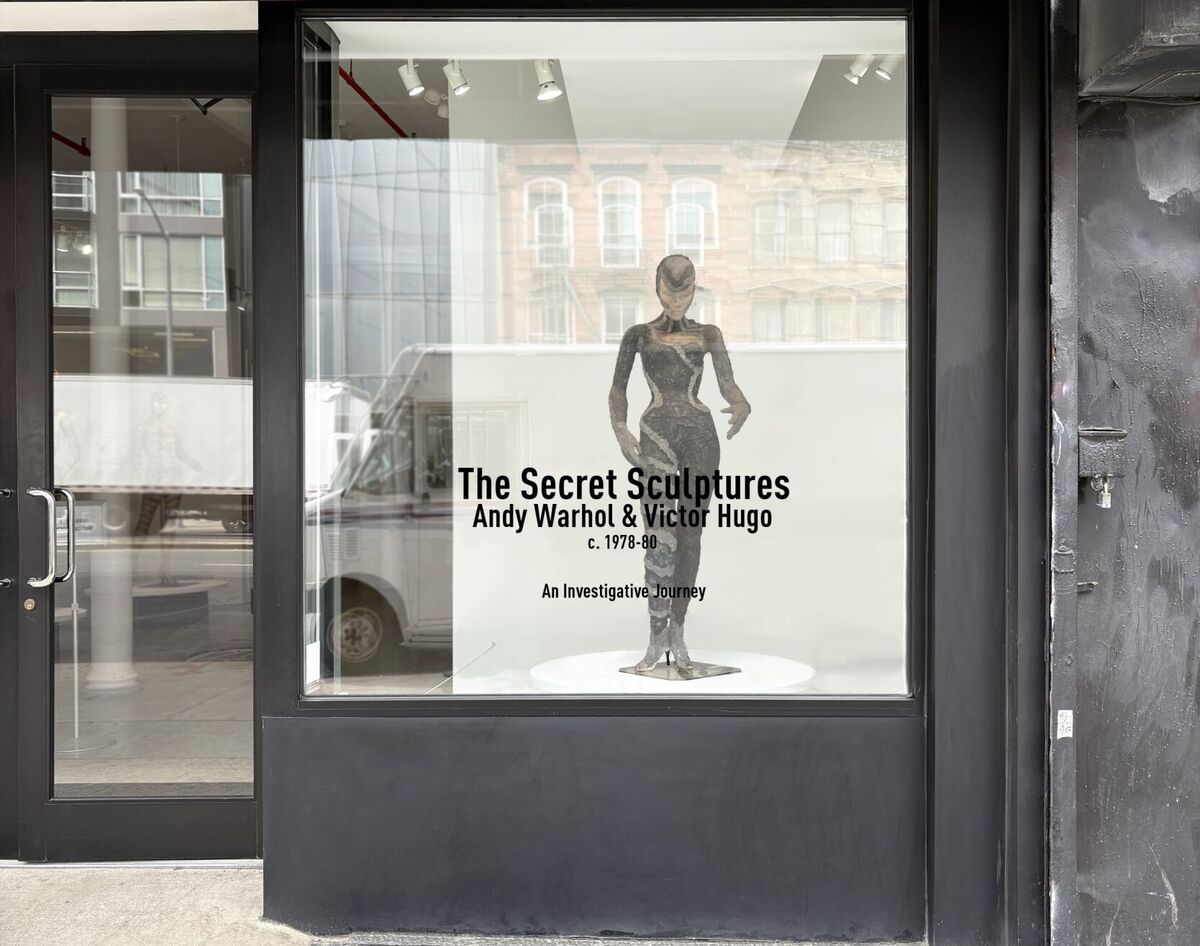 The Secret Sculptures of Andy Warhol & Victor Hugo: An Investigative Journey | Installation View, Westwood Gallery, New York, 2025. Photo: Westwood Gallery NYC

Liam Otero
Liam Otero is a freelance art writer in NYC. He was recently named New York Editor of Whitehot Magazine.
view all articles from this author