Whitehot Magazine
October 2026
"The Best Art In The World"
"The Best Art In The World"
October 2026
Exhibition Review: “exh. 03 greenhouse” by playinghouse, Tribeca (June 26 - July 6, 2025)
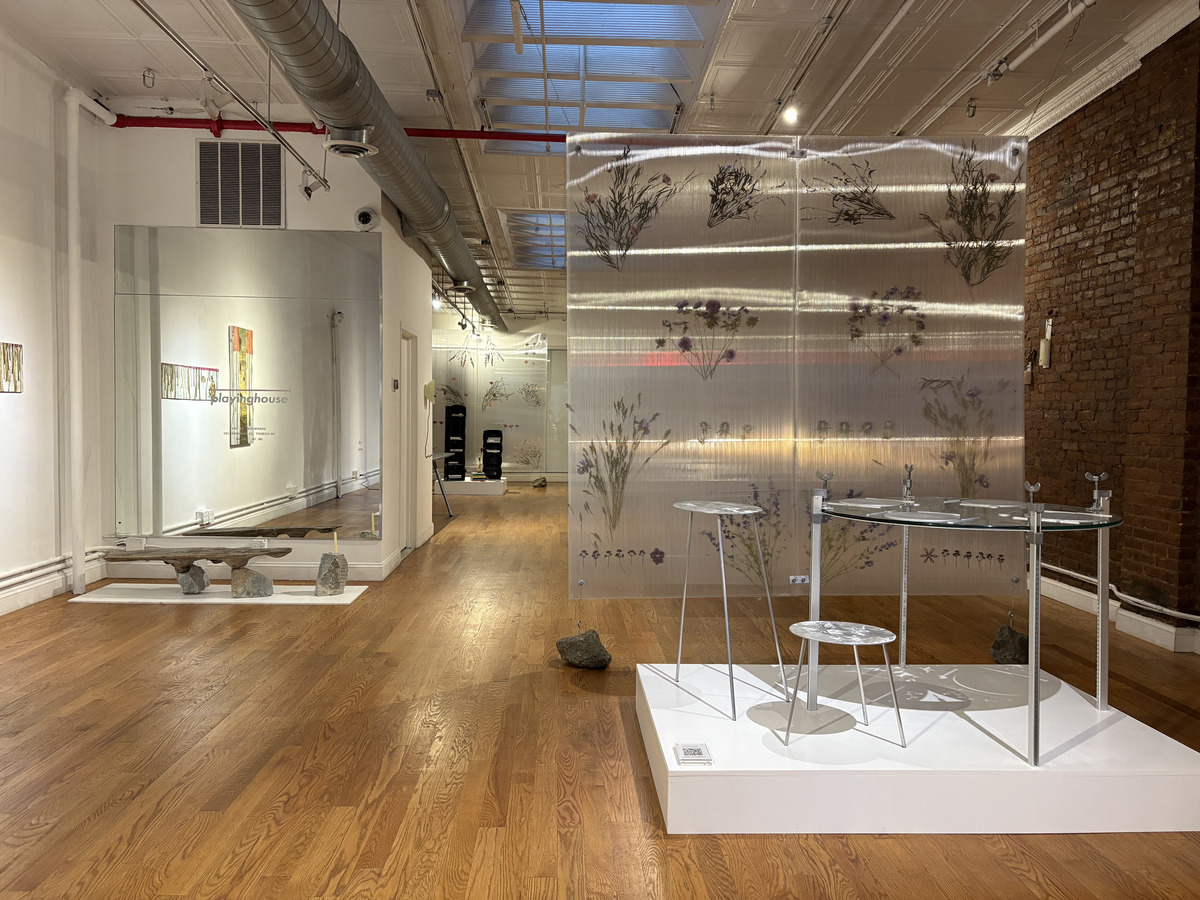 Installation view of exh. 03 greenhouse by plainghouse in Tribeca (June 26 - July 6, 2025)
By LIAM OTERO July, 17, 2025
I recently had an insatiable appetite for an exhibition focusing on the interconnectedness between art, architecture, and design. Amazingly, that hunger was satisfied (and more) through an exhibition organized by the independent curatorial collective, playinghouse, that can best be described as an incredibly mirthsome and inspiringly innovative concept underscoring practical means of achieving a more eco-sustainable future. Environmentalism has long-been a major theme in art, which has produced many exhibitions highlighting crises that stem from climate change and global warming. Yet, for as important as these shows are in their critical outlook, such exhibitions tend to focus on raising awareness on specific issues (the “what” of environmentalism). Where playinghouse hits much differently is the attention it gives on the “how” - i.e. the prescriptive methods that can be taken in remedying ongoing environmental issues (plus preventing future ones).
Located on the fifth floor of a former fabric factory in Tribeca, the domestic feel of the motley objects gelled very well with the exposed brick and industrial piping of the space; the floor-to-ceiling windows overlooking Broadway along with a series of skylights played a remarkable role in allowing natural light to interact with each and every piece. A minimalist ethos appears to be the overarching aesthetic and design philosophy that unites each of the creatives’ works. As a staunch supporter of Minimalism, I find that the style has gotten a bad rap over the years in which it has been derided for purportedly conveying a hostile sterility and austereness according to its critics. However, let me cite the greenhouse exhibition as a prime example where Minimalism succeeds in expressing a dynamically innovative and visually appealing style that will convince critics to think otherwise.
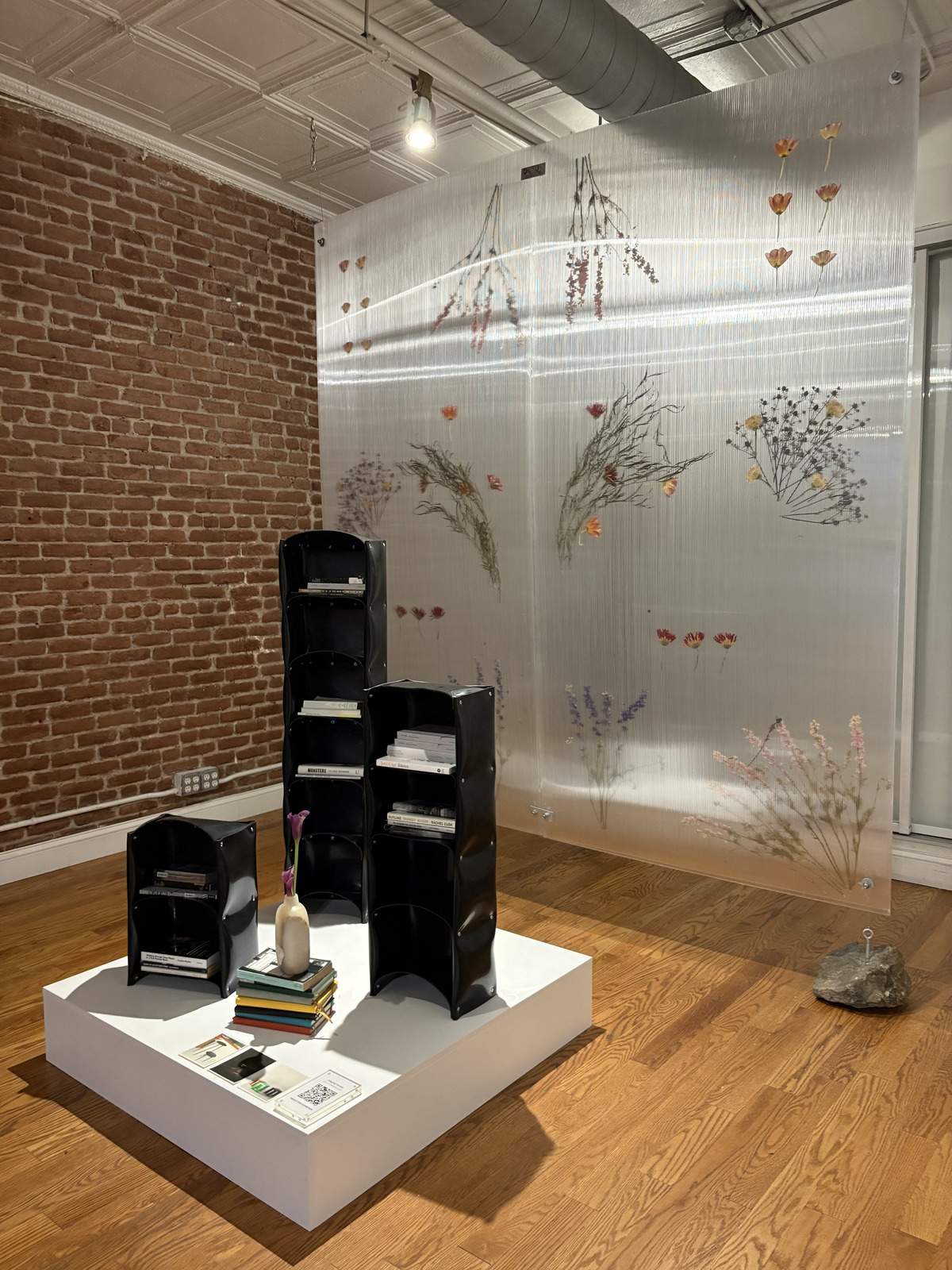
Installation view of exh. 03 greenhouse by plainghouse in Tribeca (June 26 - July 6, 2025)
Atelier Fomenta (based in Montreal, Canada) follows an economy of means through their reliance on the bare minimum of a given material that is applied to the fullest extent where no excess material is wasted and the final look is quite eye-catching. The Château de Cartes is a triangularly shaped table lamp whose hand-polished stainless steel body ensconces a powerful light source that emanates from the top and bottom in a pleasing glow. Sample designs of Atelier Fomenta’s rubber libraries - bookshelves made from black rubber and rivets - is an example of structurally durable furniture that is just as engaging to look at with its lightly reflective surface and buoyantly curved edges.
 Atelier Fomenta (based in Montreal, Canada), Château de Cartes, 2025, hand-polished stainless steel. 11 3/4" H x 7 3/4" W
On the subject of light, other creatives devised novel methods of producing luminescence that is practical, efficient, and beautiful. Baiyang Kong (b. China, based in New York) uses a narrowly tall brushed stainless steel pillar lamp to emit a strip of light from the front and back, as opposed to the top and bottom as we are accustomed to seeing in conventional lamp designs (the pillared shape has strong parallels to certain Dan Flavin light sculptures). Bureau Parso (b. Korea and France, based in Eindhoven, Netherlands) and Jake Coan (b. United States, based in Hudson Valley, NY) each meld energy-efficient light fixtures with natural materials, the former with a cast aluminum of refined scrap wood that is subsumed into a sculptural veneer lamp and the latter with a more plant-like form in which a milkweed plant is transformed into a LED light source that shines forth from leafy crevices. Mike Ruiz Serra ((based in Brooklyn) conceptualized a mannequin lamp whose half-head & neck body contains a spherical bulb as an homage to the artist Giorgio Morandi’s (Italian, 1890 - 1964) paintings of blank mannequin busts in eerily quiet still life compositions. Yet, Serra’s intent here is to allow the light to give off a sufficient glow that is neither too dim nor too overpowering, but just enough to soothe its immediate surrounds.
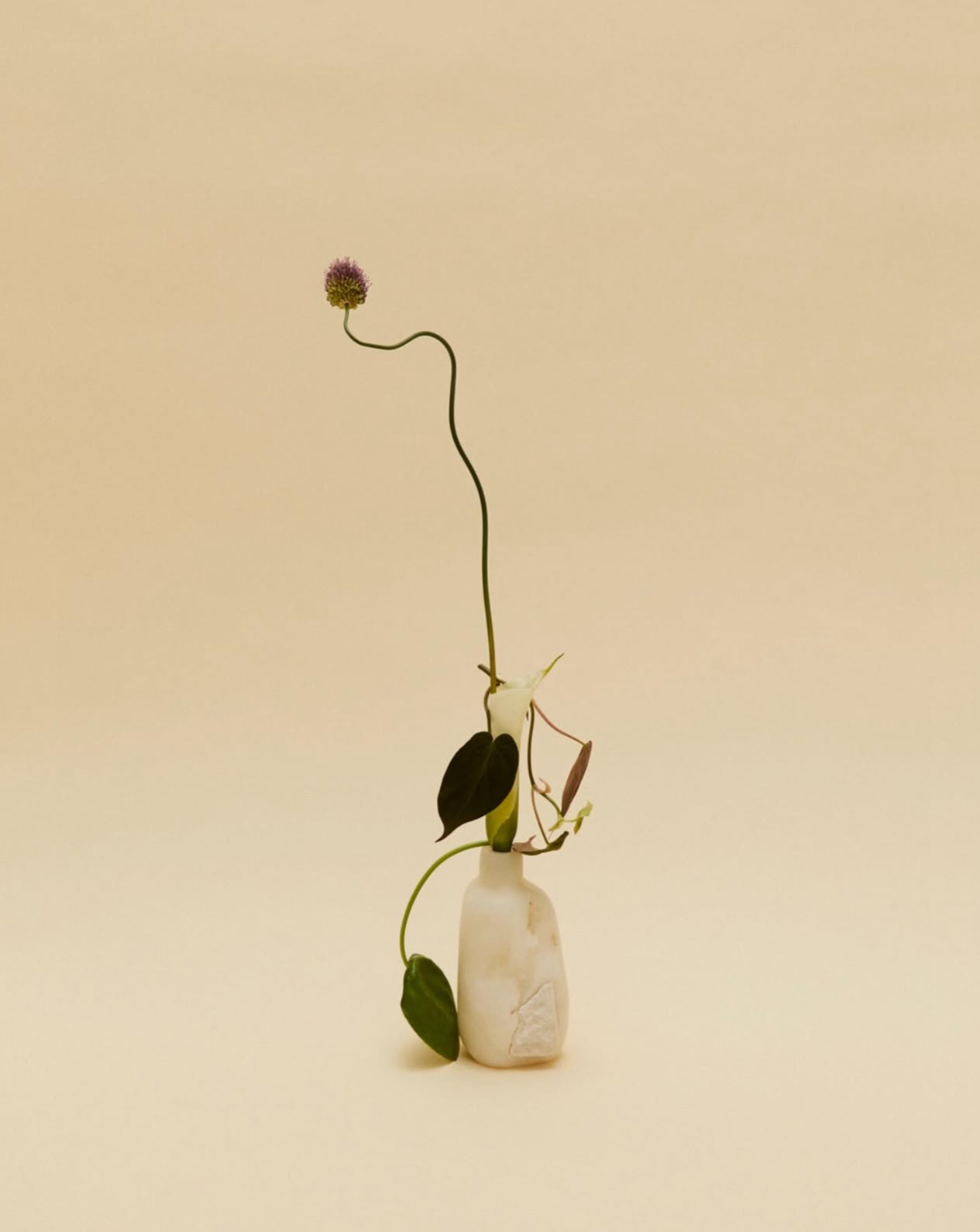 Elizabeth Lenny (b. Canada, based in Toronto), Inlay Vase, 2024, alabaster, cast alabaster dust.
The harmonious coexistence of organic and industrial materials is another major facet behind the exhibition’s narrative. Huy Truong’s (b. United States, based in New York) Archipelago is a bench made from wood and stone that almost feels like it could have been a happenstance natural wonder discovered in the midst of one’s travels along a mountainous path. Though this work is entirely nature-made, Truong’s bench was positioned in front of a mirrored wall (a permanent fixture of the exhibition space) as a self-reflective section encouraging contemplation and pondering, a bit like a Zen Buddhist garden whose design principles adhere to a 21st Century mindset. Elizabeth Lenny (b. Canada, based in Toronto) fuses aluminum and alabaster to produce intimately-scaled inlay vases whose stark white bodies make for a pleasing contrast to the plants contained within them; Lenny also is an inspiring practitioner of a “waste not” philosophy as dusty remnants from the carved alabaster are attached to the pieces for an added textural depth.
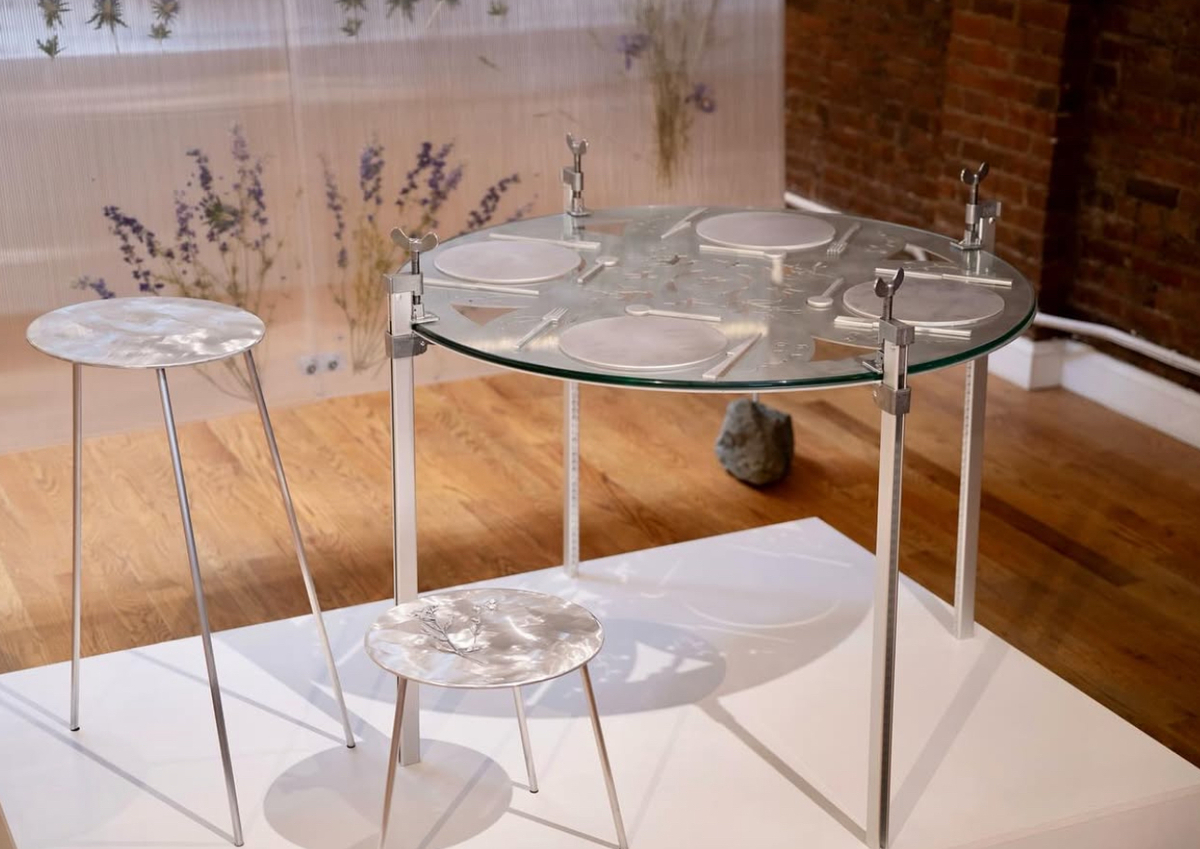 Francesco Rosati (b. Italy, based in New York), Prototype for a Table, 2025, stainless steel, glass.
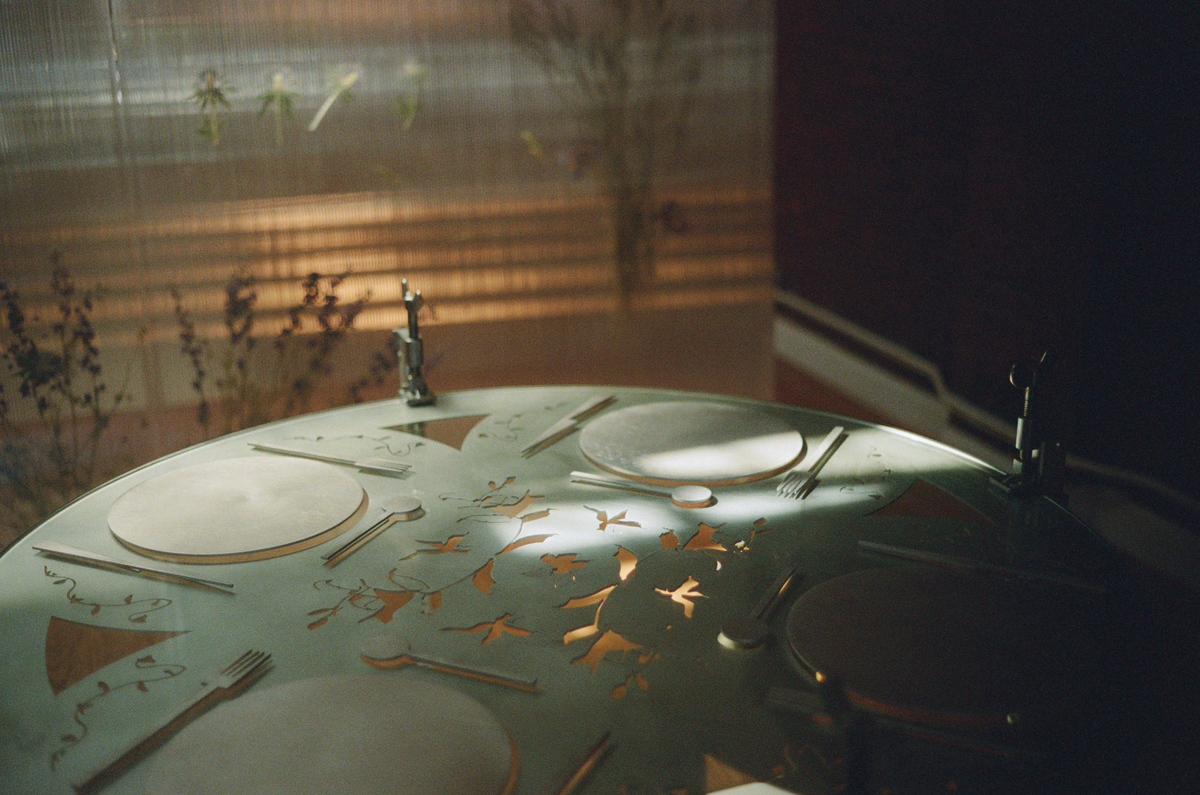 Francesco Rosati (b. Italy, based in New York), Prototype for a Table (detail), 2025, stainless steel, glass.
The mere thought of stainless steel automatically conveys a sense of heaviness, but not so with Francesco Rosati’s (b. Italy, based in New York) dinner table as its entire body is extremely sleek and narrow, with accompanying plates and utensils rendered in the simplest and flattest forms (I was allowed to pick up one of the plates and it felt light as a feather as opposed to the typical glass dinner plate). For all its pared down simplicity, Rosati does not eschew decoration as the silhouettes of floral and tendril shaped holes yield matching shadows directly beneath the table, with further changes in appearance according to how the light interacts with the furniture throughout the day.
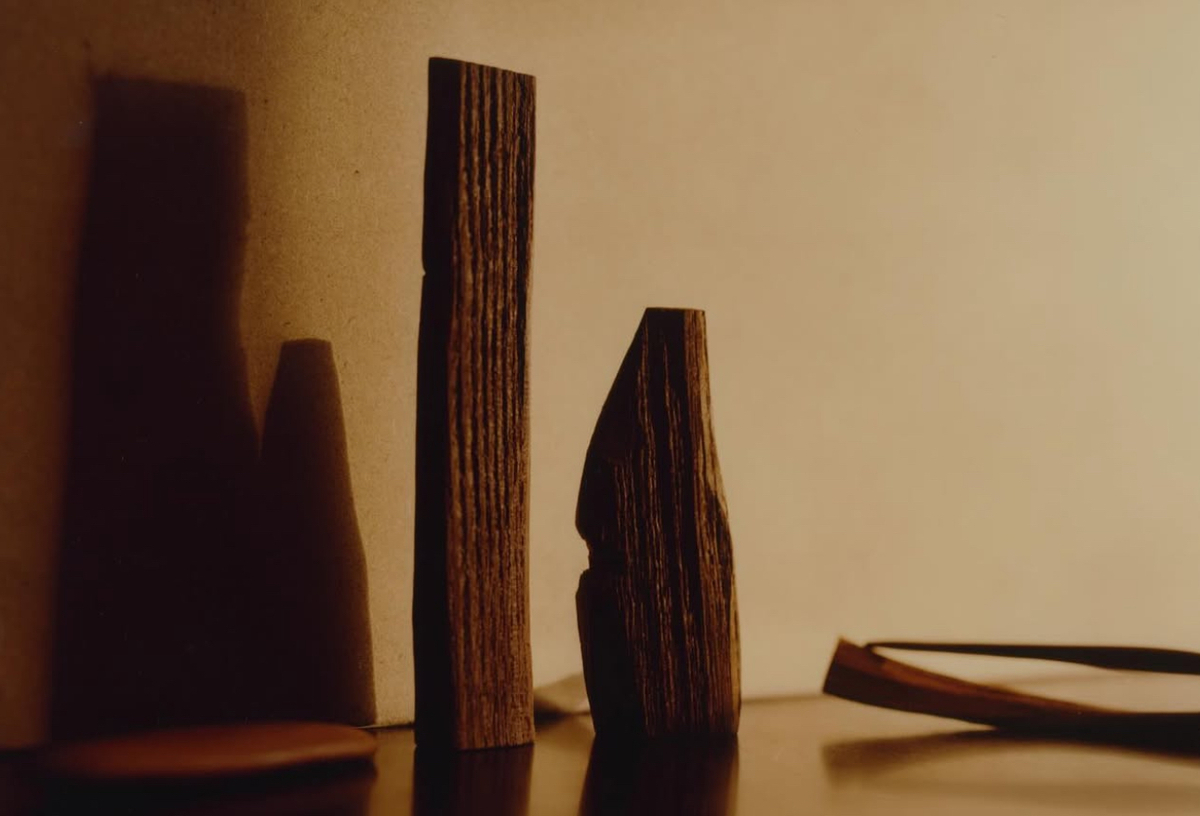 Jalan and Jibril Durimel (b. France, based in New York), Pine I, 2025, photographic print. 24.75" H x 33" W
Works that we associate with the fine arts - painting, photography, and tapestries - are integrated seamlessly among the design-centric objects cited above. Jacqueline Qiu (b. United States, based in New York) introduces her Shallow Grave tapestry that is suspended from the ceiling and is comprised of hand-painted yarn and beads. This work derives from a performance involving the use of mulberry paper molded to a body in a bathtub, a process in which the human figure becomes one with the artwork. Here, there is a bodily association in the upside-down semi-abstract figurative silhouette that appears, but there is also a landscape element seen in the mountain-like towers of color and patterns that wind up and down. Fernan Bilik (b. Argentina, based in New York) painted two different forested landscapes containing barren trees in a desolate woodland scene, one of which depicts a rifle-toting hunter approaching a sleeping deer. Though the narrative is open to interpretation, one cannot help but feel a creeping suspense as to what will next transpire along with our own spatial relationships with the scenes (a pervading question of “are we present in the composition?”). Though known for their fashion editorial photography, twin brothers Jalan and Jibril Durimel’s (b. France, based in New York) goldish-brown toned still life photographs of stones and wood pieces at off-center or oblique angles offer a poetic meditation on discovering beauty in the most unassuming organic forms.
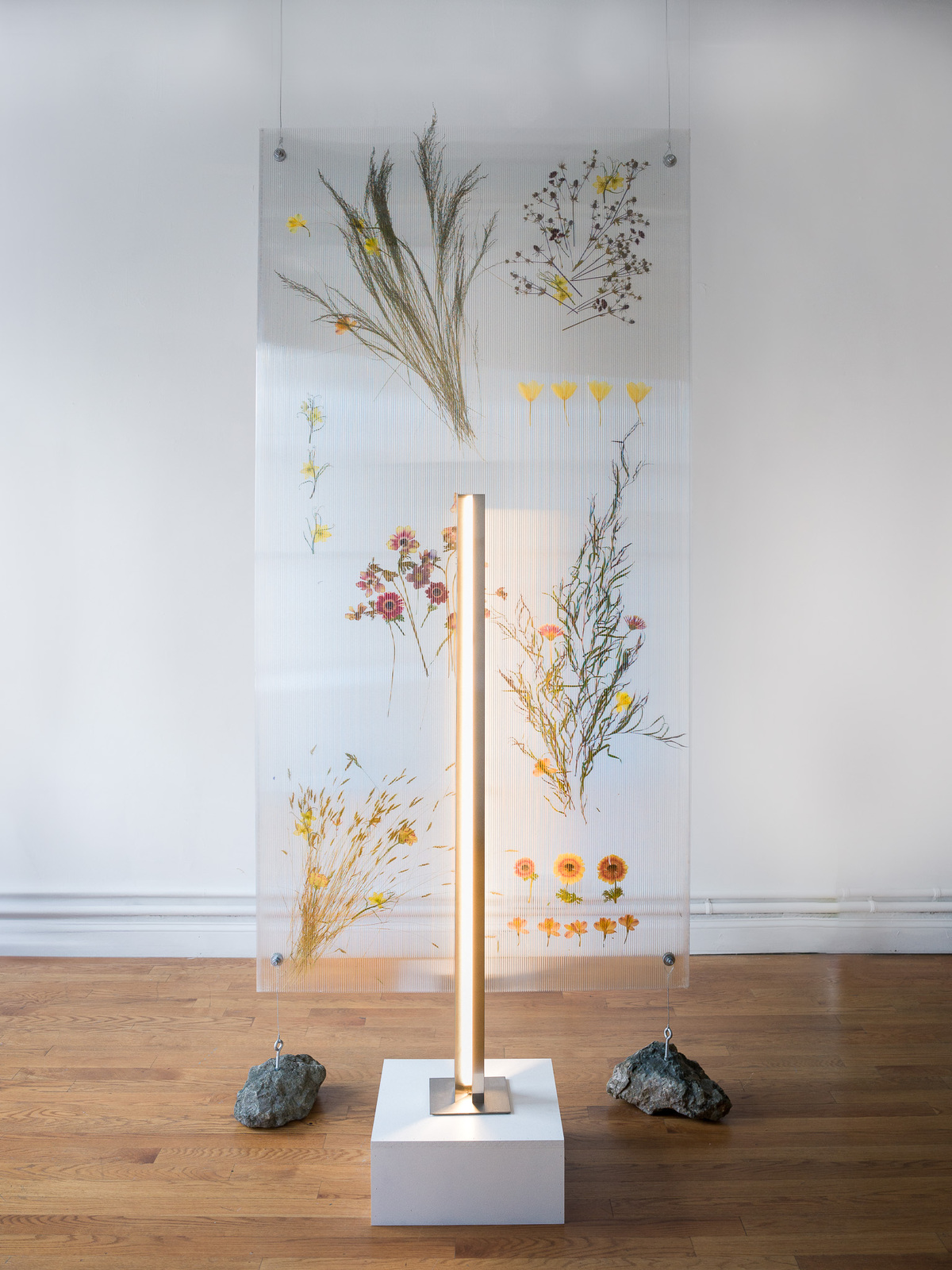 Installation view of exh. 03 greenhouse by plainghouse in Tribeca (June 26 - July 6, 2025)
In the midst of each work, a series of Garden Walls (or, as I kept referring to them as Flower Curtains) appeared as a deconstructed meta-commentary on the greenhouse in which isolated two-layered polycarbonate panels encased real flowers and plants that absorbed direct sunlight from above and across the room. These partitions served as dividers for different areas of the exhibition. Designed by Andre Bahremand and Edyta Milczarek, the curators of playinghouse felt that scenography was a crucial component that needed to be synthesized into the overall exhibition layout, to which I concur as something would have felt missing had it not been included.
The bringing together of eco-friendly architecture & design products in tandem with fine art pieces was exceptionally demonstrative of how there are many ways forward in attaining a healthier, more economical, and mutually beneficial relationship between man and nature. Finally, I discovered an exhibition that emblematizes a dismantling of the long-held “form follows function” design principle in preference for the far more appealing “form coexists with function”!
playinghouse is an independent curatorial collective focusing on art & design-themed exhibitions. Based in New York, the collective is overseen by arts professionals Angela Yang, Sophie Taylor, Clara Leverenz.
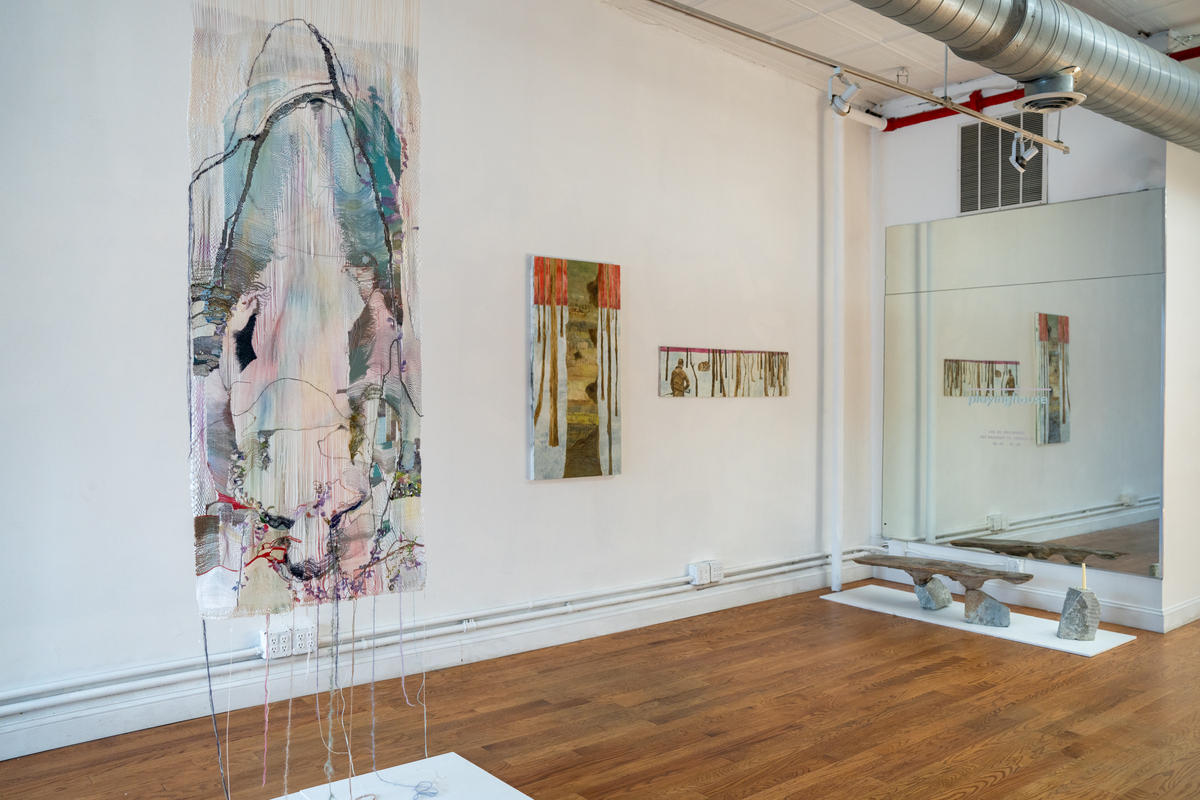
Installation view of exh. 03 greenhouse by plainghouse in Tribeca (June 26 - July 6, 2025)

Liam Otero
Liam Otero is a freelance art writer in NYC. He was recently named New York Editor of Whitehot Magazine.
view all articles from this author