
Whitehot Magazine
October 2026
"The Best Art In The World"
"The Best Art In The World"
October 2026
September 2011: Painter Eric White talks to Joe Heaps Nelson
 Eric White, 1938 Dodge Brothers Business Coupé (Double Indemnity) 2011 oil on canvas 20 x 50 inches
The painter Eric White elicits near-universal admiration from his peers. For one thing, his technique is immaculate and just about surgically precise. I was excited to see the new series of paintings he has been working on, especially since they are slated to be exhibited in Italy and this might be my only chance to see them.
Right away I noticed in his studio, among the easels, brushes and palettes, cups of q-tips. But these were no ordinary q-tips; they were specially shaped ones intended for applying makeup. This indicates to me that he has many tricks up his sleeve. His paintings are tight! I can only imagine the hours of labor that go into each one.
He's created a style that's immediately recognizable; his hyperrealist technique, filtered through a freakish personal sensibility, produces images commonly described as psychedelic, but often when I look at an Eric White painting, I feel a familiar sense of unease. There is a dream logic at work here, a quality which links his art with the surrealists, but his compulsion to distort and twist his subject matter is straight mannerist. He has the ability to paint the most beautiful portrait or landscape, but some quirk of his mind won't permit him to be satisfied with that. This is not to say that he's being ironic; the sincerity and the emotion in his work comes across right away. It's just that he's a product of our Late American Empire, raised on Mad Magazine, individually wrapped bullshit, and all the rest of the fast-moving pop culture parade, and a sort of deep skepticism is part of what he needs to communicate. So even though his work has flirted (promiscuously) with various styles, and although he believes in hope, innocence, mom and apple pie, and is an admirer of old-fashioned glamour, as soon as it becomes too beautiful, he is programmed to subvert his own talent, and the weird tension thus created is a major feature of the work. And this may not have anything to do with anything, but I also happen to know that he's a fabulous dancer.
 1961 Ford Galaxie 500 Sunliner (Pierrot Le Fou) 2010 oil on canvas 48 x 48 inches
It was tough to schedule the interview, because this time of year in New York, all the artists are very, very busy. When I arrived, my friend Genevieve Dimmitt, the photographer, was already there, and Eric was working in the studio with his all-girl army of kung fu assassins, I mean assistants, Rachel, Rachel and Hazel. They were stretching canvases, unstretching canvases, and stuffing things in boxes. Several friends came and went over the course of the interview, including the artists Jordin Isip, Eric's pal from RISD; and Jason Polan, "the guy who started the Taco Bell Drawing Club." Eric was scheduled to fly to Italy the following day, and had hoped to complete another painting before his departure, but despite his tight schedule, as he suavely presided over the amiable chaos, he welcomed us with grace, for he is a true gentleman. We talked about his latest paintings, which feature wide angle views of movie stars in classic cars, as well as his recent and continuing album cover series, and his earlier Collusion series; he described a video collaboration with some popular zany sketch comedians; and shared some fond memories of his Dumbo loft days.
Heaps: Eric, you're getting ready for a big show in Milano. How did this come about?
Eric: I did a show at a gallery in Barcelona, and a German curator who lives in Rome saw my work there and asked me to be in a museum show in Rome. I was in that show and she wanted to keep working with me, so she curated a show in the gallery in Milan. They sold a painting in the museum show and in the group show, they were pretty big paintings. So, he [Antonio Colombo] asked me to do a show, at the end of last year. Usually I like to have a year. Actually, it was supposed to be in June, which would have been ridiculous. So, it's happening next week!
Heaps: So, these paintings for the show in Milan are people in cars, and they look like they're from old movies.
Eric: They are all referencing film, and they're all people in cars. In most cases, the spaces they're in are impossible.
Heaps: There's kind of a surrealist flavor to these paintings.
Eric: Yes. With the exception of one, they're all from single films. This has characters from 3 different films, they're all in the front seat together. They're from noir films, so it's called "Noirpool". The year, make and model of the car is the main title, and in parentheses is the film reference. It's about... There are psychological issues going on, and metaphysical things happening, and self-reflection and alienation and anxiety and all the stuff that I enjoy. This one is the idea of a sequence of events being compressed into one instance. It's obviously about relationships, and it's an impossible physical space. An 8-seater. After I did that I wished I had done another layer, and shown the idea that it just goes on infinitely, toward you. This one is one that's a little cartoony, and it feels like maybe that's just a backdrop but the space makes sense. Their heads are actually bigger than they would be in that, but it's meant to have that artificiality. That's one thing I love about cars in films, how fake they look.
 Eric White, 1940 Dodge De Luxe (Noirpool) 2011 oil on canvas 20 x 50 inches
Heaps: Yeah, it reminds me of Pulp Fiction when Bruce Willis is riding in the taxi, and behind them you see a super fake black and white background.
Eric: That's right, it's moving like crazy. That's definitely a play on that. I like that, and the claustrophobia, and the relationships you can find in bizarre spaces.
Heaps: And it's Hollywoody. You are a California guy.
Eric: Well I was. I'm not from there.
Heaps: Oh yeah, you're originally from Michigan.
Eric: Detroit, yeah. That's the other thing. I grew up in Ann Arbor, but both my parents were born in Detroit and both my grandfathers worked in the auto industry. One grandfather worked in the Dodge factory stamping sheet metal his whole life. My mom's dad was an automotive engineer who had all of these patents. Opposite ends of the spectrum, the auto industry in Detroit, when it was still thriving. So there's that connection as well. And I just have a personal obsession with film, especially 40s film but I guess I'm kind of branching out into some 60s and 70s things, and foreign films.
Heaps: That gives you a chance to add color.
Eric: Yeah. I do that anyway. The one from the bottom is from a Bergman film, it's my least favorite, it's the very first one in the series. I was still working things out so I don't feel like it fits as well as the others. That's actually just invented color. It's from a black and white film. Since that one, I kind of stuck to the film.
Heaps: I like the horizontal format. It always looks cinematic. These are especially so.
Eric: Yes, I tried to push that. That's another thing. I guess my work has been cinematic since my first show, in '96.
Heaps: You work fast or slow?
Eric: Slow, I'd say. I've gotten a lot faster, and sometimes I can be fast, I had problems, but also I started working in a new way, and I was letting things develop more organically. A lot of times I'll have it controlled, pretty much set, before I start. But with the ones I did over the summer, and it's partly why they took so long, I made drastic changes when I was pretty deep into the painting, and I don't generally do that. There were things that weren't working, so I'd just wipe out days and days of work. Normally I don't. It actually felt really good but it just made it take longer. So then I kind of had to rush with the remaining ones. And there's one that I'm going to have to do... The guy set me up with a studio over there. So, I'll be able to work there. I'd rather not have to work at all, but I said 10 paintings, and I want to come through.
 1973 Ford Pinto with Tanguy Sky (3 Women) 2011 oil on canvas 40 x 60 inches
Heaps: How did you get Tim and Eric (from the Tim and Eric Awesome Show) to do Tim & Eric & Tim & Eric?
Eric: My good friend Tim Biskup is an artist in L.A. We were in L.A. at some event, and someone introduced us as Tim and Eric, and some guy came up (obnoxious L.A. voice) "Oh you guys are great! Your show's amazing!" (Explosive snort of amusement, from Heaps) How would you think that we were those guys?! He obviously hadn't... How can you say the show is good, like, how do you not know we're not them?! My friend Tim lives out there, so he knows some guy who's an exec, and also I think independently of that he met Wareheim at a party and they were talking, and he kind of developed this relationship with him. We had much crazier ideas. Tim was never into it. Until the moment he stepped on stage and we started shooting it, and he was amazing then. But Eric was organizing it all, and he's into art, and he liked the idea of what we were going to do. They were filming their show, and a movie, and all these other things, so we had planned it but we didn't know when it was going to happen, then it was like, "OK! You need to come tomorrow and you can use our stage at this time tomorrow," so I had to fly to L.A., zero notice, to get ready. I stayed up all night making that painting and some other painting, they printed out fake versions of our paintings so they could destroy them. I stayed up all night stretching them. We mixed up that fake paint and we went and shot the thing.
Heaps: You guys got squirted pretty good.
Eric: Yeah. It was really exciting and nerve wracking. We just went in, and I was trying to get Tim, my Tim, or somebody, to do some kind of a treatment so we had some idea of what we were doing, and Eric was like, "Ah we'll just wing it, it'll be fine." It made me really nervous, don't we want some kind of script, some idea? And then we talked to Eric the night before, he's like, "It's fine, we'll do this, this, this," so, it went really fast. Tim didn't seem that into it, but when we started doing it, and you see it on the thing, he's amazing. He kinda takes over, and the stuff he says is just brilliant. And Eric's not really saying anything, he's kinda just spraying that shit in my face and making weird grunting sounds.
Heaps: Yeah, animalistic.
Eric: It was a year ago. I was so nervous. But it was great. We got to go to their little studio. And then we were just covered with that goop that was mostly sugar, so we had to take a shower at their place. Tim didn't seem too excited about it, and when we started he was like, when do we read the script, and Eric was like, there's no script... Anyway, it came together well. Then we used their editor, and he did it, and I made a couple changes that he was happy to fix, just a couple moments that he left out that I wanted in there.
ewhite.com/archive/video/timeric.html
Heaps: How do you know Tim Biskup?
Eric: We go way back in L.A. We've shown together forever. We didn't meet though until I moved out here. We were in the same shows, and probably were at openings and things together, but we never got to know each other until we had a mutual friend who said, you guys need to spend time together and realize how similar you are.
Heaps: That happens sometimes.
Eric: He's coming out, he's gonna screen that out here for the Pictoplasma thing. It's a character design conference or something. He was going to screen it at the Hammer Foundation, or the Hammer Museum in L.A., he's still working that out. We want to keep showing it. He has all these crazy ideas. He wants to do stand up together, which sounds like a horrible idea.
Heaps: That sounds really scary.
Eric: It sounds like the most terrifying thing I can imagine.
Heaps: Well, I've known of your work for a really long time, because you got pretty famous when you were young.
Eric: I wasn't that young. My first show was '96.
Heaps: Speaking of cinema, you sold one of those early paintings to Leonardo DiCaprio, right?
Eric: I sold like 8 paintings to him. Then he stopped. For whatever reason, part of it's just that gallery. They're hooked up with celebrities. No, that was a separate gallery, I guess it's because it was L.A. I sold one to Viggo Mortensen, and then he ended up publishing that book of mine.
Heaps: He was married to Exene.
Eric: Yeah, that's right. He's an amazing guy.
Heaps: So, which gallery were you doing stuff with in L.A. in the first place?
Eric: It was La Luz de Jesus, twice. And then a split show with Joe Sorren, in 2001, like a week before September 11th, in L.A. My grandmother died while I had the show. So I went to Detroit. And my dad was like, yeah, stay the night, and for whatever reason, I was like no, I want to fly from L.A. to Detroit, go to the service, and leave that night, and fly back to S.F. Because I was living in S.F. Oh no, I was living here! That's right, but my family was in S.F. For some reason I was adamant. Normally I would just say yeah, sure. So my brother and I flew back and just crashed when we got home. Then he wakes me up in the morning, "New York's being attacked." So I was stuck in San Francisco for a week, instead of being stuck in Detroit for a week. Preferable. So then I had a third show in L.A. with Track 16. [Heaps notices some kitschy pictures pinned to the studio wall]
Heaps: It's fun to see this collection of stuff that you have up on the wall. It reminds me of some paintings you did like that.
Eric: Yeah, there's one right there.
Heaps: What do you call those?
Eric: Every one that's like that has the word "Collusion" in the title. The very first one was just called "Collusion" I think. I did a series. I did one painting for every marriage my parents had. That's my mom and dad, and I did ones for my mom's second and third marriages, and my dad's second marriage. And I did a giant commission one of those, and some other ones.
Heaps: So this is just the kind of stuff that catches your eye.
Eric: That's it. I have a ton more of it, that's just what happened to be out when decided to put it up on that wall. I have enough to cover the whole thing. I just threw it up there. I find that something weird comes along and I put it up
Heaps: Do you ever do any collages?
Eric: For a lot of these paintings, I do photoshop collages. I'll do them actually when I have to make someone a birthday card. I do love it though. But I haven't done that as a final product.
Heaps: Well, so much of your work is about the hand.
Eric: Yeah, unfortunately.
 Eric White studio activity, photo by Genevieve Dimmitt.
Heaps: You teach at SVA with my buddy Steve Ellis. What's that all about?
Eric: That I've been doing since 2006. For whatever reason, that year I got 3 offers to teach. I'd always thought about it, never did it. I'm teaching in the illustration department. Steve taught there for 7 years, and then he took time off. We've known each other for years.
Heaps: Steve's awesome. He just bought a piece from my show on First Avenue. And I have a candy apple print of his.
Eric: Oh nice! That's awesome. We work well together. Right Rachel? (Eric's assistant)
Rachel: Good combo.
Eric: Good cop, bad cop?
Rachel: You guys work well together.
Eric: It seems like we do. Are we too nice?
Rachel: Sometimes.
Eric: He's nicer than me.
Rachel: You would be the bad cop?
Eric: Yeah, but I'm not even that bad. It's the really good cop and the good cop.
Heaps: He's the nicest guy in the world. Oh yeah, Genevieve, you know him!(Genevieve curates Gawker Artists, with her sister Liz.)
Genevieve: Yeah, we put him in that show. With the Amanda Lepore pen. It was in the NSFW show in New York.
Heaps: So, the album cover paintings are flying all over the world.
Eric: I wish I could have just done a giant show of them and kept them all together, but I'd still like to do a big show with the remaining 75, and I could borrow some back.
Heaps: You did a show of those at Alix Sloan.
Eric: That was the first show of them.
Heaps: And then, wasn't there something in Miami, at O.H.W.O.W. Gallery. I remember that now, Miami is always such a blur.
Eric: Yeah, I never can remember what year what happened.
Heaps: That wasn't the same year they did a thing with David Lynch. Or was it?
Eric: That was the same year! It was around in the back. I was excited, I was in a Twin Peaks 25th anniversary show. I used to be obsessed with David Lynch, and that show in particular. When I was at RISD my life just revolved around that show. That was my priority over everything else. Jordin [Isip] was there too. Jordin and I would watch it. Remember that night we ran back from the lecture? We were watching some mandatory lecture, just watching the time, and as soon as it was over we were just sprinting down the street. I taped every single episode.
Heaps: I got a kick out of Daniel Davidson's show this summer at Mulherin + Pollard. (This comes to mind because I saw Eric there, and Eric showed his album cover paintings at Alix Sloan 2 years ago with Daniel's bilaterally symmetrical drawings). He'll do a show in one style, and another show in a whole other style. It's pretty great.
Eric: He's an unbelievable artist.
Heaps: It's funny because I used to see him in the York Street subway station all the time, but I didn't know him.
Eric: Wait, did we meet in Dumbo? How did we meet?
Heaps: I can't even remember now.
Eric: You used to... do you still have your studio in Dumbo?
Heaps: No.
Eric: Do you know David Weeks? I think he might have been on your floor. David Weeks Lighting? We went to RISD with him.
Heaps: Yeah yeah yeah. When I moved out of my space he took it.
Eric: Oh, right, because he expanded. That means I was just in your old space and I didn't even know it.
Heaps: I had that studio from '98 to '03. And then I was just down the road, at 110 Bridge Street. With the big windows.
Eric: You know I lived in that building.
Heaps: Oh yeah! You built the loft! That was the same space!
Eric: You were in my space? After Nelson?
Heaps: Nelson moved out, but he still used it as a studio.
Eric: That's right. I knew that. I totally forgot. Built that whole place out, I was up there scraping the paint off the fuckin' ceiling, on a ladder. 20 foot ceilings. That was my first year here. I was in Park Slope for 6 months and then I moved there for 6 months and I moved back here. I don't know when I met you, I don't remember how. It must have been Nelson Loskamp who introduced us. Remember him?
http://whitehotmagazine.com/articles/issue-2-nelson-loskamp-interview/294
 Eric White studio, Eric White (L) and Heaps photo by Genevieve Dimmitt
Heaps: So you moved to Dumbo in 2000.
Eric: And also, that place sucked! Oh, so I said hey, has anything ever happened? Have there been incidents? It's right by these projects, it's totally deserted, there's nothing around. He goes, oh nothing's ever happened. It was just a nightmare. It's kind of an amazing story now but it was just a total nightmare from the second it started until I got out of there.
Heaps: So we were in the same neighborhood back then, but I didn't even know you.
Eric: Yeah, but I've known you for years. We met a long time ago. Like 2003. At any rate, the day I was set to move in, I had the keys, I go in there with all my shit, Jordin was there, I had a couple of friends to help me move. I knock on the door and the previous tenant is in the space. Nothing is moved. He's like oh yeah, I haven't got ready to go yet. I'm like dude, I have all my shit here. He's like oh yeah, I'm just not ready yet, um, I have to leave my cat here for a couple weeks? And I look in the litter box, and it was like, just a mound of shit. Like, all shit. That poor cat. So now I got this cat, and I had a cat, so I had to separate them. And then he was like, did Reynold tell you why I'm moving out? I was like, no, he didn't mention it. He's like, oh yeah, see that window right there? A guy jumped in with a knife and stole my laptop. I can't take it. And the guy was black! The guy living there was black. I was like great. I'm a skinny white dude living here now? If that guy's getting robbed, I'm fucked! So terrifying. And then I had to take care of his cat and clean up the scum that he left everywhere. He was like, oh yeah, if you want that futon you can have it. It's like, dark gray. With filth. He's just a total slob. And that poor cat! And then, we had the inspectors come. Reynold neglected to tell me the inspection was coming that day. I was also expecting FedEx to come so I hear this knock on the door, and I open the door and there's 2 inspectors and the owner behind them, going like (wild gestures) like that, from behind them. I had no idea. So they come in and they're looking around, I had a dresser and a bed, and my girlfriend was there, we were CLEARLY living there, the guy's like, so, you living here? I'm like no, it's just my studio, and he's like, yeah, and you crash here occasionally, right? He TOTALLY knew. So then the guy got fined, and that was the one moment they were going crazy, raiding places around there. We had a refrigerator, and a sink, I built out the kitchen and everything, we had a bathroom with a shower and all, so it was obvious. And then, they never came back, they didn't care, but Jim and I were so freaked out by it, we disconnected our stoves and our bathtubs, and each of us moved our bathtub and our stove down to the basement and buried it in baseball cards, and just garbage that was down there. It was the most insane - and then we had to just live like that, without, I mean it was ridiculous. All I know is my girlfriend at the time, we did it, and then I left for San Francisco, and she stayed there by herself. It was one of the coldest winters. She couldn't take a shower, she was so pissed at me!
Heaps: I loved that building, it was great!
Eric: That fuckin' place was so cold. I've lived here 11 years, that was the coldest winter we ever had. The heat...
Heaps: The ceiling was that high! And the windows were broken.
Eric: And it was leaking, and the skylight was a piece of plywood or something. Oh, so we had a heater, but we didn't have a chimney, so the exhaust was coming in, so we'd be huddled on the couch with a blanket, in the middle of that giant space, aiming that heater, and right where the heater was blowing on us it was also blowing in the exhaust, so we were getting splitting headaches, feeling nauseous, with the stink of the burned fuel. So ridiculous.
Heaps: That's the glamorous artist's life!
Eric: Yeah, that's it. But then he's like, oh, let's put chimneys on now. So he's like, oh yeah, just sit on this ledge, so I'm sitting on the top ledge, the outer ledge of that building holding the thing while he went down below and screwed it in. It was the most ridiculous thing ever.
Heaps: Let's end it with something funny.
Genevieve: That was pretty funny.
Eric: It's funny now, it wasn't funny at all then. Oh yeah, and the thing that ended it was, i was coming home one night, and I got out of the subway - it was like 2 minutes to be in the East Village, which was awesome, that was the best thing about it. But I come home and there's just police lines around the whole building, and they're like, no, no, you got to go all the way around, what happened, oh somebody got shot right in front. So then I went around and I went up to the roof and looked down, there's just this pool of blood in the middle of the street and some shells, and I was like that's it. Fuck you guys, I'm outta here. Nightmare after nightmare after nightmare. I was like fuck off, I am leaving. I was only there 6 months, it felt like 2 years.
Heaps: Now they built really expensive condos over there, across the street from the projects, and these new millionaires are all, wait a minute, I'm getting jumped here every week!
Eric: Yeah. Big surprise.
Heaps: Good luck with your show.
Eric: Thank you, you too.
AUTOMATIC will be on view at Antonio Colombo Arte Contemporanea
Milano, 15 Settembre - 19 Novembre 201
http://ewhite.com
Joe Heaps Nelson
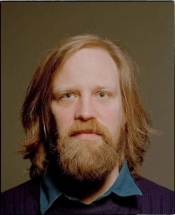
Joe Heaps Nelson is an artist and writer in New York City.
http://www.joeheaps.com



