Whitehot Magazine
October 2026
"The Best Art In The World"
"The Best Art In The World"
October 2026
September 2012: Follow Your Own Path: Mike Cockrill Interview by Joe Heaps Nelson
 Mike Cockrill, Fragmented Face (Flag), 2012 34 x 24 inches.
Mike Cockrill Interview
by Joe Heaps Nelson
Mike Cockrill is jumping into the void! Will he soar, or splat? I'm curious to find out. How about you?
He's a favorite. I always try and keep up with what he's doing. He's a veteran of the East Village days, and by that, of course, I mean the 1980s, old school, straight up DIY. I was surprised to learn he has had a studio in the same building (in Brooklyn) since 1979. He's known for rock solid technique - this guy can draw and paint - he likes pretty girls and he goes for racy, adventurous subject matter. Horny, but with all the signifiers of innocence: stuffed animals, butterflies, flowers, picket fences, clowns driving over the edge of a cliff in a tiny car. It's the kind of stuff I find amusing. It's All-American apple pie sort of stuff, but really twisted, always provocative, a lot of sexual content, the sort of thing that New Yorkers love because it's well painted and makes conservatives squirm. If he was ever afraid of being perceived as obnoxious, he got over it a long time ago. He's always been a button-pusher. As Charlie Murphy said of Rick James, "he's a habitual line stepper."
Which makes it all the more amazing that he has chucked his old style out the window, and he's painting a la Picasso and Braque, circa 1910-12. This has been going on for a couple of months, at most. It's a sudden and radical transformation. So far, he has retained his characteristic palette, which is somewhat subdued - generally light hues, dusty roses, springy greens, lemon yellows with other colors in them, nice use of unbleached titanium, but the vocabulary of forms is all different. Everything else has gone right to formal abstraction. I mean all the way. There are a couple of tall vertical paintings that evoke totem poles, one unfinished, and there it appears he's going in a synthetic cubist direction, and he's pulling old portraits of girls out of the racks, and getting cubist all over their faces. Mike Cockrill is a cubist now, or as he might say, "high modernist". So, stick around. We're talking about painting!
Heaps: Mike, I'm eager to hear what you have to say about these new paintings, but I want to get some background in the conversation too. My goal is to make everybody get an idea of what kind of painter you are.
Cockrill: I've done straight ahead figurative painting for about 40 years. I was academically trained at the Pennsylvania Academy of Fine Arts. I was painting like Edward Hopper and Thomas Eakins when I was in school. That was the time people considered painting dead. The big struggle was to figure out how to make painting not dead, how to paint something relevant, that led me to switching over to cartoon painting and using completely over the top subject matter. Kennedy assassination, incest in the American home, I was working with a collaborator who was fearless. It made me kind of fearless. Together we created these pieces as Cockrill/Judge Hughes, and that was a big break from my academic formal training. But I think every 10 years I feel like I get to the point where I understand the form, and I need to do something different to keep myself interested and growing as an artist. After the Cockrill/Judge Hughes cartoon paintings, which were acrylic, I switched over to oil, or back to oil, trying to figure out how to paint a figure again. It kind of culminated in the Baby Doll/Clown Killer series in '95. Those were the first paintings that people actually wanted to buy. And it was the first time I got press that was positive. After doing about 20 of those, and selling most of them, I began to look at childrens' illustration, childrens' books, I started doing tableaus of boys, girls, moms, the kind of sexual awakening, coming of age. That sort of genre. I painted that up until this year, still pushing the narrative nostalgic figuration. It looked like it was from my childhood. I set it in that era so that if I'm doing a boy looking at a mom without a shirt on, it was funnier and more satirical and socially significant to make it in the 60s, because it's a look back at your childhood, the things that I was aware of growing up, that the girl next door was changing over into a young woman, these kind of things are really charged, and not something that you are supposed to talk about. Not anything that anybody wanted to acknowledge. And they still don't in our culture, want to acknowledge that children, at 9, 10, 11 start becoming aware of their bodies and the bodies of each other. This is supposed to be buried until we're 18. So when I was painting it, some people got really upset. They called it child pornography, they called me a pervert, a pedophile, and that's so dishonest. Because other people come up and say, Are you kidding? This is totally my experience too when I was a kid, I had a big crush on the girl in front of me in class. So to deny that that exists is completely corrupt.
Heaps: Do you find that in the art world, because everyone is so sophisticated, there is a prejudice against nostalgia? Like nostalgia would be a bad thing to have in your paintings, and this is part of the reason that nobody likes Norman Rockwell, for example?
Cockrill: I don't think that's really true, because if you look at John Currin, or Neo Rauch, or some of the figurative painters that came along in the 90s, they were working with costumes, or a look that seemed divorced from our moment. They were turn of the century, or Neo Rauch, I don't know what costumes those people are wearing. It doesn't look like today.
 Mike Cockrill, Gossip Girls, 2010. Oil on Canvas, 62 x 50 inches.
Heaps: The way they are drawn looks like the boy scout handbook, East German version.
Cockrill: Yeah, exactly. I thought all that stuff was great, and I was doing it too. I loved that stuff. Who did it first? I was doing sexually charged imagery in the 80s, so some people thought I was a little ahead of the curve when they started seeing Lisa Yuskavage and John Currin doing it in the 90s, but I had been doing it for 10 years and getting a lot of shit for it! They were able to dress it up in kind of a goofy kitsch look that deactivated the content.
Heaps: I feel like your work is kind of that way too though, containing elements of goofy kitsch.
Cockrill: It is, but in some of my boys and girls it's not really that kitschy. It's nostalgic, it's the 50s, but they aren't making a stupid face, or a goofy expression, they look like they are really into each other! Hahahahaha! Which they are. I think it was a personal feeling this summer that I needed to break into a new direction, and I have been trying to break into a new direction for the past year, but I wasn't really sure how to do it. I was painting faces, like different kinds of expressions, like really angry or really goofy, trying to deconstruct my imagery, and then I hit on the idea that the face is completely obliterated and deconstructed in a cubist way. That was the breakthrough, to deconstruct the face, and what I deconstructed it with was high modernism.
Heaps: It's funny, because these kind of parallel developments in painting 100 years ago. This just occurs to me now, but isn't it about 100 years ago that Picasso and Braque started doing paintings like this!
Cockrill: I didn't want to go back and look at them. I have purposely not looked at modernist painting, because I remember it. It's probably a continuation of nostalgic figuration, in a way.
Heaps: These paintings look like they were portraits of girls, they were old paintings, and you have obscured the faces with cubist painting... There's a little de Kooning in there too.
Cockrill: Yeah, there's de Kooning, and Cy Twombly. Cy Twombly will mark on the canvas, like these, raw canvas, he'll make little pencil marks on it. This is half cubist, half deconstructed, just mark making on the surface, where you become aware of the process. I was really fascinated by Cy Twombly, or even Basquiat, where you can see the hand, and the decisions on the surface. I always loved that. And when you do a full bore painting of the house, and the kids, it gets so painted over that you can't follow the process. I wanted to be able to follow the process in my work more.
Heaps: The other thing is, if you're doing a full scene like that, it can be interesting to leave some evidence of the process, maybe some sketchy parts, or some parts that are just drawn, but at times that can feel contrived. It's tough to pull off.
Cockrill: It is tough. If it happens by accident while I'm working, that's a good way, but to purposely leave it unfinished, self consciously...
Heaps: That's kind of, almost a trend right now. People are getting their paintings 3/4 finished, nobody wants to make just a realist painting any more, because then it looks like you are retarded or something. Like you don't know.
Cockrill: Yeah. Well John Currin goes ahead and makes it, but he distorts it. It's so odd.
Heaps: I think he is great. I love him.
Cockrill: I do too, I like his work. I liked it more earlier, when it was weirder. Same with Lisa Yuskavage, I liked their work earlier, it was uglier and stranger. I think he knows he's in some kind of cul de sac now. Once you start going toward really explicit sexuality, show the vagina and the penis, if that's your shock content, where are you going to go after that?
Heaps: Bestiality maybe?
Cockrill: Well I did all that in the White Papers, I did all that in the 80s, so I know the dead end. I know what that feels like. I had to change my painting style. Also with the nostalgic figuration, the boy/girl, mom/daughter, I felt I had hit a wall and I didn't know where to go, and so my only way out was to break my work apart.
Heaps: That looks like what's happening here, it's just... shattering.
Cockrill: Interesting. I think it's interesting that people respond so much. They could have said why did you do that I love your paintings, but they say I love your paintings and I like this too, which is good, that's what you hope for if you're gonna radically shift gear.
Heaps: Well, you are good at what you're doing. People look forward to seeing what you're doing. I know I would always make sure to check out your show when you had work up. I have been influenced by you.
Cockrill: That's nice, thanks. I think a lot of people have actually. Hahaha!
Heaps: Or at least I felt like I was exploring similar territory in my work, and then finding out that you had been there before. So I was always interested in what you were doing. You know, maybe this is like when Dylan went electric.
Cockrill: Yeah, right. I think in a way, a good artist can shift form, and it's still good. Look at Picasso, he could have painted realistically, it doesn't matter what form he picked, they're all pretty awesome.
Heaps: There's such a facility.
Cockrill: And Dylan... and we are not comparing me to these people! I'm just saying that in the way these great geniuses work, Dylan shifted from folk to electric and it was pretty seamless, he could do it. And the Beatles talk about that too. Like, you write pop songs, but what if it was the 30s? They said well we would have written in that style. They're writing in the style that sells. There's a much bigger commercial aspect to the Beatles, that they willingly acknowledge, than the critics want to admit.
 Zippy Paint Job, Cockrill/Judge Hughes, 1985 is a large acrylic on canvas work made during Cockrill's 80s collaborative period
with Judge Hughes. Approx 7 ft by 9 1/2 ft.
Heaps: They had a big bag of tricks to dip into.
Cockrill: They built their tricks; they didn't have a big bag when they started. They were pushing themselves. I think the point is, for any artist, push yourself. Once you know how to do it, it's time to stop doing it. That's my feeling. Because you start making the same painting you made just before, it doesn't look as good. [indicating work on the studio wall] I did that here, I did that painting and I wanted to make another one, and it was, ohhhh, I can't make another one, so then I pushed that one, the Bride. It went to a good place. And that was good! An artist is always battling in the studio to not repeat yourself, but to actually surprise yourself. I did this last night, I grabbed a couple old paintings to paint over, and I don't know, I was in a mood where I did that, I said I really like that, I'm not going to do any more.
Heaps: This is the one where you painted the dark eyes on the girl, this is an old portrait painting.
Cockrill: It's from '92. I squared it off, changed her hair, put the dark eyes on it. I call it paintover.
Heaps: For somebody who loved that period of your work, it's like you're vandalizing your old work.
Cockrill: I'm vandalizing my earlier paintings, in some cases I was not satisfied. These are from a magazine store, they were studio headshots of girls who wanted to be models, and so I painted them, but they kind of needed something. It took me 20 years to figure out that they needed to be grafittied over! Hahaha! So it's still my painting underneath. I think if I got those at a thrift store and painted on them, I think it would have a different energy then the fact that it's my early work I painted on.
Heaps: I think so too. Jim Shaw went and did that.
Cockrill: Schnabel got a painting at a thrift store, and he painted over it, and then he made big paintings of the whole thing. He also painted over circus tarps and things like that. Salle had other people paint parts of the painting...
Heaps: I hate his work.
Cockrill: His work is dead. It's dead not because of the technique or anything, it's just that he is dead. He's just corrupt as an artist, because he's not honest. It's not because I sued him, it's not because he took from the White Papers, I think it's OK that he took from the White Papers.
Heaps: I never knew that you sued him.
Cockrill: I did. I complained that he used the White Papers. But now, looking back at Richard Prince, and a lot of artists who use other work, I think it's OK that Salle used my work. I take it back. I think there's too much restriction now on the creative process. Asking Prince to destroy those paintings, that he did of that photographer, it's appalling. It's a crime against art. They're not like the other artist's work; there's no confusion. It has to be sorted out. Does the artist transform the work? I think Prince transformed it; I think Salle transformed it, I don't know. Certainly Koons transformed the String of Puppies. That's a whole other issue. My disdain of Salle's work is that he's so cautious, so conservatorial in his own oeuvre that he protects it, and he won't grow. It bothers me when artists don't grow, that have every resource. He has money, he's got paint, he's got the assistants, do something fucking interesting! Don't keep making these products for rich people!
Heaps: It's been a lot of years, hasn't it.
Cockrill: Yeah, he's just making souvenirs, that's what bothers me.
Heaps: I love this! It's scandalous!
Cockrill: I don't care. I've already been so scandalous in my whole art career, what the fuck. Salle's paintings had jarring juxtapositions, because it was fresh. And it's not fresh any more, it's predictable. You can't do those same guitar riffs today that you were doing in the 80s. I heard them already. Also, he doesn't paint enough of his own work. A lot of them are factory painted, and they look it.
Heaps: Salle used to have that wrongness, and Fischl had it for sure. And Fischl will still stick up for Salle, because they're pals.
Cockrill: They're fine. I hate to criticize another artist who's just making a living, but you get to a point where the edge is gone, and it starts to become dilettante wall decorations for rich people and that's what their work looks like to me. Also, I saw Eric Fischl at a lecture, he was not willing to discuss or consider kitsch, bad painting, irony. I think it's over, it's good to avoid it, but if you're going to discuss the history of painting in the 20th century you have to talk about that. It goes back to Picabia. Picabia is the father of bad painting. It's a way out of academism. That's the value of it; it's a way to get out of good taste. By the 70s you had the best taste paintings ever, Agnes Martin and Brice Marden painting the most elegant paintings you can make, and Diebenkorn. These things are elegant. That's why you had to escape.
Heaps: Guston is a guy who escaped.
Cockrill: He escaped by doing these cartoony things that are brilliant, and way more monumental and dynamic than anything that the other people were painting.
Heaps: And not that he wasn't an interesting painter before, he was a good abstract expressionist.
Cockrill: I like his little humble abstract paintings; humble I call them because the little brushstrokes are just so not action, male, testosterone, it was like being in the room with a kind of sense of failure. I like that.
Heaps: He painted north, south, east, west, never diagonal.
Cockrill: That's interesting. I love Diebenkorn, by the way, and I like Agnes Martin's work. I love all their work too much. The problem is I like it so much, the only way I could get out of it was painting John Kennedy with his head being blown up. That was fresh.
Heaps: Why did you sue David Salle?
Cockrill: OK. He used my drawing of Oswald being shot, from the White Papers, twice, in a major painting. He reproduced it in What is the Reason for your Visit to Germany, 2 feet high on the painting, with a big, bent over nude, exactly like this, and instead of the penis you had a saxophone. He deconstructed this beautifully for collectors. Anyway, it was at Castelli Gallery, I went to see it because it was the most important show in Soho. I was looking at the show, and I thought, I can't believe Julian Schnabel even still talks to you, because you are so ripping off Julian Schnabel in every little thing you're doing. Like doing a painting and putting a big smear going across it, but doing it carefully. So then he put a tornado of brushstrokes, and I was thinking, you are completely ripping off Julian Schnabel. In fact, I found out later that they had stopped talking to each other because Julian thought the same thing. So while I was looking at the show, I was like, whoa, that really looks like my drawing. I thought, that's impossible, nobody knows who I am! David Salle is like the most important artist in New York, how could he be doing my drawing? So I went home and I got the White Papers, I brought it to Judge Hughes and we looked at it, we had the art book, yeah, he used our drawing!
Heaps: What kind of guy is Judge Hughes?
Cockrill: He's from the Midwest, he was a carpenter, he was in the theatre, he's very theatrical, loves subversive theatre. His favorite play is Bertolt Brecht, Threepenny Opera. So he felt, when I met him in '79, he was lecturing me that paintings were dead skins you hang on a wall, art had to engage people, art had to just completely assault the sensibilities of the bourgeoisie. I was bored of my own work, I didn't have a direction. I thought it was very intriguing. My wife left, I was willing to listen to other voices. He started suggesting some ideas for paintings and drawings, and they were so outrageous, I said I'll draw that. From there it took off into a whole collaboration.
Heaps: So you're at Castelli Gallery, looking at David Salle's show, and you recognize that...
Cockrill: He had used our work! So we made a satirical flyer. We were picketing the gallery. We created a street performance in front of the most important show, in front of the most important gallery in New York City. It said, Dear Castelli patrons, you are entering the scene of a crime. The crime, copyright infringement, theft, it was a Jeremiad, a wide-eyed tract, aimed at people who knew it was clearly satirical, and that street performance was our way of dealing with this theft of our property. Jerry Ordover came down from Castelli Gallery and said you can have your fun today, but have your lawyer call us. A really nice guy, he never gave me a hard time about the street performance, about suing Castelli. He basically said, if you don't like it, sue us. It wasn't really something I wanted to do, but I thought maybe we'll make a trade, give me a drawing or a print, I don't care if you use my work, but acknowledge it. Then press started coming out about the show, talking about this drawing of Oswald being shot, you're reading a review of the show in which the reviewer said, when I saw the drawing of Oswald being shot, it all made sense. It's like, that's my fucking drawing! Oswald being shot is the reason that it all makes sense! I felt like he was taking from the White Papers this understanding of American culture that we were mining, between sex and violence and political assassination, we put it all together in the White Papers, and he was putting it in Castelli, and that wasn't fair. It wasn't taking a soup can off a shelf. It was taking an underground artist's work, and running with it in Castelli. I wanted to clear the record. So, we went public. And it was like, you don't own Oswald being shot. No, but turning him into a cartoon, being shot, is the idea. So he was represented by John Koegel. John Koegel handled the case also for Jeff Koons and the String of Puppies. John Koegel was extremely angry at me for suing on the basis of copyright. He thought it hurt the art world; he resented it for years, and he badmouthed me. Eventually, when he saw my paintings in the 90s, he actually walked up to my dealer and said I have to say one thing, Mike Cockrill became a good painter. So to me, that was a nice way to make peace, and I think he got over it. We settled. We didn't even take it to trial. We just took 2,000 bucks, because they were going to throw a lot of money at us, and we just could not afford to really take Leo Castelli to court. But we made our point! It was my drawing.
Heaps: So, then you were unpopular in the art world?
Cockrill: It was used against me in my first review. Gary Indiana said my paintings were not paintings, they were just cartoons, and more to the point, the only reason I was having a show was to cash in on my notoriety as the plaintiff in a lawsuit against David Salle. Like I would never have been given a show if I hadn't sued David Salle. Which was absolutely not true, because my dealer loved the White Papers, he loved Cockrill/Judge Hughes cartoon paintings. Mike Bidlo said if you want to do a show about the new pop going on, the only person you should have is Cockrill/Judge Hughes. That's how I got the show. Bidlo thought that was the stuff!
Heaps: Now Bidlo made a whole career of copying other people's work, did he not?
Cockrill: In a way, but he thought it was a failure if you didn't know who he was copying. The point is you knew who he was copying. That's different.
Heaps: Yes, that's true. It's like Sherry Levine's approach.
Cockrill: Yeah, he's in the appropriation genre. But he said, if someone looked up and saw his version of Warhol's Before and After, but they didn't know the Warhol, it's not that famous to non-Warhol people, and when the person said, oh, you're doing your own work, he considered the piece a failure, to that person, because the person didn't get that it's a Warhol. Salle's not appropriating, Salle is stealing. I mean if he does Reginald Marsh, you know it's Reginald Marsh, but if he finds an obscure artist's drawing, and uses it to activate his painting, I don't think that's appropriation. That's a different kind of layering of imagery, maybe you could call that mining the cultural landscape, but I could see that, I think being able to mine the cultural landscape is valid, but it's not really appropriation, it's more collage.
Heaps: So, for appropriation to work, it's OK to grab a lot of stuff, but you're supposed to know the references?
Cockrill: I do it! You're supposed to know this is children's illustration, in my book I showed the children's illustration I was ripping on. So you would think, this boy is showing a rocket to his teacher? That's so loaded, the teacher's touching the rocket? But it's from a children's illustration, from schoolbooks! They actually had this loaded, Freudian stuff in schoolbooks. So I thought it was funny to put what I found in schoolbooks, and make paintings of my own version of it, and show that it's in the vernacular, it's in our cultural landscape.
Heaps: That's just what I was doing with the paintings of cheerleaders for all those years.
Cockrill: Yeah, right! You get it. You know what cheerleaders are. We see these things. You're commenting on the visual information that we're bombarded with, or that we sometimes don't even notice. It goes back to Jasper Johns, who said, I want to paint what we're not looking at. That we see all the time, it's right in front of us and we're not looking at it. Targets, flags, numbers. You take it for granted. It's all conceptual.
Heaps: Was it Jim Dine who said, the mind likes what it already knows. Do you remember this quote? It was in reference to his heart shaped paintings.
Cockrill: I don't. But I don't find him to be very original.
 Mike Cockrill's Baby Doll Clown Killer painting on studio wall with new-work
Heaps: He can really draw well.
Cockrill: He draws too well. The problem is, for instance, his tool drawings are not nearly as engaging now as Lee Lozano's. Lee Lozano drew tools at the same time, the early 60s, but her tools become alive and fuck themselves. They just come off the page, they twist around, the torque, they become sex machines. Whereas Jim Dine's is just an elegant hammer drawn in a blur, like it went from here to there, so what. Lee Lozano has been recently rediscovered, look her up, she's completely nuts. She died, but she became obscure, she dropped out of the art world in like, 1970, and ended up institutionalized, she did way too many drugs. She was the real deal though, she was completely on the edge.
Heaps: So, for people who are interested in the East Village scene, who were too young to be there, what was it like?
Cockrill: It was a hell zone to go to, because you'd be afraid of the rats, the drug addicts, the Hell's Angels, the rapists and murderers, hahahaha! I was scared to go down there, it was dark, and it was lawless. There were artists taking over buildings, to survive, artists taking over storefronts, and they put up galleries, down in this no man's land. To see art in a no man's land was like, the most beautiful, radiant thing you could put into a darkness. It was a sign of light, a positiveness. It was beautiful! There was a great energy about it. Party on the street, music, art inside, with no commercial concerns. Just artists doing what they felt like doing. A lot of it was really bad art, it didn't really matter. It was rough, and pure. When Keith Haring put his big mural up on Bowery and Houston, it was like a sunrise in a wasteland. You cannot reproduce that now. They repainted it, but there's no surprise, there's co-ops now, and fancy food markets, it belongs. There was nothing there but squeegee men. When he first put that up, it was so bright, so radiant, and everything around it was decayed, dark, it was shockingly fresh looking. The context has shifted. Now it's gentrified, it's safe, the drug dealers are gone...
Heaps: That's my neighborhood.
Cockrill: Yeah. The thing is the storefronts were very small, and the work had to be small, by definition, and I was doing much larger works and showing them in the big shows in Brooklyn, like Terminal New York and Williamsburg, the All Fools show in 1982. Judge Hughes was in an oxygen tent. He was on an army cot, plastic, listening to a porn tape, jerking off with a dildo, and I was in a business suit with a St. Patrick's Day party hat on, handing out kazoos, and I was singing and asking the audience which photograph I should shoot, John Lennon, or John Kennedy. And I was singing a song, Let's Shoot Johnny in the Head. Behind me was a big painting of Oswald being shot on TV. People absolutely did not know what to make of this, and I have the gun still. It's an air gun. I pump it up, and I point, and I fire a shot through John Lennon's face, who had only been shot a year before. People were absolutely appalled. Plus, with Judge Hughes listening to porn and jerking off, it's beyond. I loved it. That was the All Fool's show, in 1982. Hahaha! We recreated a version of it, at P.S. 1 in 1984, without the photographs and the gun, just Judge Hughes and a tape of... Oh, he was Jack Kennedy. In a cot, with a head mask, and bullet, with blood, cartoon blood on his tie, he was the martyred Jack Kennedy, and you could make love to him for 25 cents. I was going to encourage the audience to get into the army cot with Jack, because he was lonely, and Jeffery Deitch forbid us to do that performance. And when Judge Hughes started to perform anyway, with the dildo, and the tape was running, about my story about my friend Jack, he burst into the room and came up to me and said (Deitch voice) What are you doing? I told you you couldn't perform! I said, I'm not performing, it's on tape. He burst out of the room and called my gallery and tried to kick me out of the show.
Heaps: It was a Deitch show?
Cockrill: It was a Jeffrey Deitch curated show, the New Portrait. Every artist was in it, in New York, like 170 artists, that had anything to do with portraits. My portrait was Kennedy. And Jackie, on a pedeastal. Yeah, so Jeffrey Deitch freaked out. So much for his avant garde creed. It was too much for him.
Heaps: The first thing he did when he got to L.A. was paint over the mural done by the Italian artist, Blu.
Cockrill: The only reason I got to stay in the show was it the only piece that Kim Levin wrote about in the Village Voice. She glancingly mentioned who was in the show, and then spent 2 paragraphs talking about these 2 guys with the Kennedy mask, and the cot, and the bedpan, hahahahahaha! But that's way back. That's a long time ago.
Heaps: So you're doing this stuff in the 80s, in pretty much obscurity, not getting any money.
Cockrill: I wasn't getting any money; I was in most of the art magazines though.
Heaps: Who were the dealers who showed you, and backed you?
Cockrill: The one dealer who took the risk was Barry Blinderman. He now runs the art department at Illinois State University, where he also showed David Wojnarowicz's Tongues of Flame. He had the most interesting figurative group in Soho at that time. He had Robert Colescott, Martin Wong, the young Mark Kostabi, Cockrill/Judge Hughes, Ellen Birkenblit, he showed Futura 2000, many interesting artists.
Heaps: So, then, the breakthrough for you was the clowns shot by the little girls?
Cockrill: That was sort of more, accepting Mike, as an artist. After I dissolved the relationship with Judge Hughes I did a series of large acrylic paintings of little girls in the late 80s. Little girls in pink dresses, little girl in bed, little girl on bicycle, little girl as a cheerleader, and that was even more problematic than the Kennedy incest paintings because these were more realistic, and it was 5 years before Currin and Lisa Yuskavage, and people just were not ready for it.
 Mike Cockrill in his studio
Heaps: We're really protective of our little girls.
Cockrill: It wasn't clearly kitschy enough, and I wasn't thinking of it as kitsch. I was just thinking, has anybody painted a 9 year old girl 8 feet high? In her pink party dress? And no one had done it. Well, what would it be like? What would it be like to paint a cheerleader girl with her legs up, in her little cheerleader costume?
Heaps: Jesus, Mike, that's my whole career! I didn't know about that!
Cockrill: Barry Blinderman thought they were beautiful paintings, and he put 'em in Illinois State University in 1994, it was picketed! Fox News called me!
Heaps: This was a solo show?
Cockrill: Yeah, he said, these are great, I have a slot, I want to show them. I warned him, I had shown them in 1989 or 1990 in the West Village and the cops came, and told us to keep the door of the gallery closed. When Barry wanted to show them, he saw these big paintings, he saw the drips, he saw the brushwork, he didn't care that they were big little girls. But, they did not get that in Illinois. In Illinois they just went nuts.
Heaps: That's when you know you're doing well.
Cockrill: Yeeeeeeeah, but it was really bad. It was bad, I got sick from it, I got really stressed out, and after that I did the girls armed with rifles, and clowns. It was like, OK, here are little girls, they're dressed, they've got guns, they've rounded up the clowns, they're going to kill 'em all. Whether it was a response to the assault on me at Illinois State, I don't know. But I do know that again, I felt like changing my work. And I had a little clown, my mom, when I was a little kid, we had these little clown watercolors in my bedroom. Actually, one of them is over there, I rescued it from our house, a little clown with a dog. And I wanted to paint something really banal. Like, get away from all this Kennedy, and incest, and naked girls, and just paint something really, really banal. I want to do little clowns.
Heaps: Clowns scare some people anyway.
Cockrill: Right, well I was drawing them on the subway, and this little kid was watching me draw, and he said, is that a clown? I said yeah, and he said, you have to have something happening to the clown. He said, you know, you have to have water falling on his head or something. And I said, yeah, true. Something should be happening to the clown. Around that time I saw this horrifying photograph in the Daily News from the Holocaust Museum in Israel, of this SS officer shooting this parent and child. I don't know that that triggered it, but I saw in my sketchbook, several months after I drew it, I had forgotten I drew it, a little girl in a party dress, with a rifle, shooting a kneeling clown. I said that would be a really interesting series, these little girls shooting these little clowns. So, it just popped into my head.
Heaps: That's how it goes.
Cockrill: Yeah. But each step of the way, then I exhaust that, and then as I said, I went into the children's illustration.
Heaps: With an occasional clown popping up.
Cockrill: The clowns come through, all this stuff is sort of woven into the paintings, but what is a clown? A clown is a person with a painted face. There's paint on their face. So, you don't know who they really are. Their face is obscured. They're not who we know. Maybe that, psychologically is there. Maybe I want to get away from the specificity of particular individuals. You could pop psychologize this obscuring of the face, I don't know what it means.
Heaps: Well on these new cubist ones, you have obscured the faces, they are kind of veiled. That goes in that direction too.
Cockrill: Yeah. Veiled. Right. It ties in with my Catholic upbringing. All my work is tied up with my Catholic upbringing. Hahaha!
Heaps: A lot of the most fucked up artists have that in common!
Cockrill: Yeah they do. When you're told you're personally responsible for the suffering of Christ, when you're in 4th grade, it weighs on you, the guilt trip. Plus the whole transcendence of the Madonna, and the mother, and the teacher, all virginal godesses. You put those 2 things together, and you got one fucked up kid! Hahahaha!
Heaps: I remember that painting, where do I remember that from?
Cockrill: 31 Grand.
Heaps: 31 Grand!
Cockrill: I had a breakout show at 31 Grand. That's where I started doing the kids, and Madonna rising in suburban yards and stuff.
Heaps: I must have seen that.
Cockrill: Every time I think I'm too conservative in my work, I bust it apart again. That was the first time I really felt I was having a good time. Even at Semaphore, in the mid 80s, there was a lot of resentment among the artists about the fact that I was doing these cartoon paintings of cocks and vaginas, some of the artists thought it was awesome and others resented it.
Heaps: Well, hell, you gotta follow your own path.
Cockrill: This is how artists reinvent themselves. I was at Kim Foster, I felt like my work got too conservative and safe, I happened to be at 31 Grand because a young curator put one of my Baby Doll/Clown Killers in a show in Williamsburg I guess, and she was doing another show at 31 Grand, and I went out to be supportive, I wasn't in the show, I just was there, and I was talking to Heather, and I was looking at one of her artists, and I said I like that boy in the baseball hat, and she asked what do you do, and I said I paint little girls shooting clowns, and she said that would be great for our next show! Our next show is called "Gun", or something like that. So they come to my studio, and they're like 10 years younger than my dealer, they're in their early 30s, and I showed my paintings and they said that's cool, I said do you want to see my drawings? Sure. So I bring out the most fucked up drawings that my dealer would never show, really sexually over the top drawings, like Sambo drawings, like clowns, the clown becomes a kind of Sambo, like what if it's blackface? I didn't even show those. But, everything's just like, when I draw, you're just drawing in your studio, you just draw whatever fucked up thing you think of, so I have all these drawings, and they said these - are - so - fucked - up, you have to show them. So, I knew I had found a new dealer. That was the right reaction. So it was like, go for it, Mike. Then I had a show and that show was the first time I got back in Art in America in 20 years. The first time a rave review in Art in America. It was not Sambo drawings. Haha! But it was Ascension, with a mom, like a cross between American sex goddess, mom, riding on a constellation, with the kids worshipping her, with the suburban background and the dad playing golf, it was like that whole suburban Catholic thing was in that work, and that was why Kent Gallery called.
Heaps: Well, fuck it, you're a national treasure. Now we have plenty of history, and we got you up to the present day. Here you are working on these new cubist paintings, seems to be the beginning of a new phase. Where do you think you're going, or are you just experimenting and figuring out where you're going?
Cockrill: Yeah, I'm just experimenting. I have not even shown these to my dealer yet, ironically. I wanted to know more about what I was doing before I brought in my dealer. I don't want him to come in and go what are you doing and I have no idea. So, I've only been doing these for less than 2 months. Someone already put them in a pop up show in Bushwick, Loren Munk made a YouTube video, you've come to interview me about them, it's almost like, I don't know whether it's the work, or the fact that I've changed, but there's a lot of curiosity about this and what am I doing and where am I going, and I don't know. I'm not going to know until I get there. That's the good part, I'm going with an open mind about it.... I'm an old artist. I don't feel old. I think that an artist goes through phases where you have a breakthrough in your 20s, often, and then later you have another one. You start looking at 60 and you think, you know, fuck it, I'm just gonna do what I want to do now. Hahaha! I'm gonna just bust out and do something different. It's like a midlife crisis for an artist. I think some have it in their 40s. It's always a crisis being an artist. It's one long crisis. But sometimes it's productive.
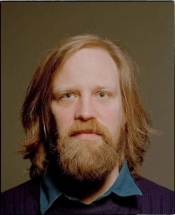
Joe Heaps Nelson
Joe Heaps Nelson is an artist and writer in New York City.
http://www.joeheaps.com